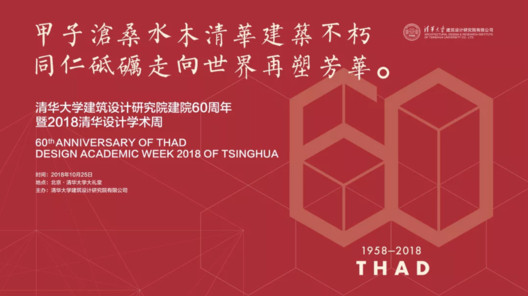
In 1958, Tsinghua University established the Architectural Design and Research Institute of Tsinghua University (THAD) as a practical platform for architectural education and academic research, serving the development and construction of the newly founded republic. In 2018, THAD celebrates its 60th anniversary. Over the past six decades, the institute has navigated the shifts in China's social and economic development, witnessing the evolution of modern Chinese architectural design. To mark this 60th anniversary, THAD and the Tsinghua University School of Architecture are jointly hosting the "60 Years of Tsinghua Design Practice" event, inviting key figures and institutions from across the Chinese architectural community to join the celebration. Through a series of exhibitions, forums, lectures, and publications, the event aims to review the institute's history, reflect on the progress of Chinese architectural design over the past 60 years, and share research, practice, and insights to continue serving national development and the advancement of architectural scholarship and practice.
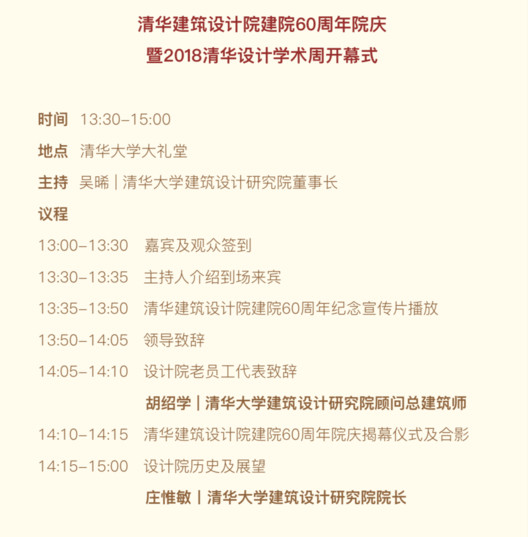
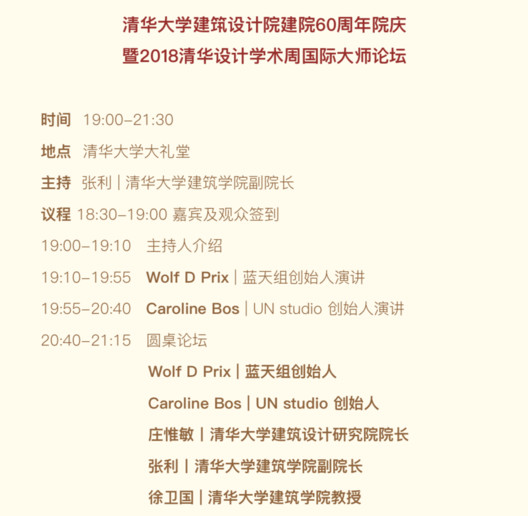
To celebrate the 60th anniversary of the Architectural Design and Research Institute of Tsinghua University, the Tsinghua Design Academic Week will be held on October 25, 2018. Prominent Chinese academicians, including He Jingtang, Wang Jianguo, and Meng Jianmin, alongside international guests such as Coop Himmelb(l)au and UNStudio, will attend. Concurrently, the exhibition titled "6X10: The Modern Architectural History of a University Design Institute" will officially open.
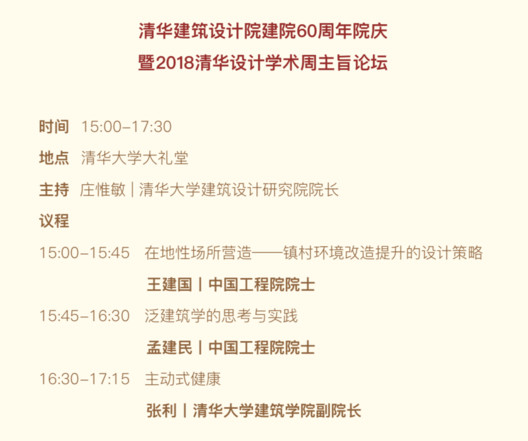

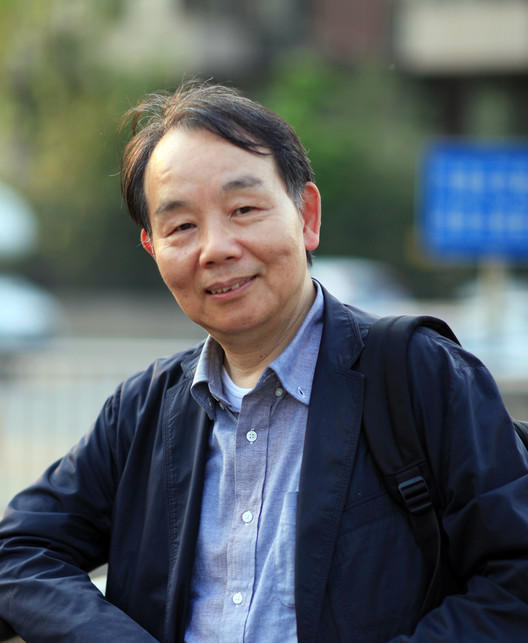
Wang Jianguo
Professor and Doctoral Advisor at Southeast University, Academician of the Chinese Academy of Engineering (CAE). He currently serves as Director of the Urban Design Research Center of Southeast University, Vice President of the Urban Planning Society of China, Vice President of the Architectural Society of China, Deputy Director of the Urban Design Expert Committee of the Ministry of Housing and Urban-Rural Development, Member of the Xiong'an New Area Planning Review Expert Group, and Editor-in-Chief of *Frontiers of Architectural Research*. In 2001, he was named a "Changjiang Scholar Distinguished Professor" by the Ministry of Education and received the National Science Fund for Distinguished Young Scholars. In 2016, he was awarded the title of National Renowned Teacher under the "Ten Thousand Talents Program."
Academician Wang Jianguo was the first in China to systematically establish a comprehensive theoretical and methodological framework for modern urban design. He pioneered quantitative guidance and control methods for the rational layout of urban high-rise buildings, established scientific technical methodologies for determining urban land development intensity and floor area ratios, and developed and practiced urban landscape design methods based on dynamic random viewpoints. These achievements have helped address key urban design challenges concerning height, density, and aesthetic optimization and control in urban construction. He has published 7 books and over 200 academic papers. He has lectured and conducted academic exchanges at world-renowned institutions, including Harvard University, MIT, and University College London (UCL), and has delivered keynote speeches at 18 international academic conferences, including the World Urban Forum. His honors include a First Class Natural Science Award from the Ministry of Education, a First Class Science and Technology Progress Award from the Ministry of Education, four Second Class awards, and a First Class Huaxia Construction Science and Technology Award from the Ministry of Housing and Urban-Rural Development. Over the past 30 years, he has led more than 100 urban and architectural design projects in over 40 cities, including Beijing, Shanghai, Guangzhou, Nanjing, Hangzhou, and Zhengzhou. These works have earned him two First Prizes and one Second Prize for National Excellent Architectural Design, one First Prize and two Second Prizes for National Excellent Planning and Design, seven provincial/ministerial-level first prizes, and two international awards.
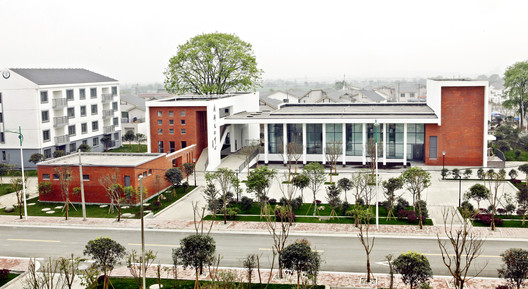
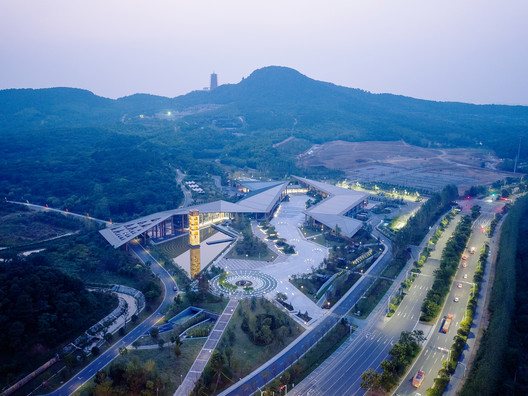

Meng Jianmin
Academician of the Chinese Academy of Engineering (CAE), currently serving as Chairman and Chief Architect of Shenzhen General Institute of Architectural Design and Research Co., Ltd. (SZAD). He graduated from Southeast University with a Ph.D. He is also a Distinguished Professor at Shenzhen University and the City University of Macau, Vice President of the Architectural Society of China, Vice President of the Architects Branch of the Architectural Society of China, President of the Shenzhen Association of Experts, and a professor at Southeast University, South China University of Technology, and Shenzhen University. He has been honored with the title of National Architectural Design Master, the Liang Sicheng Architecture Prize, the Gold Award of the Dragon Design Foundation Award, and the Nanyue Outstanding Talents Award. He has long been dedicated to architectural design and theoretical research.
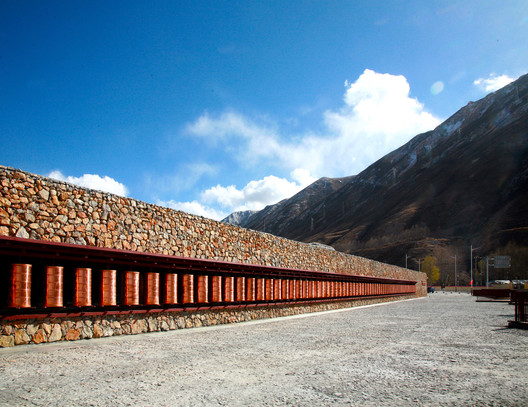
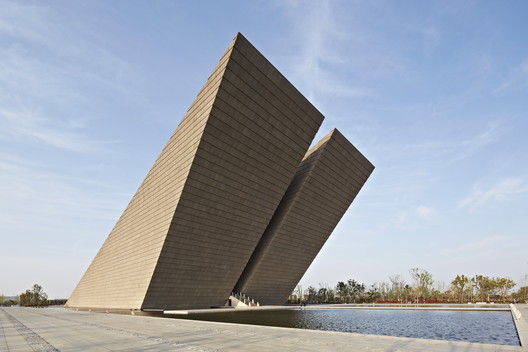
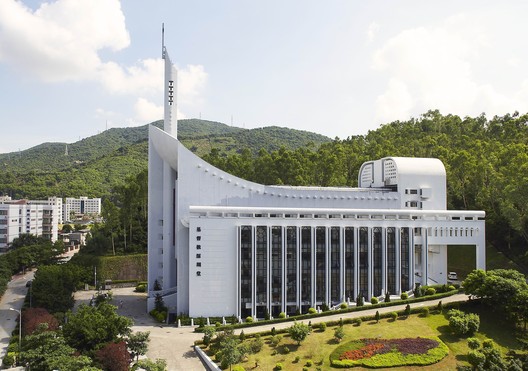
He has led the design of over 200 projects, including the Memorial Hall of the Crossing-the-Yangtze-River Campaign, the Yushu Earthquake Ruins Memorial, the University of Hong Kong-Shenzhen Hospital, the Passenger Clearance Building of the Shenzhen-Hong Kong Western Corridor, and the headquarters of Kunming Yuntianhua Group, winning more than 80 professional awards. He serves as the project leader for the National Key R&D Program project, "Goal- and Effect-Oriented New Methods and Tools for Green Building Design." He has published several books, including *Original Design* and *Creation and Practice of New Medical Buildings*. He proposed the theory of "Original Design," advocating for "all-round humanistic care" and the "three-all methodology," which provides a systematic and actionable path for engineering practice.
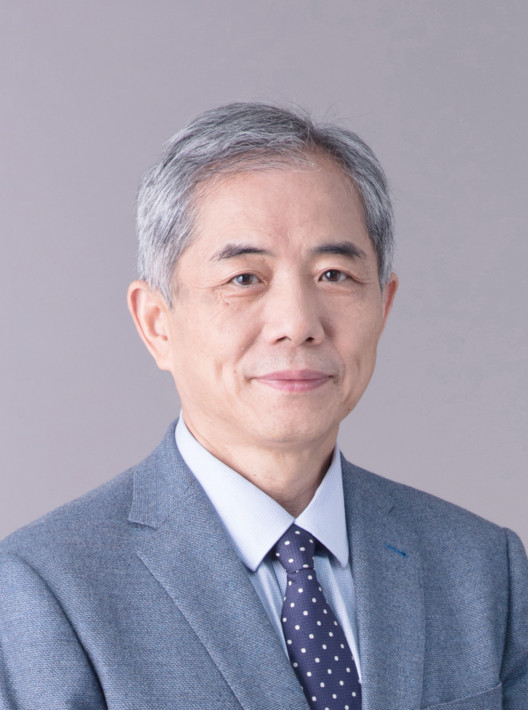
Zhuang Weimin
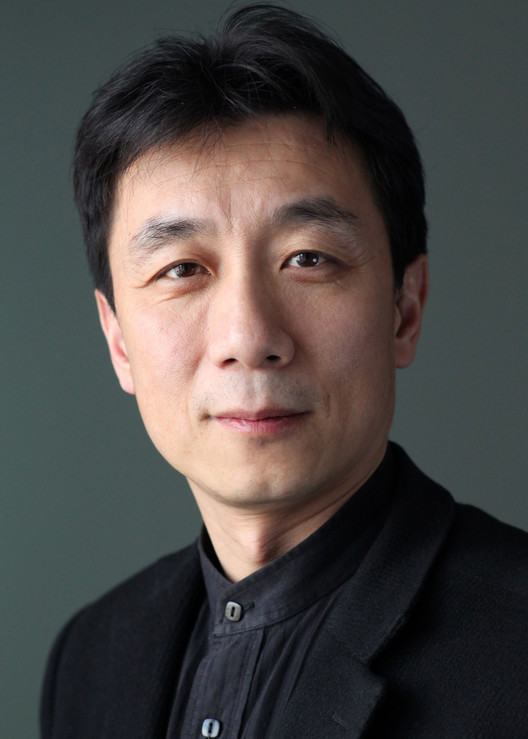
Dean, Professor, and Doctoral Advisor at the School of Architecture, Tsinghua University; President and Chief Architect of the Architectural Design and Research Institute of Tsinghua University (THAD). He is a National Engineering Survey and Design Master, a Class 1 Registered Architect in China, and a Registered Consultant. He also serves as Vice President of the Architectural Society of China, Convenor of the Discipline Review Group of the Academic Degrees Committee of the State Council, Council Member of the International Union of Architects (UIA), Co-Chair of the UIA Professional Practice Commission, and Secretary-General on duty of the APEC Architect Central Council.
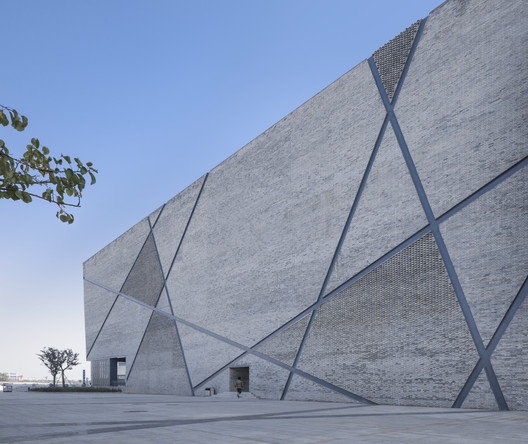
He is the author of several monographs, including *Post-Occupancy Evaluation in China*, *Architectural Programming and Design*, *Introduction to Architectural Programming*, *Ecological Strategies in Architectural Design*, *UIA Accord on Recommended International Standards of Professional Practice in Architecture*, and *Zongshan in Tibet*, and has published over 100 academic papers. His project, *Architectural Programming Theory, Methods, and Key Engineering Applications*, won the First Class Science and Technology Progress Award from the Ministry of Education in 2018. He has led the design of major projects, including the renovation of the National Art Museum of China, the Swimming and Diving Hall for the World University Games, the National Shooting Range, Clay Target Field, and Judo and Taekwondo Gymnasium for the 2008 Beijing Olympics, the Huashan Visitor Center, the China International Exhibition Center, and the State Grid Electric Power Technology Museum. The Huashan Visitor Center won the ARCASIA Award for Architecture 2014 Honorable Mention; the Chengdu Jinsha Site Museum was nominated for the 2014 FIDIC Project Award; and he won the RIBA "Diverse City" Design Competition Award in 2004. Additionally, the State Grid Electric Power Technology Museum was nominated for the 2017 FIDIC Project Award. His design works have received numerous national gold, silver, and bronze awards, provincial and ministerial outstanding design awards, and Gold and Silver Awards for Architectural Creation from the Architectural Society of China.
.jpg?1539684383)
.jpg?1539684543)
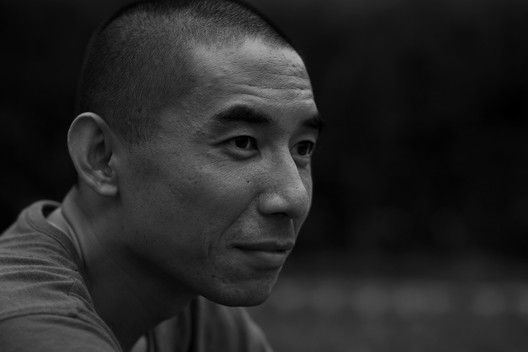
Zhang Li
Professor, Doctoral Advisor, and Associate Dean of the School of Architecture, Tsinghua University; Editor-in-Chief of *World Architecture*; Principal of Atelier TeamMinus; Board Member of the Architectural Society of China; and Deputy Chief Architect of the Architectural Design and Research Institute of Tsinghua University (THAD). His research focuses on the interaction between architectural space and the human body, aiming for contemporary interpretations of Eastern spatial philosophy while advocating for "soft sustainability" and active health spaces. His key international academic appointments include Visiting Professor at the Polytechnic University of Turin (2017), International Practice Professor at the Syracuse University School of Architecture (2012), and Professor for the New Asian Architecture Masterclass at the National University of Singapore (2010).
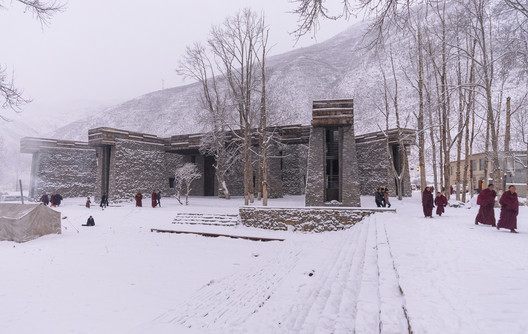
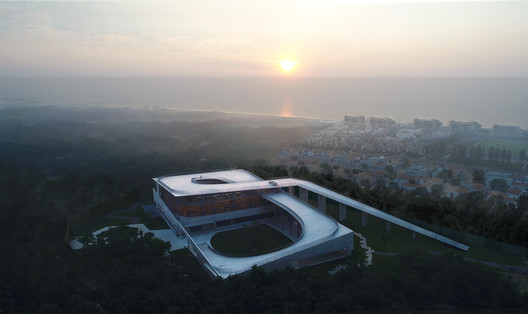
From 2014 to 2015, Zhang served as the Director of Venue Planning and Sustainability for the Beijing 2022 Olympic Winter Games Bid Committee, delivering keynote presentations to the International Olympic Committee in Beijing, Lausanne, and Kuala Lumpur. Since 2016, Zhang has been leading the planning and design efforts for the Beijing 2022 Winter Olympics as the head of the Chinese design team for the Zhangjiakou Zone and the Chief Planner for the Olympic-related planning of Chongli. Key works include: Aranya Qixing Youth Camp (2015–2017); Beijing Nanluoguxiang Visitor Center and "Zuoyou Times" Renovation (2014–2015); Yushu Jianamani Visitor Center (2010–2013); Ningbo Industrial Design District & Hefeng Creative Plaza (2008–2012); "The Roof Garden of the China Pavilion" (New Nine-Province Plateau) and Regional Pavilions at the Shanghai Expo (2007–2010); Beijing Main Venue for the 7th China Flower Expo (2007–2009); and the Jinchang Cultural Center (2003–2008), among others. Major awards include: the Zumtobel Group Award for Young Practice (2017), the Italian ArchMarathon Award (2014), the British AR+D Award for Emerging Architecture (2013), shortlist for the Exhibition Category at the World Architecture Festival in Singapore (2013), the Gold Award for Architectural Creation from the Architectural Society of China (2014), and First Prize in the Rotterdam International Architecture Biennale Design Competition (2007).
This article was written by Winnie Wu. The translation is powered by AI.
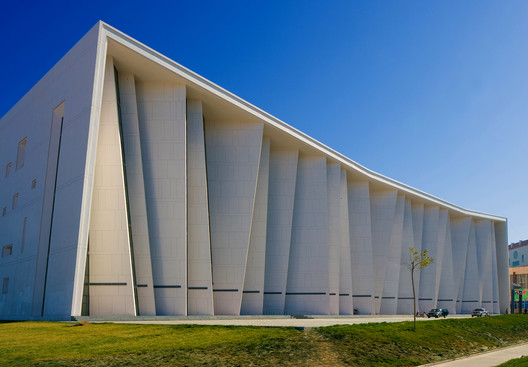


.jpg?1539684543 "Listen to Academicians Share Their Insights on Architecture! Registration is Now Open for the 60th Anniversary of the Tsinghua Architectural Design and Research Institute & the 2018 Tsinghua Design Academic Week!")


.jpg?1539684383 "Listen to Academicians Share Their Insights on Architecture! Registration is Now Open for the 60th Anniversary of the Tsinghua Architectural Design and Research Institute & the 2018 Tsinghua Design Academic Week!")