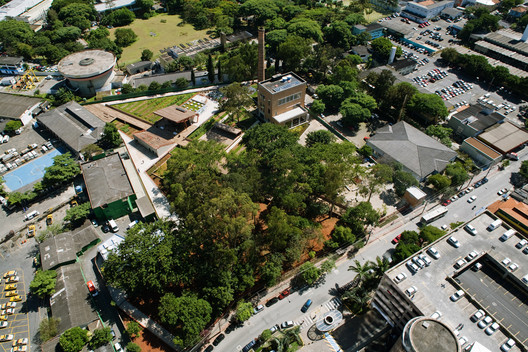
Today, it is estimated that in Brazil alone, 30 million tons of waste are deposited annually in landfills, with São Paulo alone sending 14,000 tons of solid waste to these sites every day. [1] Unsurprisingly, landfills occupy vast tracts of land that continue to expand, posing a critical challenge for nearly every city. But what can be done once landfills reach capacity and close? Is it possible to breathe new life into these mountains of waste? What are the possibilities and necessary precautions?
Initiatives have been transforming previously degraded landscapes, paving the way for the establishment of parks and plazas. This process requires a collaborative effort between professionals and local communities, as it demands extensive long-term research on the site—both before and after the transformation.
According to a study conducted in 2012 by the Faculty of Architecture and Urbanism of the University of São Paulo (FAUUSP), “the design and implementation of public parks in areas that once housed dumps or controlled landfills should only be carried out after a detailed investigation of contamination risks.” [2] The study adds that “the use of former landfills to create parks aims to offer the population more green and leisure areas, especially on the outskirts,” [3] but strict site monitoring remains essential, and “the implementation can also serve as a laboratory to identify plant species most suitable for soil cover.” [4]