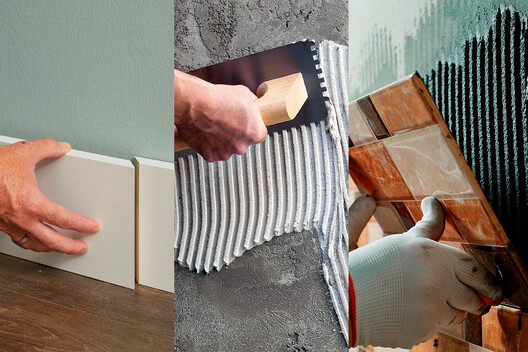
The history of building materials is a journey of innovation and adaptation to environmental demands. In their most rudimentary forms, for example, the earliest adhesives were made from natural sources, such as mixtures of tree resins, lime, and water. Later, cultures like the Egyptians refined these methods, using starch and casein (a milk protein) to bond elements in their structures. This evolution reached a milestone during the Industrial Revolution, when industrialization and the introduction of synthetic compounds laid the groundwork for the advanced products we know today. The production methods of these materials have transformed construction, optimizing processes and driving significant progress toward sustainability.
Naturally, materials have had to evolve alongside buildings and construction systems, which have also changed and improved over time, requiring a parallel adaptation. Today, elements such as wall and floor claddings vary in composition, thickness, and format, ranging from small, lightweight pieces to large, heavier formats. Within this context, Aislantes Nacionales' architectural adhesives address contemporary demands through modern and efficient bonding systems, incorporating sustainability throughout the entire process—from reducing CO₂ emissions in their operations to utilizing clean energy.


.jpg)
