In Brazil, popular festivals share a deep spatial, historical, and symbolic connection with urban public spaces, providing a unique experience of collective occupation, appropriation, and reimagining of these sites during their occurrence. These events not only utilize urban spaces in ways that differ from their daily routines, but they also constitute the cultural and social landscape of cities, offering alternative ways of perceiving them. By appropriating the streets—in their full potential and broadest sense—these festivities imbue them with new uses, which often transcend and subvert their everyday functions.
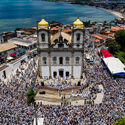
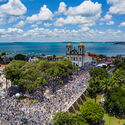
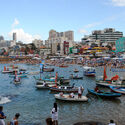
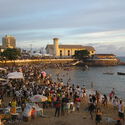

Among these diverse festivities, a cultural landscape that also includes the world-famous Brazilian Carnival, are the Lavagem do Bonfim and the Festa de Iemanjá in Salvador, the Círio de Nazaré in Belém, and Saint George's Day in Rio de Janeiro. These popular festivals craft their own ways of experiencing time, circulation, affects, and physical gestures within the urban space. According to researchers Adrián Gorelik and Fernanda Peixoto, when we approach the city as a site of experimentation—a cultural product in constant transformation—we understand that urban culture "allows for a more complex and comprehensive understanding of both the city and culture itself."