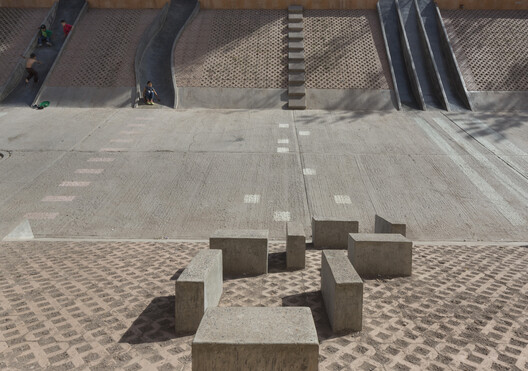
What role does street furniture play in public spaces? In response to human social behavior, the design of public spaces is part of a complex inquiry. Alongside the analysis of uses, community participation, the study of climatic and geographical conditions, and resource efficiency—among many other factors—it involves selecting appropriate urban equipment and elements to meet the needs of a large share of the population. As the Spanish architect and urban planner Oriol Bohigas Guardiola maintained, architecture is not only an art but also a direct service to society. Consequently, harmony among the multiple disciplines involved should yield tools that improve and facilitate community life. Understanding the role of street furniture—how it supports specific activities depending on its layout, dimensions, materials, and long-term lifespan—is essential to the current and future functioning of urban spaces.
The origins of street furniture date back to the Industrial Revolution. In the mid-18th century, Paris showed a growing concern for urban planning and zoning, which fostered order and the development of public space alongside street furniture. By the 19th century, lightweight public equipment began to appear in France, such as streetlights, water fountains, and tree grates. However, it was not until the 1960s that the term "street furniture" was officially coined, in response to the cluttered and unorganized accumulation of objects and structures in urban spaces. From slabs, tiles and lattices to curbs, precast elements, and street furniture, Basaltex showcases diverse products that emphasize the durability, quality, and versatility of concrete in the construction industry.


