
When the first rays of sun strike the Swedish town of Jukkasjärvi, as winter gives way to spring, this ice hotel begins to melt. Five hundred tons of water flow toward the Torne River. What were once walls, floors, and ceilings are now drops of water seeking their natural course. In this scene, which has occurred every year since 1989, everything is a contradiction: the solidity and longevity of construction versus the ephemerality and transience of ice sculpture.
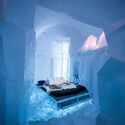
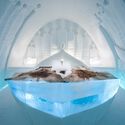
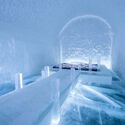


In the late 1980s, in this town located 200 km from the Arctic Circle, Yngve Bergqvist, founder of the Icehotel, drew inspiration from the Japanese tradition of ice sculpting and invited two professionals in the field to host a workshop. During the winter, they built a 60-square-meter igloo named the ARTic Hall, which served as an art gallery. In the following years, besides art exhibitions, the space also hosted religious events and film screenings. One night, a group of guests asked if they could spend the night in the ARTic Hall; equipped with reindeer skins and sleeping bags, they loved the experience. Thus, the concept of the ice hotel was born.


