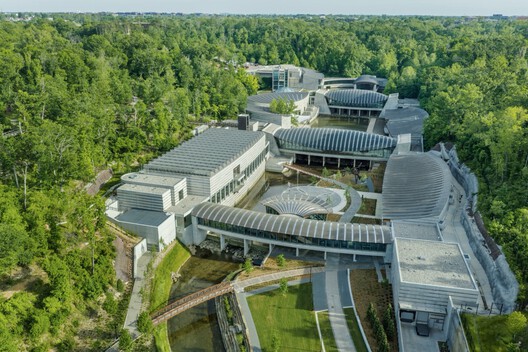
Crystal Bridges Museum of American Art in Bentonville, Arkansas, will open a major 114,000-square-foot expansion to the public on June 6–7, 2026. Designed by Safdie Architects, the project extends the museum's original architecture while introducing new galleries, educational facilities, public gathering spaces, and landscape connections across the institution's 134-acre campus. The addition represents the completion of a long-term development strategy for the museum, enhancing both its exhibition capacity and its engagement with the surrounding Ozark landscape.
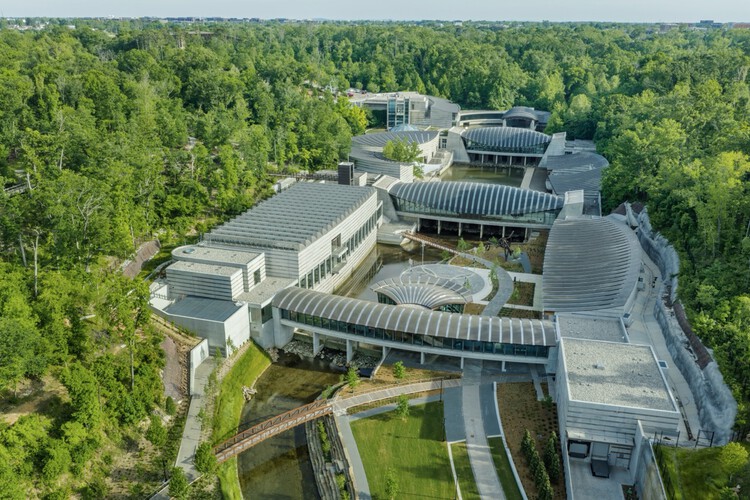
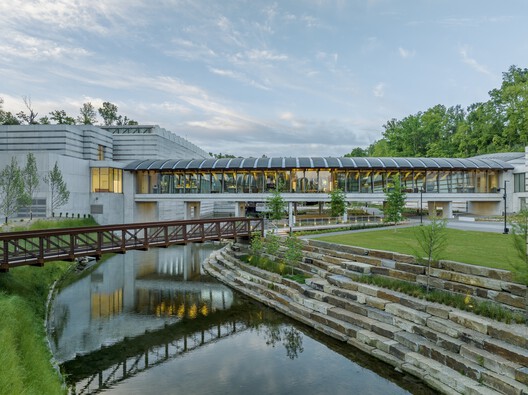
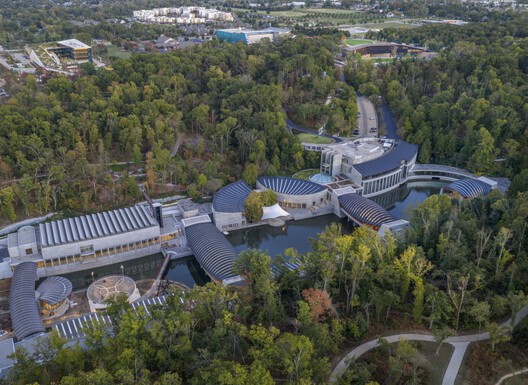
Situated within a wooded setting characterized by streams, ponds, and walking trails, the expansion builds upon Safdie Architects' original design for Crystal Bridges, which opened in 2011. The new intervention extends the museum's looped circulation system into a completed figure-eight configuration spanning two stream-fed ponds. A new north entrance provides multilevel access to the museum and grounds, while a series of new pavilions integrates exhibition, educational, and community-oriented functions into the existing campus framework.
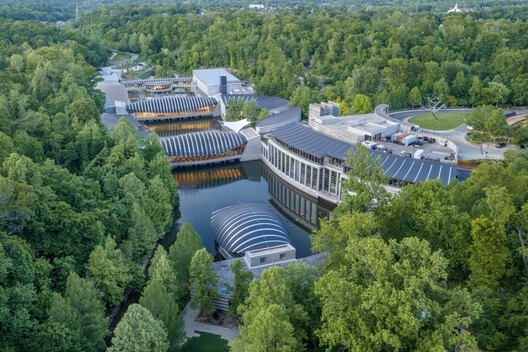
Materially and formally, the addition continues the architectural language established by the original museum. Exposed southern yellow pine glulam beams, copper cladding, sloped roof forms with deep overhangs, and expansive floor-to-ceiling glazing reference regional building traditions while framing views of the surrounding landscape. Structural systems combine reinforced architectural concrete, steel trusses, and timber construction. Sustainability measures include high-performance glazing, radiant heating and cooling systems, LED lighting, water-saving fixtures, high-efficiency mechanical systems, and partially below-grade construction to reduce thermal loads.
Related Article
Safdie Architects to Design Major Crystal Bridges ExpansionThe expansion introduces two dedicated art galleries totaling approximately 29,000 square feet. Among them is a 14,000-square-foot temporary exhibition hall equipped with a custom skylight system designed to accommodate changing exhibitions. The inaugural exhibition in the new space, Keith Haring in 3D, will explore the artist's three-dimensional works through sculptures, totems, masks, painted objects, and archival materials. The new gallery infrastructure allows the museum to host multiple temporary exhibitions simultaneously, increasing its curatorial flexibility.
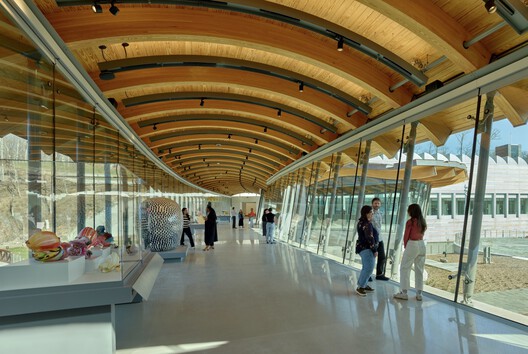
A new Contemporary American Art Gallery expands the museum's presentation of postwar and contemporary works, including installations by artists such as Yayoi Kusama and Teresita Fernández. The galleries are connected by a bridge that functions as both circulation and exhibition space, providing additional areas for displaying sculpture, ceramics, and glassworks. The bridge also houses a 40-seat café overlooking five acres of landscaped grounds, including gardens, trails, streams, and a newly constructed 15,000-square-foot pond.
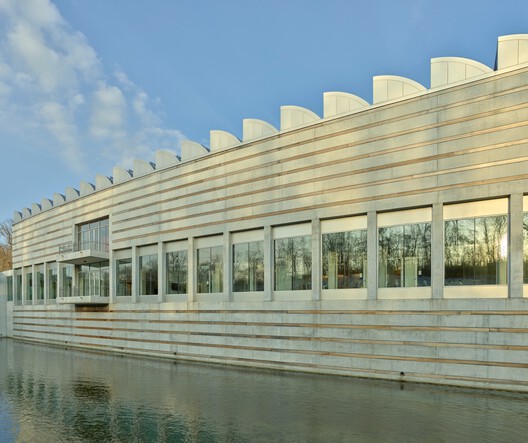
Central to the project is the Learning and Engagement Hub, a dedicated facility designed to support educational programming and creative production. The Hub includes classrooms, community gathering areas, artist-in-residence studios, a digital art studio, a ceramics studio, and flexible artmaking spaces intended to serve visitors of different ages and abilities. Additional public amenities include an event plaza with a water feature and support facilities for performances, gatherings, and outdoor programming.
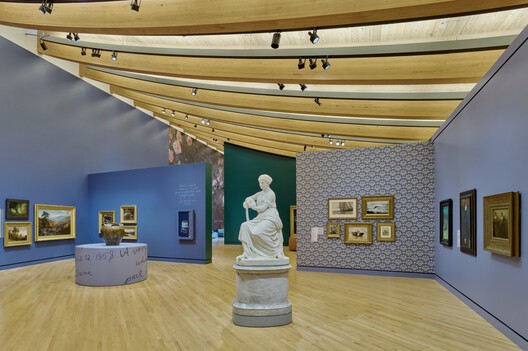
The expansion also coincides with a comprehensive reinstallation of the museum's collection. Nearly every artwork within the institution was relocated as part of a broader curatorial reorganization that reconsiders the presentation of American art through multiple perspectives and narratives. Visitors will encounter approximately 600 works from the museum's collection of more than 4,100 objects, including nearly 200 works being shown for the first time. Indigenous art is integrated throughout the galleries, supported by recent acquisitions and commissions that further expand the representation of historically underrepresented artists within the museum's collection.
Located on the Crystal Bridges Campus alongside the Heartland Whole Health Institute and the Alice L. Walton School of Medicine, the expanded museum reinforces the campus-wide ambition to connect art, architecture, education, wellness, and landscape. With the completion of the Safdie Architects-designed addition, Crystal Bridges increases its exhibition and educational capacity while strengthening the relationship between its architecture and the natural environment that has defined the institution since its founding.
In other recent museum and cultural infrastructure news, the French Ministry of Culture announced the selection of a team led by Selldorf Architects, STUDIOS Architecture, and BASE Paysagiste to deliver the "Louvre–Nouvelle Renaissance" renovation of the Musée du Louvre. Meanwhile, the first phase of the restoration of Albania's National Historical Museum in Tirana, designed by Casanova + Hernandez Architects with local partner iRI, is nearing completion. In the United States, the Brandywine Conservancy & Museum of Art unveiled plans to transform its 15-acre campus through a new building by Kengo Kuma & Associates, renovations to the existing museum, and landscape interventions by Field Operations.