

Buildner has announced the results of its competition, the Concrete Pavilion. Part of Buildner's Material Studies series, the competition invited architects and designers to explore the architectural potential of concrete through the design of an experimental pavilion. Participants were challenged to reconsider the material beyond its conventional use, investigating its spatial, structural, and sensory possibilities.
The competition called for pavilion proposals of no more than 50 m², located on a site of the participants' choosing. Designs were encouraged to engage with questions of material innovation, atmosphere, public interaction, and sustainability, while demonstrating how concrete can create meaningful architectural experiences.
This competition invited designers to rethink concrete as both a structural material and a medium for architectural expression. The pavilion was intended to demonstrate how concrete could shape space, atmosphere, and public experience while challenging conventional assumptions about the material.
Design proposals were encouraged to consider the following core principles:
- Material Innovation: Proposals explored new possibilities for concrete through experimental structures, fabrication techniques, textures, finishes, and construction systems.
- Spatial and Sensory Experience: Designs investigated light, shadow, tactility, acoustics, and movement to create compelling architectural atmospheres.
- Dialogue Between Material and Context: Participants were encouraged to establish meaningful relationships between the pavilion and its surrounding landscape, climate, or urban setting.
- Public Engagement: The pavilion functioned as an accessible public space intended to encourage interaction, gathering, and reflection.
- Sustainable Experimentation: Proposals considered environmental responsibility through material efficiency, low-carbon strategies, modularity, adaptability, or circular construction approaches.
Buildner's other ongoing competitions include: the MICROHOME 2026, with a €100,000 prize fund seeking innovations for small-scale housing; the Mujassam Watan Urban Sculpture Challenge aimed at finding innovative sculptures reflecting Saudi Arabia's heritage, modern achievements, and future ambitions; and The Next House: USA, which invites innovative ideas for a new American suburban prototype: a home that is compact yet generous, adaptable yet grounded, replicable yet sensitive to place.
Projects:
First Prize Winner
Project title: Re-Maze
Authors: Hamid Karimiantakbolagh, Saber Karamzadeh, Leila Nikjoosafa, Amirmohammad Taheri, from Austria
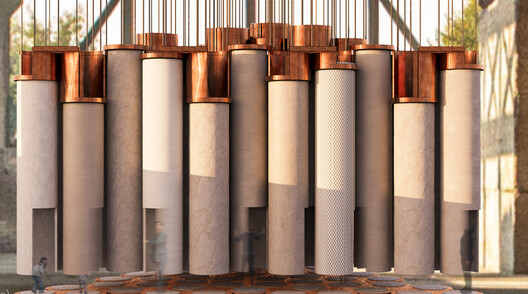
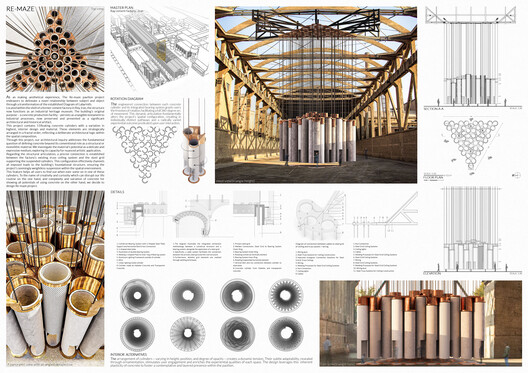
Installed within a former industrial hall, this pavilion reinterprets concrete as an atmospheric and spatial medium rather than a purely structural one. A clustered triangular arrangement of cylindrical concrete elements forms a suspended volume beneath the existing steel trusses, hovering slightly above the ground plane. Each cylinder varies in height, opacity, and internal treatment, generating a porous interior landscape of light wells, shadow gradients, and layered thresholds. Suspended cables reinforce the verticality of the intervention while referencing the industrial logic of the host structure. The composition operates simultaneously as object and environment: from afar it reads as a dense geometric formation, while at close range it dissolves into tactile surfaces, apertures, and intimate chambers. Through careful material studies and structural detailing, the project establishes a compelling dialogue between the heaviness of concrete and the perception of lightness within a reclaimed industrial context.
Second Prize Winner
Project title: Cultivating Pavilion
Author: Nuttapol Techopitch, from Thailand
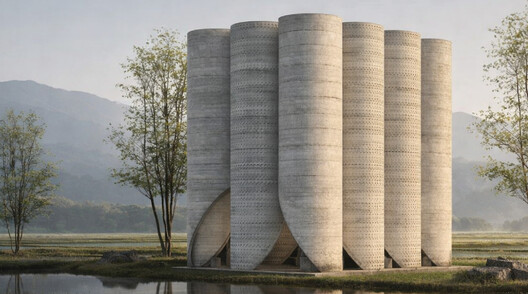
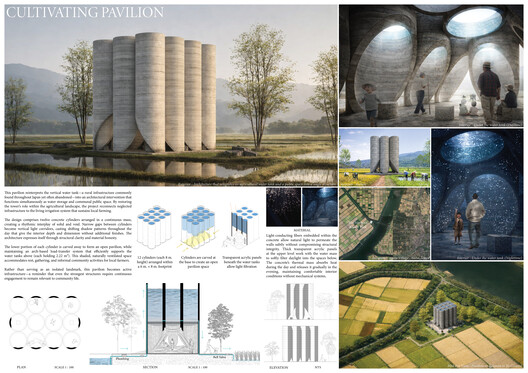
"Cultivating Pavilion" reinterprets the rural vertical water tank as a dual-purpose architectural intervention, merging agricultural infrastructure with public space. Twelve cylindrical concrete silos are arranged in a compact cluster, preserving the practical function of water storage while carving out a shaded communal space beneath the suspended tanks. Strategic voids and selective cuts transform the heavy mass into a porous spatial field, allowing light, air, and filtered views to animate the interior. Transparent acrylic inserts and light-conducting fibers introduce calibrated daylight below the water mass, producing a contemplative atmosphere shaped by thermal inertia and diffused illumination. The project successfully balances infrastructural pragmatism with spatial sensitivity, transforming an everyday rural typology into a civic and environmental experience.
3rd Prize Winner
Project title: Push Pull
Authors: Koh Noguchi, Ssu-Kuo Lo, from the United Kingdom
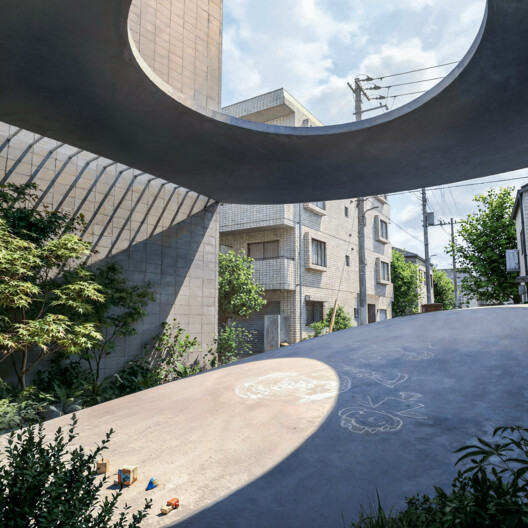
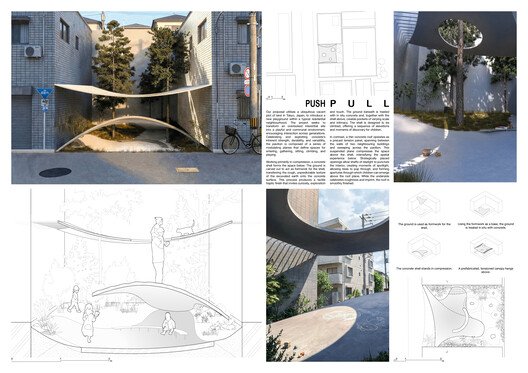
Inserted into a narrow residual gap between two existing buildings, this pavilion transforms an overlooked urban void into a sheltered micro-landscape for informal gathering and play. The intervention operates through two primary gestures: a shallow earth-formed concrete shell that shapes the ground into a soft inhabitable topography, and a thin suspended canopy stretched lightly between the flanking walls. The lower shell is cast using the excavated ground itself as formwork, producing a tactile surface that invites sitting, climbing, and lingering, while the canopy introduces shade, compression, and framed views of the sky through circular apertures. Through minimal means, the project reclaims forgotten urban space and demonstrates how concrete can generate both intimacy and spatial playfulness at a small scale.
Buildner Student Award
Project title: Folding Concrete
University: University of Pennsylvania
Authors: Yi Yang, Chun Zhou, from the United States
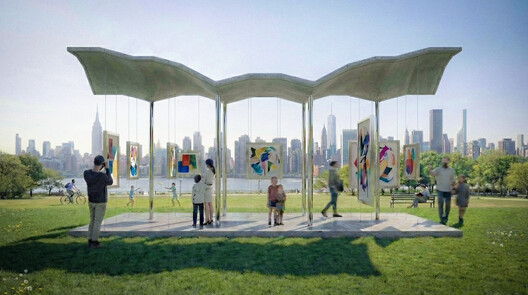
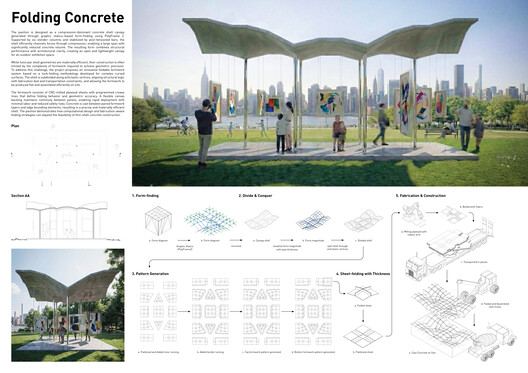
"Folding Concrete" proposes a compression-dominant concrete shell canopy generated through graphic statics and sheet-folding logic. The project reimagines thin-shell concrete construction through a system of foldable plywood formwork panels that can be robotically milled, transported in pieces, and assembled on site. Supported by slender steel columns and post-tensioned elements, the shell achieves structural efficiency with minimal thickness while maintaining strong architectural clarity. Beneath the canopy, rotating display panels create an open-air gallery condition that frames views toward the surrounding landscape and skyline. The proposal positions itself equally as a material experiment and a fabrication study, advocating for digitally informed construction workflows that expand the accessibility and feasibility of thin concrete shell architecture.
Buildner Sustainability Award
Project title: Earth Moves
Company: supermanoeuvre collaborating with apeapeape, Arup, and University of Technology Sydney
Author: Lain James Maxwell, from Australia
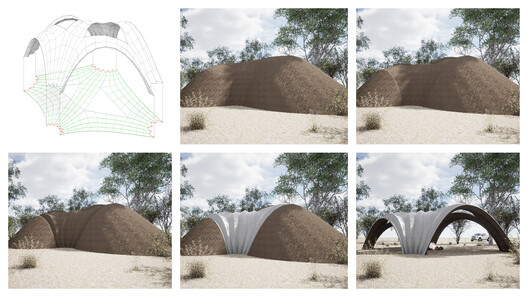
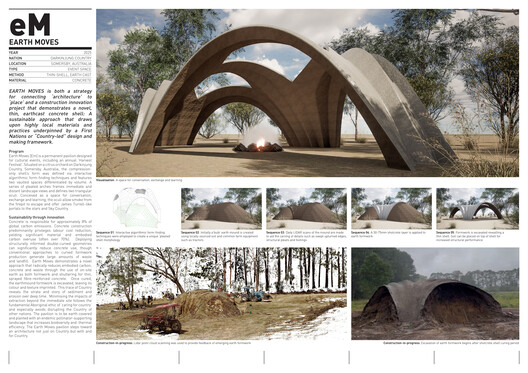
"Earth Moves (eM)" is a thin-shell earth-cast concrete pavilion embedded within the landscape of Somersby, Australia. Conceived as both an event space and cultural infrastructure, the project draws on local soil, on-site excavation, and First Nations-led principles to establish a construction methodology deeply rooted in place. Rather than relying on conventional fabricated formwork, the pavilion is shaped through an earth-mound casting process in which sculpted berms are scanned, refined, and coated with a thin shotcrete layer before excavation reveals the final shell. The resulting intersecting compression arches frame fire, sky, and gathering space while reducing material waste and reinforcing a reciprocal relationship between architecture, landscape, and material sourcing. The project presents construction itself as a form of environmental transformation and stewardship.
Highlight Projects
Project title: Elevated Nature
Author: Helena Kalčić, from Slovenia
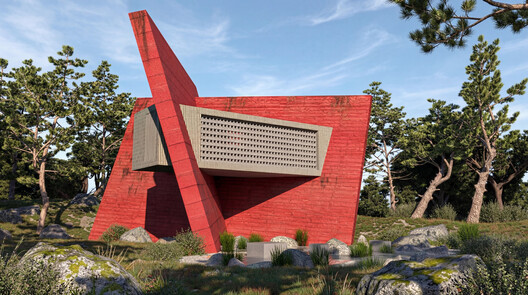
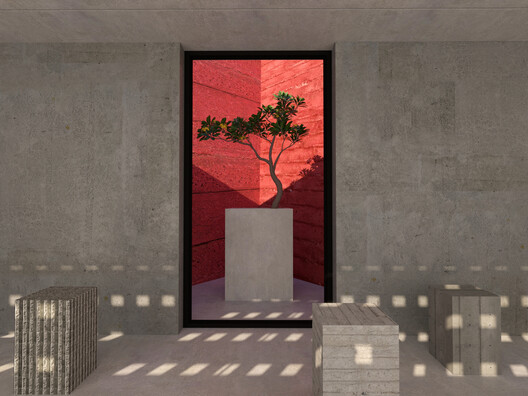
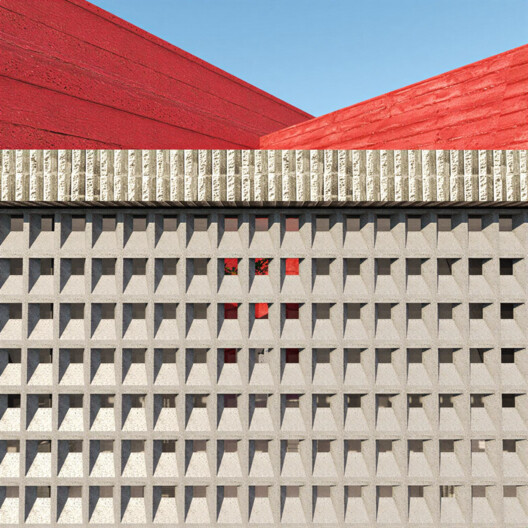
"Elevated Nature" proposes a suspended concrete gallery that frames nature as the central protagonist of the architectural experience. Defined by two vivid red inclined concrete walls supporting an elevated exhibition volume, the pavilion establishes a deliberate contrast between the artificial intensity of the intervention and the surrounding greenery. This tension heightens sensory perception and transforms movement through the project into an immersive spatial sequence. Rather than functioning solely as a container for exhibitions, the pavilion itself becomes an exhibition of concrete as material, atmosphere, and technology. Textured concrete surfaces, exposed structural walls, and carefully controlled views encourage visitors to engage with the material through touch, light, and movement. At the center of the composition, a living plant placed within a concrete trough reinforces the project's ecological narrative, positioning nature as both symbolic and spatial core. Combining monolithic in-situ construction with prefabricated low-carbon concrete elements, the proposal integrates passive environmental strategies and minimizes landscape disturbance, presenting concrete as a durable and expressive material capable of mediating between architecture, climate, and landscape.


