Global Design Forum Istanbul concluded its inaugural edition between May 13 and 16, 2026, bringing together architects, designers, urbanists, and cultural practitioners through a city-wide programme of installations, talks, screenings, and public events. Presented by London Design Festival in collaboration with People Places Ideas, the forum was developed and curated by Artistic Director Melek Zeynep Bulut and Forum Content Advisor Beatrice Galilee. Organized around the theme "Worlds in Contact," the programme featured contributions from figures including Lina Ghotmeh, Marina Tabassum, Liam Young, Tom Dixon, Lesley Lokko, Ma Yansong, Andrew Waugh, and Olaf Grawer, positioning Istanbul as a platform for interdisciplinary discussions on design and the built environment.
Over four days, the forum unfolded across a series of conversations and site-specific interventions hosted within Istanbul's historic urban fabric, including Hagia Irene, located within the Topkapı Palace complex. Rather than separating architecture from broader cultural and environmental questions, the programme positioned design as a civic and collective practice shaped by ecology, memory, identity, and public life. This perspective informed sessions such as Nothing New Under the Sun, where Ma Yansong, Andrew Waugh, Han Tümertekin, and Olaf Grawert discussed adaptive reuse, anti-demolition approaches, and the potential of working with existing material resources. Similar themes emerged in The Museum Has Left the Building, where Alper Derinboğaz, Beral Madra, Ömer Selçuk Baz, Guta Moura Guedes, and Anastasia Sinitsyna examined the museum as an evolving public framework informed by accessibility, ecology, and community participation rather than as a fixed institutional typology.
The programme also explored speculative and socially engaged perspectives on architecture and urbanism. Liam Young's Planet City, presented alongside a live performance by Forest Swords, combined film, sound, and speculative design to imagine a hyper-dense global metropolis shaped by climate migration and resource redistribution. Expanding the discussion toward material culture and contemporary practice, Design of Our Time brought together Tom Dixon and Lina Ghotmeh in a conversation on material experimentation, craft, memory, and the evolving responsibilities of contemporary practice. In another session, Lesley Lokko joined Beatrice Galilee to discuss questions of identity, representation, and the colonial legacies embedded within architectural education and production. Closing the forum, Marina Tabassum reflected on architecture's role within regions increasingly affected by climate vulnerability and displacement, reinforcing the programme's broader inquiry into the social and environmental conditions shaping contemporary architectural practice. Extending these discussions beyond talks and screenings, the forum's installations and site-specific interventions transformed locations across Istanbul into spaces for public engagement and architectural experimentation.
Related Article
Istanbul Architecture City Guide: 5 Historical and 20 Contemporary Projects to Explore in Türkiye’s Largest CityPavilion of the Moment by Waugh Thistleton Architects
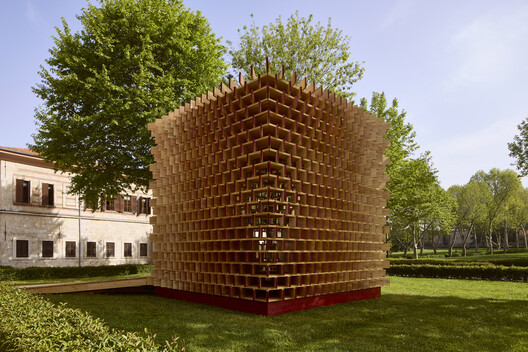
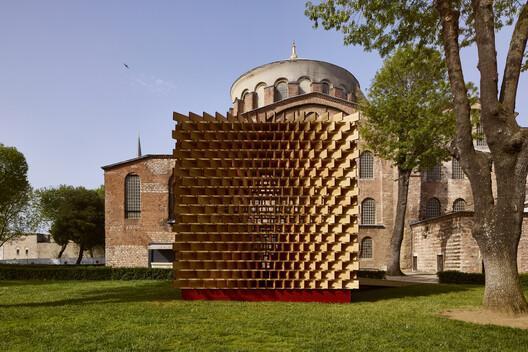
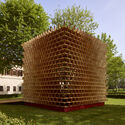
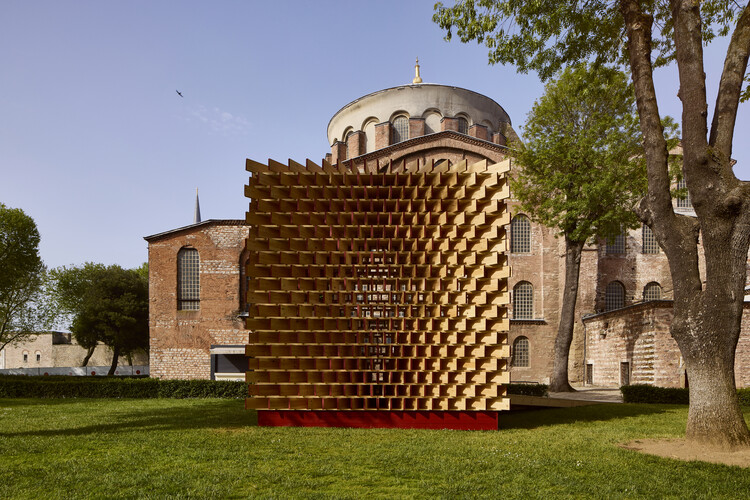
Designed by Waugh Thistleton Architects in collaboration with the National Wood Association, TORID, and People Places Ideas, Pavilion of the Moment introduced a temporary timber structure within the Topkapı Palace Complex. Constructed from slender elements of Turkish Pinus Nigra, the pavilion abstracted the geometry of the adjacent Hagia Irene through a spatial relationship between cube and sphere. The repetitive timber framework referenced traditional architectural patterns while emphasizing lightness, reversibility, and material efficiency. Conceived as a demountable intervention, the project proposed an alternative to permanence, positioning timber construction as both a spatial and environmental strategy within the context of contemporary architectural practice.
Yakîn by YAKIN Kolektif
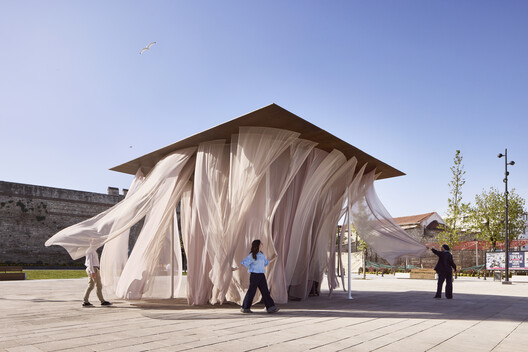
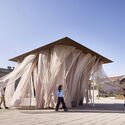
Installed within the grounds of Topkapı Palace, Yakîn by YAKIN Kolektif, Nil Aynalı, Furkan Türkyılmaz, and Muhammed Arif Aksu examined spatial perception through layered textile surfaces and movement. Composed of semi-transparent silk curtains arranged in successive thresholds, the installation guided visitors through shifting conditions of light, density, and enclosure toward a quieter central space. Drawing references from concepts of proximity and inward reflection in Islamic thought, the project framed architecture as an experiential condition shaped by atmosphere, bodily movement, and sensory transition rather than fixed physical boundaries.
Oblique Land by Salon Alper Derinboğaz
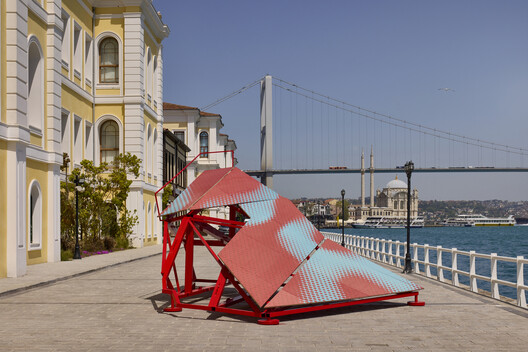
Located on the Bosphorus-facing grounds of Kabataş High School, Oblique Land by Salon Alper Derinboğaz reconsidered the architectural potential of the ground plane through a sloped inhabitable surface. Positioned between landscape intervention and public platform, the installation altered conventional movement patterns by encouraging visitors to navigate the site through shifting angles and bodily balance. Referencing Istanbul's topography and its relationship with the Bosphorus, the project aimed to transform viewing into a spatial and physical experience while simultaneously functioning as seating, gathering infrastructure, and observation point.
Wall / Tribune / Gate by Ali Derya Dostoğlu and Uğur Özer
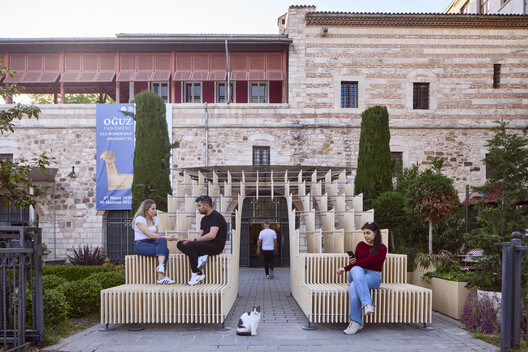
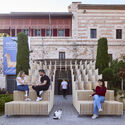
Situated along the entrance axis of the Museum of Turkish and Islamic Arts, Wall / Tribune / Gate by Ali Derya Dostoğlu and Uğur Özer drew from the archaeological traces of the ancient Hippodrome and its buried sphendone structure. The installation translated historical measurements and urban alignments into a contemporary temporary intervention that operated simultaneously as a threshold, a seating element, and a viewing platform. Slightly elevated from the ground plane, the structure reframed perspectives toward İbrahim Paşa Palace while reactivating the site's historical associations with spectatorship, movement, and civic gathering through a restrained architectural language.
The Red Room by NUN Architecture and People Places Ideas
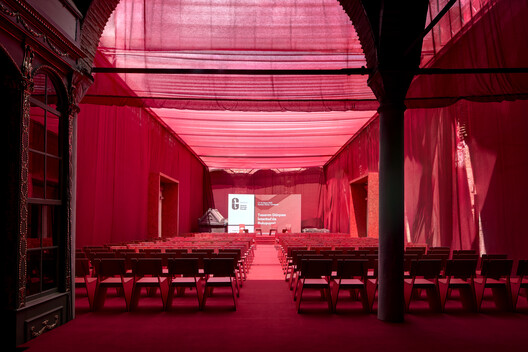
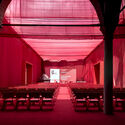
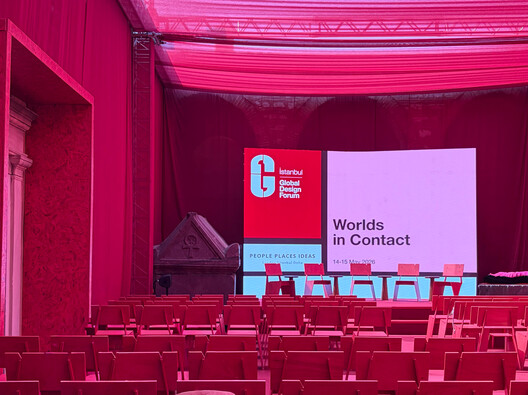
Installed within the courtyard of Hagia Irene, The Red Room by NUN Architecture and People Places Ideas transformed the historic setting through a monochromatic spatial intervention composed of layered translucent red tulle. The installation filtered natural daylight into saturated tones that altered depth perception and atmospheric conditions within the stone structure. Referencing the warm red and ochre hues associated with Istanbul's timber houses and waterfront residences, the project established a visual dialogue between Byzantine architecture and later domestic urban typologies. Through material transparency, colour, and light, the intervention temporarily redefined the courtyard as an immersive sensory environment rather than a purely historical monument.
In other news from the global architecture and cultural calendar, the World Urban Forum 13 has started in Baku, where it will continue through 22 May 2026 under the theme Housing the World: Safe and Resilient Cities and Communities, bringing together policymakers, planners, and design professionals to address the future of urban living. In Venice, the 2026 Art Biennale inaugurated on 9 May and will remain on view until 22 November across the Giardini della Biennale, the Arsenale, and venues throughout the city. Meanwhile, the UIA World Congress of Architects 2026 Barcelona has released its full programme ahead of its upcoming edition taking place from 28 June to 2 July 2026, outlining a broad agenda of lectures, debates, exhibitions, and public events centered on the future of architecture and urban practice.