

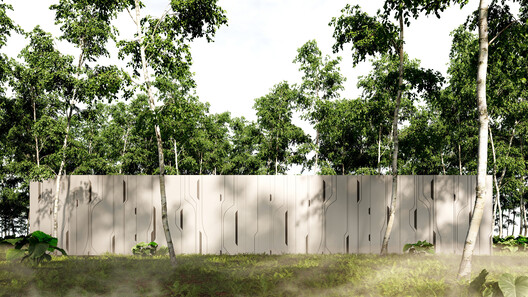
Qbiss Notch, a new design edition developed by Pininfarina for Trimo's Qbiss façade system, has received the Red Dot Design Award. Based on Trimo's Qbiss façade technology, the project introduces vertically installed modular Qbiss panels, an alphabet of engraved Glyphs, and Notches with integrated lighting. Together, these elements allow designers to create distinctive façade compositions. Despite its visual flexibility, the system is designed around the efficiency and precision of prefabricated construction.
A Design Recognition Rooted in Architectural Value
The Red Dot Design Award recognizes projects that demonstrate design quality, innovation, and relevance. Qbiss Notch was recognized for its approach to façade design, combining architectural expression, usability, and prefabricated construction within a single modular system. Prefabricated construction is becoming increasingly common in contemporary architecture, but efficiency alone is no longer enough. Buildings are also expected to communicate identity, character, and a sense of place.
Using Trimo's Qbiss prefabricated metal façade panels with mineral wool insulation as a foundation, Qbiss Notch introduces a new architectural system. The design combines pattern, light, and modular composition within a single architectural system. Created in collaboration with Pininfarina, the concept takes inspiration from the vertical rhythm of birch forests. This natural reference is translated into a modular façade language that can be adapted across different projects and scales. Rather than being added as decorative elements, pattern and light are integrated directly into the façade system itself.
Identity, Pattern, and Light in a Modular Façade System
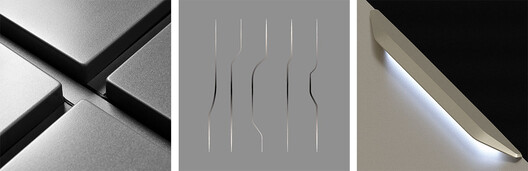
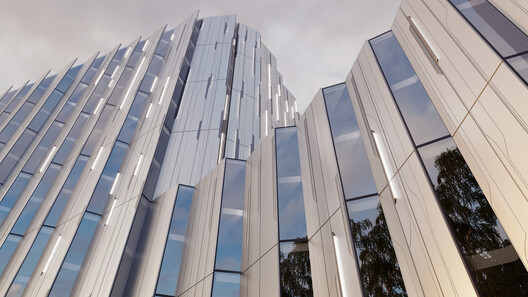
Qbiss Notch is structured around three fundamental components: vertically installed Qbiss panels, engraved curves known as Glyphs, and modular Notch lighting elements. Together, these elements create façades defined by vertical rhythm, the softening of the treated surface, and integrated light.
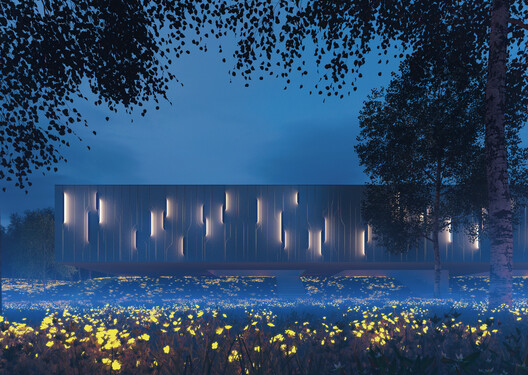
The engraved curves of the Alphabet of Glyphs form part of the system's graphic language and can be mirrored, rotated, or repositioned to create different façade compositions. This flexibility allows designers to develop project-specific identities while working within a consistent modular system. The aluminum Notch elements have integrated LED lighting and highlight the system's vertical rhythm. During the evening, the lighting gives the façade a different visual character and extends its architectural presence beyond daylight conditions.
From Concept to Execution
Beyond its visual language, Qbiss Notch is designed to support designers throughout the planning and execution process. Dedicated design tools help adapt façade compositions across different project scales and contexts. At the same time, the system maintains the flexibility of modular design together with the efficiency and precision of prefabricated construction.
In recognizing Qbiss Notch, the Red Dot Design Award points to a shift in façade design. Facades are no longer just technical envelopes. They are expected to define the building's identity. Prefabricated systems must now combine performance with architectural expression. By integrating pattern, light, and modularity into a single system, Qbiss Notch demonstrates how prefabricated construction can support both efficiency and architectural character.
To explore the system in more detail, including technical documentation and design tools, visit Trimo's official Qbiss Notch product page.


