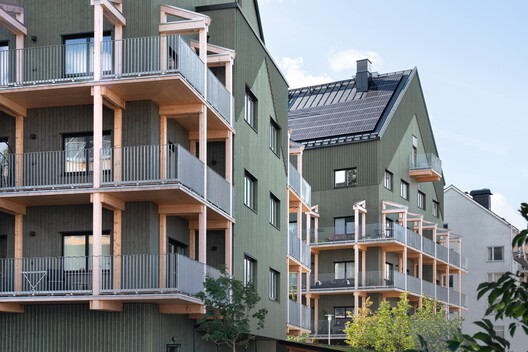
Recent years have seen a shifting paradigm in multi-family residential architecture, as more and more new projects are being built with engineered wood, specifically Cross-Laminated Timber (CLT) and glued-laminated timber (glulam). Because timber is lightweight, these systems can reduce dead load and ease foundation demands, which is especially useful on sites with limited bearing capacity or over existing infrastructure. From a sustainability standpoint, timber can store carbon over the life of the building and often reduces embodied carbon compared with conventional concrete-and-steel systems. In fire design, large timber members can be engineered to char at a predictable rate, allowing the structural core to remain protected for a defined period when detailed appropriately.
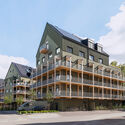
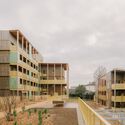
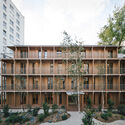
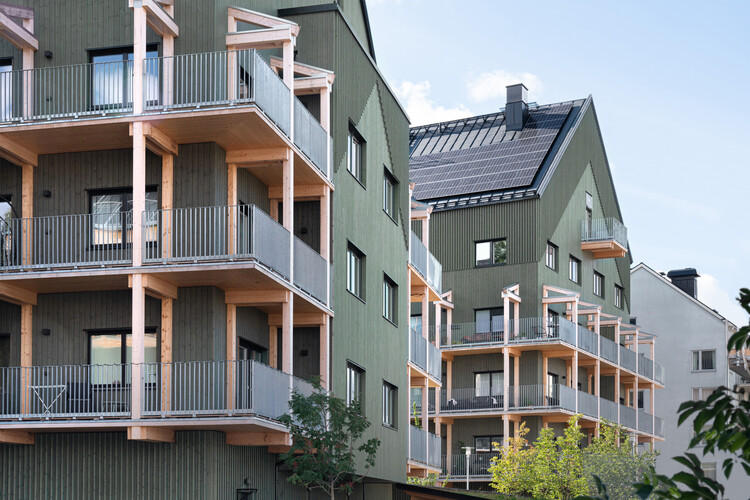
Across all five projects in this collection, the choice of a wooden structure seems to fundamentally shape their architectural layout, demanding a modular design that prioritizes long-term weather protection and specialized structural adaptations. Because engineered wood construction relies on a factory-prefabricated grid of columns, beams, or panels, these buildings feature clear, repetitive structural modules and regular window rhythms. Furthermore, because wood is vulnerable to moisture degradation and moves dynamically depending on its moisture content, all five designs are characterized by protective envelope detailing. This includes deep projecting balconies, specialized end-grain sealants, or engineered joinery tolerances that allow the wood to breathe, dry, or resist weathering while maintaining the tight thermal seals required for high-performance energy efficiency.


