Large factories are being transformed into museums, former administrative buildings are becoming co-working spaces, and even churches are being converted into homes. In this century, the rise of adaptive reuse in cities reflects a growing interest in preserving the memory and identity of historic structures. At the same time, it introduces a contemporary perspective that responds to the urgent needs of today's urban landscape.
In Gabrovo, Bulgaria, the Municipality invites architects to design the Christo and Jeanne-Claude Center for Contemporary Art by transforming, adapting, and upgrading the former Textile Technical School and its adjacent site. EU co-financing, a disclosed budget, a designated jury, and a two-phase structure frame this competition, reflecting the spirit of Christo and Jeanne-Claude's artistic practice: bold, accessible artistic creation. More than a commission for a cultural building, it calls for a design response that understands the specific character of their work, adding a curatorial dimension to what might otherwise be a straightforward adaptive reuse project.
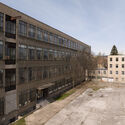
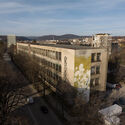
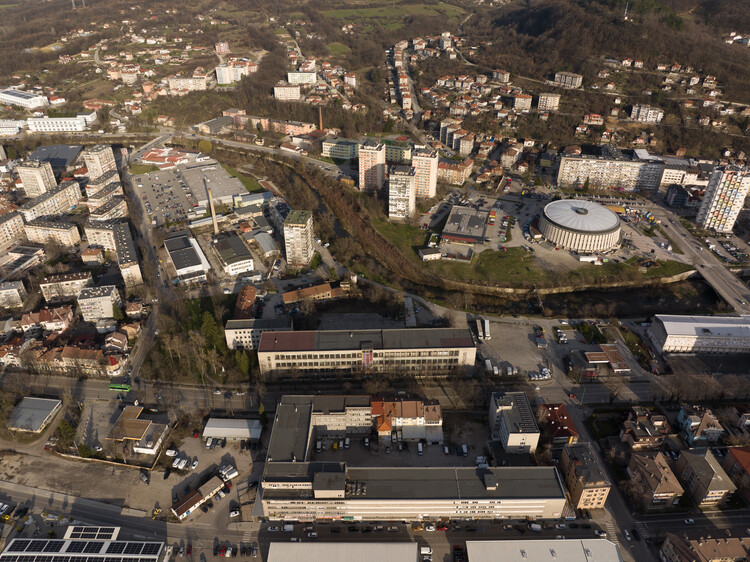
Like any significant architectural concept, the site for the Christo and Jeanne-Claude Center for Contemporary Art carries its own history. Gabrovo is located in the Yantra River valley on the northern slopes of the Balkan Mountains. Historically, the city established itself as a major industrial center and, due to its strategic location, became an important transport hub, crossed by one of Bulgaria's main north-south routes.
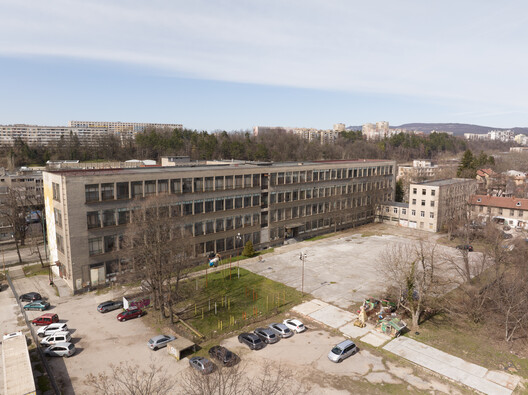
Gabrovo's textile industry has a particularly deep history. By the early 20th century, many factories had opened, with much of the city's production dedicated to the textile sector. By 1930, the city already had more than 200 factories. Christo's family was connected to the industry through the production of textile chemicals. Following 1945, the state accelerated industrial development, leading to a high demand for qualified technicians.
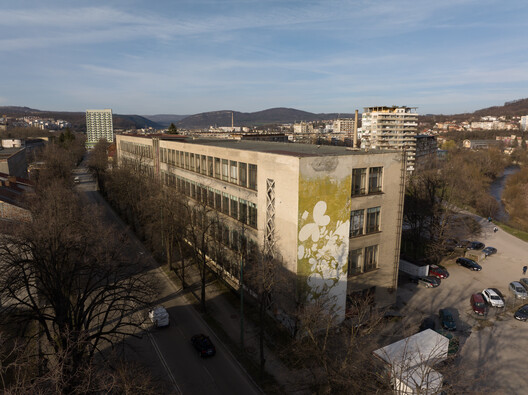
Consequently, the Ministry of Industry established a knitwear school, which initially held classes at the Technical School, known as the Technical College of Mechanical Engineering. In 1961, new buildings for the technical school were commissioned; however, student enrollment declined during the 1990s. By 2008, the Vocational High School of Textiles and Fashion Design had been closed by decision of the Ministry of Education and Science, and by the end of 2022, the Council of Ministers transferred the building's ownership to the Municipality of Gabrovo free of charge to establish the Christo and Jeanne-Claude Center. The Regions in Growth Program 2021–2027 supports the adaptive reuse and reconstruction of the building. The cost of the refurbishment, interiors and exhibitions is €11,261,103, excluding VAT.
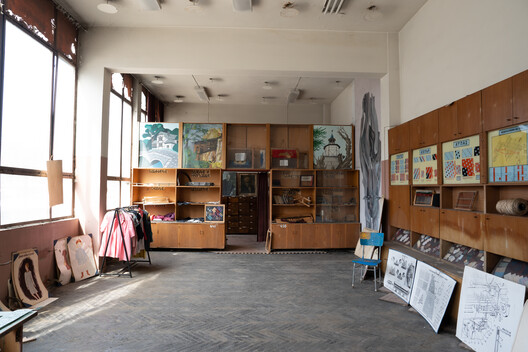
The idea for the Center has been decades in the making. In 1992, the local newspaper 100 vesti suggested a permanent exhibition dedicated to Christo and Jeanne-Claude's projects. In 2008, the NGO Our Greater Gabrovo Association, led by the newspaper's editor, proposed building an art center in the city bearing the artists' names. The City Council ultimately approved the initiative on June 19 of that same year. In an agreement signed by Christo and his brothers in 2013, the Municipality of Gabrovo received a donation of 50 posters and committed to creating the Center. In 2017, two exhibitions were organized at the Gabrovo Museum of Humor: Christo and Jeanne-Claude. Projects and Born in Gabrovo. Due to strong public interest, both exhibitions remained open for an entire year and became a major catalyst for the development of the Christo and Jeanne-Claude Center.
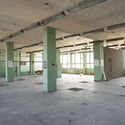
After researching and evaluating several possibilities for repurposing an existing building or constructing a new one, the project team, the Municipality of Gabrovo, and the City Council decided to locate the Center within the former Textile Vocational School, which closed in 2009. The building featured spacious workshops with high ceilings that could be transformed into exhibition halls and production spaces. But it also reflected a connection between the school's primary discipline—textiles—and the work of Christo and Jeanne-Claude.
"Making a Center named after Christo and Jeanne-Claude seems like an oxymoron, since their work seems to defy the very notion of a center. Their work was always eccentric, consisting of projects created for different places all over the world and always for a limited time-span. But it is precisely because of the fleeting nature of their work that such a center is so necessary today, in order to make sure that its ingenious spirit can continue to impregnate the minds of artists, architects, and the general public."—Andreas Ruby, jury member
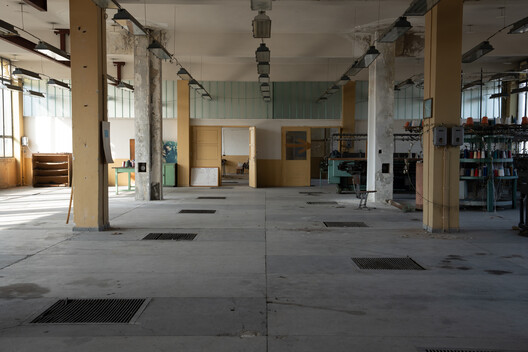
The pair's legacy extends beyond traditional art into engineering, environmental issues, urbanism, entrepreneurship, and the complex art of negotiation. The Center aims to attract not only art enthusiasts but also those inspired by the way Christo and Jeanne-Claude conceived, prepared, negotiated, coordinated, executed, and ultimately realized their projects. Throughout their careers, Christo and Jeanne-Claude consistently negotiated with public authorities and private entities alike. Navigating between functions, users, spaces, and funding, negotiation emerges as a guiding principle for the proposed intervention, alongside the integration of the principles and values of the New European Bauhaus. These include sustainability measures addressing climate change, reducing pollution, and increasing biodiversity; involvement supporting diversity and accessibility; and an emphasis on the quality of the experience, linked to aesthetics and identity.
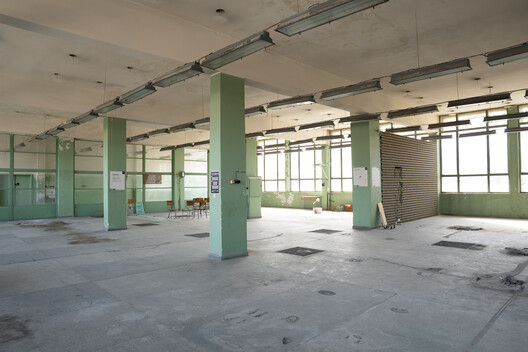
However, the project for the Center represents more than a simple architectural reconstruction for the Gabrovo community. It reflects the creation of a new cultural identity that respects the past, serves the present, and anticipates the future as a living cultural and creative organism. Working alongside artists and curators from around the world, local educational, artistic, and business communities, as well as national and international institutions, the project team has worked to identify the project's needs, interests, and partners. To date, more than 50 focus groups, debates, and meetings have been held to ensure a participatory process. In addition, a public art program took place in the area to help reintegrate it into the urban fabric, and a discussion dedicated to the building's transformation was even organized as part of the Bulgarian Pavilion program at the 2023 Venice Architecture Biennale.
"Having met Christo and Jeanne-Claude on numerous occasions since 2000, I came to recognize their deep appreciation for their community of friends, collaborators, and artists. The teams they worked with embodied the extended family of Christo and Jeanne-Claude. A substantial part of Christo and Jeanne-Claude's work lay in the process of materializing their art installations with all the approvals, engineering, trials, logistics, etc. These efforts were made possible only through a tightly knit and deeply committed team. Observing this family of people around Christo working together made clear to me that fostering and supporting communities of artists and creative people was an essential and valued aspect of Christo and Jeanne-Claude's work."—Erich Schoenenberger, jury member
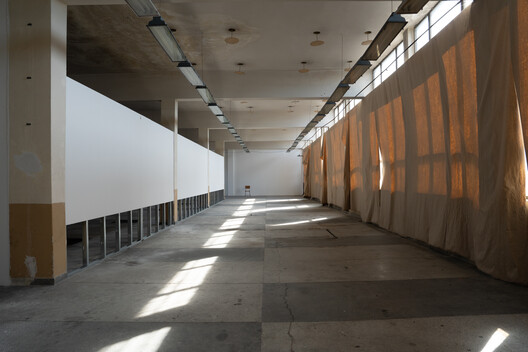
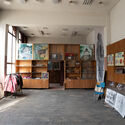
Once the building was acquired by the Municipality, artists from Gabrovo established their studios there, and the space was later informally inaugurated through exhibitions, screenings, talks, workshops, open studios, a pop-up shop featuring artists' editions, and parties. Since then, exhibitions, performances, and events have continued to take place, serving, among other purposes, to test several of the Center's future functions.
The invitation to participate in the competition for the Christo and Jeanne-Claude Center for Contemporary Art involves transforming and adapting the former school building into a space dedicated to contemporary art, public art, and textiles. Structured in two phases, the first consists of a design competition for a conceptual proposal focused on the building itself and its adjacent grounds. Submitted proposals will be evaluated by an international jury composed of Andreas Ruby, Aneta Vasileva, Boštjan Vuga, Erich Schoenenberger, Lutsia Dekova, Martin Hristov, Vasıf Kortun, and Hristo Stankushev. The top five ranked entries will each receive prizes of €20,000.
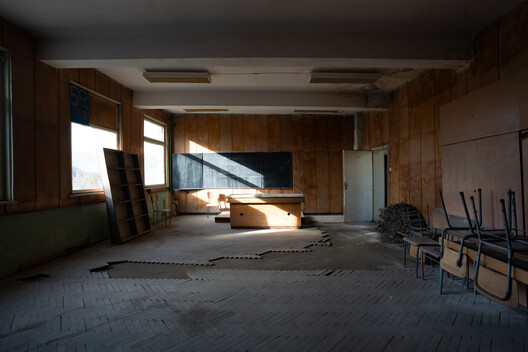
The second phase consists of the conceptual design stage, which the Municipality may award to the five highest-ranked candidates from the competition. During this phase, candidates must assemble a multidisciplinary team including a lead design architect, landscape architect, engineers, exhibition designer, lighting designer, and accessibility and inclusive design consultant. This stage concludes with the signing of a design contract covering the technical and construction phases, interior design, permanent exhibitions, and author supervision.
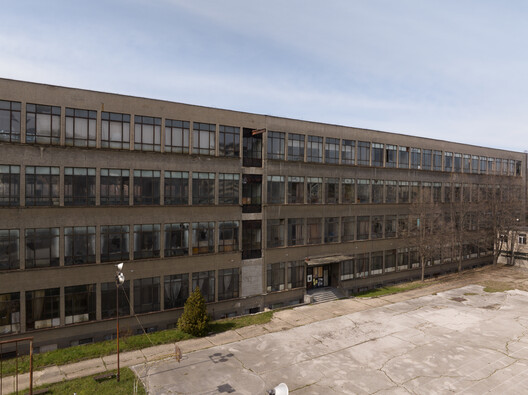
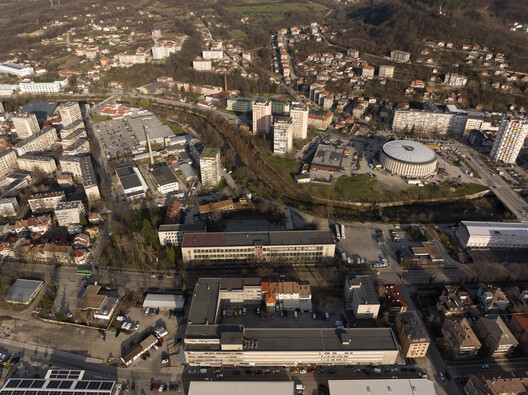
The competition scope includes several buildings and sites composed of multiple properties, ranging from the main building to the transformer substation and courtyard. Covering the main building, the small building, the enclosed corridor, and the interior courtyard, the project must envision the transformation of the entire complex into a unified architectural, functional, and urban system. Buildings and courtyard would form a shared cultural center integrated into the broader urban fabric and the Yantra River waterfront environment. The total built area of the complex is 2,737 square meters, while the total developed floor area reaches 13,330 square meters.
The Christo and Jeanne-Claude Center for Contemporary Art seeks to become an internationally recognized cultural and educational institution with significance for the identity and economy of the city and the region. Conceived as an attractive destination for Gabrovo residents and tourists alike, it also functions as a multidisciplinary production space for artists, curators, and researchers from around the world. While it contributes to the revitalization of surrounding areas, it also fosters a dynamic and sustainable cultural ecosystem in the region. The Center supports a wide variety of experiences aligned with exhibitions, events, educational programs, workshops, and other planned activities and functions.
"The Christo and Jeanne-Claude Center in Gabrovo is a place where art will be created, where young artists will work, live, and debate. That is the recipe for it to evolve naturally into a living organism. I am convinced that this will happen, and it is wonderful that it will bear the names of Christo and Jeanne-Claude."—Vladimir Yavachev, Christo's nephew and Director of Projects of the Christo and Jeanne-Claude Foundation
Preserving the memory of the building and its place within Gabrovo's industrial and educational history, the modernization of the existing structure through contemporary architectural solutions does not seek to erase its history. It exposes it to new generations through the layers, materials, structures, and artistic elements from the time of its creation. Its design embraces accessibility not merely as a regulatory requirement, but as a tool for cultural democratization, where art and culture are made physically, emotionally, and cognitively accessible. Accessibility becomes a right to participation, expression, and belonging.
For more details regarding deadlines, competition guidelines, terms and conditions, and additional information, visit the official competition website.
This publication is part of a communication activity co-funded by the European Union under Grant Agreement No. BG16FFPR003-2.006-0124-C01, Regional Development Programme 2021–2027.


