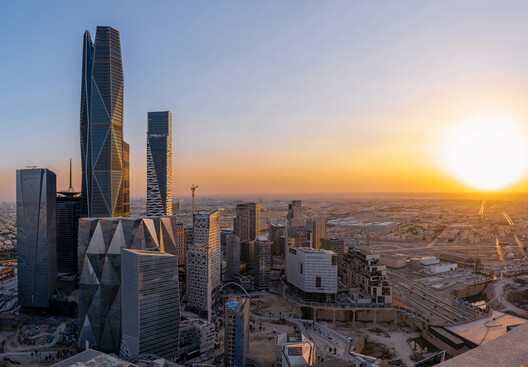
Step from the heat of Dubai into the lobby of a glass tower, and the desert seems to disappear. Outside, temperatures climb past 45 degrees Celsius; inside, the air is cold, sealed, and perfectly controlled. For decades, this contrast became the defining image of Gulf modernity. Architecture became less a negotiation with climate, and more a demonstration that climate could be overcome. Towers of reflective glass rose from the desert as symbols of arrival, projecting financial power, technological confidence, and global ambition. Beneath this urban image sat an infrastructure built on oil, cheap energy, and the continuous mechanical suppression of heat.
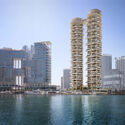
In the Gulf, modernism arrived less as a response to place than as a product of petroleum abundance. The rapid urbanization of cities like Dubai, Doha, and Abu Dhabi coincided with the expansion of oil economies that transformed the region within a few decades. Architecture carried this transformation into visible form. International-style skyscrapers, artificial islands, multilane highways, and climate-controlled interiors signaled participation in a globalized future. The skyline operated as a political and economic instrument, designed to communicate visibility and relevance on the world stage.
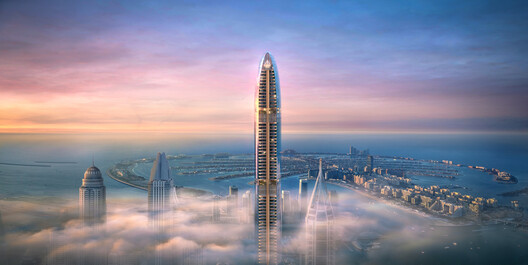
The shift extended beyond aesthetics. Petroleum reshaped the material and infrastructural logic of architecture. Cheap energy enabled buildings to rely almost entirely on air conditioning rather than passive cooling, while petrochemical products like synthetic insulation, sealants, membranes, plastics, and asphalt have allowed sealed environments to expand across the desert. Gulf urbanism increasingly operated as though environmental constraints could be bypassed through energy-intensive systems. Gulf cities became landscapes calibrated around cooling, mobility, and continuous consumption.
Related Article
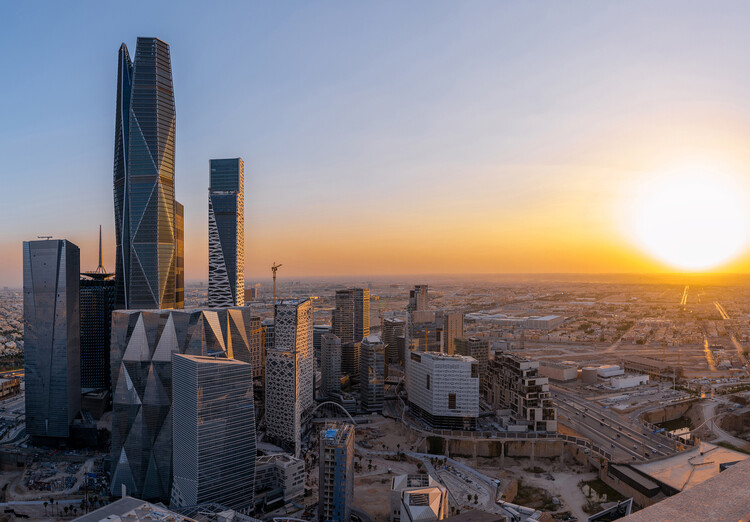
Unearthing the Ground: Architecture and the Politics of OilProjects like the Emirates Towers or the Kingdom Centre reflected this moment clearly. Their sleek curtain-wall façades belonged to a global architectural language associated with finance, corporate power, and modernization. Climatic responsiveness receded behind the demands of image-making. In the Gulf, the glass tower evolved into a preferred symbol of economic ascendance.
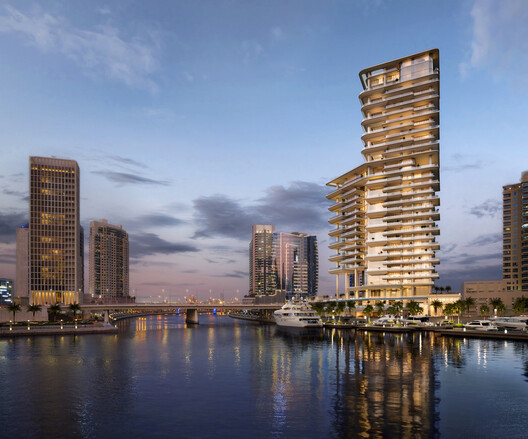
Entire urban districts soon followed the same logic. Developments such as Dubai Marina and Palm Jumeirah extended this model beyond individual buildings into urban territory. Artificial coastlines, highway networks, and high-density clusters produced environments heavily dependent on infrastructure and cooling systems. Public life increasingly shifted indoors into malls, hotels, and enclosed commercial spaces protected from extreme heat. The desert remained present; architecture increasingly insulated itself from its conditions through enclosed interiors and cooling systems.
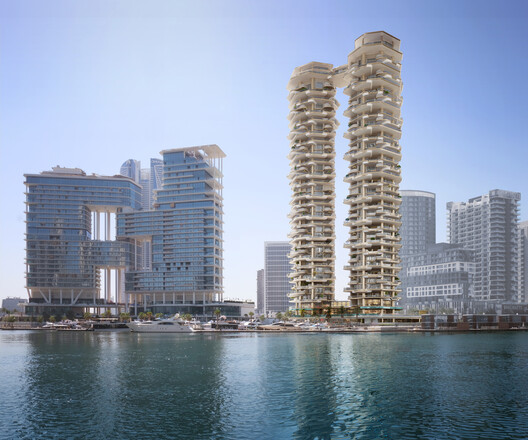
Yet the Gulf's environmental history tells a different story. Long before glass towers dominated the skyline, architecture across the region evolved through careful climatic adaptation. Traditional settlements relied on compact urban form, shaded alleys, courtyards, thick walls, and wind towers to moderate heat and maximize ventilation. These systems emerged from environmental necessity, not stylistic preference. In cities across the Gulf, architecture developed as an active negotiation with scarcity, solar exposure, and desert conditions.
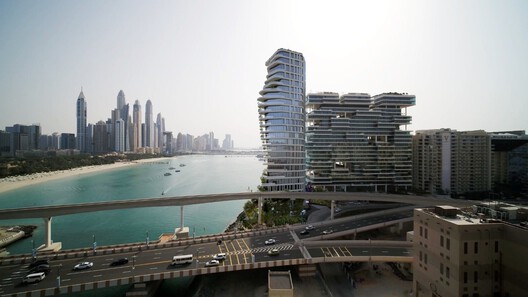
As modern urbanization accelerated, much of this environmental intelligence was initially sidelined. Mechanical cooling appeared to render climatic adaptation unnecessary. Over time, the contradictions within petroleum urbanism became harder to ignore. Glass façades performed poorly under intense solar exposure, cooling demands expanded dramatically, and sprawling urbanization intensified heat island effects. The fossil-fuel systems underpinning Gulf modernity also intensified environmental vulnerability across its cities.
Climate change sharpened these tensions further. The Gulf today faces some of the world's most extreme heat conditions, forcing governments and developers to reconsider how cities are designed. Sustainability increasingly shifted from branding language into infrastructural policy. New planning frameworks such as Abu Dhabi's Estidama system and broader net-zero ambitions across the region reflect a growing recognition that environmental performance can no longer remain secondary.
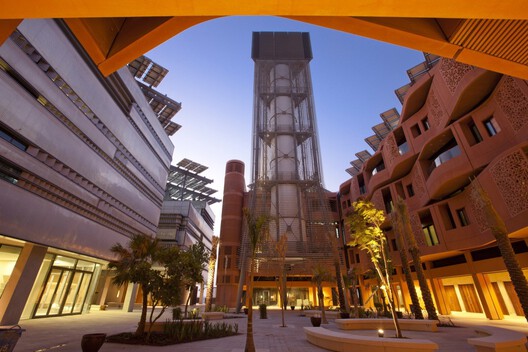
This shift is visible in projects like Masdar City, which marked one of the region's earliest large-scale attempts to rethink desert urbanism. Designed by Foster + Partners, Masdar rejected the isolated glass tower model in favor of dense shaded streets, compact planning, and passive cooling strategies inspired by traditional Arab settlements. Wind corridors, narrow urban canyons, and reduced solar exposure became central design tools. The project has since been revised substantially and remains heavily debated as the realization that Gulf urbanism could no longer depend entirely on suppressing climate through energy abundance.
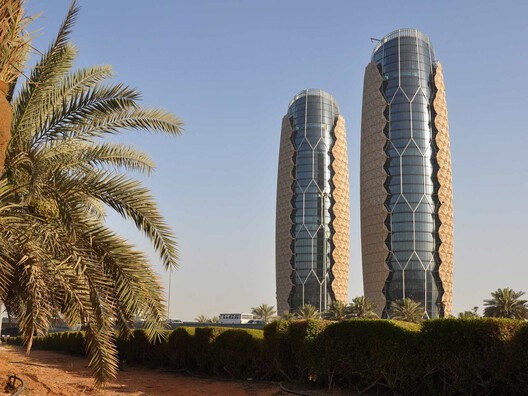
Other projects pushed this environmental reconsideration further through technological reinterpretation rather than historical revivalism. The adaptive façade of the Al Bahr Towers reimagined the traditional mashrabiya as a responsive shading system that opens and closes according to sunlight conditions. Similarly, Louvre Abu Dhabi transforms its massive dome into an environmental device, filtering light and generating shaded microclimates beneath it. In both projects, climatic performance moves back into visible space through shade, filtered light, and microclimate.
Perhaps the clearest example of this broader transition is Msheireb Downtown Doha. Rather than reproducing the isolated megaproject model, the district reintroduces density, walkability, shaded public space, and vernacular spatial principles into the center of Doha. Contemporary technologies remain present, recalibrated through climatic and vernacular spatial strategies. The district points toward a different direction for Gulf architecture which is a recalibration of its environmental assumptions.
The implications of this shift extend beyond architecture itself. The Gulf's earlier urbanization was deeply tied to petroleum infrastructures that shaped everything from mobility systems to construction technologies and territorial expansion. Today, as cities begin reconsidering environmental performance, they are also confronting the limits of the petro-urban condition that produced them. Architecture becomes one of the more visible sites through which this transition is negotiated.
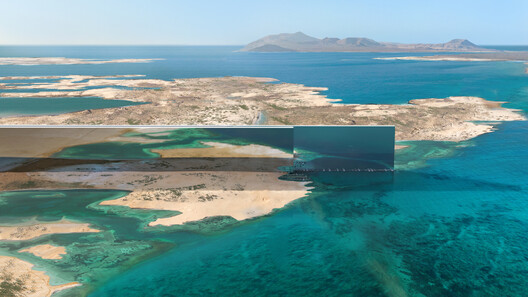
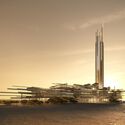
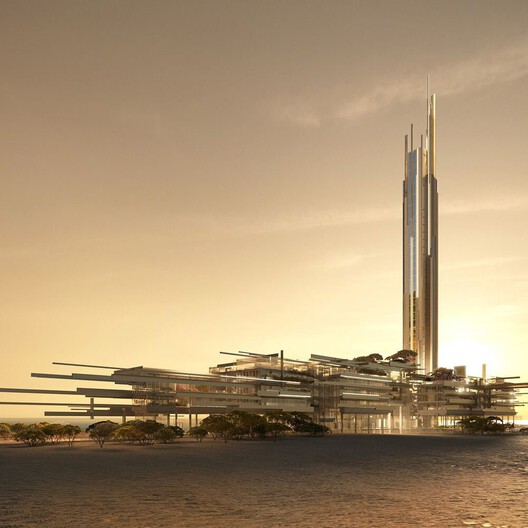
The region remains full of contradictions. Projects like NEOM and The Line continue to operate at the scale of spectacle and technological ambition that defined earlier Gulf megaprojects. Even these proposals now rely heavily on the language of sustainability, environmental efficiency, and post-oil futures. Whether these ambitions can genuinely reconcile ecological responsibility with large-scale development remains unresolved.
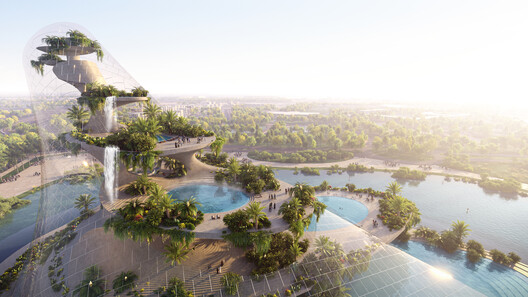
A broader shift is now visible across the region. The desert increasingly reappears as an active environmental condition architecture must engage directly to overpower through engineering and energy consumption. In this sense, the Gulf's evolving urbanism reflects more than a stylistic transition away from glass towers. The shift reaches deeper into how Gulf cities relate to climate, energy, and territory.
For decades, Gulf modernity relied on the assumption that architecture could insulate itself from environmental limits. Many of the region's more compelling projects now move in another direction, relearning how to live within desert conditions rather than escape them through mechanical separation.
This article is part of the ArchDaily Topic: 20th Century Design in Flux: A Global Reinterpretation of Architectural History. Every month we explore a topic in-depth through articles, interviews, news, and architecture projects. We invite you to learn more about our ArchDaily Topics. And, as always, at ArchDaily we welcome the contributions of our readers; if you want to submit an article or project,contact us.