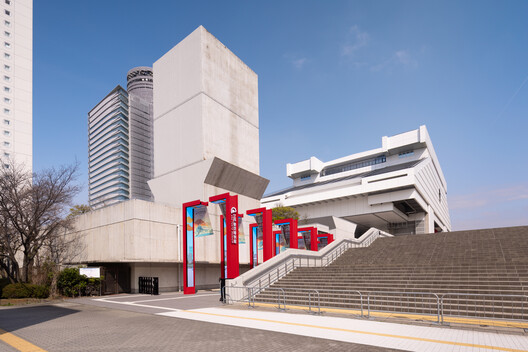
The Edo-Tokyo Museum has reopened to the public following a multi-year renovation, unveiling a series of scenographic interventions and installations designed by OMA under the direction of Shohei Shigematsu. Marking the firm's first public project in Japan, the commission forms part of the broader renewal of the museum's iconic building by Metabolist architect Kiyonori Kikutake. Originally opened in 1993 as the first museum dedicated to the history of Tokyo, the institution traces the city's evolution from the Edo period to the present day, and the new interventions aim to strengthen its relationship with contemporary audiences while preserving the identity of Kikutake's architecture.
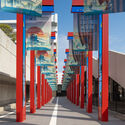
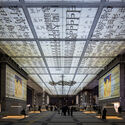
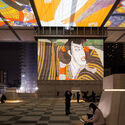
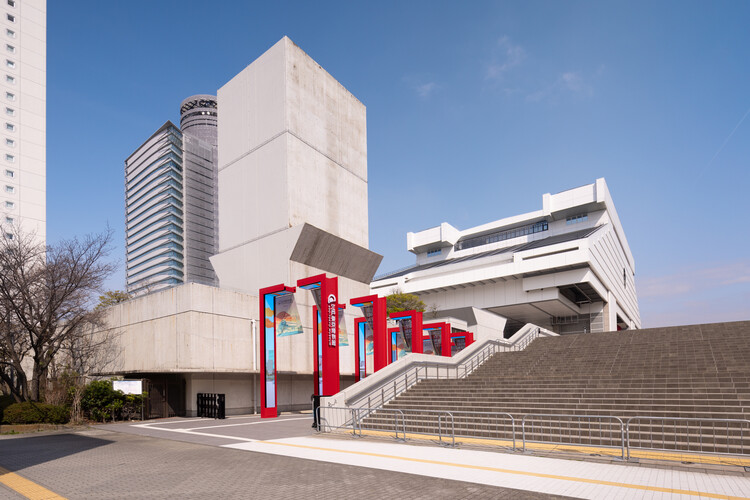
Rather than introducing significant physical alterations to the building, OMA's proposal focuses on activating underused spaces through projection, lighting, signage, and scenographic elements. The project seeks to improve accessibility, clarify circulation, and create a more visible public presence for the museum within the city. This approach extends to the entrance sequences, where new marquees and wayfinding elements respond to pedestrian movement from nearby transit lines while reinterpreting motifs connected to both the museum and Japanese architectural culture.
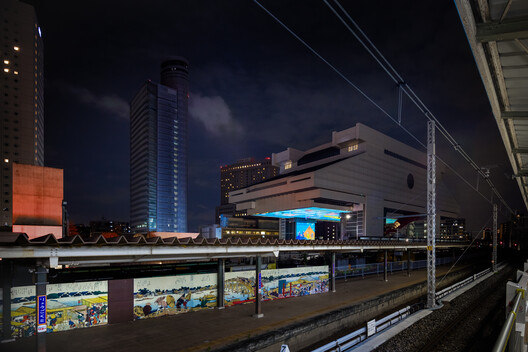
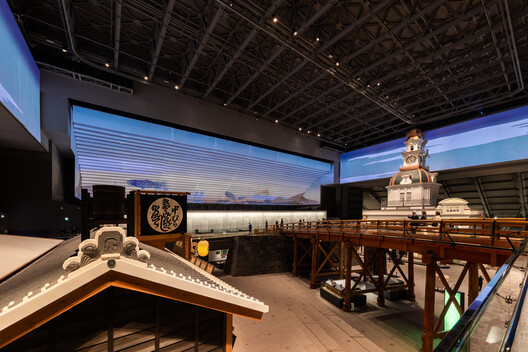
At the west entrance, visitors move through a sequence of gates inspired by traditional Japanese torii, referencing an earlier concept developed by Kikutake for the site. On the east side, a circular sign recalls the museum's logo, itself derived from the eye depicted in a historic ukiyo-e portrait. Inside the museum, the interventions continue across the sixth-floor galleries, where immersive projections have been integrated into the exhibition spaces. Panoramic moving images are projected onto curved screens and vertical louvers, surrounding life-size and scaled architectural models with changing skies and atmospheric urban scenes. By extending across walls and suspended surfaces, the projections create spatial continuity between the exhibits and their visual backdrop, transforming the galleries into environments that evoke different moments in Tokyo's history.
Related Article
"An Environment Where People Show Knowledge": In Conversation With David Gianotten of OMA on Salone ContractRather than physically altering the existing architecture, we took a somewhat 'non-architectural' approach, focusing on fully activating its unique spaces and highlighting its extraordinary collection. Using projection and light, the building becomes a medium that communicates the museum's renewed identity outward and creates a more open and accessible experience for the public. – Shohei Shigematsu, Partner, OMA
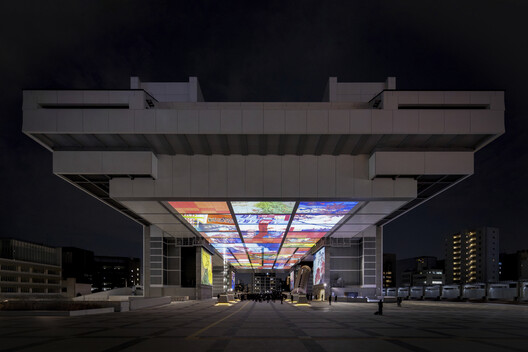
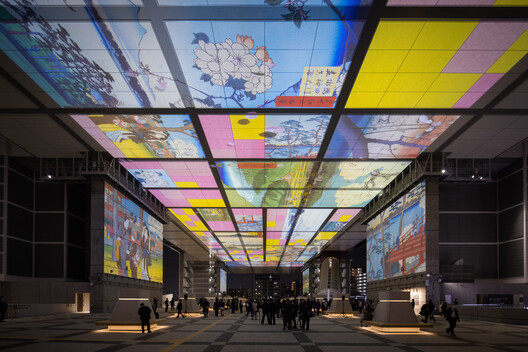
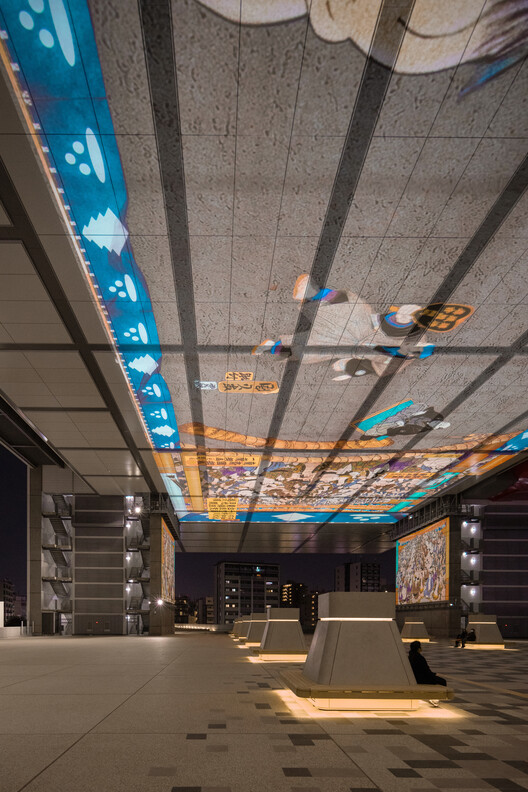
The project also reactivates the museum's expansive third-floor outdoor plaza, positioning it as a public gathering space and a concluding point within the visitor experience. During and after museum hours, moving images of traditional Japanese patterns, foliage, prints from the museum's collection, and scenes from Edo and contemporary city life are projected across the underside of the building and its large pilotis. The projection equipment is concealed within lantern-like structures informed by Edo-period forms, which simultaneously function as seating elements, while modular furniture made from locally sourced wood accommodates informal gatherings and public events.
In other recent museum and cultural institution updates, the Brooklyn Museum announced an expansion designed by Peterson Rich Office to create new permanent galleries for its African art collection within the museum's landmarked neoclassical building. In Paris, the observation deck atop the Tour Montparnasse is scheduled to close ahead of a major redevelopment of the tower and its surrounding complex. Meanwhile, the Getty Center has announced a large-scale modernization program that will temporarily close the campus between 2027 and 2028 for renovation works.