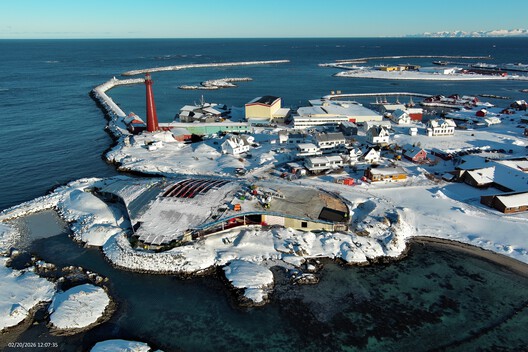
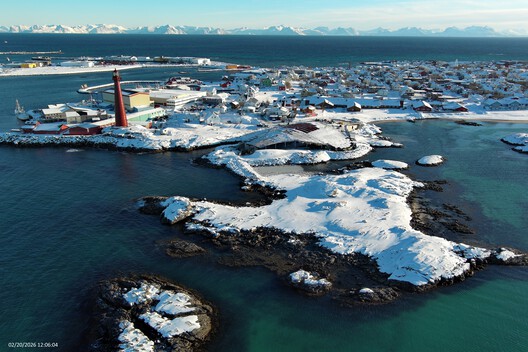
Located approximately 300 kilometers north of the Arctic Circle, on the island of Andøya in northern Norway, The Whale by Dorte Mandrup is currently under construction along the coastline of Andenes. The small settlement is situated near Bleiksdjupa, a deep-sea canyon that brings marine life close to shore and has contributed to the region's role as a whale-watching destination. Recent construction images show the building emerging from the rocky shoreline, maintaining a low profile that follows the contours of the site. The surrounding context, including the existing lighthouse and residential structures, situates the project within an active coastal environment.
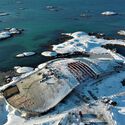
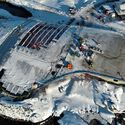
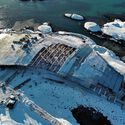
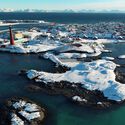
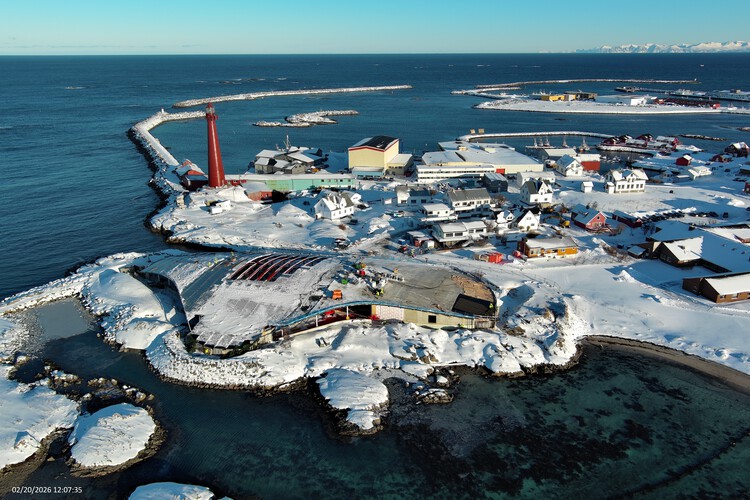
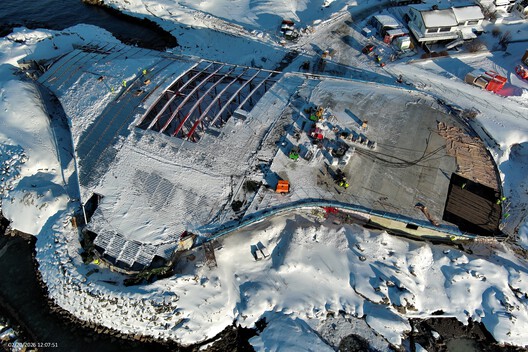
The project was first introduced following an international competition launched in 2019, with the aim of creating a cultural and scientific facility focused on marine ecosystems, and is developed in collaboration with Marianne Levinsen Landscape, Ralph Appelbaum Associates, Norconsult A/S, and AT Plan & Arkitektur. The proposal adopts a site-responsive approach, avoiding a distinct volumetric expression in favor of a form that extends the existing terrain. As construction progresses, the building's footprint becomes more legible, aligning closely with the topography and minimizing the visual separation between land and water.
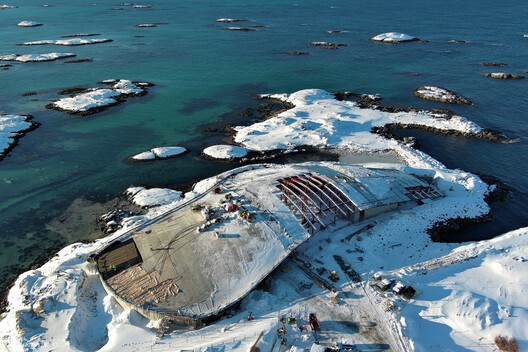
A key element of the design is the building's curved roof, which is now visible through its steel and concrete structural system. The parabolic geometry is defined by a series of ribs that span the interior space with limited points of support, allowing for a large column-free area. This structural approach supports both material efficiency and environmental performance, addressing local conditions such as wind exposure and snow accumulation. The roof is intended to be finished with locally sourced stone and vegetation, contributing to its integration with the site.
Related Article
The 20 Most Anticipated Projects of 2026The roof surface is also designed to function as an accessible area, allowing visitors to walk across it and use it as a viewing platform. Its gradual slope provides elevated views toward the Norwegian Sea and the surrounding archipelago, while maintaining continuity with the ground plane. In this sense, the project operates across multiple scales, combining building and landscape within a single surface. The integration of circulation and viewing functions within the roof reflects the project's emphasis on spatial continuity.
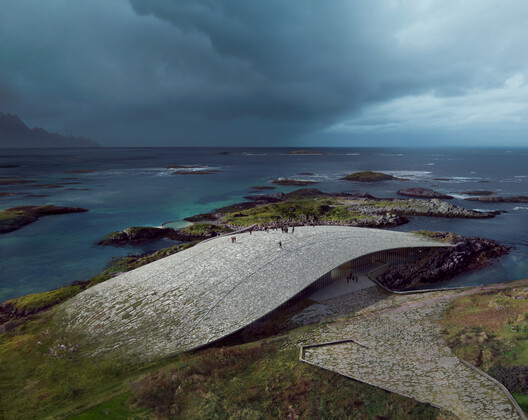
Inside, the building is organized around a series of open exhibition spaces oriented toward the water. Preliminary images indicate a restrained material palette, including concrete, timber, and large glazed openings. These elements establish visual connections with the exterior and allow natural light to enter the interior spaces. The program includes exhibition spaces, offices, a café, and a retail area, along with outdoor paths and viewing points that extend into the landscape.
In other recent construction updates around the world, OMA's Metropolitan Village continues to advance toward completion in Taipei's Xinyi District, while MVRDV has begun construction on the EU TUMO Convergence Center in Yerevan, Armenia. Meanwhile, in Shanghai, the Snøhetta–designed Grand Opera House is nearing completion along the banks of the Huangpu River, with opening anticipated in the second half of 2026.