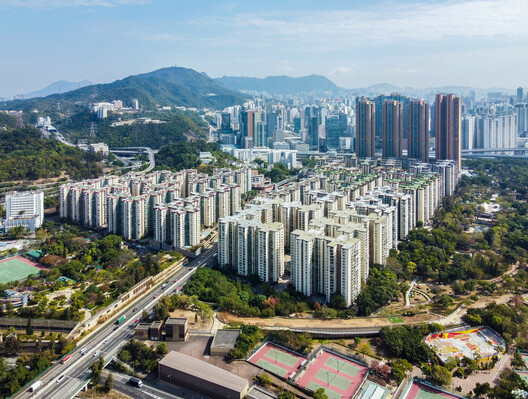
Southeast Asia is often narrated as a kind of architectural playground—an arena where modern and contemporary ideals have been tested at full scale through singular, iconic buildings. One can trace an easy lineage through names that have helped shape the region's skyline imagination: Paul Rudolph's Lippo Centre in Hong Kong and The Concourse in Singapore, I.M. Pei's OCBC Centre and Hong Kong's Bank of China Tower, Norman Foster's Supreme Court of Singapore and the HSBC Main Building in Hong Kong, Ron Phillips' Hong Kong City Hall, Moshe Safdie's Marina Bay Sands. Yet this familiar history—told through objects, colonialism, authorship, and signature forms—risks missing a deeper, more consequential layer of influence: the planning logics and infrastructural frameworks that have quietly structured how these cities expand, densify, and distribute everyday life.

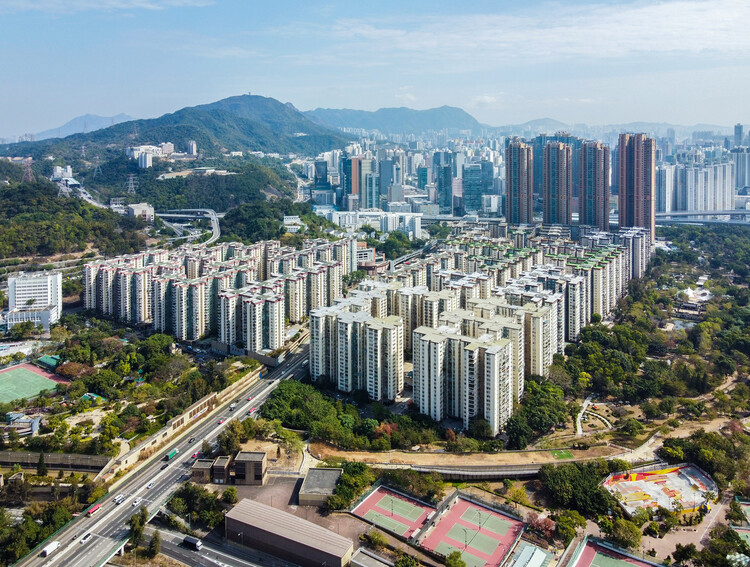
Because beyond the isolated landmark, the region's most enduring architectural "inheritance" has often arrived as an urban operating system: new towns, housing districts, satellite extensions, transit-linked development, and the mechanisms that make high-density growth administratively and spatially legible. Many of these planning ideas—rationalized, zoned, infrastructural—were contested, rebranded, or softened in Euro-American contexts, where modernist urbanism is frequently remembered through its failures. In Southeast Asia, however, related principles were repeatedly adapted and operationalized under different pressures: rapid urbanization, land scarcity, climate, governance, and the need to house large populations quickly. The result is a region where modernism's most persistent afterlife may not be the tower itself, but the city-making apparatus that allows towers—and their supporting podiums, malls, and stations—to proliferate.
A different reading emerges when that apparatus is treated as architectural history written in plan rather than façade. The "satellite city" then appears less as a dated proposal than as a typology with an afterlife—one that has repeatedly been retooled as new towns, mass housing districts, and, more recently, transit-oriented development and rail-linked megaprojects. Tracing this lineage across Hong Kong, Singapore, Malaysia, Thailand, and beyond also reveals how architectural ideas travel unevenly: contested or discredited in some Euro-American contexts, yet normalized elsewhere under different pressures of density, governance, and land scarcity. In Southeast Asia, these conditions have helped produce one of the most durable—and most ambivalent—reworkings of 20th-century planning in the present tense.
Related Article
Podium–Tower Urbanism in Southeast Asia: Density, Management, and the Disappearing Street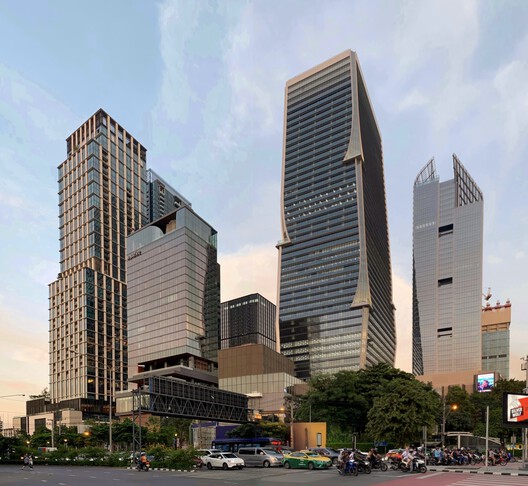
Rail as the New Spine: Station Catchments and Node-Based Growth
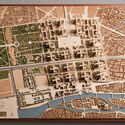
The satellite city's principal proposition, as Le Corbusier conceived it, is deceptively simple: relieve pressure on a congested core by distributing population into planned extensions: self-contained enough to support daily life, connected enough to remain economically integrated. In the region, the idea endures not because it is utopian, but because it is implementable. It can be delivered through repeatable housing blocks and large tracts, with infrastructure as the organizing spine. What changes over time is not the logic of distribution and connection, but the mechanism that performs the connection. Early satellite-city thinking leaned on roads, buses, and the planning diagram of town centres. Late in the 20th century and into the present, that connective tissue increasingly becomes railways. Transit-oriented development emerges less as a "new" idea than as the satellite city's contemporary upgrade: a city organized around station catchments, mobility economies, and nodes where density and infrastructure co-produce one another.
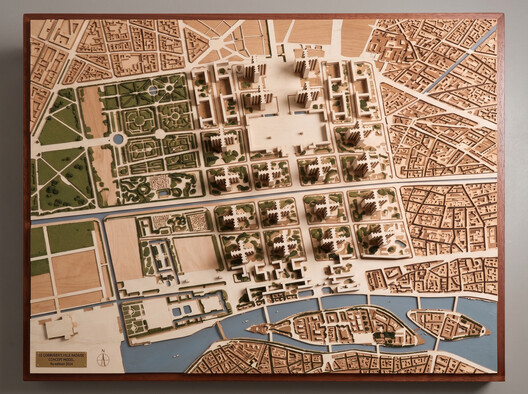
Hong Kong offers a particularly legible sequence of this evolution, not because it invented satellite urbanism, but because its rail-integrated housing trajectory is unusually readable across time. The city's post-war housing history is often narrated through public programs and the urgency of quantity, yet the more revealing lens is infrastructural: how mass housing and new-town logics gradually aligned with rail expansion, and how that alignment later scaled into station megaprojects. Importantly, not all early estates were conceived as transit-oriented. Many were built first, with rail arriving later, an after-the-fact integration that demonstrates how "satellite" logics can be retrofitted into a metropolitan system.
The First Afterlife: Estates Pulled into Transit Logic
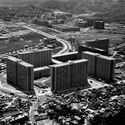
Choi Hung Estate is a clear example of that first stage. Completed in the early 1960s, it belongs to an era when housing delivery was guided primarily by urgency and land availability rather than station-driven value capture. Yet the later opening of Choi Hung Station on the Kwun Tong Line in 1979 re-situated the estate within an emerging rail metropolis, altering commuting time, daily movement, and the estate's relationship to the city's economic centre. The point is not that Choi Hung was designed as a rail district, but that the city's later infrastructural decisions effectively rewired the estate's everyday geography. The "satellite" condition—the sense of being at a distance from the core—can be softened, intensified, or redirected simply by where rail arrives and how it is integrated into daily life.
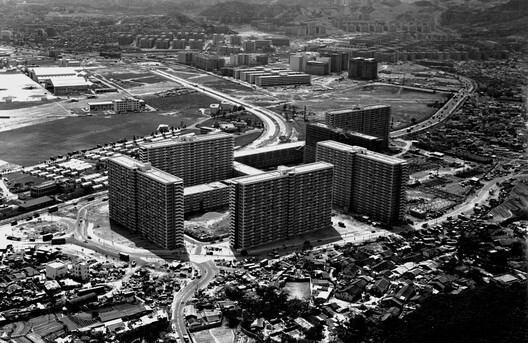
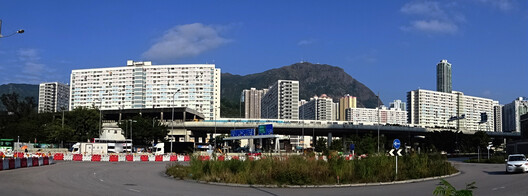
A parallel story plays out through private housing at a different scale. Mei Foo Sun Chuen was developed in phases across the late 1960s and 1970s, a large residential landscape in its own right—effectively a self-contained settlement embedded within the city's broader industrial and reclamation geography. When Mei Foo Station opened in 1982 on the Tsuen Wan Line, the estate's relationship to the metropolitan core tightened. Rail did more than reduce travel time. It redefined what "local" meant by making an estate part of a larger networked daily rhythm—commuting, shopping, and social movement now calibrated to station proximity. Again, the station followed the estate, but once the rail arrived, the estate began to function less like an enclave and more like a node.
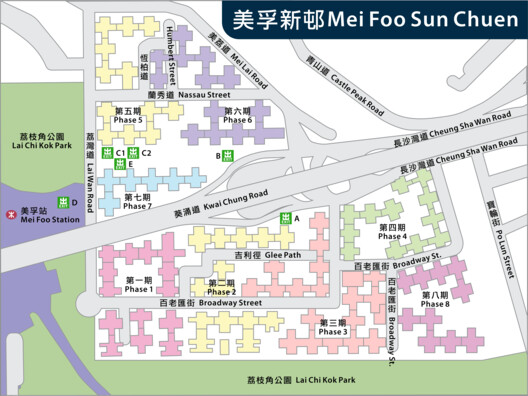
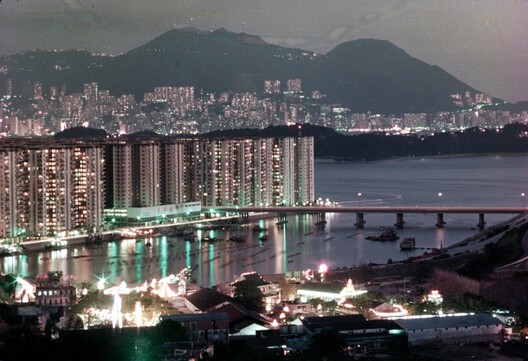
These early examples matter because they illustrate a first stage of the satellite city's afterlife: housing districts built as large populations, later pulled into a transit logic as rail networks expand. Transit begins to operate not only as mobility, but as a metropolitan organization—transforming the estate from an isolated settlement into a connected component of the city's social and economic circulation. Yet the next stage is more consequential: the moment when rail stops being an external amenity and becomes the development platform itself.
The Rail-Plus-Property Pivot: When Access Becomes the Product
That pivot is often associated with Telford Gardens. Completed between 1980 and 1982, it is frequently cited as an early hinge point in Hong Kong's rail-plus-property trajectory: a development tied directly to rail infrastructure and station adjacency, where transit is no longer merely serving housing but actively shaping it. Here, "access" is no longer a benefit; it is the foundation of the real estate proposition. The station begins to function as a new kind of ground. Retail, lobbies, and pedestrian links calibrate their main interfaces to the transit arrival level, and the logic of daily life begins to reorganize around station economies.
This shift is typological as much as it is financial. Once the station becomes the anchor of land value and density, the satellite-city logic evolves from peripheral distribution into node-based intensity. It is still about accommodating large populations, but now those populations are organized through catchments, interchanges, and a thickening of mixed-use programs around transit. The result is not simply "more density," but a different kind of urbanism—one in which the station is both a mobility hinge and an urban generator.
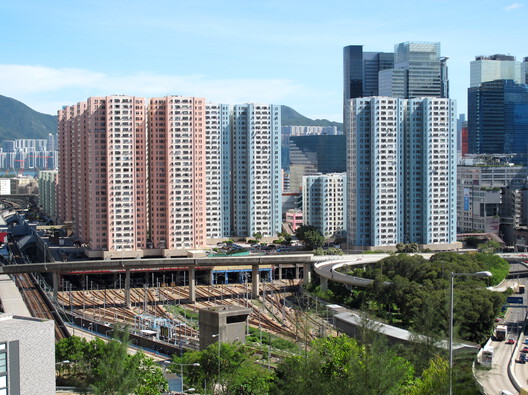
Airport Rail Megaprojects: When Stations Become Districts
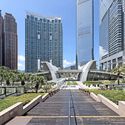
The airport railway era makes this evolution unmistakable. With the opening of Hong Kong Station and Kowloon Station in 1998 as key nodes for the Tung Chung Line and Airport Express, rail became city-making infrastructure at the scale of megaproject. These stations are not simply points on a line; they are anchors for a new type of integrated district logic, where rail interchanges, retail podiums, towers, and internal circulation systems are assembled into a single managed territory. Here, the satellite city's afterlife becomes more commercial, more internalized, and more totalizing. The "new town" is no longer necessarily distant; it can be central, premium, and hyper-connected. The connective infrastructure does not merely link the satellite to the core—it produces an intensified node that behaves like a city within the city.
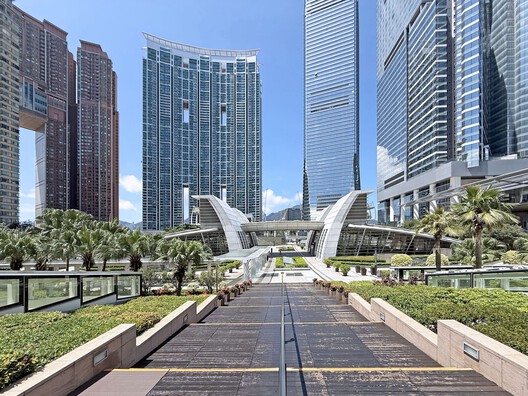
At this scale, transit-oriented development begins to read less like a planning principle and more like a development platform. The station anchors an assemblage: rail + mall + towers + concourses + bridges + controlled interfaces. The result is larger and deeper than earlier estates, and often more legible as a planning diagram than as a street-based city. Movement is efficient, and comfort is engineered and bought, but the ground becomes less negotiable. The city is increasingly encountered through podium levels and internal networks rather than through the messy reciprocity of the sidewalk.
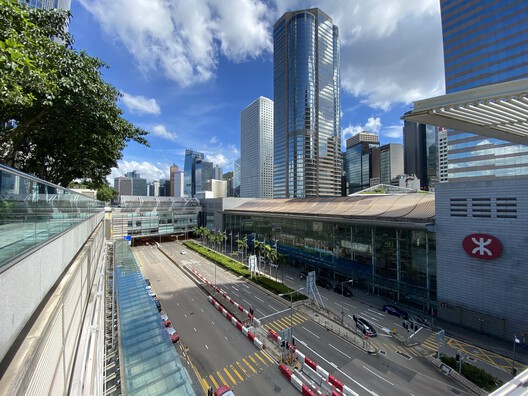
Across these phases—estate proximity, on-station development, and station megaprojects—the satellite-city idea persists, but its values shift. Scale intensifies as stations evolve from access points into district anchors. Commerce becomes structural rather than incidental, with retail and internal circulation operating as engines of viability. Public life internalizes as the "commons" migrates into concourses, podiums, atria, and elevated decks—spaces that function as public realm, but under different rules of access, maintenance, and behavior. None of this is inherently good or bad; it reflects real pressures of climate, land economics, governance, and the need to fund infrastructure. But it does change what the satellite city means, and what kind of everyday life it produces.
The Satellite City That Didn't End: The evolving TOD model
Hong Kong's trajectory also mirrors a broader regional condition. Singapore's new towns demonstrate a parallel interpretation: large-scale housing districts planned alongside infrastructural expansion and regional decentralization, where modernist planning logics became durable not as ideology but as governance apparatus. Malaysia and Thailand show contemporary versions of the same evolution, often through developer-led integrated districts and station-adjacent megaprojects that treat transit nodes as development platforms and fold retail, services, and controlled public space into the architecture of mobility. The satellite city keeps reappearing because the metropolitan problem keeps reappearing: urban cores cannot absorb infinite growth without mechanisms of distribution and connection. TOD is one of the most widely adopted contemporary answers, but it also carries a risk: as station nodes intensify, urban life can become too concentrated, too internalized, and too controlled—reproducing superblocks and reducing the street's role as a civic commons.
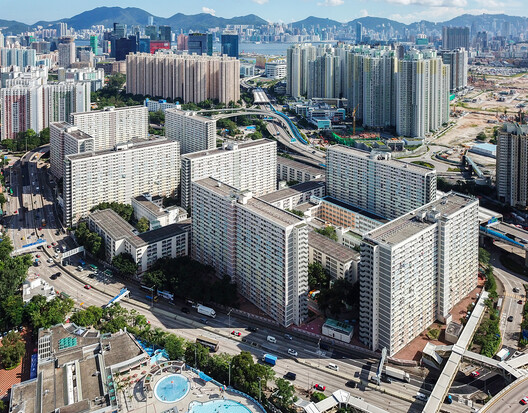
To reinterpret architectural history from Southeast Asia, then, may require shifting attention away from the icon and toward the operating system. It asks us to read the city not only through landmark objects but through the mechanisms that structure daily life at scale—where people live, how they move, where they gather, and what counts as "public." It also resists the temptation to treat modernist planning as a one-way export whose failures were simply repeated elsewhere. The Southeast Asian story is more uneven—and more revealing. Ideas contested in one context became normalized in another, then evolved again as they absorbed new realities: rail financing models, developer urbanism, climate-controlled interiors, and the commercial logic of podium cities.
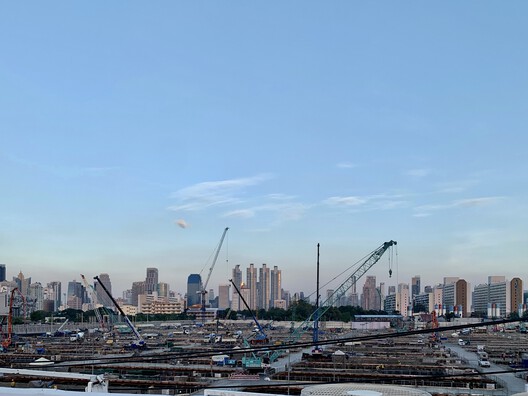
The satellite city did not end. It became transit-oriented development, and then it became something larger: the station-city, the podium-and-tower node, the interiorized commons. The open question is not whether this evolution is progress, but what kinds of urban life it makes possible—and what it displaces. If TOD is the contemporary continuation of satellite-city thinking, the design challenge may be to recover what the growing scale of TOD displaces—livability, legibility, distributed everyday life—without reproducing TODs increasingly brittle tendencies: segregation, superblocks, and the retreat of the street.
This article is part of the ArchDaily Topic: 20th Century Design in Flux: A Global Reinterpretation of Architectural History. Every month we explore a topic in-depth through articles, interviews, news, and architecture projects. We invite you to learn more about our ArchDaily Topics. And, as always, at ArchDaily we welcome the contributions of our readers; if you want to submit an article or project,contact us.


