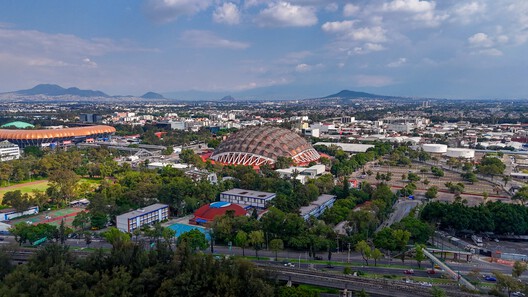
When Mexico City hosted the Olympics in 1968, it was the first time the Games had been awarded to a Latin American country as well as the first time for a Spanish-speaking nation to host them. This made the games a good opportunity to project Mexico and its culture internationally, thus prompting the government to constitute an organizing committee with prominent local talent. They appointed Pedro Ramírez Vázquez as its president, a Mexican architect who held significant influence over the state's mid-century building program. His approach was explicit: architecture as a synthesis of international modernist technique with Pre-Columbian references and local material culture. Under his direction, the committee would oversee the construction and adaptation of venues distributed across the southern districts of Mexico City, nearly all designed and built by local architects, engineers, and technicians.
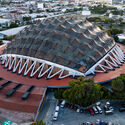
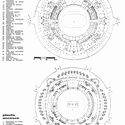
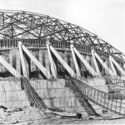
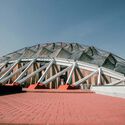
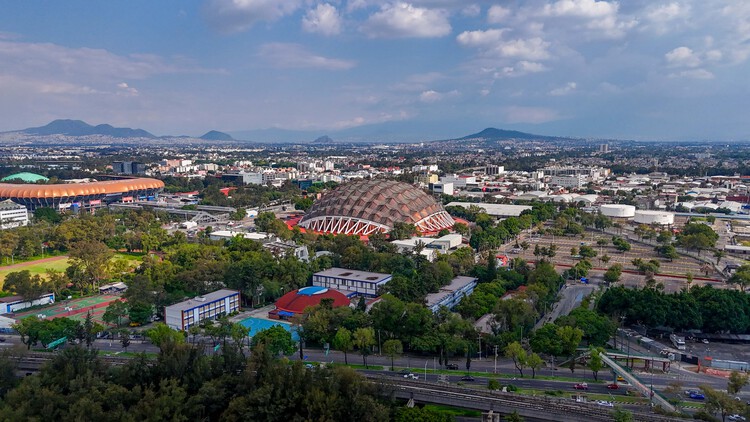
Out of all the Olympic buildings, the project that presented the most complex structural requirements was the Palacio de los Deportes (Palace of Sports), which functioned as the venue for the basketball tournaments. For its design, the committee drafted a competition through the Secretaría de Obras Públicas, and the winning entry came from Félix Candela, working in collaboration with Antonio Peyrí Macià and Enrique Castañeda Tamborell. Candela, a Spanish-born engineer who had emigrated to Mexico after the Civil War, had spent two decades designing structures, most of them thin-shell concrete forms based on the geometry of the hyperbolic paraboloid.
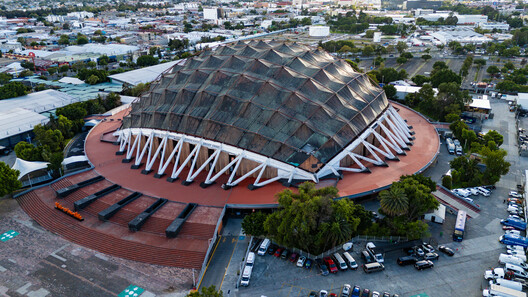
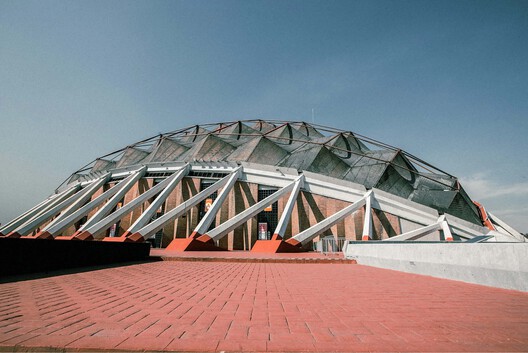
However, the main problem with the project was one of scale. The building had to cover an unobstructed interior area of approximately 27,000 square meters. This span forced Candela to go beyond his comfort zone of the thin concrete shells that had made his reputation and into a new structural typology. His solution was a geodesic dome. The structure measured 116 meters in diameter, and was composed of aluminum hyperbolic paraboloid panels mounted on a grid of steel arches and finished in copper cladding.
Related Article
Olympic Urbanism: The Afterlife of Olympic Parks and Stadiums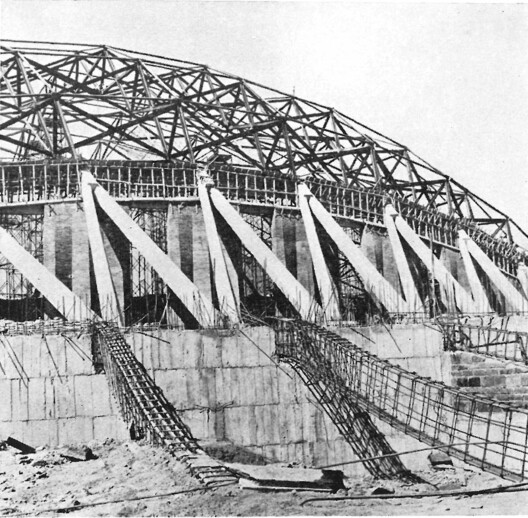
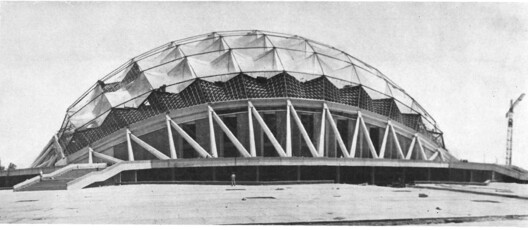
The choice of copper over concrete was partly a response to the constraints of budget and schedule as the entire building had to be completed in eighteen months. In that sense, copper was lighter than concrete, reducing the load on the steel arches and allowing for faster assembly. At the same time, it was also a formal decision that transformed the building's surface into something that could respond to its specific environmental conditions: a material that oxidizes, shifts in tone with light, and accumulates the climate of the city over time. Interestingly, the construction was so complex that the team required the use of computers for structural calculation, as the calculation of the crossed-arch geometry made manual methods difficult. At the time of its inauguration in 1968, it was the largest indoor sports facility in Olympic history.
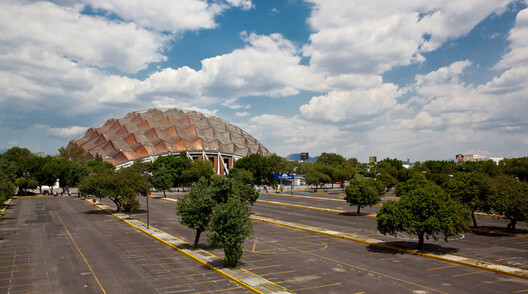
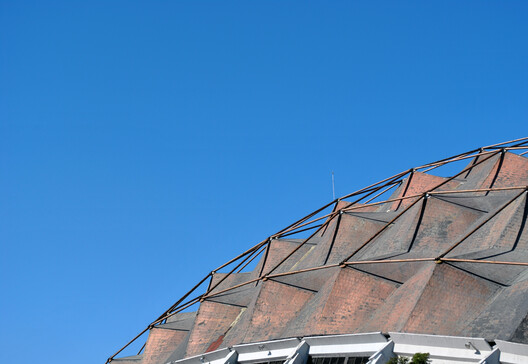
The form of the Palacio belongs explicitly to Candela's structural logic, but the building shares in its geometry and spatial ambition a resonance with Mexican indigenous architectural precedents. The structural expressionism of the dome's exterior arches, visible from a distance across the flat southern terrain of the city, gives the building a hierarchy that can be compared to the great civic platforms of Pre-Columbian sites. In the same way, the copper cladding adds to this impression by giving the building a surface quality (warm, oxidized, climatically alive) that distinguishes it sharply from the glass-and-steel curtain walls of other contemporary International Style buildings at the time.
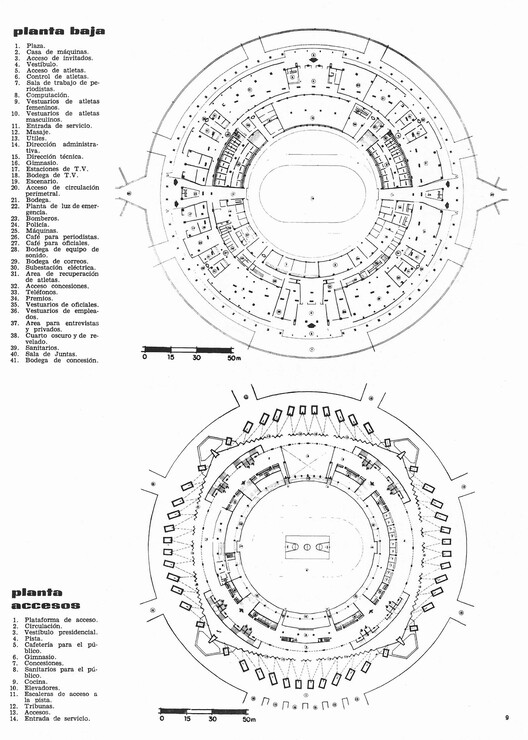
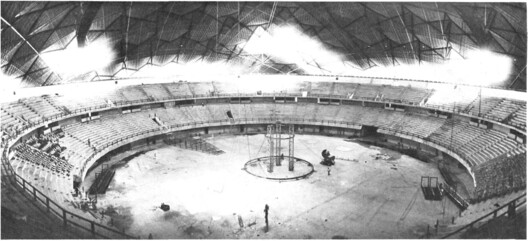
This ambition was not foreign to the Olympic program. Ramírez Vázquez had organized the committee around a vision of Mexico that was simultaneously technically advanced and culturally rooted. Today, the legacy of the Mexican Olympic games has mostly been preserved. In fact, 20 of the 23 venues built for the games remain in use today. Buildings like the pool and gymnasium complex, the velodrome, the University Stadium, the Azteca stadium are still public spaces that host sports events in the city. In the case of the Palacio de los Deportes, it has remained in continuous use, hosting concerts, sporting events, and major expositions, being administered since the 1990s as a commercial venue.
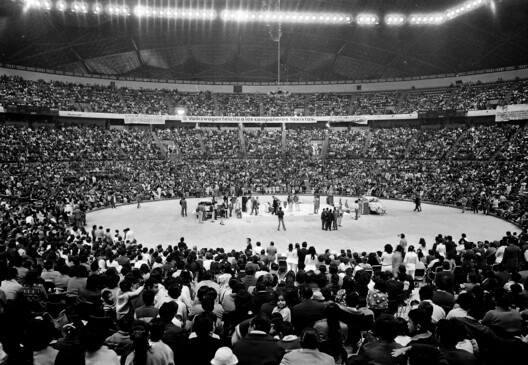
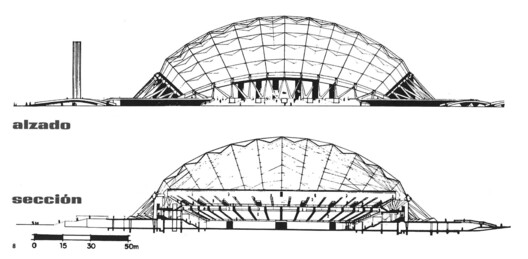
The endurance of the Palacio de los Deportes as a functional space nearly sixty years after its inauguration is a result of its structural flexibility. The 116-meter clear span, originally required for the basketball tournament, allows for a column-free interior that adapts to modern acoustics and high-capacity crowds without compromising the integrity of the shell. While many Olympic structures face obsolescence, the Palacio de los Deportes in Mexico City offers a case study of how venues can maintain their relevance, both in terms of usage and design, decades after hosting the Olympics.
This article is part of the ArchDaily Topic: 20th Century Design in Flux: A Global Reinterpretation of Architectural History. Every month we explore a topic in-depth through articles, interviews, news, and architecture projects. We invite you to learn more about our ArchDaily Topics. And, as always, at ArchDaily we welcome the contributions of our readers; if you want to submit an article or project, contact us.