Learning something new is, biologically, a transformation of the brain. With each experience, neural connections are reorganized, creating and strengthening synapses. Far more than simply accumulating information, learning is about reconfiguring internal structures, a process that can reshape individuals and societies alike. The environment in which this takes place can cultivate curiosity, adaptability, and emotional resilience, thus supporting our next generation of leaders, or suppress those qualities, leading to withdrawal and isolation.
With the rise of modern schooling during the Industrial Revolution, a standardized model emerged, defined by rows of desks, simultaneous instruction, and visual supervision. Often compared to a factory system, this model still persists in many places despite profound technological shifts. These rigid environments remain even as modern learning demands experimentation and adaptability.
Designing for learning means creating spaces that can accommodate this complexity by supporting different rhythms, modes of interaction, and ways of building knowledge. In a world shaped by rapid change and evolving workforce demands, educational environments are taking on a more active role. A global leader in K-12 education design, DLR Group has been exploring this terrain through projects that treat space as an integral part of the educational process, directly influencing how we learn, relate to one another, and construct knowledge.
We spoke with DLR Group Principal and K-12 Education Leader Vanessa Schutte, AIA, ALEP, who shared insights from a range of educational projects and the challenges of designing for different stages of life. As she points out, comfort and a sense of belonging are essential: "A really well-designed architectural space for education is something that makes kids feel welcome and feel like they belong. Students should be able to see themselves in the environments we design for them."
Designing for Different Ages: Same Logic, Different Scales
The way space is perceived changes dramatically with age. As Vanessa explains, "The learning cycle does not change. But what does change is our bodies." This shift has direct implications for design. While learning involves observing, testing, and reflecting, how individuals engage with these processes depends on their physical, cognitive, and sensory development.
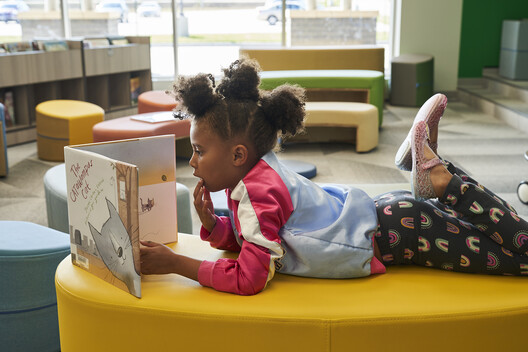
In early childhood environments, this means paying close attention to scale, field of vision, and movement. Children experience space in fragments, constantly moving and engaging with their surroundings while their perception is still developing. "Kids have not yet developed peripheral vision like adults, so their heads are constantly moving as they absorb the environment around them."
Designing for this stage requires more than simply scaling things down. It involves understanding how space is discovered and appropriated over time. Furniture, textures, colors, and spatial transitions all become active components of the learning process. This approach is evident in projects such as Storm Lake Early Elementary School. Rather than rigid, compartmentalized environments, the building offers a variety of learning settings, with distributed maker spaces and areas that encourage experimentation and discovery. As Vanessa notes, the process is not linear, and design must be able to support that: "Exploration is a messy process, and we need to design for that instead of trying to control it."
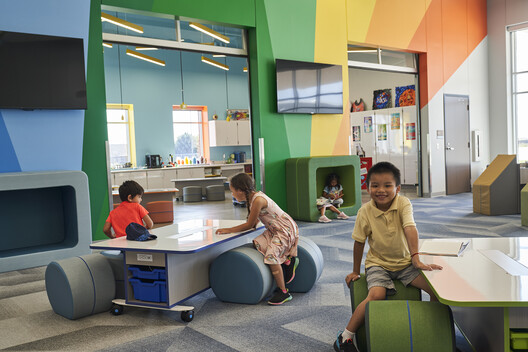
In this context, elements often treated as secondary, such as durable materials, washable surfaces, integrated sinks, and the display of student work, become essential. As students grow, spaces evolve but maintain a consistent logic: areas for focus, collaboration, experimentation, and reflection.
From Classroom to Learning Ecosystem
As early learners grow and mature, their autonomy should grow with them. Space must support multiple modes of use simultaneously, allowing learning to unfold in a more distributed way. At projects such as Capps Middle School, this manifests as clusters of interconnected spaces.
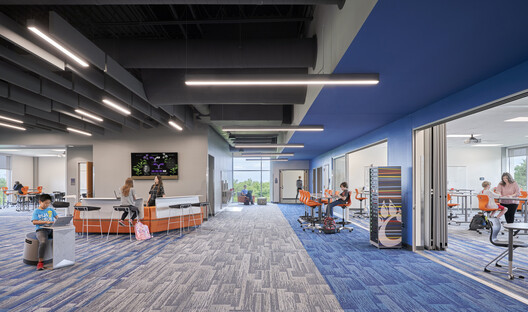
Instead of traditional classrooms, it uses learning suites composed of different types of spaces— maker areas, presentation zones, collaboration areas, and what Schutte describes as a 'front porch'. Much like the front porch of a home, the front porches were envisioned as flexible environments that expand seamlessly through operable walls. Designed to foster connection, they emphasize views outward and encourage casual collisions, whether through spontaneous social interaction among students or moments where groups are experiencing cross-pollination across curricula.
Teachers are no longer tied to a single room but select spaces based on the activity at hand, making learning less classroom-centered and more responsive to changing dynamics. This shift requires educators to rethink their practices. "If you take a teacher used to a traditional corridor classroom model and put them in this environment without preparation, it can be overwhelming." To help guide the transformation, DLR Group engaged the client in a design and continuous improvement process that included extensive stakeholder engagement and coaching. Leveraging proprietary BOLD (Bridging Organization, Leadership, and Design) services, the team worked directly with school leadership and educators to develop flexible learning neighborhoods and systems to support inquiry-based learning. Post-occupancy studies at Capps show increased student engagement and collaboration, reinforcing the impact of spatial organization on learning outcomes.
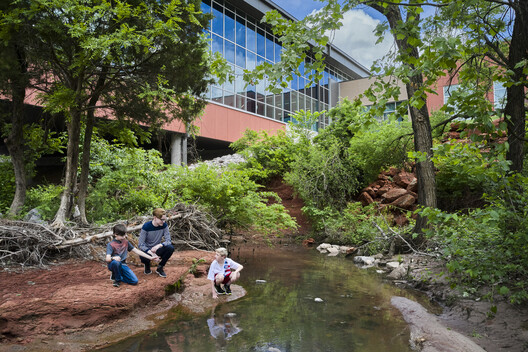
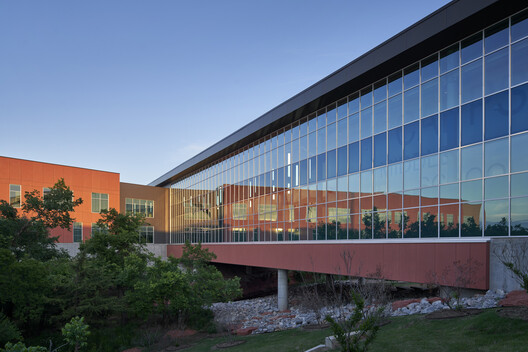
Here, design extends beyond architecture into pedagogy. The building also engages directly with its natural context, incorporating an existing creek into the spatial experience. "There's something poetic about that—the natural environment beneath a highly technical learning environment."
Seeing through the Silos and into a Real-World Career
Space must expand possibilities as students begin to shape their futures in high school. Projects like Gretna East High School serve a wide range of learning profiles, bringing together arts spaces, academic areas, and technical labs within a clear spatial framework that supports orientation and connection. Views to the exterior and a central courtyard reinforce both legibility and a sense of belonging.
Learning by Doing: Connecting Education and Practice
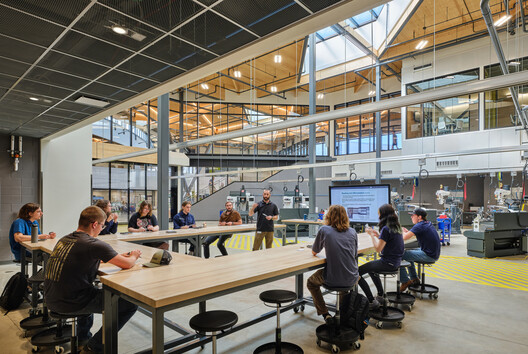
This approach becomes even more pronounced in Career and Technical Education (CTE), where schools directly engage with the world of work. Projects like the Kalamazoo RESA (KRESA) Career Connect Campus are propelling CTE environments into the future by integrating sustainable and biophilic design, and aligning education with real-world conditions.
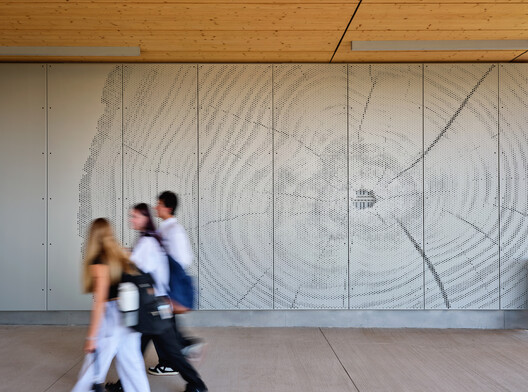
The mass timber roof deck at KRESA Career Connect Campus provides a warm, inviting atmosphere for learning while lowering the project's carbon footprint. Shaped by state and local market analysis and input, the courses provide students specific skill training and certifications in high-demand sectors, in settings furnished with industrial equipment and modern technology. Programming is tailored to the local Michigan economy. A fully stocked industrial kitchen gives students a real-world culinary education; classrooms for automotive technology courses include industry-standard car lifts and diagnostic equipment; specialized hands-on labs prepare students for roles in manufacturing and distribution, with practical training tools such as a forklift simulator to train students in operating machinery.
Transparency between spaces allows students to engage with different disciplines, expanding their awareness of potential paths. "These shared spaces allow students to see what's happening in other programs and that visibility can spark interest."
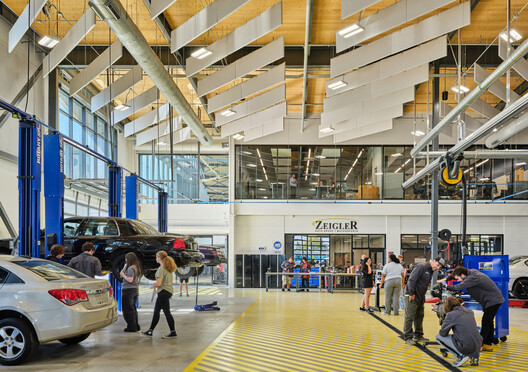
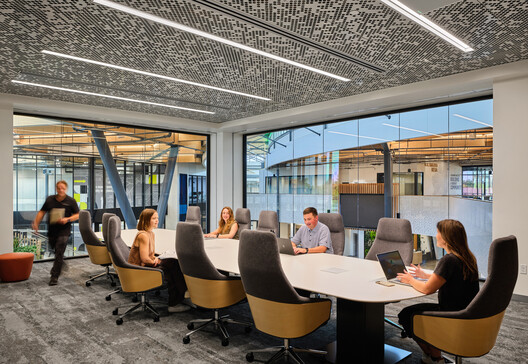
By making learning visible, the building becomes a space of ongoing discovery. This is reinforced by non-linear trails that wind through the building to expose students to various career pathways. Shared, interdisciplinary environments foster interaction and exchange, moving away from isolated rooms. This approach extends to broader initiatives like West-MEC, which connect schools with industry and community partners. These environments also acknowledge that students learn in different ways. "Not every student thrives in traditional academic settings, but many excel through making and exploring."
Architecture, Well-being, and Belonging
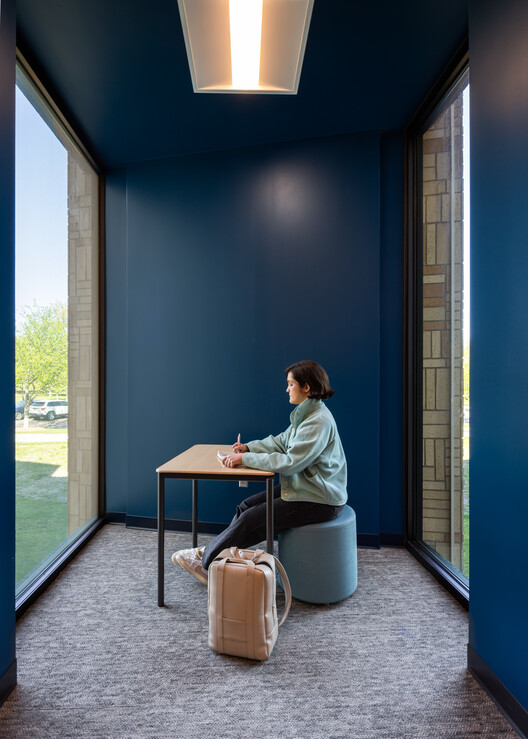
In more complex contexts, space must also support emotional well-being. According to data from the Substance Abuse and Mental Health Services Administration, more than two-thirds of children in the U.S. experience at least one traumatic event by the age of 16. In this context, learning depends not only on stimulation, but also on safety and emotional support. At the Boys Town Education Center, designed for students facing vulnerability, the architecture provides different levels of exposure and retreat. Small niches adjacent to classrooms provide opportunities for students to step away without disconnecting entirely.
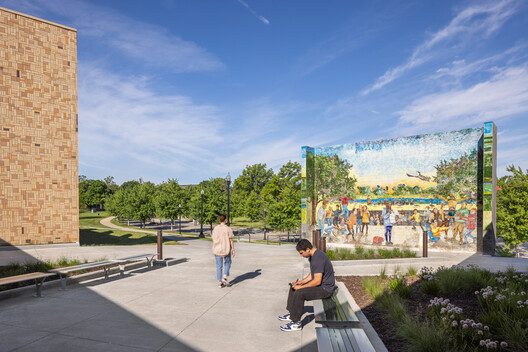
The same level of care is extended to educators, with dedicated areas for rest and recovery. The impact is tangible: in its first year, the school reported zero teacher attrition, underscoring how closely performance and well-being are linked. If learning is a process of transformation, the spaces where it happens cannot remain static. Over time, educational architecture has reflected shifting worldviews, from contemplation to discipline, from standardization to efficiency. Today, it is being asked to respond to a more complex and constantly evolving reality.


