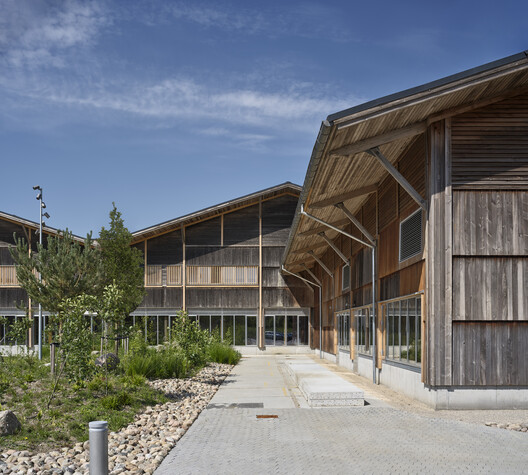
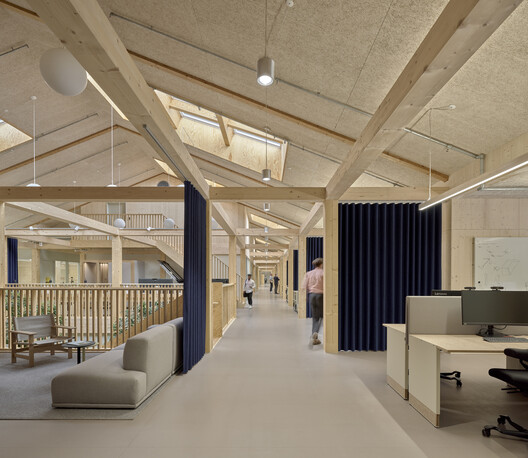
What happens when you choose reuse over demolition? In Østbirk, Denmark, a 30-year-old timber warehouse has been transformed into a 14,000-square-meter world-class innovation hub for nearly 500 VELUX employees. This article explores how the LKR Innovation House project challenges conventional building practices, preserves material legacy, and offers practical lessons for architects working with existing structures. A new book documents the process through essays, interviews, and photographs.
An Experiment in Wood
The story begins in 1995, when Lars Kann-Rasmussen, son of the VELUX founder, initiated what he called an "experiment in wood." His motto was direct: "One experiment is better than a thousand expert views." The original warehouse used untreated timber from Danish and Swedish forests, a forward-thinking approach to material selection that has stood the test of time.
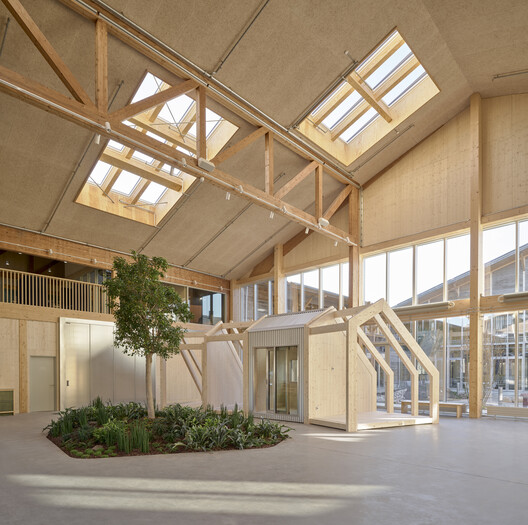
Three decades later, that experiment has been extended. Rather than demolishing the building, VELUX partnered with Praksis Architects, Søren Jensen Engineers, DETBLÅ Landscape Architects, and KG Hansen to transform it into the LKR Innovation House. A workspace that now brings together offices, workshops, and laboratories supporting product development across the VELUX Group.
The Impact
In a time of limited resources, architects are increasingly called to engage in dialogue—with the site, its history, and the untapped potential of what already exists. Rather than defaulting to demolition and new construction, the future of architecture may lie in uncovering opportunities for innovation within buildings that have already stood the test of time.
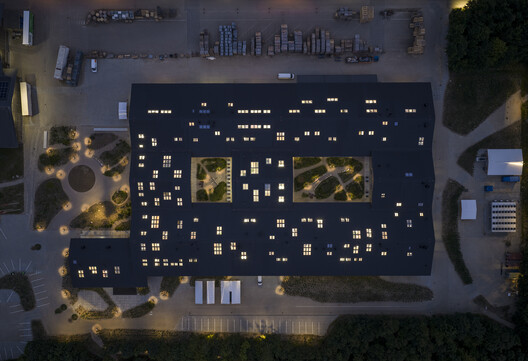
By transforming the existing structure instead of demolishing it, more than 55% of the building's materials were saved compared with new construction. Furthermore, the project achieved a carbon footprint of 4.6 kg CO₂eq/m²/year, third-party verified by Artelia, well below the projected Danish Building Regulations threshold for 2029. At the same time, the building provides top-class thermal comfort and indoor air quality.
The New Book
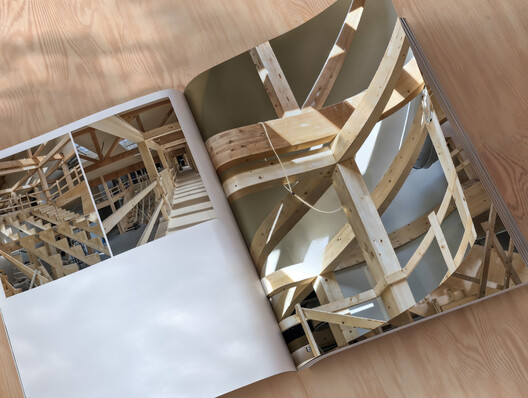
In the new book More Than a House – An Experiment in Transformation, VELUX tells the story of how a building experiment became a model for transformation. The book includes:
- Interviews with the partners and visionaries behind the project, including Lars Kann-Rasmussen and Tina Mayn, EVP of Products & Innovation at VELUX, whose perspectives shaped the transformation from the very beginning.
- Conversations with architects, engineers, and industry experts, featuring Mette Tony and Mads Bjørn Hansen from Praksis Architects, Troels Thorbjørnson from Spant Studio Architects, Mikkel Bahr from Friis & Moltke, Kasper Mose from Kasper Mose Studio, Professor Joseph G. Allen from Harvard University, Siobhan Rockcastle from OCULIGHT Dynamics, and landscape architect Birthe Urup from DETBLÅ.
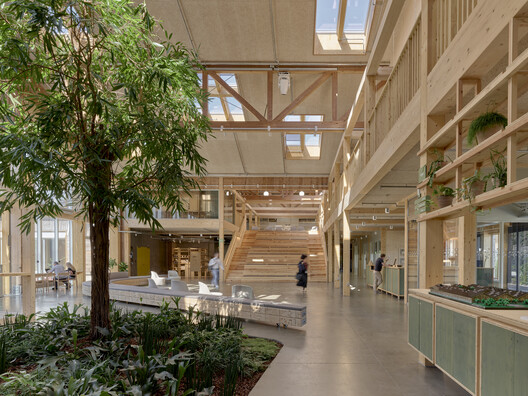
- Photographs by Adam Mørk capturing the transformation of LKR Innovation House. The images document the building during construction and after completion, revealing shifts in light, material, and seasons while moving between architecture and landscape.
Today, nearly 500 colleagues work in the transformed building, but the project is more than a workplace. It explores a different way of building—one that begins with what already exists. It is also part of the VELUX Group's Re:Living agenda, which focuses on rethinking the buildings we already have and how they can support both people and the planet.
LKR Innovation House ultimately became more than a building. It became an experiment in how architecture can evolve over time.


