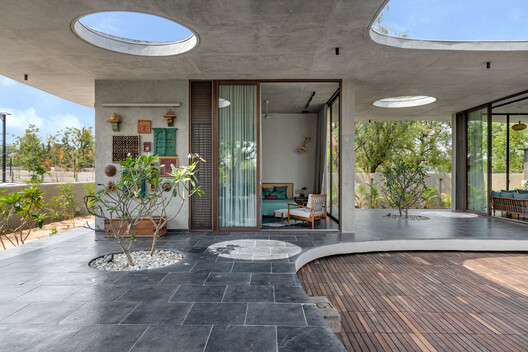
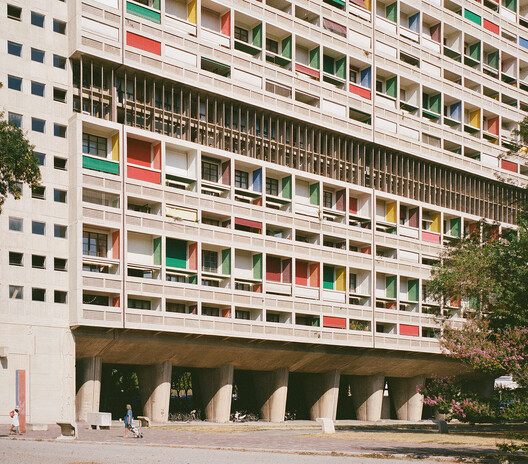
The image is familiar, a façade layered with brise-soleil, light softened into a patterned shadow, interiors kept cool without machines. It appears as intelligence made visible, architecture that understands the sun. This image is rarely examined closely. The same devices that temper heat also organize access, distribute comfort, and depend on particular forms of labor. What looks like a climatic response is also a decision about who gets relief from heat, and how. Tropical modernism, often reduced to a visual language of shade and porosity, emerges instead as a set of situated practices where climate, labor, and power are negotiated differently across contexts.
At the scale of the element, tropical modernism begins as a technical problem. In hot climates, solar radiation is not incidental but constant, requiring buildings to mediate light, heat, and air before they reach the interior. Architects like Maxwell Fry and Jane Drew approached this with a level of precision that resists any reading of these elements as decorative. Shading devices are calibrated according to solar angles, orientation, and seasonal variation. Brise-soleil are dimensioned to block high-angle sun while admitting diffuse light; overhangs extend just enough to prevent direct gain at peak hours; openings are aligned to encourage cross-ventilation. Mid-century research further tested these strategies, measuring temperature reductions and airflow improvements. In this sense, the language of tropical modernism is not symbolic. It is performative: each projection, void, and screen is part of an environmental system.
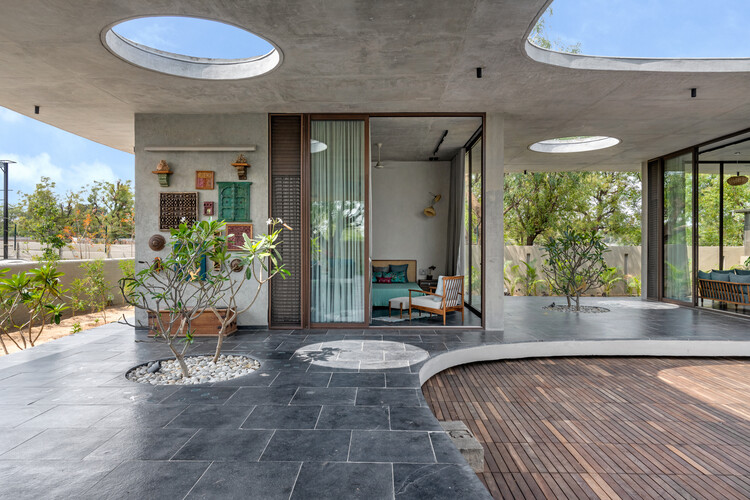
Yet these same elements do more than regulate climate. They structure how space is approached, entered, and occupied. The veranda, for instance, operates simultaneously as a climatic buffer and a spatial filter. In the colonial bungalow, documented extensively, the veranda mediates between exterior heat and interior comfort, but also between public and private, between who is admitted and who is kept at a distance. It is neither fully inside nor outside, but a controlled threshold that is shaded, elevated, and often surveilled. Movement through such spaces is gradual and ordered, with each layer reducing exposure while increasing privilege. Climate, here, is inseparable from hierarchy. The cooling effect of shade is paired with a social logic that determines who occupies the most protected zones.
Related Article
Tropical Modernism: Costa Rica’s New Elevated Treehouses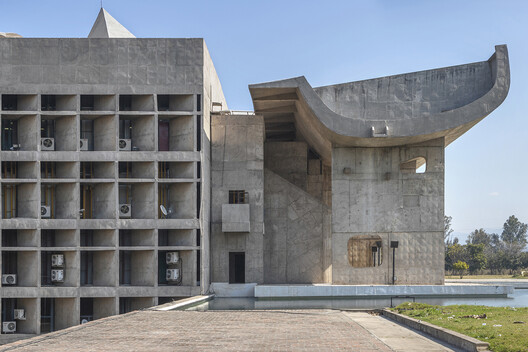
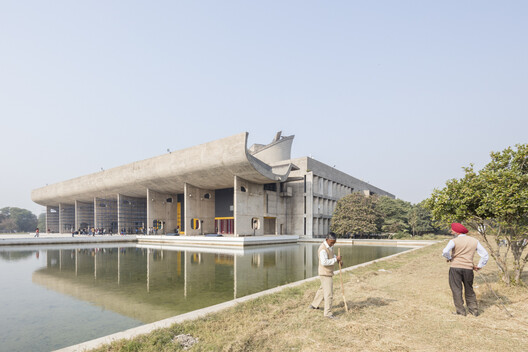
This distribution of comfort becomes more explicit in planned modernist contexts. In Chandigarh, housing was organized into multiple types aligned with administrative rank. The differences were not only spatial but also environmental. Higher-ranking residences were afforded deeper overhangs, better cross-ventilation, and more generous shaded areas, while lower-tier housing received more limited climatic buffering. The same sun fell across all sectors, but the architecture filtered it unevenly. Passive design, often framed as universally beneficial, was in practice selectively distributed. The result is subtle but consequential: comfort becomes a gradient, aligned with institutional hierarchy rather than shared climatic need.
These systems operate spatially and are constructed materially, where another layer begins to take shape. The effectiveness of passive cooling in tropical modernism depends on material assemblies that are often labor-intensive. Masonry screens, cast concrete fins, and deep wall sections require repetitive, skilled, and time-consuming construction. Such systems were viable in part because they relied on abundant local labor and readily available materials. Colonial and postcolonial public works departments in India codified these approaches, favoring construction methods that substituted labor for mechanical systems. It locates the environmental intelligence of tropical modernism within specific economic conditions, including how labor is organized and valued. The ability to build thick walls, intricate screens, and expansive overhangs is tied to how labor is organized and valued.
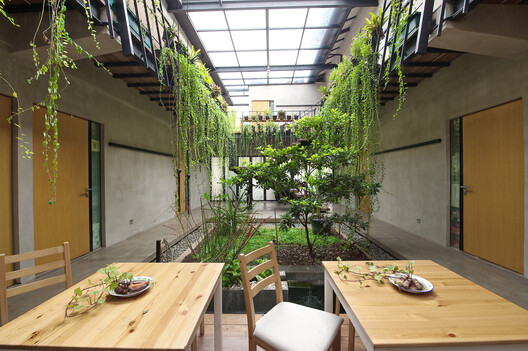
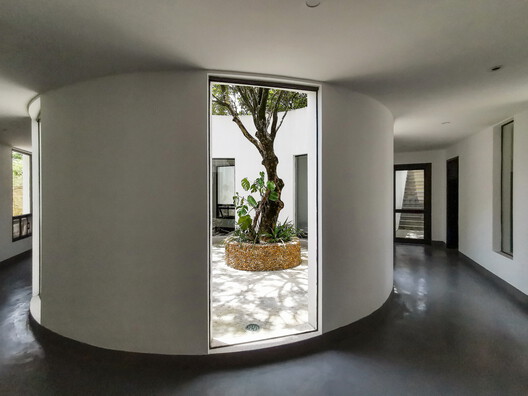
At this point, the narrative of tropical modernism begins to diverge. The same climatic devices, such as screens, verandas, and deep sections, do not carry the same meaning or consequence across regions. In West Africa, university campuses and institutional buildings aligned climate-responsive design with colonial governance and development agendas. Standardized shading systems and ventilation strategies were deployed to support administrative efficiency and educational infrastructure, embedding environmental design within the machinery of governance. Here, tropical modernism operates as a tool of institutional formation, where climate adaptation is inseparable from political administration.
In India, the transition from colonial to postcolonial contexts produces a different configuration. The bungalow and later modernist housing schemes do not simply impose climate-responsive design; they reorganize it. As seen in Chandigarh, climatic comfort becomes tied to bureaucratic hierarchy, transforming environmental design into a graded resource. The architecture does not merely respond to heat; it allocates relief according to rank. This is not the overt spatial segregation of earlier colonial models, but a quieter calibration, where differences in shade, airflow, and exposure accumulate into differentiated living conditions.
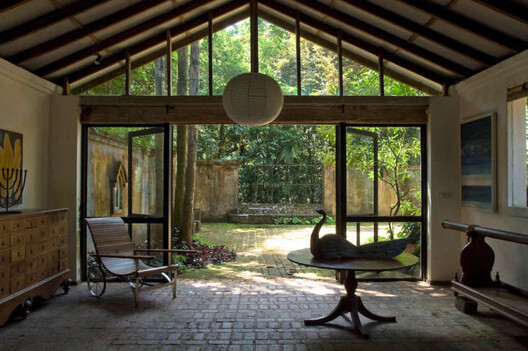
Elsewhere, tropical modernism takes on yet another role. In Sri Lanka, the work of Geoffrey Bawa reframes climate not as a problem to be controlled but as a condition to be absorbed into spatial experience. Projects such as Lunuganga and the Kandalama Hotel dissolve the boundary between interior and exterior, using landscape, water, and vegetation as primary cooling devices. Air moves through open pavilions; shade is cast by trees as much as by roofs; the building extends into its environment rather than shielding itself from it. This approach positions climate as a medium of design rather than a constraint. The political dimension here is not one of control or hierarchy, but of authorship as an attempt to produce a regional modernism that is neither imported nor imposed.
A similar shift occurs in Southeast Asia through the work of Vann Molyvann, where climate-responsive strategies are integrated into projects of national identity. At the National Sports Complex in Phnom Penh, water systems, elevation, and ventilation are combined to create large, passively cooled public spaces. These are not neutral technical solutions; they are part of a broader effort to articulate a modern Cambodian architecture rooted in local conditions. Climate, in this context, becomes a means of cultural expression and state-building, rather than an extension of external governance.
What emerges across these examples is not a single narrative of tropical modernism, but a field of differences. The same devices, like brise-soleil, verandas, and overhangs, operate across geographies, but their meanings shift depending on how they are embedded in local conditions. In some contexts, they reinforce hierarchy; in others, they support institutional systems; elsewhere, they enable new forms of spatial and cultural expression. To read them only as climatic responses is to miss their social and political dimensions. To read them only as instruments of power is to flatten their specificity.
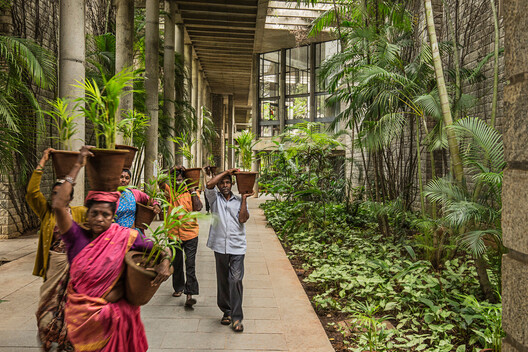
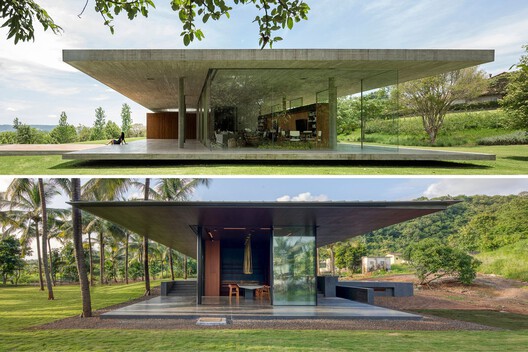
The brise-soleil, then, is not just a response to the sun. It is a response to a set of conditions that are environmental, economic, and political, which determine how architecture is made and who it serves. Its shadows are not neutral. They mark the boundaries between exposure and protection, between labor and occupation, between different experiences of the same climate. Tropical modernism, in this sense, is not a style but a negotiation, one that continues to unfold wherever heat, material, and power intersect.
This article is part of the ArchDaily Topic: 20th Century Design in Flux: A Global Reinterpretation of Architectural History. Every month we explore a topic in-depth through articles, interviews, news, and architecture projects. We invite you to learn more about our ArchDaily Topics. And, as always, at ArchDaily we welcome the contributions of our readers; if you want to submit an article or project, contact us.