Architecture is often presented as the visible expression of its time, its desires, its faith in progress, its idea of order. Yet this reading tends to flatten the conditions under which buildings are produced. It suggests that architecture follows history when, in many cases, it actively participates in it. Few periods make this more evident than the twentieth century, when architecture became deeply entangled with political programs, economic systems, and competing visions of how collective life should be organized.
What is commonly grouped under the label of Modernism is often described as a coherent project, defined by formal clarity, technological optimism, and a break with historical styles. But this apparent coherence dissolves when we look beyond its canonical centres. The same spatial principles (standardization, functional zoning, industrial production) were adopted in political and economic contexts that differed significantly in their structures and objectives. A static movement unfolded as a flexible system continuously reoriented according to the priorities of each regime. What appeared as a shared language was, in practice, a set of tools applied to distinct agendas.


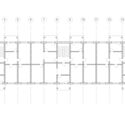
To understand twentieth-century architecture, then, is to examine the structures that made those forms possible: who commissions, who builds, who inhabits, and under what conditions. These questions do not sit outside architecture, as context or background. It is there, perhaps, that architecture reveals its political dimension.
Related Article
From Colonization to Le Corbusier: Was Modernism in India an Imposition or an Invitation?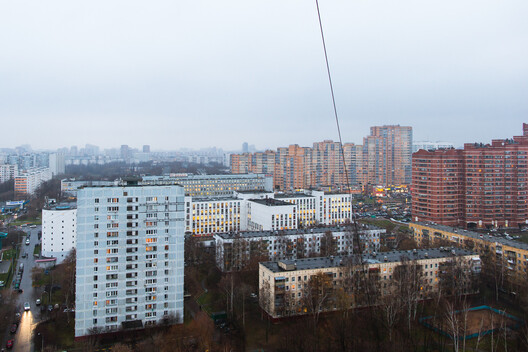
The Domestic and the Capital
The postwar American house is often imagined as a symbol of prosperity, perhaps even of freedom. It sits in the cultural imagination as something almost self-evident: a detached structure, a parcel of land, a threshold between private life and the world outside. Yet what made this figure possible was never contained within the house itself. It depended on a much larger arrangement, one that tied architecture to finance, infrastructure, industrial production, and state policy in ways that are easy to overlook precisely because they became so ordinary.
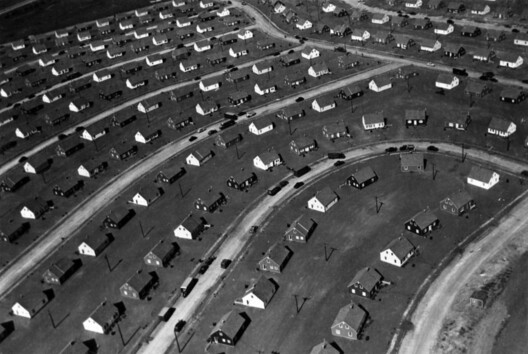
Suburbia did not emerge simply because more houses were built, but because a series of systems began to reinforce one another. Mortgage guarantees expanded access to ownership, highways extended metropolitan reach, construction methods adapted to speed and repetition, and utilities followed settlement outward. The single-family home stood at the convergence of these forces as it condensed them into a familiar object, giving spatial form to a much broader economic order.
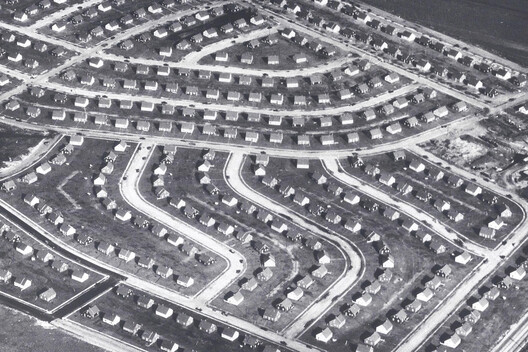
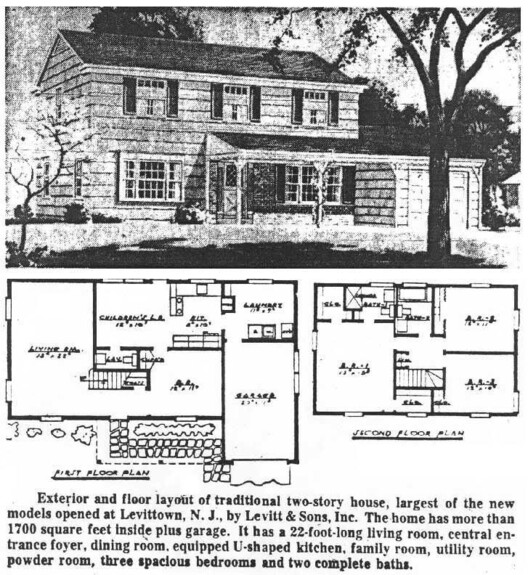
That is part of what developments such as Levittown make so revealing. Their significance lies in the way they joined industrial logic to domestic aspiration, and not precisely in their scale. The house appeared as an expression of individuality, produced through serial procedures that treated variation as secondary. It was organized, even when it looked spontaneous.
The same could be said of access. The rise in homeownership after the war has often been told as a democratizing story, and in part it was. But it was also selective. Credit was distributed unevenly, zoning sorted populations spatially, and patterns of exclusion became embedded in the geography of growth. The open territory was already differentiated, though often in ways architecture itself did not openly acknowledge. This is perhaps where the political dimension of the domestic becomes harder to grasp, because it rarely takes monumental form. It settles into quieter things like habits, routines, assumptions about what a household is, how it moves, how it occupies time. The Case Study Houses are illuminating precisely because they make visible this overlap between architecture and cultural projection. Their openness (the glass, the continuity with landscape, the apparent ease of movement) not only proposed new spatial relations but also helped construct an image of life organized around autonomy, flexibility, and effortless abundance.
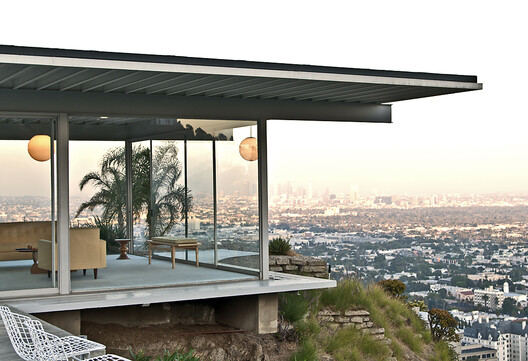
Energy-intensive comfort, long-distance commuting, standardized supply chains, and maintenance regimes. The apparent lightness of domestic modernism rested on a heavy substrate.
Inside the house, those larger arrangements took more intimate form. The kitchen was reorganized around efficiency, drawing industrial principles into domestic labour. The living room became increasingly oriented around media, linking private space to new circuits of information and consumption. The garage altered the very edge of the house, binding domestic life to the automobile and, with it, to a wider territorial condition. These shifts did not happen all at once, nor according to a master plan. They accumulated, and in that, they produced a remarkably durable spatial order. Perhaps that is what makes the domestic so politically effective. It rarely persuades through declaration. Through the slow way, arrangements become expectations, and expectations begin to feel natural. By the time power appears, it often no longer looks like power at all. It looks like ordinary life.
The standardization and the Promise
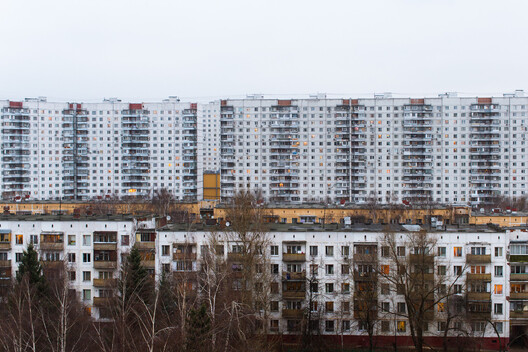
If the postwar suburb extended through dispersion, much of socialist housing moved in the opposite direction, toward concentration, coordination, and repetition organized at the scale of the system. The question was no longer how to expand ownership, but how to provide housing rapidly. Under those conditions, architecture was drawn into a different relation with power. Less mediated by the market, more entangled with administration.
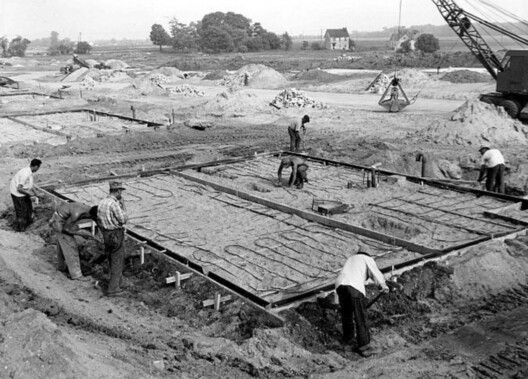
This changed how a building was understood. No longer a singular object, but part of a larger apparatus of provision. Construction shifted toward industrial logics: prefabricated panels, typified plans, modular coordination, production chains extending from factory to site. The building site began to lose its autonomy.
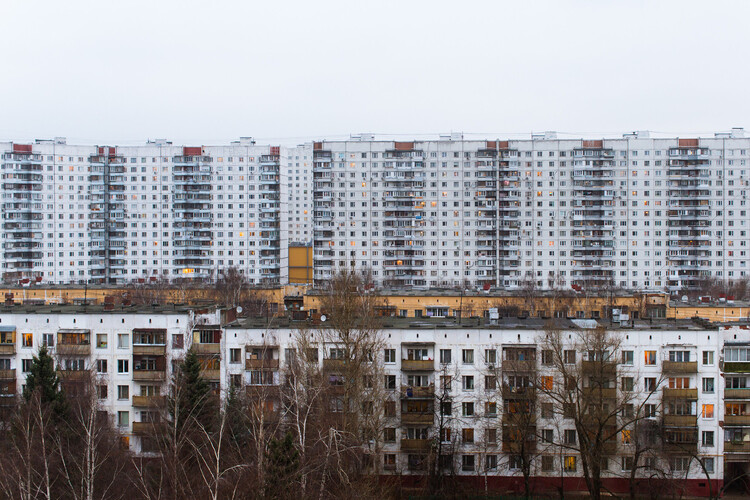
The khrushchyovka belongs to this moment, though it is too often reduced to its deficiencies. What matters is not that it was austere, but what kind of threshold it represented. For millions, these apartments marked a departure from overcrowded communal arrangements toward something that had been scarce: a private domestic unit. A separate kitchen, a door that closed, the spatial minimum carried a political charge precisely because it redistributed something previously unavailable.
This is easy to overlook when reading these environments through form alone. The significance lies as much in what they attempted administratively as in what they achieved architecturally. The apartment block was only one element in a larger structure, the microdistrict, where housing, schools, services, and open space were arranged according to a logic of proximity and provision. Daily life was, to some degree, anticipated by it.
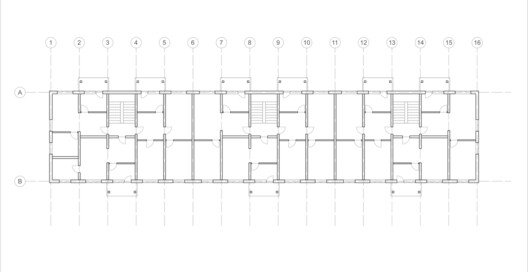
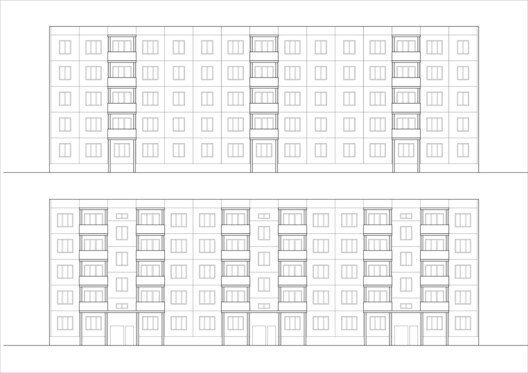
There is an ambition in this that remains difficult to dismiss. Equality was not treated as an abstract principle, but translated, however imperfectly, into distribution. By reducing variation, it sought to reduce hierarchy, making space comparable, allocable, and measurable. The difference ceased to organise the environment in the same visible way. And yet it is precisely here that tension enters. The same abstraction that made distribution possible could also produce distance. The apartment, calibrated as a unit within a system, often left little room for life deviations. Over time, they returned anyway, through enclosed balconies, improvised partitions, accumulated modifications, the quiet labour of residents adjusting what had been too tightly prescribed.
These acts of adjustment matter because they complicate the usual opposition between system and failure. They suggest something more unstable; that standardisation was never complete, never total, but always negotiated through occupation. Uniformity, looked at closely, begins to dissolve into small acts of difference. Perhaps this is where the political significance of these environments lies. Not in whether they fulfilled or betrayed an ideological promise, but in how they made visible the difficulty of giving social ideals durable spatial form.
What remains is not a simple image of monotony, nor a model to be redeemed, it is a more difficult legacy, in which architecture appears not as the resolution but as the place where its limits become legible.
The State as Author
If the suburban house embedded power in the ordinary routines of domestic life, and socialist housing attempted to administer equality through repetition, the modern capital operated at another register altogether. Architecture moved closer to the symbolic machinery of the state, to give institutional order a visible form.
This was especially pronounced in moments of accelerated modernisation, when political authority sought not simply to govern territory, but to imagine it anew. Architecture entered these projects as something more than a discipline; it became entangled with the production of political image, with the effort to render a future credible before it had taken social form.
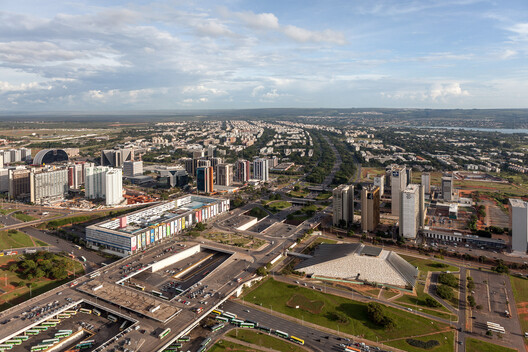
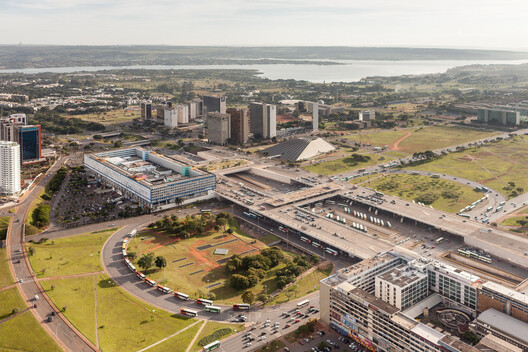
New capitals condense this ambition with unusual clarity. Brasília is often read through its monumental composition, but perhaps what matters more is the way it sought to make governance legible. Its axes, separations, and vast civic voids arrange relationships between institutions, bodies, and territory. Space becomes a medium through which authority is distributed and perceived. And there is something almost theatrical in this. Ministries aligned in sequence, the ceremonial scale of the Esplanade, and the distance imposed between buildings and between functions. The city stages an order and produces an image of coherence in advance of its social verification. It suggested that the state was not only present, but internally rational, structurally complete.
And yet Brasília has always carried a tension between image and occupation. The city's clarity as a diagram has never fully absorbed the contingencies of urban life that developed around and beyond it. Informal settlements, peripheral growth, and daily appropriations all expose the extent to which social life exceeds the abstractions through which planning seeks to contain it. The capital remains, in part, suspended between project and city.
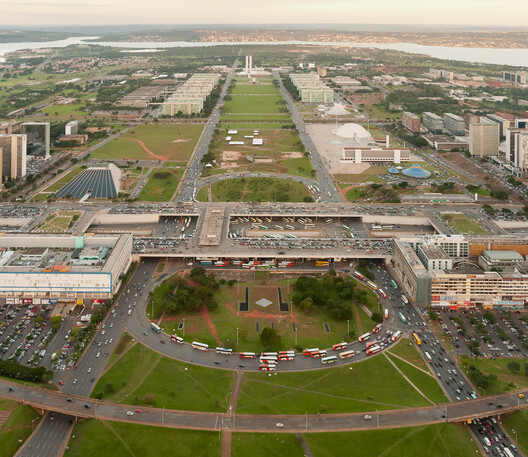
Perhaps this is where its significance lies. In this way, it reveals a recurring ambition of state modernity to stabilise authority by giving it spatial order. But this extends beyond Brasília. Across the twentieth century, ministries, parliamentary complexes, new capitals, and infrastructural megaprojects often operated in similar ways. They produced orientation, offering the state a material syntax through which it could be encountered.
What is striking is how often these environments exceed immediate function. Their scale is frequently disproportionate to everyday use, their spaces too large, too empty, too formal. Yet that excess belongs to the work they perform: the impression that authority precedes those who occupy it. And still, these spaces are never closed systems. Their meanings shift through use, through political change, through forms of occupation never anticipated in plan. Which is perhaps why they remain compelling. They make visible not simply the presence of power, but its constant need to stage itself.
After Empire
If the modern capital made visible the ambitions of the state, postcolonial contexts exposed something less stable: the difficulty of producing form under conditions where political autonomy, inherited structures, and external models remained entangled. In many cases, the independence did not arrive with a ready-made architectural language; it arrived precisely as a question of how to build after the empire.
Modern architecture offered one answer, though never an uncomplicated one. It carried associations of progress, planning, technological advancement, but also the authority of systems developed elsewhere. To adopt that language meant entering a field already marked by unequal histories, where the promise of universality often sat uneasily alongside the desire for cultural and political distinction.
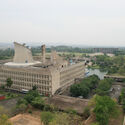
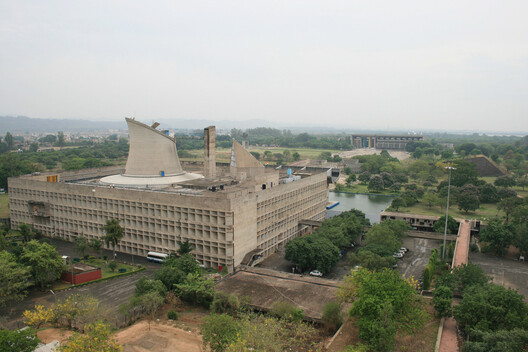
This is what makes projects such as Chandigarh Capitol Complex so difficult to reduce to either imposition or emancipation. The city is often framed as a symbol of post-independence modernity, but its significance lies less in what it resolves than in what it holds in suspension. A new political order articulated through a borrowed vocabulary; a future projected through forms carrying older genealogies. But perhaps that tension is the project's central condition. Because in these contexts, architecture becomes one of the places where identity is negotiated, often without final settlement. Local practices persist within imported structures. Colonial residues survive within projects meant to overcome them. Modernization advances unevenly.
Seen from here, the political dimension of twentieth-century architecture begins to look less like a series of distinct models (capitalist, socialist, developmental) and more like a field of recurrent questions pursued through different means. How space is distributed, how authority is made legible, how collective life is organised. The tools may recur (standardisation, planning, industrialisation), but their meanings do not remain fixed as they move into different political and cultural arrangements.
In the end, this may be why the century resists any singular narrative. Its architectures do not line up as successive movements replacing one another, but as overlapping trajectories, sometimes converging, often conflicting, each carrying its own assumptions about order, equality, autonomy, or progress. And perhaps that is where this history remains unfinished. Not in the survival of its forms alone, but in the fact that many of its questions remain unresolved. The relation between planning and power, between equality and distribution, between identity and universal systems; none belongs exclusively to the twentieth century.
Architecture does not resolve those tensions. It rarely has. But it does make them visible, and sometimes inhabitable. Which may be another way of saying that its political relevance has never resided only in what it represents, but in the contradictions it is able to hold.
This article is part of the ArchDaily Topic: 20th Century Design in Flux: A Global Reinterpretation of Architectural History. Every month we explore a topic in-depth through articles, interviews, news, and architecture projects. We invite you to learn more about our ArchDaily Topics. And, as always, at ArchDaily we welcome the contributions of our readers; if you want to submit an article or project, contact us.


