The 2026 edition of the Sony World Photography Awards has announced its overall winners, recognizing contributions across the Professional, Open, Student, and Youth competitions. Now in its 19th year, the program continues to position itself as a key platform for both emerging and established practitioners, drawing over 430,000 submissions from more than 200 countries and territories. The program recognizes work across ten Professional categories, including Architecture & Design, alongside parallel Open, Student, and Youth competitions, and is accompanied by an annual exhibition at Somerset House in London.
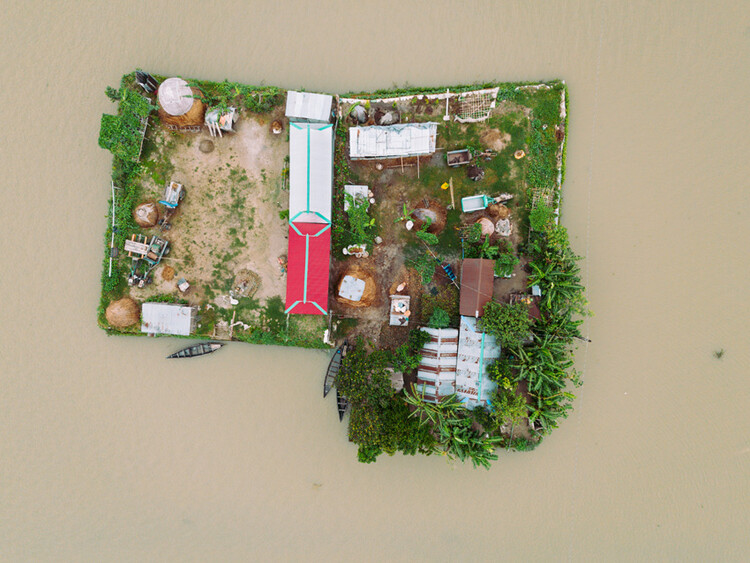
Within the Professional competition, the Architecture & Design category highlights photographic approaches that engage with the built environment through formal, social, and spatial narratives. This year, Bangladeshi photographer Joy Saha was awarded first place for Homes of Haor, with André Tezza and Chen Liang receiving second and third place, respectively. The awarded and shortlisted works are presented as part of the exhibition at Somerset House in London, on view from April 17 to May 4, 2026, alongside over 300 prints and digital displays offering a broad overview of contemporary photographic practices.
Read on to discover the Professional Competition 2026 winning and shortlisted photographs, along with short descriptions provided by the photographers.
Related Article
Zaha Hadid Architects’ International Gateway Centre in West Kowloon Hong Kong Nears Completion, Captured by Paul ClemenceFirst Place
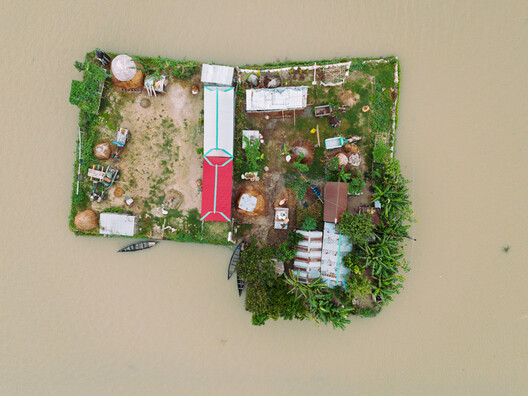
Homes of Haor by Joy Saha, Bangladesh
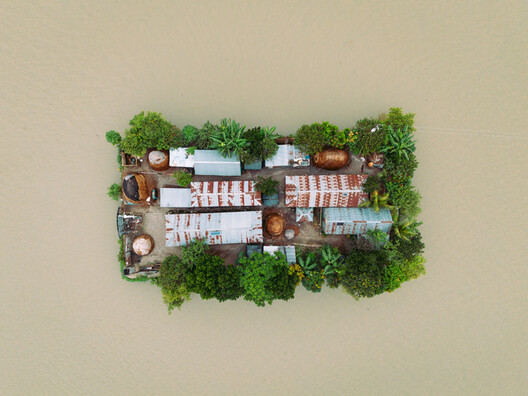
Homes of Haor documents the vernacular architecture of Ashtagram, Kishoreganj, in Bangladesh's Haor region. Here, homes are built on naturally raised mounds that become islands during the monsoon, surrounded by seasonal floodwater, and boats become the primary means of travel. From above, the settlements form distinct patterns shaped by elevation, water, and function. Elevated roads, clustered dwellings, and carefully arranged livestock spaces reveal how rural communities design and adapt their built environment to a landscape defined by water.
Second Place
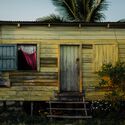
Everyday Structures by André Tezza, Brazil
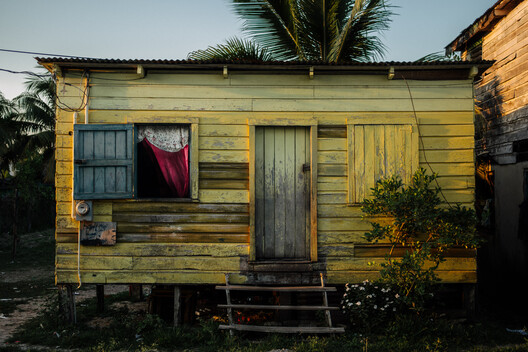
This ongoing project documents small neighbourhood grocery stores on the outskirts of Curitiba, in southern Brazil. These modest structures form an architecture of resistance that persists even as large retail chains reshape the city. Often family-run and linked to domestic spaces, the stores merge work, memory and dwelling into a single building. While the city centre undergoes gentrification, the periphery remains culturally dense and visually vibrant. This series reflects a belief that architectural beauty exists in ordinary, overlooked places.
Third Place
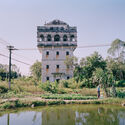
Chinese Watchtowers by Chen Liang, China
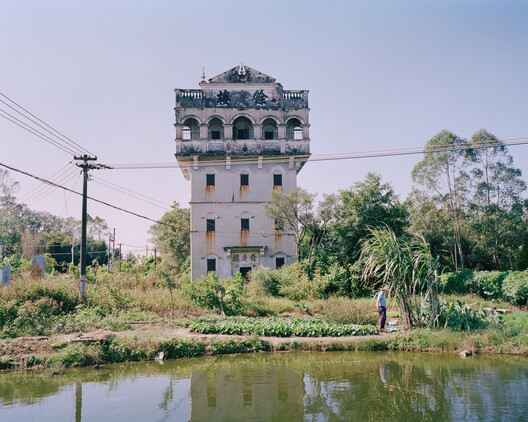
Many of the watchtowers in Jiangmen, in China's Guangdong Province, were built during the time of the Republic of China (1912–1949), as public refuges and defensive fortresses. Most were constructed by Chinese people living overseas, who had returned to their hometowns, or raised funds to build them in the countryside, making them a unique architectural form that combines both Chinese and Western influences. In 2007, the Kaiping Diaolou and Villages in Guangdong were officially designated a UNESCO World Heritage Site.
Shortlist
Ad Astra by Cristopher Rogel Blanquet Chavez & Daniel Ochoa de Olza, Mexico
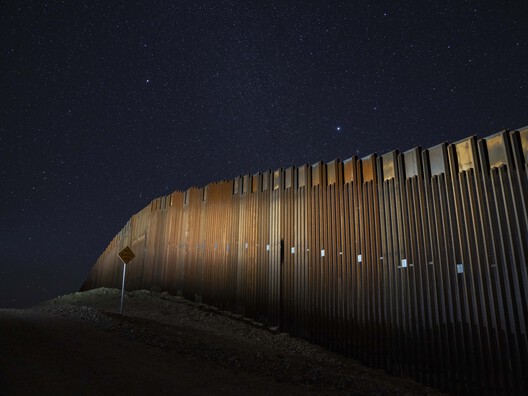
By day, the border wall separating Mexico from the USA looms large, imposing its size, but at night, beneath the stars, it transforms.
Historical Architecture of Iran: Endurance and Persistence Through Time by Farshid Rahimi Kalahroudi, Iran
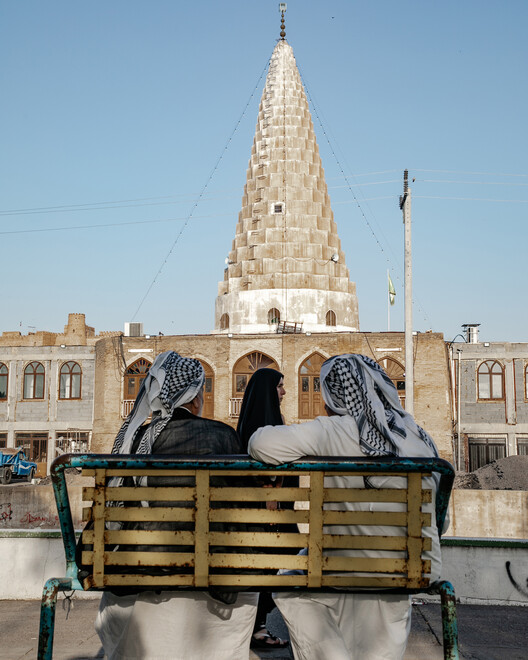
Located in the ancient city of Shush (Susa) in southwestern Iran, this site draws pilgrims, historians and travellers alike. Believed to be the resting place of the biblical prophet Daniel, the tomb's architecture blends Islamic and local Persian styles, featuring a domed structure with intricate brickwork and decorative details.
Hotel Florio by Jean-Marc Caimi & Valentina Piccinni, Italy
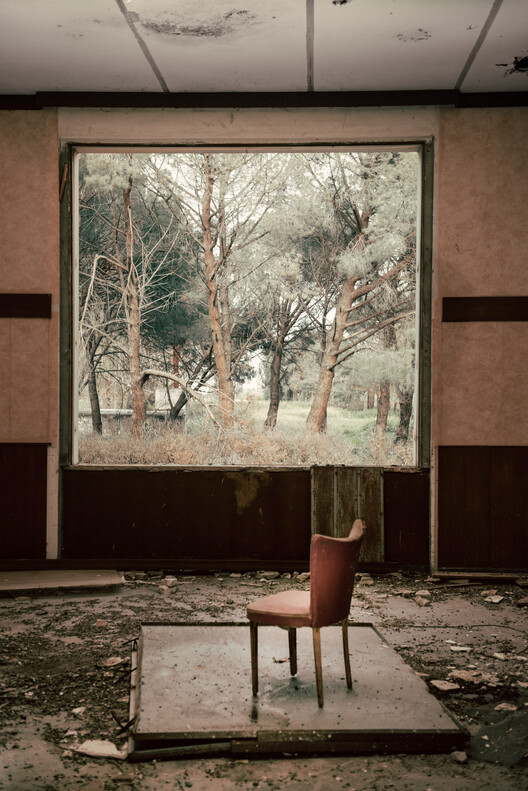
A hall overlooking the pine forest surrounding Hotel Florio. Rooms like this were used during the 1979 mafia summit, providing a fully serviced meeting space within the hotel's guest and conference layout.
Night Shift by Mathieu Moindron, France
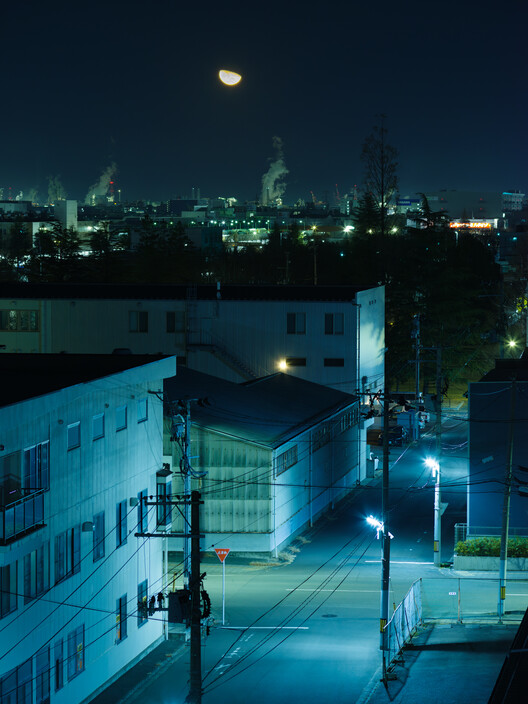
An elevated view over a service district. Warehouses and offices line an empty street in the foreground, while factory chimneys and a half-hidden moon mark the horizon. The whole urban system appears to keep running without visible people.
The Walls of Tohoku by Peter Lipton, Netherlands
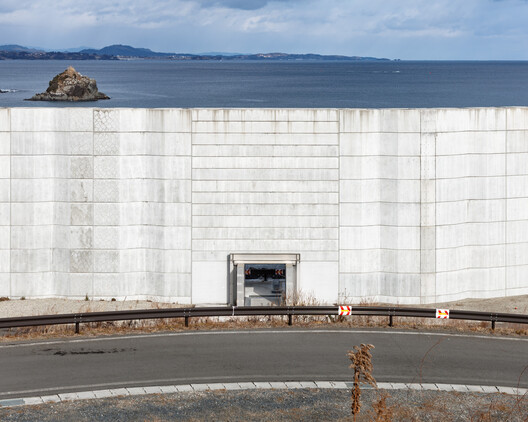
Kabe (Japanese for wall) examines the transformed landscape of Japan's northeast coast following the 2011 earthquake and tsunami. After the devastating waves crested over Tarō's historic 10-metre-high "Great Wall", the Japanese government launched a decade-long project to construct reinforced barriers equipped with massive, automated gates and integrated viewing windows, a "Tsunami Shield" designed to withstand the immense pressure of floodwaters.
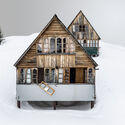
Second-Hand Houses by Stephan Zirwes, Germany
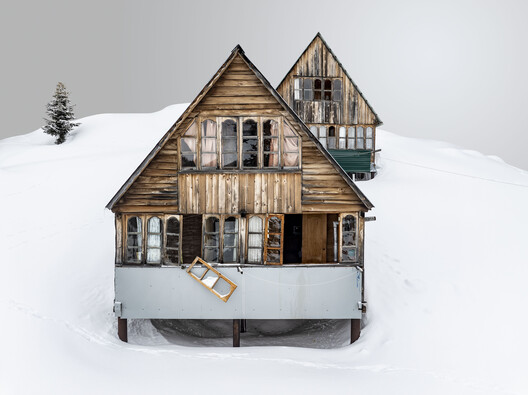
Recycling old building materials is a sustainable way to build small holiday homes. Wood, bricks and window frames from demolished buildings are given a new lease of life, reducing construction waste and the need for new resources. Such reuse not only creates a unique, charming building, but also contributes to environmental protection.
Mausoleum of the Martyrdom of Polish Villages in Michniów by Tomasz Kawecki, Poland
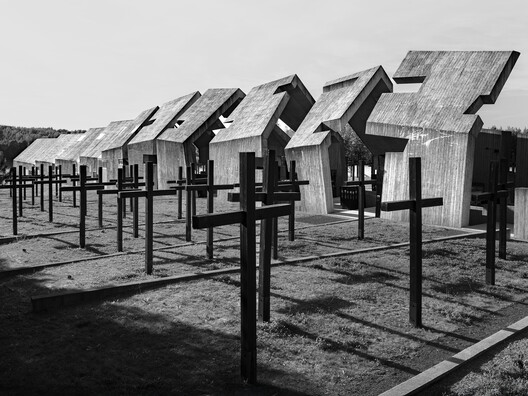
The Mausoleum of Martyrdom of Polish Villages in Michniów was created in 2009 by a team led by Mirosław Nizio. The sculptural form of the mausoleum is an architectural memorial to the pacifications that took place in Michniów and other Polish villages in 1943, during World War II. The structure's monolithic body is open to nature, the sky and the landscape, changing–sometimes abruptly–with the weather, as light reaches the interior through cracks between the segments.