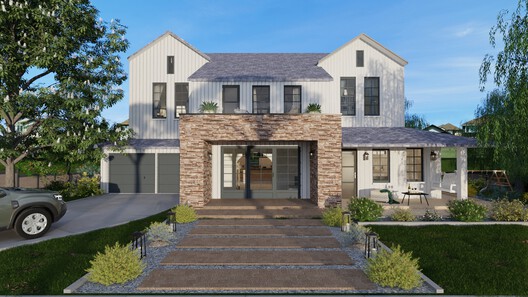
Architectural drawings operate through abstraction. Plans, sections, and elevations condense spatial, constructive, and dimensional information into a set of codes that make sense within the discipline, but are not always immediately legible to those unfamiliar with this language. In some projects, this condition can create a recurring tension between what is designed and what can be understood. This intensifies when the tools used do not correspond to the scale and complexity of the design. In contexts such as single-family homes, renovations, or additions, overly complex software can introduce noise, delays, and unnecessary dependencies, making proposals harder to develop and convey.
Tools such as Cedreo can play a fundamental role in this. Developed for professionals in construction and remodeling, the software allows technical drawings, 3D models, and images to be produced and presented within a unified workflow, with a low learning curve, bringing visualization into earlier stages of the process.
This translates into an interface that organizes the design process in a sequential and coordinated way. Starting from quickly generated plans, the 3D model develops almost simultaneously, allowing layouts, materials, and spatial solutions to be tested without switching between platforms. The system supports multi-story project development by allowing designers to duplicate and adapt floor levels while maintaining model-wide consistency. Plans can be imported in common formats such as JPEG, PDF, or CAD files and used as a drawing base, while parametric elements like doors, windows, and roof systems can be inserted and adjusted across the entire project.
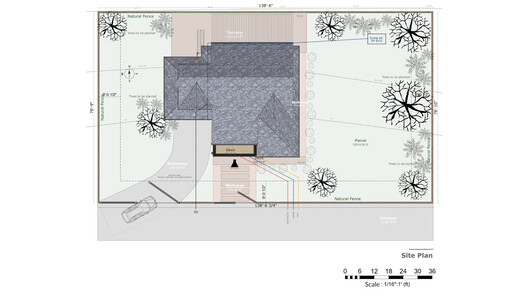
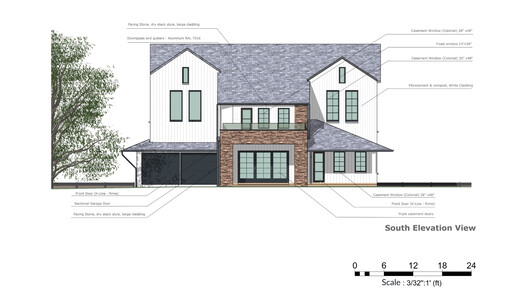
The platform integrates 2D and 3D representations in a continuous way, automatically generating scaled plans, sections, elevations, and area calculations as the design evolves. Electrical layouts, material definitions, and terrain modeling can be incorporated within the same environment, allowing architectural and site information to be developed in parallel. Libraries of elements, presets, and automations reduce repetitive tasks, while near-instant image generation supports ongoing dialogue with clients.
Unlike traditional software, which may require weeks or months of training, more intuitive platforms like this make it possible to produce and present proposals clearly in just a few hours. This improves productivity while expanding the number of professionals able to deliver projects in a more accessible way.

Closing the Gap Between Design and Communication
In residential construction or other small-scale projects, decisions rarely go through multiple technical layers. They are often concentrated in the hands of the end client, making clear communication a decisive factor. These projects represent a high-impact investment, not only financially, but also in terms of expectations around use, identity, and everyday life. Decisions extend beyond the rational, relying on trust built through the ability to anticipate outcomes and visualize what has been designed. When the project remains abstract, hesitation tends to follow. When the space can be understood by the client—its organization, materiality, and atmosphere—evaluation becomes more confident. Presentation, therefore, is not a complement, but part of the decision-making process itself.
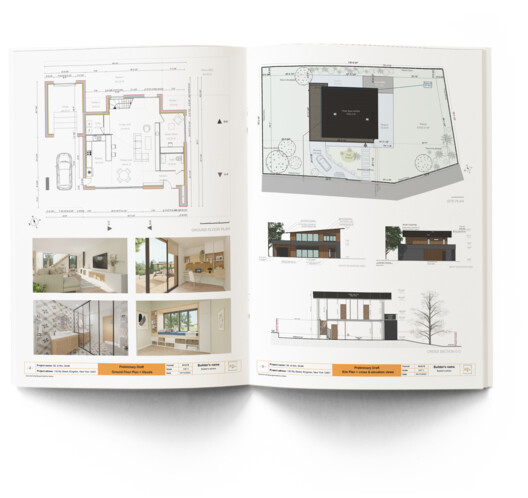
The idea of a professional presentation shifts from the isolated image quality to the coherent organization of information. This is not simply about producing more realistic renderings, but about articulating different layers of reading in an integrated way. An effective presentation combines clear, dimensioned plans; sections and elevations that explain the construction system; three-dimensional visualizations that anticipate spatial experience; and well-organized documents that consolidate this information into a coherent and accessible set. More important than each individual element is the consistency between them. When plans and images do not align, or when the process requires multiple translations between software, communication becomes fragile.
How Time and Workflow Shape Decision-Making
Traditional workflows, based on fragmented tools and outsourcing, create long intervals between meetings, development, and presentation, reducing engagement. By shortening this interval, more agile tools shift when decisions are made, allowing evaluation to happen during the process, while the client remains involved.

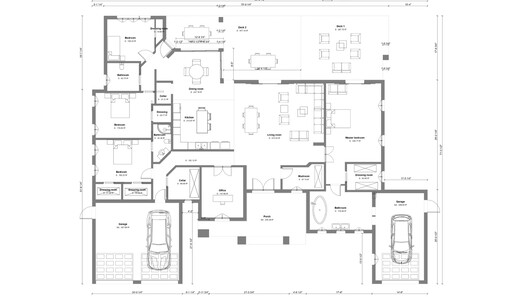
The ability to iterate quickly transforms how the process is perceived. Adjustments made in near real time make the project more transparent and easier to grasp, and this transparency translates into trust, strengthening collaboration between clients and designers. Agile, coordinated processes signal control, while slow workflows suggest uncertainty. In this sense, responsiveness is not only operational but also communicative.
In lower-complexity projects, these transformations directly impact practice. The ability to develop, adjust, and present a project within a single workflow reduces external dependencies, shortens timelines, and improves control. This is especially relevant in contexts where professionals take on multiple roles throughout the process.
The integration between design and presentation points to a broader shift: visualization is not the final stage, but a structuring element of the design process itself. In projects where decisions depend directly on perception and trust, this reduces uncertainty and brings the project closer to realization.


