As major cultural events, institutional transformations, and new architectural commissions unfold across different geographies, this week's discourse highlights how architecture operates at the intersection of public life, creativity, and long-term adaptation. With Milan Design Week 2026 foregrounding process, experimentation, and citywide participation, the projects and initiatives emerging this week point to a broader shift toward openness, accessibility, and experiential engagement across disciplines and urban contexts. Ongoing investments in cultural infrastructure, from new museums to large-scale renovations and competition-winning proposals, further underscore how institutions continue to recalibrate their spatial and social roles in response to evolving environmental, technological, and cultural demands.

Design as Event, Exhibition, and Urban Experience
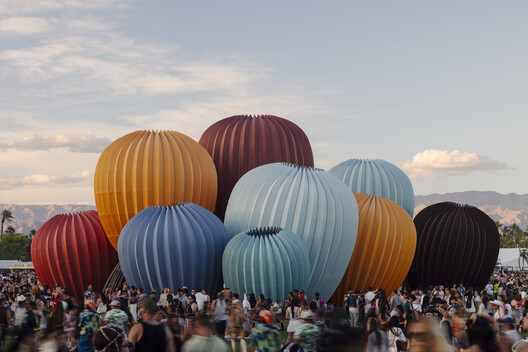
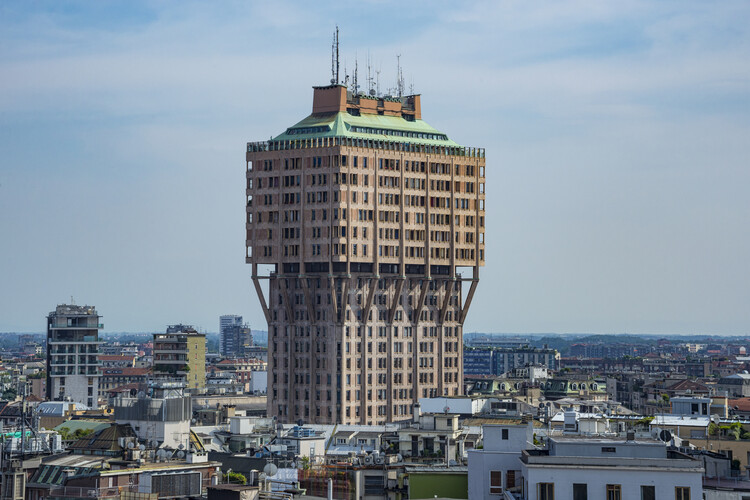
Milan Design Week 2026 returns from April 20 to 26 as a citywide platform structured around the Fuorisalone theme "Be the Project," reframing design as an open-ended, process-driven practice shaped by experimentation, collaboration, and participation. Across a distributed network of venues, the city becomes an active field of design, where installations and exhibitions unfold across districts including Brera, Tortona, and Isola, positioning Milan itself as a continuous spatial narrative in which architecture, material research, and digital practices intersect. Extending this logic of spatial experimentation into a radically different context, the 25th edition of Coachella Valley Music and Arts Festival integrates large-scale installations into the desert landscape of Indio, where curated works by Public Art Company explore monumentality through light, transparency, and sensory immersion. New commissions by Sabine Marcelis, Kyriakos Chatziparaskevas, and LADG transform the site into a field of temporary environments that function as both sculptural landmarks and inhabitable spaces, while returning installations by artists including Francis Kéré and Edoardo Tresoldi reinforce the festival's ongoing dialogue between architecture, art, and landscape.
Cultural Institutions: Expansion, Renewal, and Long-Term Strategies
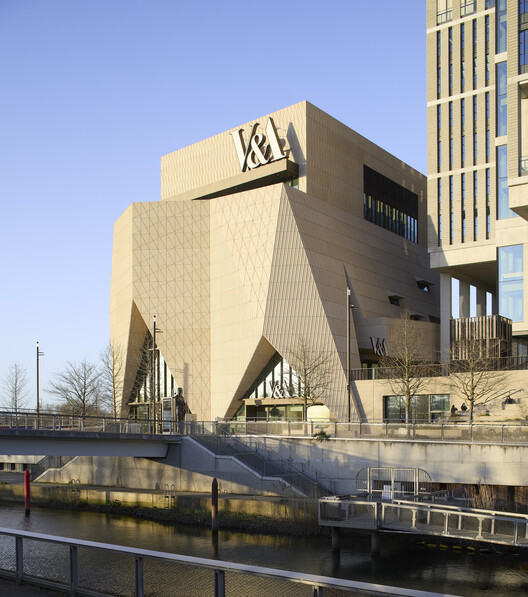
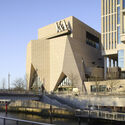
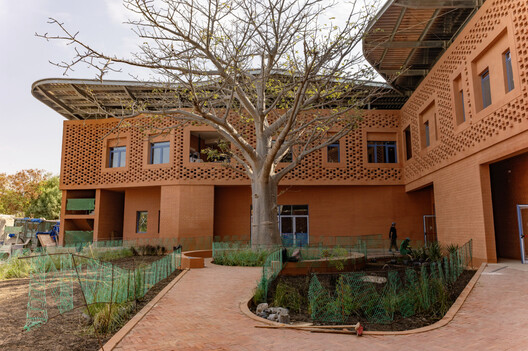
Across Europe and beyond, this week's institutional projects reflect how museums and cultural organizations are expanding their spatial, social, and environmental roles through new construction, adaptive transformation, and long-term renewal strategies. In London, V&A East Museum by O'Donnell + Tuomey, opening on April 18, 2026, introduces a permeable architectural system of vertically connected galleries, learning spaces, and public areas wrapped in a sculpted concrete façade, extending the V&A's institutional presence into East London while foregrounding accessibility, global creative practices, and community engagement. In Dakar, Kéré Architecture's Goethe-Institut marks a milestone as the first purpose-built Goethe-Institut on the African continent, organized around a central baobab tree and constructed with locally sourced laterite bricks; conceived as a platform for cultural exchange, education, and collaboration, the project reflects Francis Kéré's bioclimatic and materially grounded approach while establishing a long-term infrastructure for dialogue between West Africa and Germany.
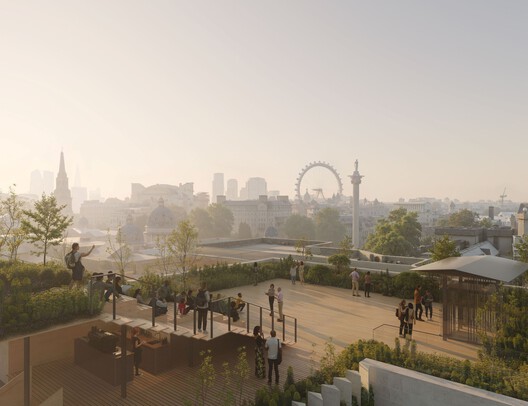
In Los Angeles, the Getty Center is preparing for its most extensive modernization since its 1997 opening, with a planned closure from 2027 to 2028 to enable upgrades that improve accessibility, environmental performance, and gallery configurations while preserving the identity of Richard Meier's pavilion-based campus and its integration with landscape and light. Meanwhile in London, Kengo Kuma & Associates' selected proposal for a new National Gallery wing under the Project Domani initiative extends the museum toward Trafalgar Square through a stepped massing in Portland stone, combining new gallery sequences and civic spaces with landscaped roofs and urban connections, positioning the expansion as the institution's most significant transformation while reinforcing its evolving role as a public cultural infrastructure.
On the Radar
Níall McLaughlin Architects' Cathedral Precinct Project to Transform Sydney's Broken Bay
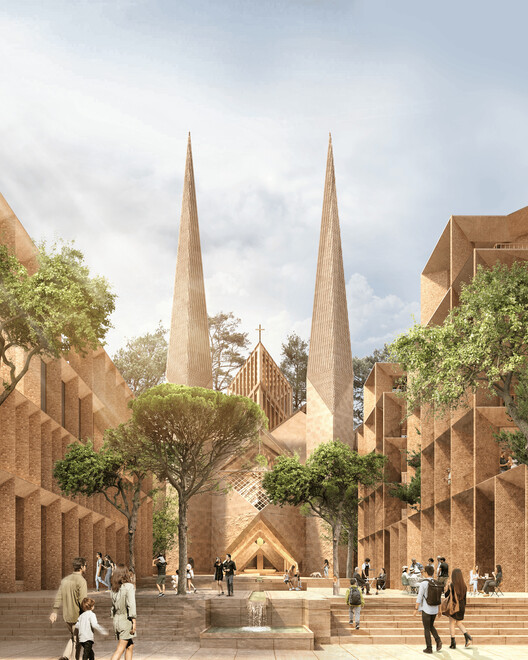
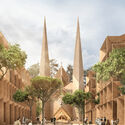
Níall McLaughlin Architects has been appointed to design the Cathedral Precinct Project in Sydney's Waitara suburb, marking a major milestone in the 7.7-hectare development that will integrate a new cathedral, education facilities, and community services into a unified civic and spiritual environment. Led by the Diocese of Broken Bay, the project is conceived as a "virtuous circle" of Catholic life, linking worship with an educational pathway from early learning through secondary education in collaboration with St Leo's Catholic College. Developed with Hayball as executive architect, the design draws on the Hawkesbury River watershed and surrounding landscape, shaping a material language of timber and sandstone. The precinct will include a cathedral forecourt and public amenities alongside pastoral and administrative functions, while preserving Blue Gum High Forest and introducing roof gardens to support biodiversity and long-term environmental care.
COX Architecture's Griffith University CBD Campus to Transform Brisbane's Historic Treasury Building
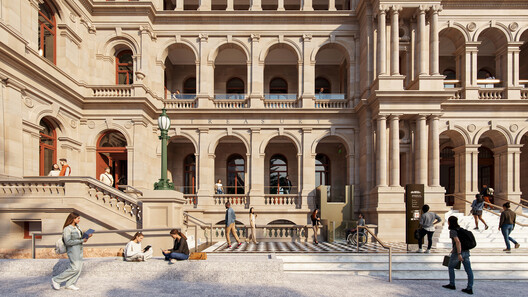
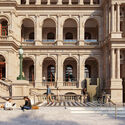
COX Architecture, in collaboration with Griffith University, FDC Construction and Fitout, and heritage consultant Lovell Chen, is set to transform Brisbane's historic Treasury Building into a new CBD campus as part of a cross-river university network linking with its South Bank creative and performing arts hub. Scheduled to open in 2027, the project will accommodate around 6,000 students and 200 staff, introducing flexible teaching environments for business, IT, and law while carefully preserving and reactivating the building's heritage fabric, originally constructed between 1886 and 1928 and later altered during its use as the Treasury Casino. The design re-centers the restored internal courtyard as a civic and academic heart, reconnected to natural light through new skylights, while a light-touch approach reinstates key heritage elements, improves accessibility, and opens public areas for events and learning, positioning the transformation as both an educational upgrade and a renewal of one of Brisbane's most significant civic landmarks.
Autodesk Receives 2026 National Building Museum Honor Award for Transforming Digital Design Workflows
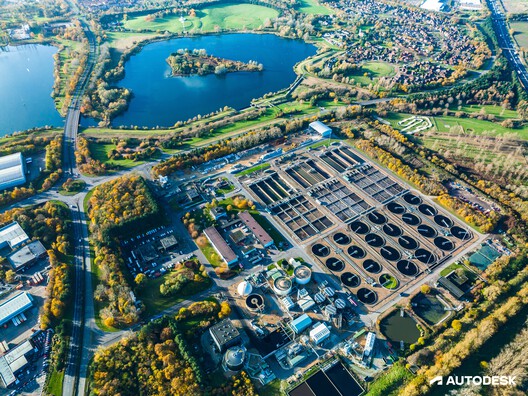
The National Building Museum has announced Autodesk as the recipient of its 2026 Honor Award, recognizing the company's longstanding role in reshaping architectural and construction workflows through digital design technologies. Founded in 1982 and known for pioneering AutoCAD, Autodesk has developed into a global platform provider for architecture, engineering, construction, manufacturing, and media industries, with its cloud-based ecosystem, including the Design and Make Platform and Autodesk Forma, positioned around connected data environments, AI-assisted workflows, and integrated project delivery. The Honor Award, bestowed annually by the Museum, recognizes individuals and organizations that have made significant contributions to the built environment by advancing building arts and sciences and shaping cultural and civic life, with past recipients including Gensler, Arup, Skidmore, Owings & Merrill, and the U.S. Green Building Council.
This article is part of our new This Week in Architecture series, bringing together featured articles this week and emerging stories shaping the conversation right now. Explore more architecture news, projects, and insights on ArchDaily.