What do lightweight materials bring to public space with an ethical, ecological, and non-extractive design principle? Various textile textures offer a point of entry, being closer to the body than heavy conventional structural materials. Through its flexibility and responsiveness, it enables a form of soft enclosure rather than a fixed boundary in architectural space. Responding to minimal environmental stimuli, the fabric brings continuous movements into space. When layered or assembled, it produces gradations of density, depth, and enclosure, while recent innovative fabrication technologies extend the possibilities of its form and structural durability.
Semi-transparent materials further mediate the conditions of visual permeability and bodily experience of the space. By transmitting and filtering light, they blur clear separations between interior and exterior, solid and void, creating thresholds that are neither fully open nor fully enclosed, but constantly in negotiation. Reinterpreting structure in urban space through lightweight, translucency, and softness opens up alternative modes of spatial perception and bodily engagement.
The following 5 projects show how the aesthetics and textures of lightweight, semi-transparent materials such as textile, polycarbonate, mesh, and translucent surfaces can mediate softness to redefine relationships between public and personal, open and intimate, creating gradients of spatial experience. Spanning both green landscapes and dense urban contexts, these architectural interventions employ these materials to explore lightness as a spatial effect, defined through permeability and flexibility, enabling shifting boundaries, adaptable conditions, and multiple modes of spatial occupation for cultural and social activities.
Related Article
The Illusion of Lightness: Designing Civic Voids for Public Life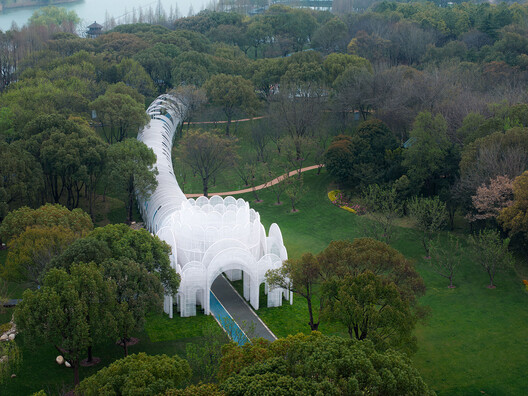
The Memory of the River / Alsar Atelier + SCRD + El Lider S.A.S + INGEACERO
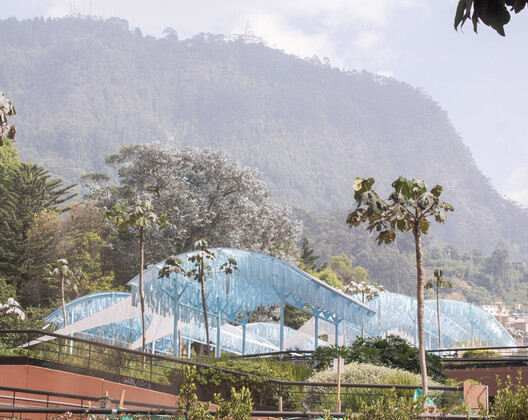
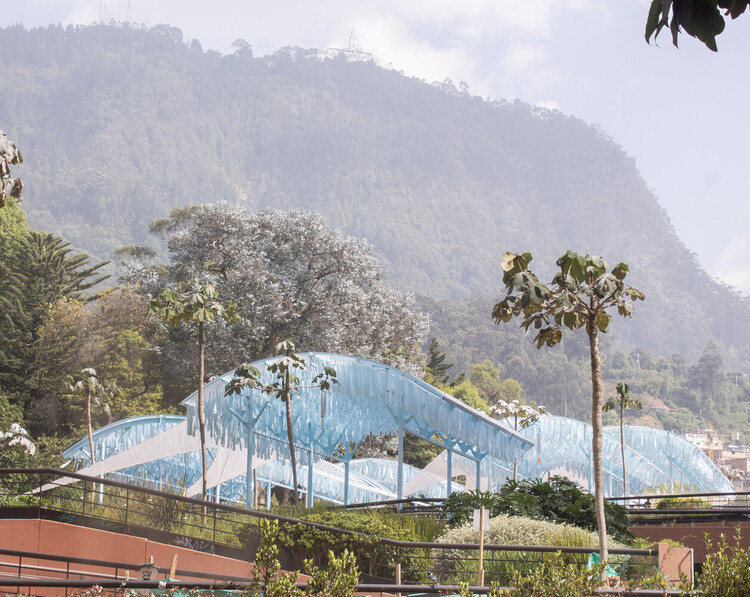
"The Memory of the River" in Bogotá is a mobile and temporal infrastructure that reactivates urban spaces at the intersection of public art and ephemeral architecture. Inspired by the adaptability of the river and its capacity to carry collective memory of the place, the design concept of the structure adopts a flexible, reassembleable modular system that allows for accommodating diverse topological and temporal conditions. The structure is enveloped in 15,000 pieces of blue fabric, evoking the transient motion and particulate nature of water. Combined with a transparent polycarbonate cover, the movement of these floating textile strips, activated by wind, creates a dynamic play of light, rhythm, and permeability—cultivating an atmosphere of lightness and spatial transparency within the urban environment. It creates an inviting setting for cultural activities and public encounters.
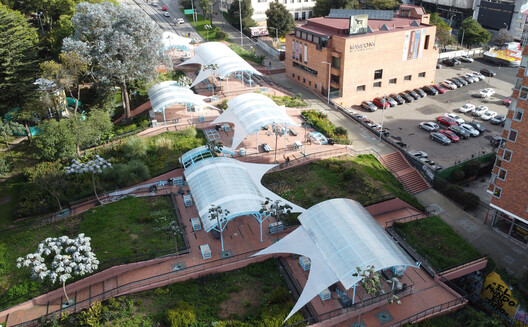
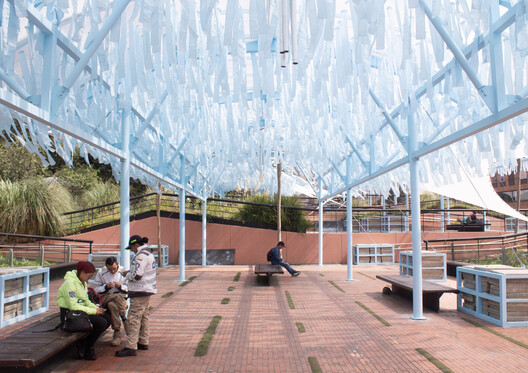
The displacement generated by the wind establishes a direct dialogue with the physical properties of the river and, when situated under a transparent polycarbonate cover, produces a changing atmosphere based on plays of light, shadow, and transparency.
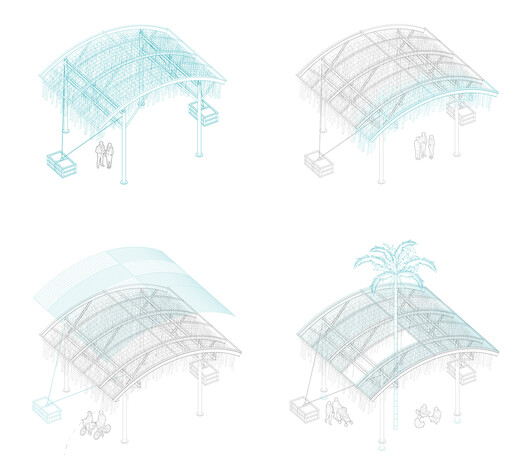
Veil Craft Installation / Figure
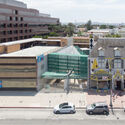
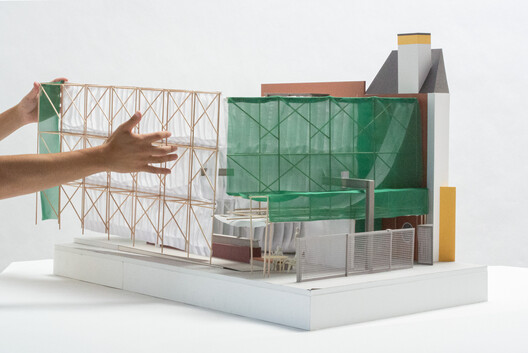
Located in Los Angeles, the Veil Craft Installation by Figure reactivates an underutilized courtyard—an urban gap—through the use of construction textiles. Materials such as tarps and debris netting are ubiquitous in cities, typically marking exclusion and enforcing boundaries around construction sites. Here, however, they are repurposed to destabilize these normative boundaries shaped by material languages in the urban condition. Scaffolding wrapped in green and white debris netting creates an ambiguous façade: at first glance, it resembles a construction site, yet a shaded threshold subtly invites passers-by into the courtyard beyond. Inside, pleated white netting drapes around a triangular void, forming a layered enclosure that balances openness with intimacy. The overlapping translucent surfaces create a textured opacity, enhancing shifting perceptions and unexpected spatial encounters.
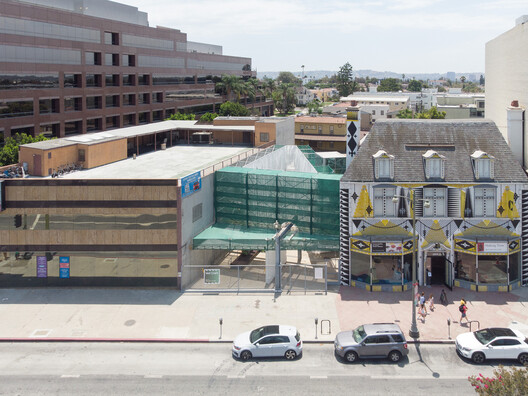
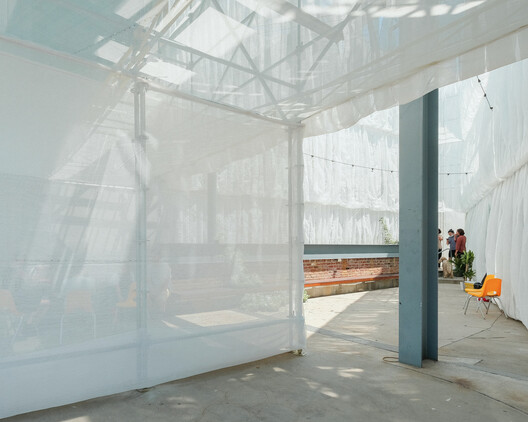
The various spaces perform a continuously shifting and unfolding act of veiling and revealing as one navigates through the courtyard, and the careful stitching and assembly of the textile panels juxtapose references to domesticity, body, garment, and ornamentation alongside typical construction practices.
Emerald Screen Pergola / Wutopia Lab
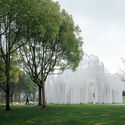
The Emerald Screen Pergola by Wutopia Lab in Bogong Island Ecology Park in Wuxi, China, is a semi-transparent structure made of white steel mesh. Reinterpreting the traditional pergola—typically built from bamboo or wood in classical Chinese gardens—the project transforms it into a contemporary lightweight intervention. Its bright, airy form contrasts with the surrounding greenery while simultaneously allowing plants to grow over and integrate with the structure, functioning both as a sunshade and a trellis. The layered mesh creates a see-through scenery, producing depth and a shifting visual experience within the garden, while maintaining the poetic qualities of the traditional garden element.
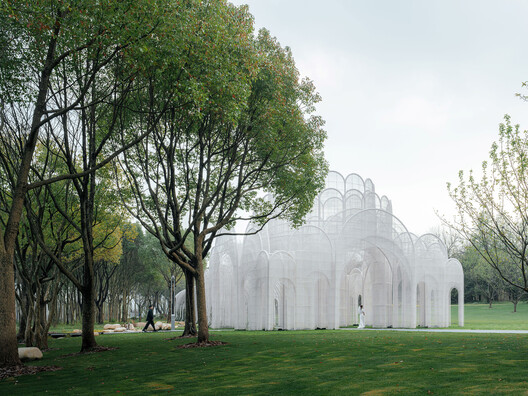
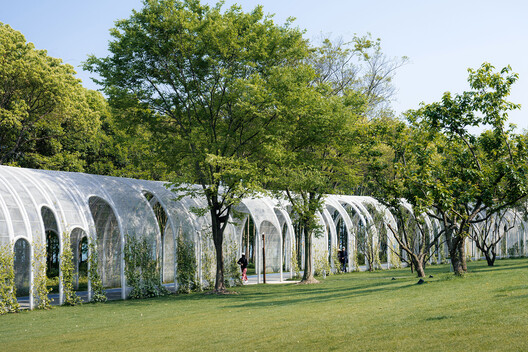
These structures open, close, stand-alone, overlap, and even disappear, redefining the previously monotonous design of the trellis corridor. The vibrant interplay of light evokes the image of a Dragon Dance.
Common Thread / SO-IL
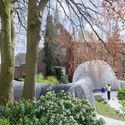
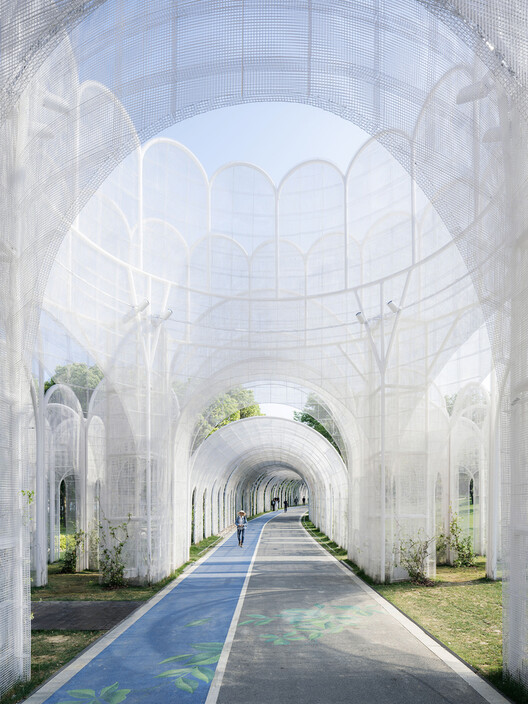
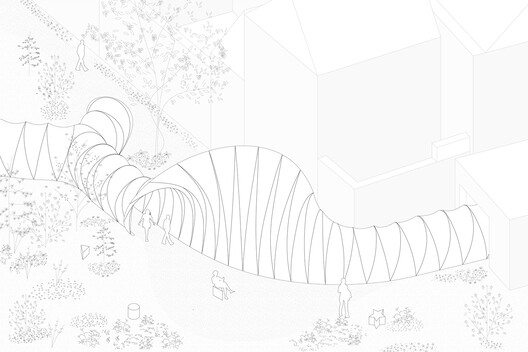
Common Thread, located in Bruges, is a wandering wave-form tunnel that reconnects the city with a previously hidden 19th-century monastery courtyard. The spiraling passage, constructed from 3D-knitted textile, draws inspiration from the town's lace-making heritage, craft knowledge historically passed down through generations of women. By reinterpreting this tradition through contemporary 3D knitting technology, the project explores geometric patterning alongside computational simulations to optimize both structure and material performance. The result is a lightweight, flexible form that guides visitors through a tactile and immersive spatial and material experience, mediating between past and present, craft and technology.
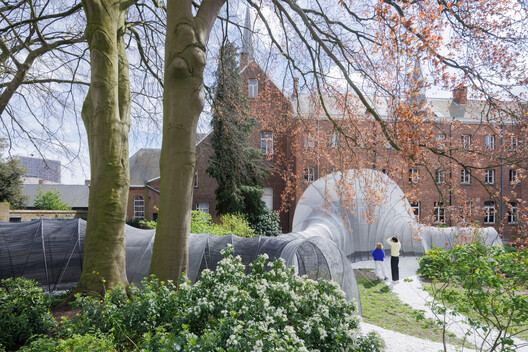
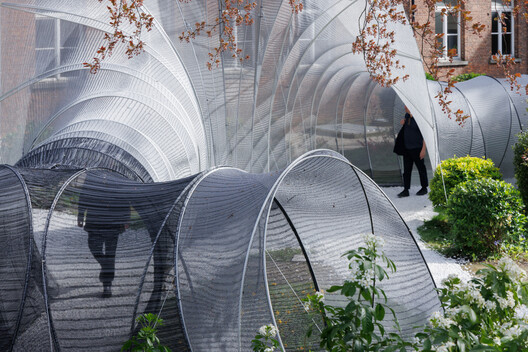
The dynamic design builds upon previous explorations, continuing to experiment with finding the bend, play, elasticity, and pliability in standardized materials.
Sikbang Maru Pavilion / one-aftr
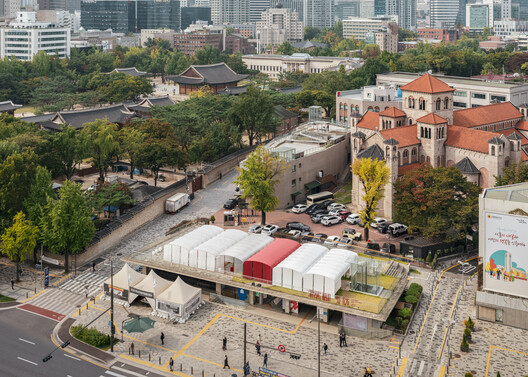
The Sikbang Maru Pavilion in Seoul reinterprets the greenhouse typology as a shared environment for both plants and people to sit, rest, and gather. Organized as a sequence of bays, the pavilion creates four distinct interior conditions through variations in textile coverings, light, and airflow. The first zones are clad in white shade mesh, producing bright and inviting spaces, while a greenhouse bay wrapped in translucent film remains visually connected to both the exterior and adjacent interiors. A meditation zone, enclosed with black fabric, offers a more introspective and calm atmosphere within the dense urban context. At the entrance bay, light-transmitting fabric combined with translucent PVC curtains introduces a softer, more intimate spatial threshold. Through these layered materials, the pavilion embodies a gradient of openness and enclosure within a lightweight architectural framework as a climate-conscious, cultural space.
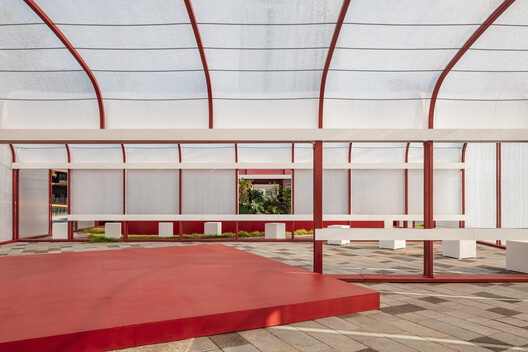
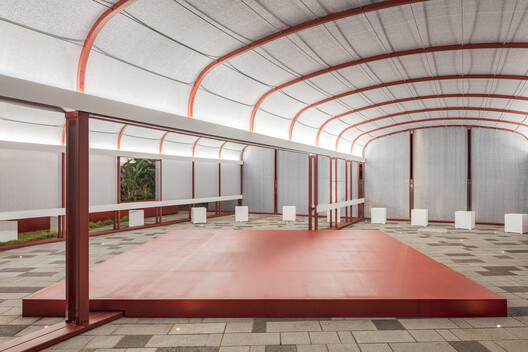
"Sikbang Maru" introduces an economical, accessible, and versatile system, underscoring architecture's role in controlling and enhancing our environment. But most importantly, it offers a welcoming public space that presents various atmospheric perspectives under a single roof.
This article is part of the ArchDaily Topic: Light, Lighter, Lightest: Redefining How Architecture Touches the Earth, proudly presented by Vitrocsa, the original minimalist windows since 1992.
Vitrocsa designed the original minimalist window systems, a unique range of solutions, dedicated to the frameless window boasting the narrowest sightline barriers in the world. Manufactured in line with the renowned Swiss Made tradition for 30 years, Vitrocsa's systems "are the product of unrivaled expertise and a constant quest for innovation, enabling us to meet the most ambitious architectural visions."
Every month we explore a topic in-depth through articles, interviews, news, and architecture projects. We invite you to learn more about our ArchDaily Topics. And, as always, at ArchDaily we welcome the contributions of our readers; if you want to submit an article or project, contact us.