From April 20 to 26, Milan Design Week 2026 returns as a citywide platform where design operates as both a cultural practice and a form of exploration. Framed by the Fuorisalone theme "Be the Project," this year's edition shifts the focus from outcome to process, positioning design as a dynamic, human-centered act shaped by intuition, responsibility, and transformation. Installations and exhibitions across the city foreground making as an open-ended condition, one that embraces error, temporality, and experimentation as integral to creative production. Within this context, design becomes a space of exchange between disciplines, materials, and intelligences, reflecting broader conversations around sustainability, emerging technologies, and the evolving relationship between the physical and the digital.
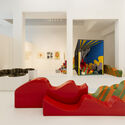
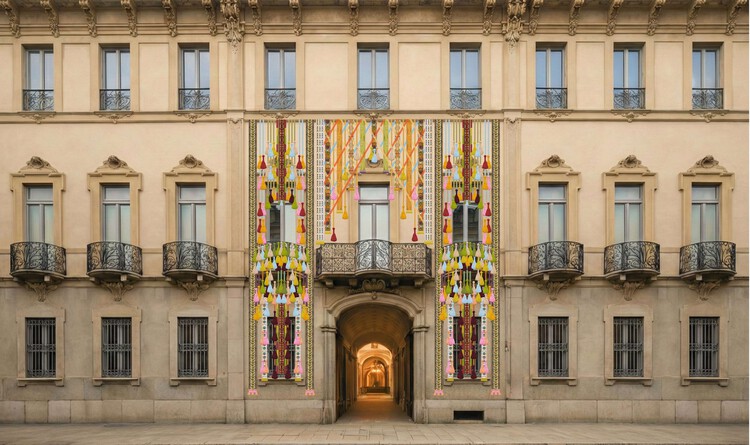
This approach is reflected in the network of venues and districts that structure the event, where Milan itself becomes an active field of design. Institutional platforms such as Triennale Milano, Università degli Studi di Milano, and Politecnico di Milano, alongside iconic sites, including Torre Velasca, are reactivated through temporary exhibitions and interventions. At the urban scale, the 2026 edition expands toward peripheral areas through Alcova's venues, the former Baggio Military Hospital and Villa Pestarini, introducing new spatial and historical layers into the Design Week geography. Across various venues including Brera, Tortona, Isola, and Porta Venezia, a dense constellation of courtyards, showrooms, and industrial infrastructures supports a program that spans scales and disciplines. Within this distributed framework, Milan Design Week aims to construct a continuous spatial narrative in which architecture, design, and the city operate as interconnected systems shaped through movement, perception, and collective participation.
Below, we present ArchDaily's curated selection of installations, exhibitions, and events across Milan Design Week 2026.
Related Article
What to Look Forward to at the Salone del Mobile.Milano 2026: Talks, Installations, and City Interventions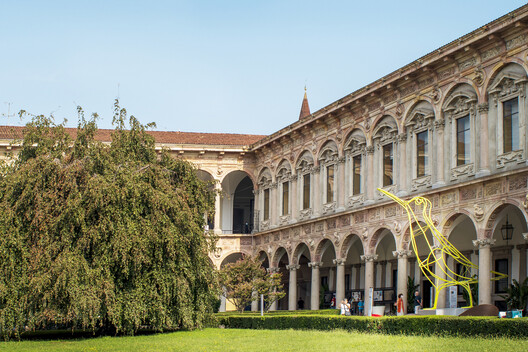
Must-See Installations
Metamorphosis in Motion by Lina Ghotmeh
Metamorphosis in Motion by Lina Ghotmeh anchors the 2026 edition of MoscaPartners Variations within the historic courtyard of Palazzo Litta, transforming the Baroque Cortile d'Onore into an immersive architectural landscape. Conceived as her first outdoor site-specific intervention in Italy, the installation unfolds as a labyrinthine pavilion of curved geometries and shifting spatial sequences, reinterpreting the courtyard's symmetry and axial order through movement and perception. Drawing on her "Archaeology of the Future" approach, Ghotmeh treats metamorphosis not as a formal gesture but as a temporal process, layering memory, material, and environment into a dynamic system where visitors become active participants. Suspended between preservation and activation, the project redefines the courtyard as a living ecosystem in which light, natural elements, and human presence continuously reshape the experience, positioning architecture as both a mediator and a catalyst for transformation.
Inside Out by JR
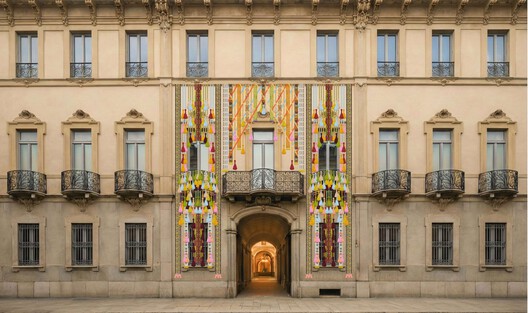
As part of INSIEME, the exhibition curated by Sabato De Sarno at Piscina Cozzi, JR presents a site-specific intervention through his ongoing Inside Out project, transforming the building's façade into a large-scale photographic installation. Composed of monumental portraits of the artisans participating in the exhibition, the work translates individual identities into an architectural surface, introducing their presence into the public realm. By extending the exhibition beyond its interior, the intervention operates at the scale of the city, using the existing structure as a support for representation and situating the figures of the makers within the broader urban context.
Renaissance of the Real by Annabelle Schneider and Snøhetta
At the Fondazione Luigi Rovati, Renaissance of the Real brings together Snøhetta, Annabelle Schneider, and USM in a multisensory installation that examines perception and presence within an increasingly digitized environment. Structured around the modular logic of the USM Haller system, the project reinterprets furniture as an architectural framework, supporting a responsive textile membrane that defines a soft, enclosed spatial environment. Developed as a sequence of sensory conditions, combining sound, light, scent, and tactile elements, the installation is conceived as a calibrated interior landscape within the museum's garden, where spatial choreography guides visitors through a gradual transition from external stimuli to a more contained, introspective setting.
Serotonin – The Chemistry of Happiness by Sara Ricciardi
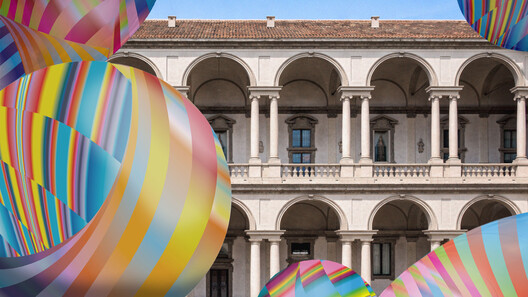
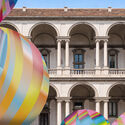
Within the Loggia of the Pinacoteca di Brera, American Express presents Serotonin – The Chemistry of Happiness, an immersive installation by artist Sara Ricciardi. The work translates the concept of serotonin, the "happiness hormone," into a sensory spatial experience that investigates the relationship between beauty and emotional response. A field of inflatable forms expands and contracts rhythmically, creating a soft, breathing environment that responds to movement and presence. Through repetition, material softness, and calibrated light, the installation constructs a continuous perceptual field in which happiness is explored as a physical, spatial, and temporal condition within the historic setting of the Brera Loggia.
Kaleido by MAD Architects
At the Università degli Studi di Milano within the Interni Materiae exhibition, MAD Architects presents Kaleido, an immersive installation developed in collaboration with Canva that translates the logic of a kaleidoscope into spatial form through a sequence of cubic volumes arranged at varying heights and clad in translucent, reflective panels. Installed in the Aula Magna, the 15-meter-long structure generates continuously shifting patterns of light and reflection, producing a dynamic field of perception that changes with the visitor's movement. Structured as a four-part journey, Reconsider, Act, Realize, Share, the installation frames the experience as a progression from reflection to interaction, with a central zone dedicated to experimentation with AI-assisted creative tools. By aligning spatial perception with computational processes of input and output, Kaleido positions architecture as a medium through which digital and physical creativity are experienced as a single, continuous system.
Il Sonno by SolidNature and OMA/AMO
At the SolidNature presentation during the Design Week, OMA/AMO develops Il Sonno, an immersive installation that reconfigures the supermarket typology as a static environment carved entirely from natural stone. Conceived within the broader "Room for Dreams" framework, designboom's site-specific takeover of the ME Milan Il Duca, the project replaces everyday commodities with sculpted mineral objects, milk cartons, detergents, and packaged goods, produced through a combination of five-axis CNC machining and manual finishing across more than forty stone varieties. The familiar spatial logic of retail aisles and shelving is retained but transformed into a continuous geological landscape, where circulation gives way to slowed observation and material permanence. Framed by mirrored surfaces and controlled fluorescent lighting, the installation extends perception into a reflective field in which consumption is recast as contemplation, positioning the supermarket as a constructed system of behavior, time, and material value.
Città delle Idee by MCA - Mario Cucinella Architects
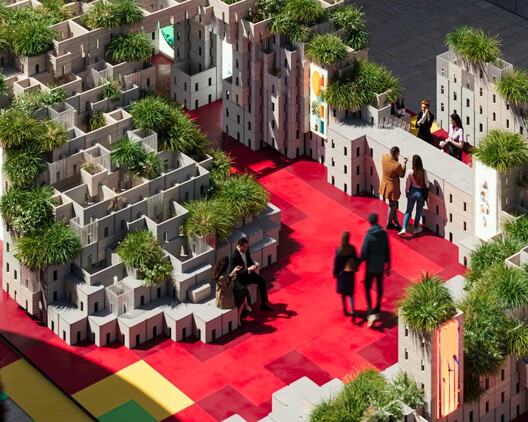
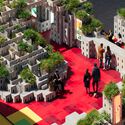
At Solferino 28, MCA – Mario Cucinella presents Città delle Idee, an installation developed for Corriere della Sera, Living, and Abitare during Milan Design Week 2026. The project is conceived as a city that gradually dematerializes, opening spaces for creativity, exchange, and new visions. It is developed through a system of 3D-printed modular elements designed to subtract material rather than accumulate it, with the objective of reducing waste and testing new approaches to additive manufacturing. The installation uses these components to construct an open spatial framework that explores alternative ways of assembling and inhabiting urban structures.
Ooooh, that's EpiQ! By Ricardo Orts Ulises
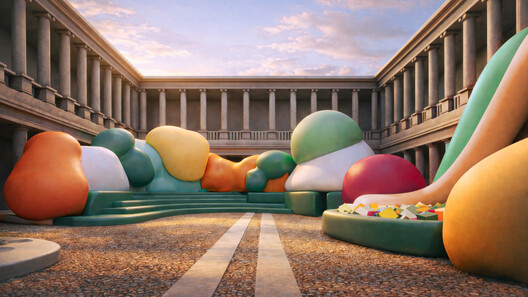
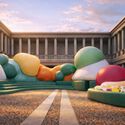
At Palazzo del Senato, home of the State Archives of Milan, Ricardo Orts of Ulises Studio develops "Ooooh, that's EpiQ!", an immersive installation for Škoda Auto. The project transforms the historic courtyard into a fluid spatial environment inspired by the campaign's modeling dough concept, where soft sculptural volumes and malleable surfaces define a continuously shifting landscape. Set in dialogue with the rigid geometry of the existing architecture, the intervention constructs a responsive field of forms that appear in constant transformation, emphasizing flexibility and play as spatial drivers. At the center of the installation, an interactive digital dome extends the experience through projections and real-time visualizations, merging physical and digital layers into a single perceptual system. Through this interplay of material softness and immersive media, the courtyard is reconfigured as an evolving environment in which spatial boundaries remain intentionally unstable.
Must-See Exhibitions
Continuous Present: The Philosophy of Andrea Branzi by Toyo Ito
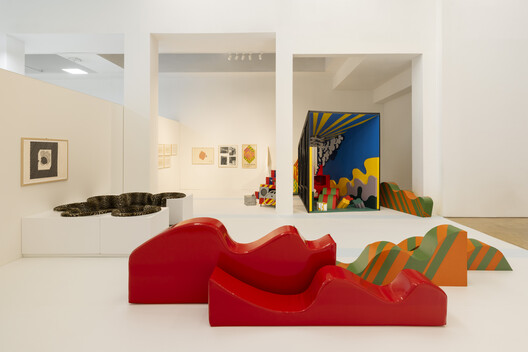
At Triennale Milano, in partnership with Fondation Cartier pour l'art contemporain, the exhibition "Andrea Branzi by Toyo Ito: Continuous Present" presents a major retrospective dedicated to Andrea Branzi, conceived by Toyo Ito and curated by Nina Bassoli and Michela Alessandrini. The exhibition traces Branzi's practice from Archizoom Associati through Alchimia and Memphis to his later anthropological approach to design, assembling more than 400 works including models, objects, installations, drawings, and archival materials. Designed by Ito as a fluid, non-linear itinerary, the display is organized as a "continuous present," where projects and ideas unfold in a spatial sequence that emphasizes continuity between disciplines, scales, and temporal frameworks, with key works such as No-Stop City and the reactivated Open Enclosures positioned as central references in Branzi's vision of the contemporary city. During Milan Design Week 2026, the exhibition is accompanied by a public talk by Toyo Ito at the Triennale Milano, introducing the curatorial approach and Branzi's legacy.
When Apricots Blossom by Kulapat Yantrasast
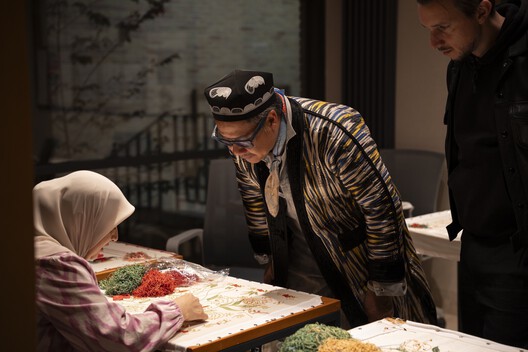
At Palazzo Citterio, When Apricots Blossom is an immersive exhibition commissioned by Uzbekistan Art and Culture Development Foundation and curated by architect Kulapat Yantrasast, exploring the crafts and culture of Karakalpakstan and the wider Aral Sea region. Inspired by a poem by Uzbek writer Hamid Olimjon, the exhibition is structured around three core themes, textiles, food, and shelter, through which it presents newly commissioned works and installations developed in collaboration with artisans from Uzbekistan. These works reinterpret traditional materials and techniques, including silk, felt, wood, ceramic, and reed, into contemporary design expressions developed by twelve international designers such as Bethan Laura Wood, Fernando Laposse, and Marcin Rusak.
Jusoor Design Collections Exhibition by Architecture & Design Commission of Saudi Arabia
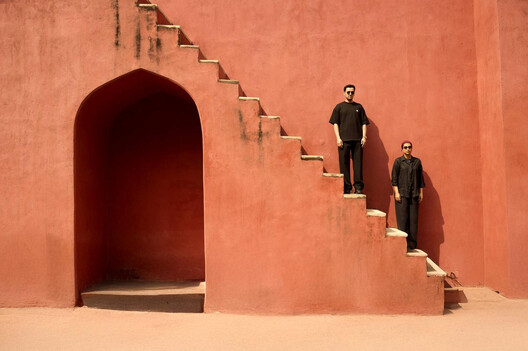
Positioned within the context of Brera, the Architecture & Design Commission of Saudi Arabia presents the Jusoor Design Collections Exhibition, a program curated by Samer Yamani that highlights emerging Saudi designers in dialogue with international design practices. Taking its name from the Arabic word jusoor, meaning "bridges," the initiative extends across Riyadh, Kathmandu, Barcelona, and New Delhi before culminating in Milan, framing design as a transnational system of cultural and material exchange. The exhibition brings together a selection of design works developed through collaborations between Saudi talent and global design brands, emphasizing processes of craft, experimentation, and knowledge transfer.
The Eames Houses by Triennale Milano
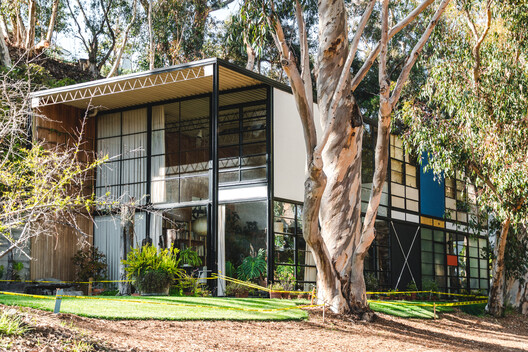
At Triennale Milano during Milan Design Week 2026, The Eames Houses presents the first comprehensive overview of the residential architecture of Charles Eames and Ray Eames, founders of the Eames Office. The exhibition explores their enduring research into prefabrication, modular construction, and human-scale living, tracing ideas developed across their residential projects of the 1940s and 1950s. Central to the installation is the debut of the Eames Pavilion System, a modular architectural framework developed by the Eames Office in collaboration with Kettal, presented through two full-scale pavilions installed at the Triennale. Alongside these structures, the exhibition includes newly commissioned scale models of eight Eames houses, archival drawings, films, photographs, and the launch of a publication dedicated to the project, offering a spatial and documentary reading of the Eames' approach to domestic architecture.
Polish Modernism. A Struggle for Beauty by Federica Sala and Anna Maga
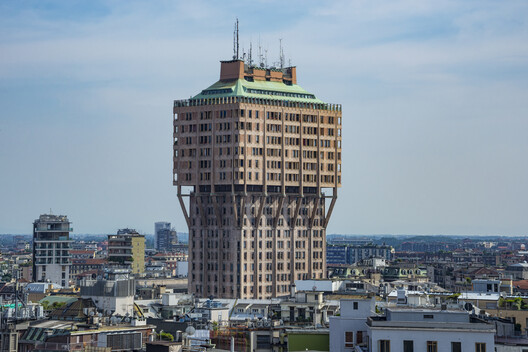
At the 16th floor of Torre Velasca during Milan Design Week 2026, Visteria Foundation presents Polish Modernism. A Struggle for Beauty, an exhibition curated by Federica Sala and Anna Maga. Following its 2025 debut with Romantic Brutalism, the foundation returns with a thematic reading of Polish modernism, positioning historical works in dialogue with contemporary design practices to trace the movement's ongoing influence on Polish visual and material culture. Set within Torre Velasca, an emblematic example of Milan's post-war architecture, the exhibition frames Polish modernism as a cultural project shaped by historical complexity, where the pursuit of beauty extends beyond aesthetics to become a form of cultural expression and continuity.
7+1 Acts of Survival by Francesco Librizzi and Riccardo Robustini
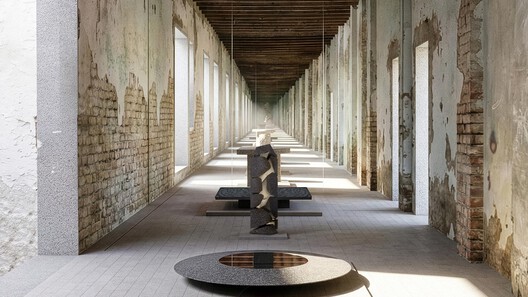
7+1 Acts of Survival brings together seven designers, Kengo Kuma, Marcio Kogan (Studio MK27), Bernard Khoury (DW5), Claudio Silvestrin, Ugo Cacciatori, Elias and Yousef Anastas (AAU Anastas), and Francesco Librizzi + Riccardo Robustini, alongside Casone, in an installation that explores survival as a material and temporal condition. Developed from identical blocks of African black stone, the project establishes a shared starting point for all participants, allowing each designer to generate distinct spatial outcomes through a common material framework. Rather than defining survival as permanence, the exhibition frames it as a process of adaptation, resistance, and transformation, shaped by the dialogue between human intention and the inherent properties of matter.
Food for Thought by IKEA
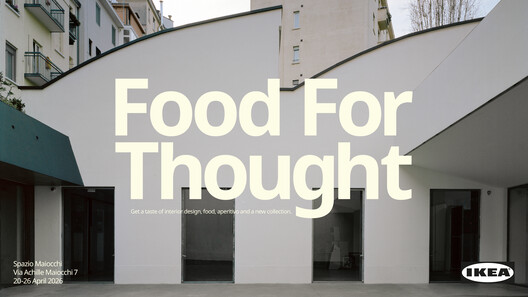
At Spazio Maiocchi in the Porta Venezia Design District, IKEA presents Food for Thought, an immersive exhibition exploring the intersection of design, food, and togetherness through the lens of Democratic Design. Developed in collaboration with international chefs and interior designers, the installation reinterprets the Swedish saluhall through a sequence of room sets and a large working kitchen, where cooking and shared meals become central spatial and social elements. The exhibition presents functional domestic scenarios that examine how food is prepared, served, and experienced in everyday contexts, while also introducing a new IKEA collection integrated within the installation.
DropCity 2026: Modes of Material Mediation
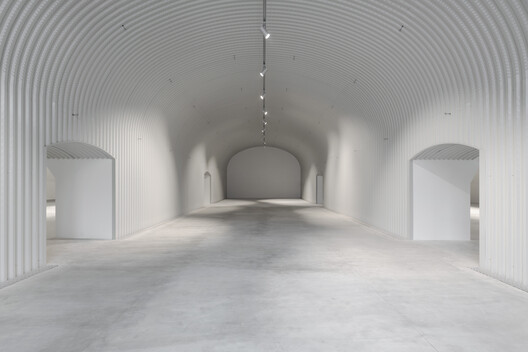
Dropcity presents Modes of Material Mediation, a program that connects exhibition projects, research, and a system of permanent laboratories dedicated to prototyping and manufacturing. More than ten facilities, including ceramics, textiles, woodworking, model making, and 3D production, are open to the public, making visible the tools, methods, and processes typically embedded within design production environments. Developed in collaboration with specialized technical partners, these laboratories operate as an infrastructure for ongoing experimentation, where fabrication and research are integrated into a continuous working system. The program is complemented by exhibitions, including Ordinary Beauty. An Italian Scenario (by Associates Architecture), Soft Fold by Davide Biancucci, and The White House. Domestic Propaganda developed with Politecnico di Milano, alongside installations by Martino Gamper and Konstantin Grcic, and a public program of talks, book launches, and workshops. Located in the tunnels behind Milan Central Station and developed under the direction of architect Andrea Caputo, Dropcity functions as a long-term infrastructure for research, experimentation, and production in design and architecture.
PIU30 by Piuarch Studio
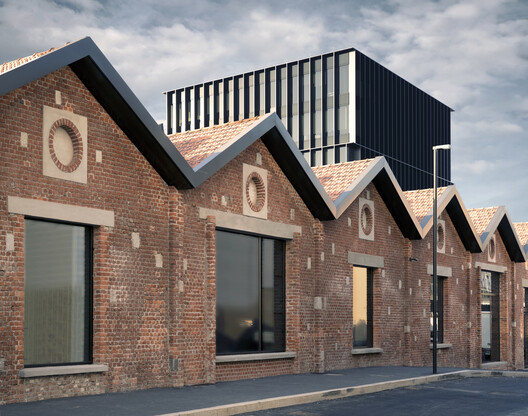
Marking its 30th anniversary, Piuarch presents an exhibition during Milan Design Week 2026 that reflects on the evolution of its architectural practice through a selection of built and ongoing projects. The presentation traces the studio's work across typologies, from office buildings and retail spaces to residential developments and urban regeneration strategies, highlighting its approach to contemporary architecture through sustainability, material research, and urban integration. Accompanied by the launch of a publication, the exhibition also addresses the firm's design methodologies and long-term contribution to the built environment, positioning the retrospective as both a documentation of past work and a framework for future directions.
Must-See Events
Architecture is Not Architecture by Ma Yansong

At Politecnico di Milano, Domus hosts a public conversation on April 22 featuring Ma Yansong, founder of MAD Architects. Titled "Architecture Is Not Architecture," the lecture reflects on architecture as an emotional and cultural language, advocating for a closer integration between the built environment and nature, and shifting attention away from purely technical or economic constraints toward human experience, perception, and symbolic meaning. The discussion situates these ideas within Ma Yansong's broader body of work and editorial research, highlighting how his projects explore the dissolution of rigid disciplinary boundaries in favor of more fluid relationships between landscape, form, and experience.
Building Stories Book Presentation by Francis Kéré
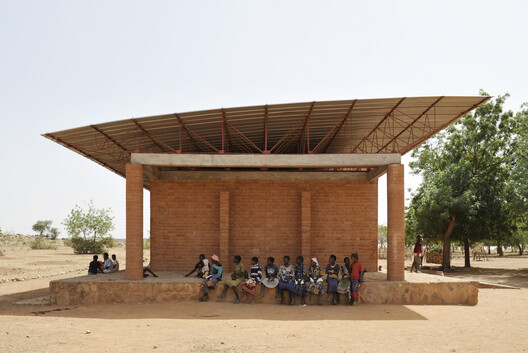
At the Agorà space at Politecnico di Milano, on April 22, architect and Pritzker Prize laureate Francis Kéré presents Building Stories, a book published by TASCHEN, in conversation with culture writer Caroline Roux. The presentation reflects on Kéré's architectural practice through projects ranging from civic buildings to temporary installations across diverse geographic contexts, offering a first-hand perspective on his design process from concept to construction. Developed through Kéré Architecture, his work is recognized for its emphasis on sustainable materials, resource-conscious construction methods, and participatory approaches to building, beginning with the Gando Primary School in Burkina Faso, which brought him international recognition through the Aga Khan Award for Architecture.
Prada Frames
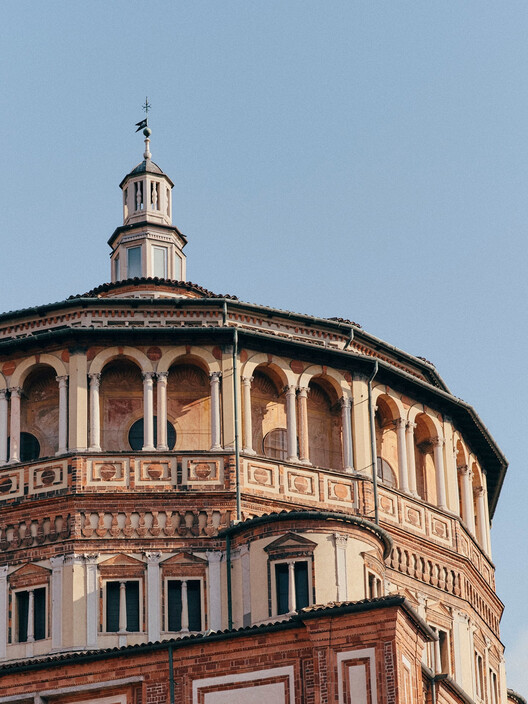
At the complex of Santa Maria delle Grazie, Prada presents the fifth edition of Prada Frames, an annual symposium curated by design and research studio Formafantasma. Titled In Sight, the 2026 edition focuses on image-making as a cultural, political, and material condition, examining how contemporary images operate across representation, technology, and infrastructure. Through a series of lectures and conversations, it addresses topics such as the historical construction of visual systems, the environmental and social costs of digital imagery, and the blurred boundaries between human-generated and machine-produced images, bringing together speakers including Paola Antonelli, Ed Atkins, Alfredo Jaar, Alvaro Barrington, Ila Bêka & Louise Lemoine, Barbara Casavecchia, Kate Crawford, Akram Zaatari, Geert Lovink, Mark Leckey, W. J. T. Mitchell, Hans-Ulrich Obrist, Jussi Parikka, Joanna Piotrowska, Sharon Sliwinski, Barbara Maria Stafford, Jonas Staal, Deborah Willis, and Joanna Zylinska.
The Meanwhile Club by Park Associati
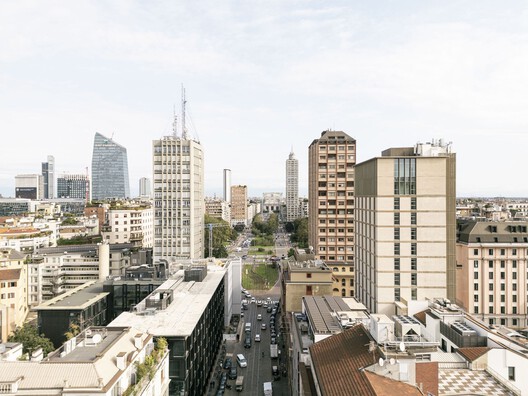
At Park Hub, The Meanwhile Club is presented by Park Associati in collaboration with Le Cannibale as a temporary installation operating between architecture and sound. Conceived as a club and listening room active from April 20 to 24, the project is constructed through the reuse of materials and fragments from past installations, forming a continuously evolving spatial environment. Activated by a curated program of DJ sets, the space becomes a platform for site-specific performances in which sound and spatial configuration are interdependent. Through this interplay, the installation frames the club as a temporal architecture, where rhythm, material reuse, and collective experience define the conditions of the project.
Celebrating Big Atlas by BIG
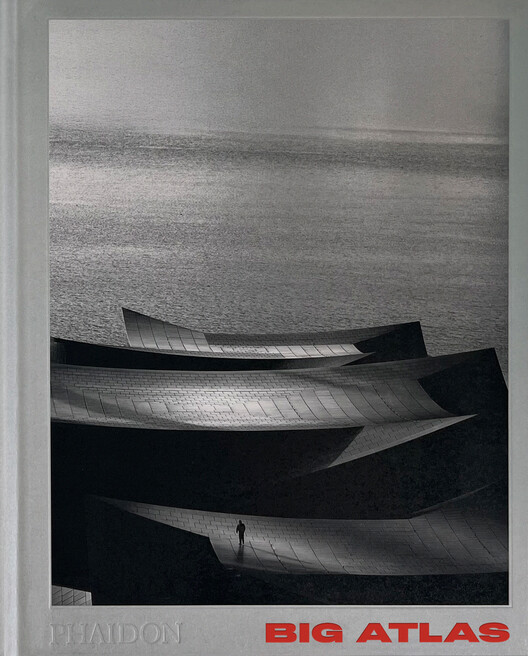
At Alcova, the launch of BIG Atlas, the new monograph by Bjarke Ingels Group published by Phaidon, is presented as a book event that expands into a temporary spatial installation within VOCLA at the Baggio Military Hospital. Conceived as a hybrid between presentation and environment, the project transforms an industrial hangar into a club-like setting where scenography, sound, and social interaction frame the publication's release. The event forms part of Alcova's 2026 program, which unfolds across the Baggio Military Hospital and Villa Pestarini, a private residence designed by Franco Albini and opened to the public for the first time, establishing a dual spatial framework that brings together large-scale, site-specific installations within a former institutional complex and a historically grounded domestic architecture.
We invite you to check out ArchDaily's coverage of Milan Design Week and Salone del Mobile 2026.