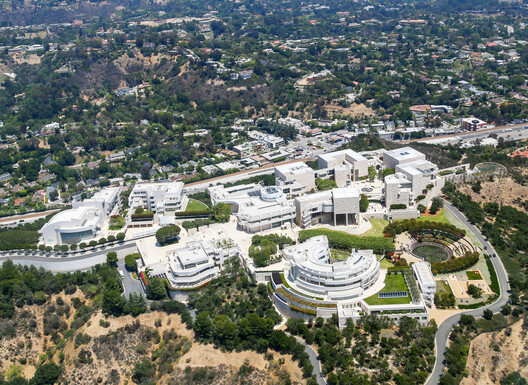
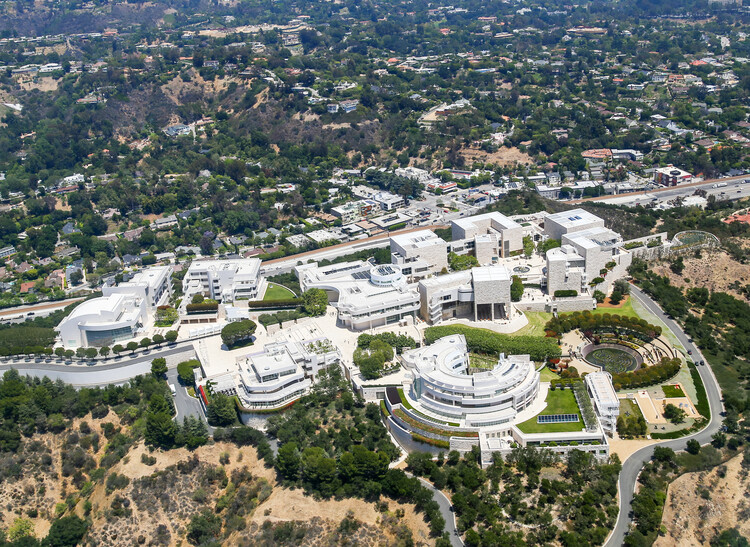
The Getty Center has announced a comprehensive modernization program marking its most significant transformation since its opening in 1997. Located within the Santa Monica Mountains and overlooking Los Angeles, the campus will temporarily close to the public from March 15, 2027, through spring 2028 to accommodate the planned works. The initiative focuses on enhancing visitor experience, improving accessibility, and advancing energy resilience, while supporting the long-term stewardship of the institution. Before the closure begins, the Getty Center will continue its program of exhibitions and events through early 2027.

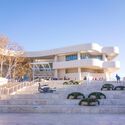

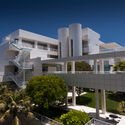
Completed in 1997 and designed by Richard Meier and Partners, the project reflects an approach that emphasizes natural light, geometric clarity, and material consistency. Smaller pavilion structures divide the program into distinct elements, creating a sequence of interior and exterior spaces and framing views toward the city and landscape. Facilities dedicated to research, conservation, and education are distributed across the campus, incorporating passive design strategies such as shading devices, loggias, and extensive glazing. The current modernization efforts build on these principles, extending the performance and usability of the campus in response to contemporary environmental and institutional requirements.
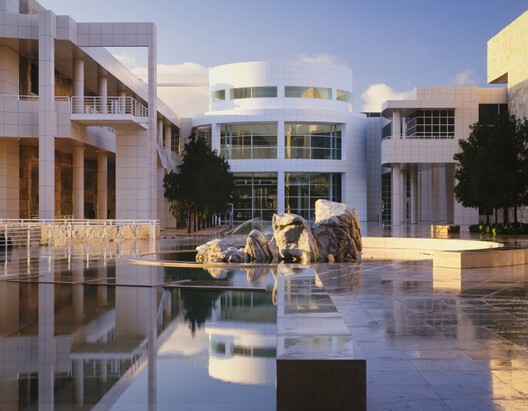
The Getty Center is organized as a multi-building campus composed of pavilions connected by open spaces and gardens, establishing relationships between architecture, landscape, and views of the surrounding region. The complex spans approximately 100,000 square feet across a 110-acre site structured along two ridgelines, responding to the topography and the metropolitan grid. Circulation is defined by an aerial tram linking the base of the site to the main arrival area, leading into a central lobby and a sequence of galleries arranged according to lighting requirements.
Related Article
Frank Lloyd Wright’s Fallingwater Reopens After Restoration, Celebrating Its 90th AnniversaryThe modernization introduces a range of spatial and technical interventions across the campus, combining infrastructural upgrades with curatorial adjustments. Planned changes include the reconfiguration of gallery spaces, the introduction of new artist commissions, and updated exhibition environments that enable more flexible display conditions. Initial phases are already underway, with partial gallery closures supporting upgrades to the HVAC systems, aimed at improving energy efficiency and aligning with current standards for collections care and environmental performance.
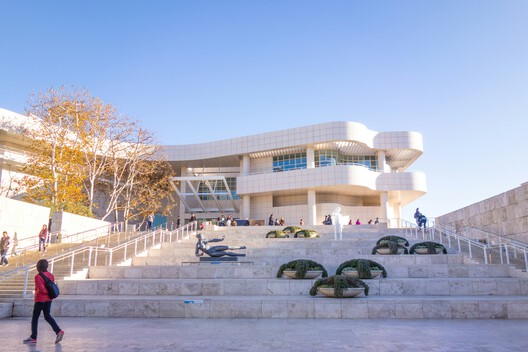
Improvements to circulation and accessibility form a central component of the project, addressing arrival sequences, the tram system, and campus-wide wayfinding. The Welcome Hall will be renovated to function as a clearer point of entry and orientation, incorporating new retail and dining facilities. These interventions are accompanied by broader infrastructure updates, including enhancements to digital connectivity and public amenities, intended to improve the overall functionality of the campus.
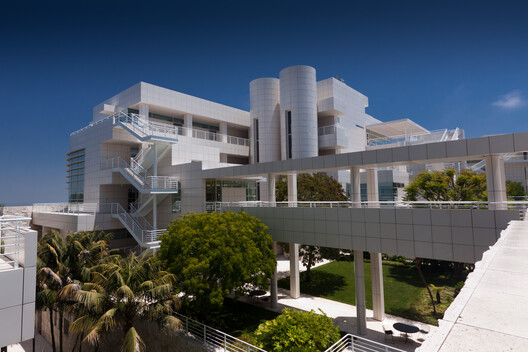
During the closure period, the Getty Villa will remain open and continue to host exhibitions and public programs. In addition to its permanent collection of ancient Greek and Roman art, the Villa will present a selection of works typically displayed at the Getty Center, offering an alternative context for part of the collection. The institution will also maintain collaborations with partners in Los Angeles and internationally, while activating a new programming space on Sepulveda Boulevard that will operate during the closure and remain in use after reopening. Additional initiatives extend beyond the main campus, including the development of a new venue for public programming and the acquisition of a property in Westwood to support scholar programs. Early design studies are underway for the Westwood site, located near a planned metro station, indicating a broader institutional strategy that engages with the surrounding urban context.
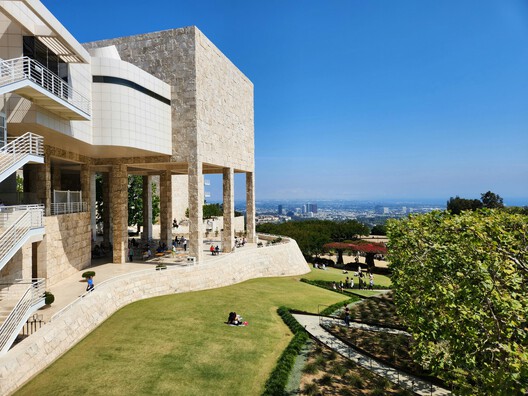
In related preservation and redevelopment updates, Fallingwater, the iconic residential work designed by Frank Lloyd Wright, has reopened to the public following the completion of a three-year conservation program. In Paris, the public observation deck at Tour Montparnasse is closed on March 31, 2026, as part of a broader redevelopment of the tower and its surrounding complex, a project that revisits one of the city's most debated high-rise interventions. Meanwhile, in London, the BT Tower is set to be converted into a hotel, with Orms appointed to lead the transformation of the postwar landmark.