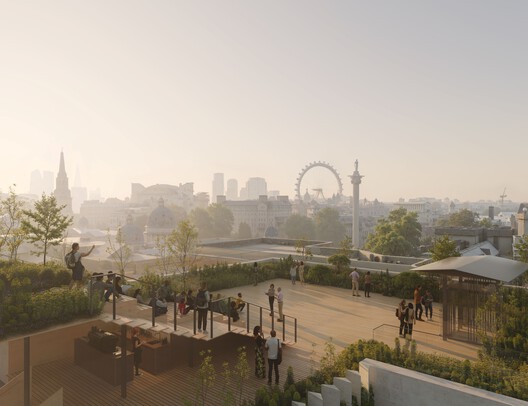
London's National Gallery has announced Kengo Kuma & Associates, in collaboration with BDP and MICA, as the winners of the international competition to design a new wing for the institution. Launched in September 2025, the competition attracted 65 submissions from international practices, from which six teams were shortlisted to develop proposals. The selection marks a key milestone in the institution's long-term development strategy, Project Domani, positioning the new addition as a central component in the reconfiguration of its architectural and curatorial framework. Conceived as the most significant transformation of the museum since its establishment in 1824, the project aims to expand both spatial capacity and curatorial scope, enabling the presentation of a continuous narrative of Western painting within a single setting.
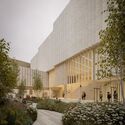

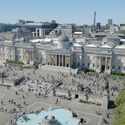
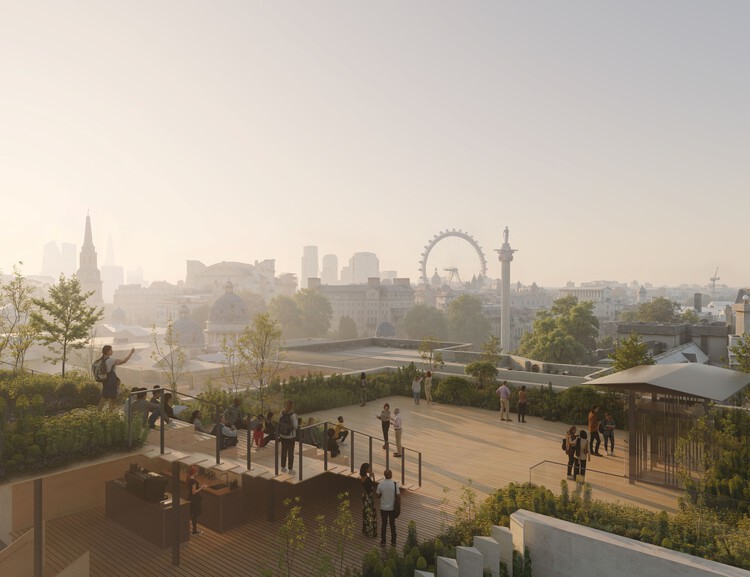
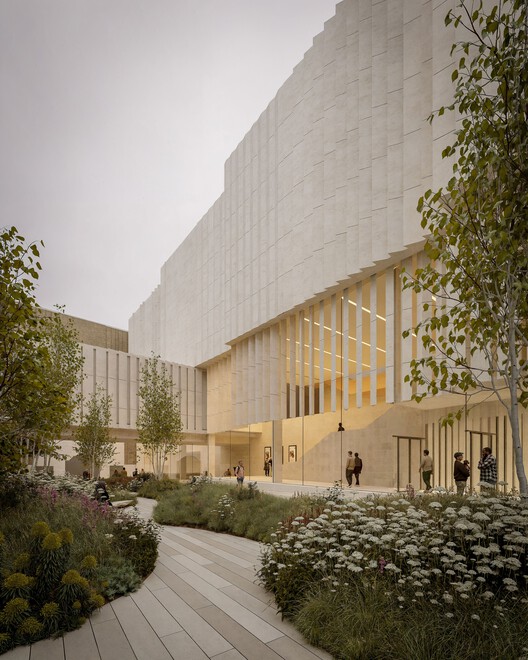
The selected proposal was described by the jury as "exemplary," highlighting its capacity to balance formal clarity with sensitivity to context while establishing a dialogue with the existing Sainsbury Wing. The design introduces an architectural language articulated through stepped massing and the use of Portland stone, responding to the surrounding urban fabric and allowing natural light to permeate the interior. Landscape elements, including a roof garden and planted public spaces, contribute to a more porous and accessible public realm, highlighting connections between Leicester Square and Trafalgar Square. In this way, the project aims to extend beyond the building envelope to engage with the broader urban condition and reinforce the Gallery's civic presence.
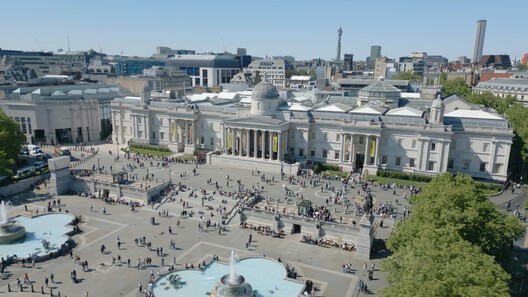
Internally, the scheme is organized through a sequence of differentiated gallery environments that respond to both curatorial and spatial considerations. The lower level adopts a series of vaulted and arched spaces that extend the spatial character of adjacent galleries, reinforcing continuity within the existing museum fabric. In contrast, the upper level introduces a more geometric and restrained language, creating a shift in spatial experience while maintaining coherence within the overall composition. This dual approach allows for both continuity and variation, supporting diverse modes of display and enhancing the overall visitor experience.
Related Article
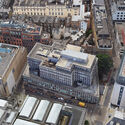
London’s National Gallery Unveils Shortlist for Expansion Featuring Farshid Moussavi, Foster + Partners, RPBW, and Kengo KumaBeyond formal and spatial considerations, the proposal integrates a structured approach to sustainability and social value through a dedicated Climate and Social Action Design Framework. Environmental strategies are embedded alongside a broader commitment to public engagement, positioning the project within ongoing discussions about the role of cultural institutions in addressing ecological and social challenges. The new wing will be constructed on the site of St Vincent House, a property acquired nearly three decades ago to support future expansion and currently occupied by a hotel and office complex. Its redevelopment represents the final major opportunity to extend the Gallery's campus while consolidating its relationship with the surrounding urban context.
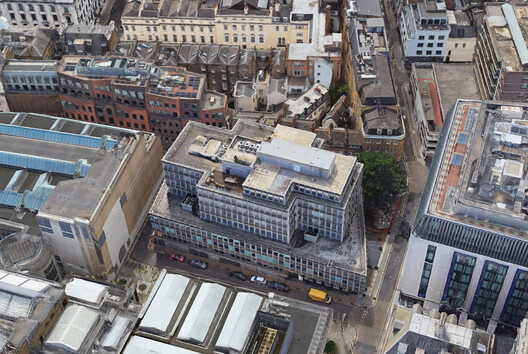
The appointment follows an earlier phase of the competition that brought together a shortlist of internationally recognized practices, including Foster + Partners, Renzo Piano Building Workshop, Selldorf Architects, Studio Seilern Architects, and Farshid Moussavi Architecture. In parallel with this announcement, other recent competition developments highlight the continued prominence of large-scale cultural and urban projects, including shortlists featuring MVRDV, Heatherwick Studio, and Mecanoo for a sustainability-focused landmark in Rotterdam, as well as the selection of RSHP to lead the redevelopment of the Rives-Défense site in Paris.