

In the city, aesthetics are not measured by the height of towers or the width of roads, but by their ability to evoke meaning within space. From this perspective, the Mujassam Watan initiative emerges as more than a mere artistic endeavor. It involves a deliberate attempt to redefine the relationship between people and place, between material memory and imagined identity. In the city of Khobar, in the Kingdom of Saudi Arabia—where urban modernity intersects with rapid social transformation—this initiative raises the question: How can a sculpture become an open text, one that is both visually read and experientially felt?
Urban sculptures, at their core, are not silent masses; they function as encoded discourses that assert their presence in public space. They transcend purely aesthetic roles and invite viewers to participate in the creation of meaning. Within this context, the Mujassam Watan initiative rearticulates the concept of the urban landscape as a philosophical act—an invocation of memory and a reconfiguration of spatial awareness.
Under the umbrella of the Al Fozan Social Foundation, the initiative is presented not as a transient event but as a sustained effort to rethink the city's aesthetics. Art here is not imported as a ready-made element; rather, it is locally produced within its cultural and social context, reflecting the pulse of the place and translating societal transformations. This approach frees sculpture from being a detached object and integrates it into the urban fabric as a living entity that interacts with time.
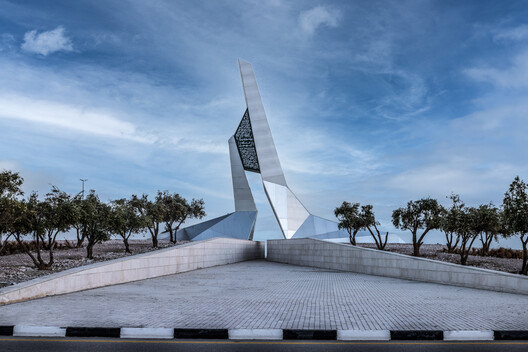
Notably, the initiative has moved beyond theoretical discourse into tangible works that redefine public space through architectural interventions with profound symbolic depth. The Al-Bairaq sculpture does not merely represent the flag as a visual form; it reconfigures it as a sovereign marker in space—a rising mass that declares the presence of identity and evokes a sense of belonging. The flag is not only seen but experienced as an emotional condition, a vertical extension of national memory within the city's horizon.
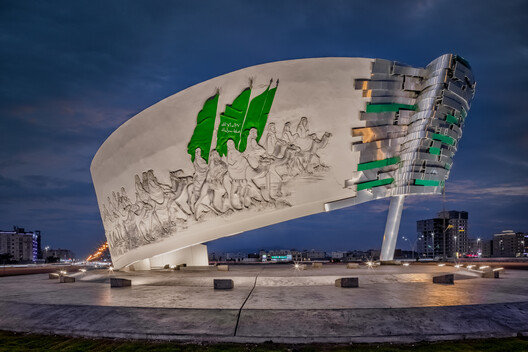
As for Al-Ardah, it transcends being an open plaza to become a stage. It consists of thirteen columns representing the regions of the Kingdom, yet they are not read as separate elements but as a visual rhythm that reflects unity in diversity. The columns are not merely structural supports but symbolic markers that reinterpret geography in architectural form, transforming the site into a ceremonial space where cultural performance intersects with spatial composition in a holistic sensory experience.
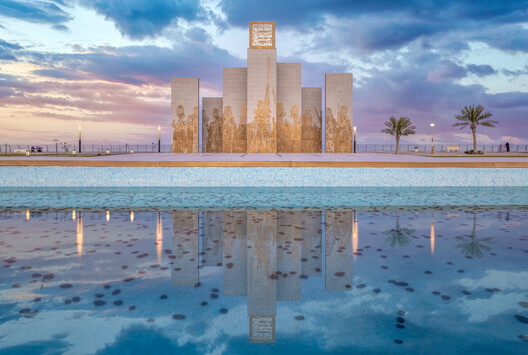
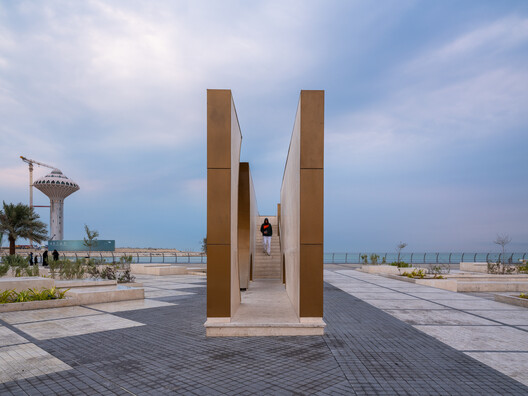
In Khobar Memory Square, the sculpture takes the form of a bridge that elevates the visitor, offering a different perspective of the city. At a deeper level, however, it is not merely a movement or viewing element, but a perceptual device that reshapes the relationship between people and the urban landscape. The act of ascent is not only physical but also cognitive—a transition from a horizontal viewpoint to a broader, more contemplative horizon, where the city is understood as an integrated network of relationships rather than a collection of fragmented elements. The perforated patterns along its structure weave a visual narrative that traces the chronological evolution of Khobar, transforming the experience into a temporal reading as much as a spatial one.
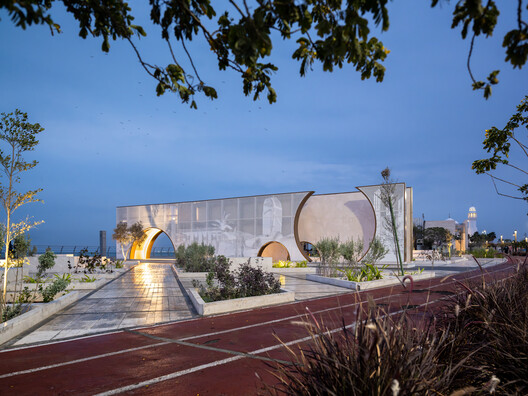
These examples reveal that Mujassam Watan is not concerned with producing isolated aesthetic forms, but with constructing spatial experiences that reshape perception. In this context, sculpture becomes a mediator between people and place, between physical presence and emotional experience. It reorganizes movement, frames vision, and stimulates reflection.
From an architectural perspective, these works can be read as semantic elements within the city. They don't simply fill space; they redefine it, granting it a narrative dimension. Mass, line, shadow, and void become the vocabulary of a language that refers to broader concepts: the nation as a dynamic idea, identity as an ongoing process of formation, and belonging as a relationship continually reshaped through everyday experience.
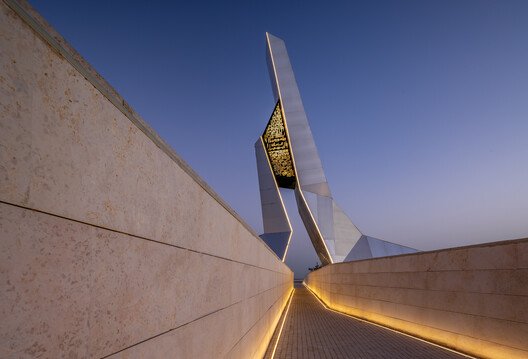
This initiative reflects a balance between the material and the symbolic. Despite their solid physical presence, the sculptures remain open to interpretation, evolving with light, time, and multiple readings. They are not fixed objects, but ongoing possibilities for meaning.
Moreover, the initiative's participatory dimension adds further depth. By inviting designers to present their visions, the city becomes an open experimental field where ideas intersect and approaches diversify. This plurality not only generates visual diversity but also contributes to building a collective memory that reflects the spirit of the place.
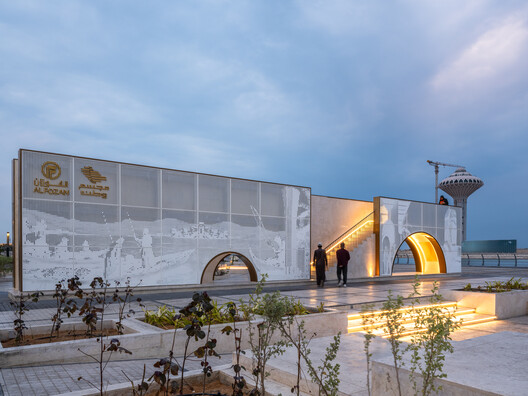
Mujassam Watan is not merely an initiative to beautify the city; it is a cultural act that redefines public space as a domain of meaning rather than simply a space of utility. It reconsiders what we see every day—not as something familiar, but as a constant potential for rediscovery.
Through this rediscovery, the nation reveals itself not as a set of drawn boundaries, but as a living presence shaped by experience and reproduced each time we move through space—seeing it anew and seeing ourselves within it. The Mujassam Watan initiative consolidates a cultural contribution that redefines the city's relationship with itself and grants public space a meaning that is lived, not merely seen.
Author: Dr. Abdulrahman A. Lardhi


