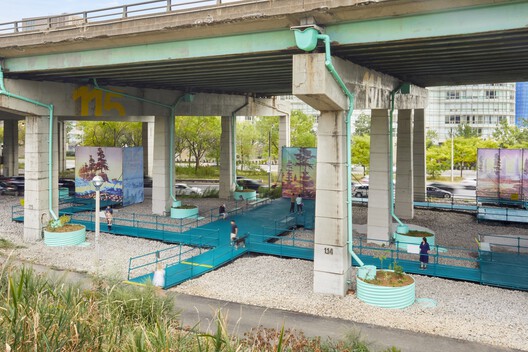
Elevation is often framed as progress, lifting movement above the friction of the city and smoothing circulation into uninterrupted flow. Every act of lifting produces a secondary condition in its wake. Beneath flyovers, metro lines, and railway viaducts, a second ground emerges as shaded, ambiguous, and rarely planned with the same intent as what moves above. These spaces are not incidental leftovers. They are the spatial consequence of a design decision that privileges speed, clearance, and efficiency, redistributing value and visibility across the city in the process.
What lies below is not empty. It is structured, constrained, and defined by infrastructure, left without a clear role. Studies on elevated highways consistently describe these undercroft zones as residual spaces, formed when transport systems are conceived independently of the ground they pass through. An Arup report on spaces beneath viaducts notes how they often disrupt pedestrian continuity while remaining outside formal planning frameworks. Similarly, recent academic reviews of under-flyover environments highlight that these areas are rarely integrated into urban design strategies at all. The result is a peculiar condition: space that is physically present and structurally determined, but programmatically undefined.

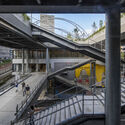
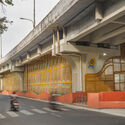
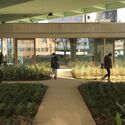
This ambiguity does not remain unoccupied for long. Where design withdraws, use takes over. Across cities in South Asia, Southeast Asia, and beyond, undercroft spaces become sites of informal economies and improvised habitation. Research from Dhaka documents how areas beneath flyovers host small-scale commerce, social interaction, and even recreation, while studies from Mumbai point to their parallel use for parking, storage, and temporary shelter. These occupations are not random. They respond directly to the spatial qualities infrastructure produces: shade from harsh climates, proximity to high footfall, and a relative absence of regulation. In this sense, informality is not an anomaly; it is a spatial response to design omission.
Yet the same conditions that enable occupation also produce uneven urban experiences. Not all undercroft spaces function alike. A 2025 study on Shanghai's elevated infrastructure found that centrally located sites with intentional design interventions attracted higher levels of public use, while peripheral ones remained fragmented and underutilized. Environmental factors such as light, ventilation, noise, and safety vary dramatically depending on context. In Cairo, research has shown how flyover spaces often suffer from poor microclimatic conditions and a lack of greenery, reinforcing their exclusion from everyday urban life. What emerges is not a single typology, but a spectrum: from active, improvised environments to neglected voids shaped by neglect and disinvestment.
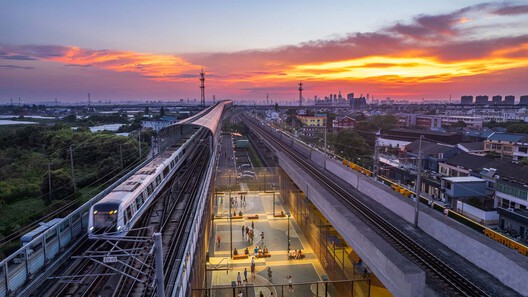
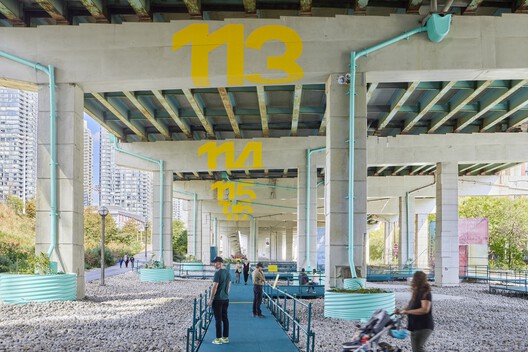
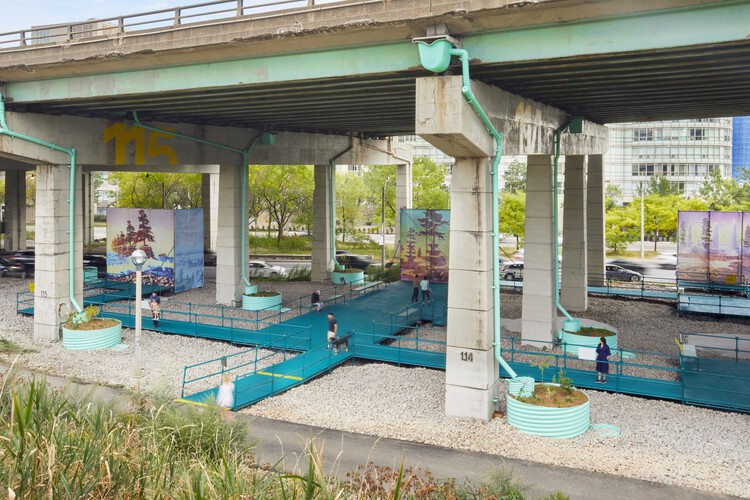
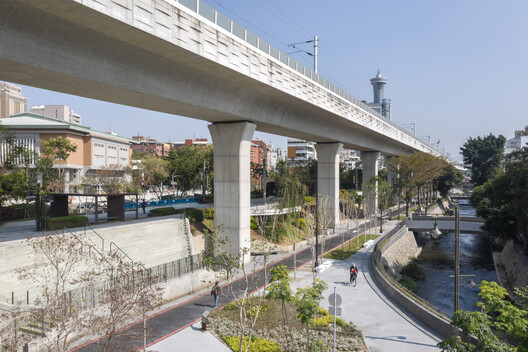
Against this backdrop, a growing number of projects attempt to reclaim these spaces, not as afterthoughts, but as extensions of the public realm. The Bentway Staging Grounds, in Toronto, transforms the undercroft of an expressway into a programmable civic landscape, using lighting, flexible surfaces, and seasonal programming to draw people back into a space once defined by infrastructure alone. Similarly, the Taichung Green Corridor in China reimagines a former railway alignment as a continuous public spine, integrating landscape, mobility, and social infrastructure into what was once a linear barrier. These projects do more than activate space; they reveal how much design effort is required to counteract the initial absence of intention.
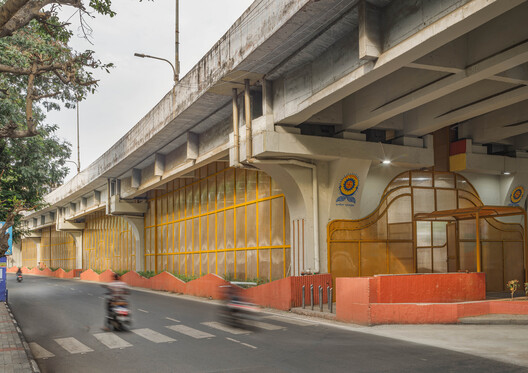
In some contexts, the transformation is less about large-scale redesign and more about strategic insertion. Under-flyover environments within Indian cities demonstrate how even modest interventions, like introducing play areas, seating, and community programming, can recalibrate urban life. Eungbong Terrace, in Seoul, integrates landscape and circulation beneath elevated infrastructure, softening its impact while extending the usable ground plane. These examples suggest that the question is not simply whether undercroft spaces can be used, but how deliberately they are incorporated into broader urban systems.
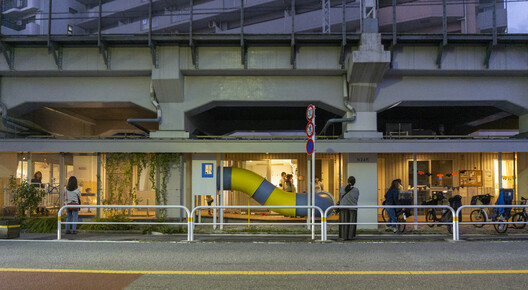
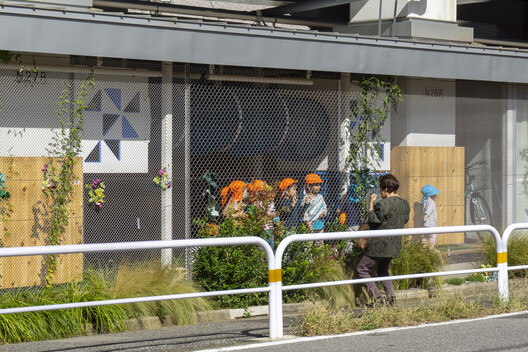
Tokyo offers a different model altogether, one where the space beneath infrastructure is not treated as residual, but as integral. Along railway lines, under-track environments are systematically developed into dense strips of restaurants, bars, retail, and cultural venues. What might appear elsewhere as leftover becomes, here, a continuous layer of urban life. Miyashita Park extends this logic further, layering commercial, recreational, and public functions across both elevated and ground levels. Even smaller interventions, like the Hibi Hitoawa Brewery, demonstrate how architectural precision can carve out intimate, inhabitable spaces within infrastructural constraints.
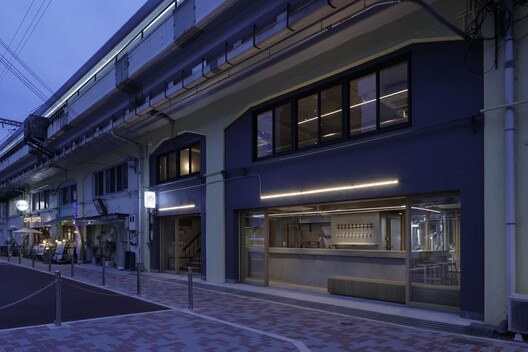
What distinguishes these examples is not just design quality, but governance: a coordinated approach that treats infrastructure corridors as valuable urban assets rather than leftover land.
This shift is becoming more explicit as new uses emerge. In Japan, Tokyu Corporation is currently testing the viability of installing data centers beneath railway lines, leveraging the structural stability and controlled environments these spaces provide. The experiment signals a broader revaluation: undercroft spaces are no longer seen solely as marginal, but as potential sites of high-value infrastructure. The same spatial conditions that once accommodated informal economies are now being reconsidered for digital ones. The shift lies in how value is assigned to the same spatial condition.
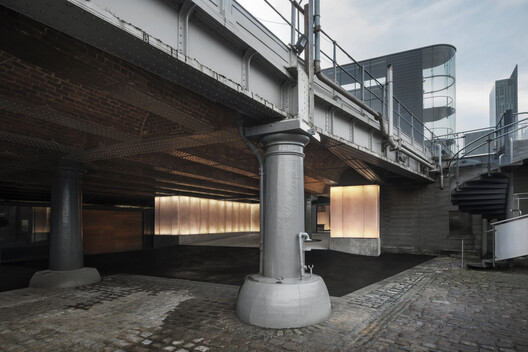
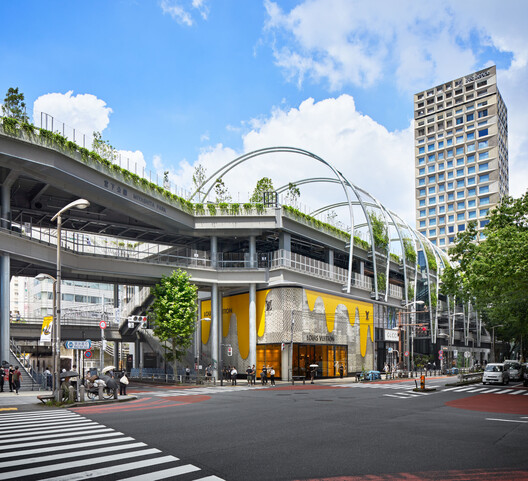
Together, these trajectories reveal a deeper dynamic. Elevation does not simply add a layer to the city; it reorganizes it vertically. Above, infrastructure enables speed, visibility, and capital flow. Below, it produces zones of ambiguity, where use must either emerge informally or be reintroduced through design. This redistribution reflects planning priorities that consistently favor movement over habitation, efficiency over continuity. The ground is not erased, but it is redefined, fragmented into pockets of uneven quality and access.
Projects like the Bentway or Miyashita Park often stand out precisely because they resist this logic. They demonstrate that the space beneath infrastructure can be continuous, legible, and public. But they also reveal how exceptional such outcomes remain. In most cities, undercroft spaces still operate as the residual underside of progress, absorbing what is displaced, overlooked, or deferred.
Approaching these spaces as opportunities for activation alone comes too late in the process. By the time design intervenes, the spatial logic has already been set. A more fundamental shift lies upstream, at the moment infrastructure is conceived. What if elevation did not assume the ground as expendable? What if the space below was treated not as leftover, but as co-equal terrain, designed with the same precision as the systems it supports? Until then, the life beneath the span will continue to mirror the priorities above it: uneven, improvised, and shaped by how and for whom the city is built.
This article is part of the ArchDaily Topic: Light, Lighter, Lightest: Redefining How Architecture Touches the Earth, proudly presented by Vitrocsa, the original minimalist windows since 1992.
Vitrocsa designed the original minimalist window systems, a unique range of solutions, dedicated to the frameless window boasting the narrowest sightline barriers in the world. Manufactured in line with the renowned Swiss Made tradition for 30 years, Vitrocsa's systems "are the product of unrivaled expertise and a constant quest for innovation, enabling us to meet the most ambitious architectural visions."
Every month we explore a topic in-depth through articles, interviews, news, and architecture projects. We invite you to learn more about our ArchDaily Topics. And, as always, at ArchDaily we welcome the contributions of our readers; if you want to submit an article or project, contact us.