As architectural discourse continues to expand across cultural, educational, and civic domains, this week's developments highlight how the discipline operates simultaneously through legacy, knowledge production, and large-scale public engagement. From reflections on influential figures and their enduring impact to evolving academic landscapes and new forms of cultural infrastructure, architecture is positioned as both a repository of ideas and an active agent in shaping contemporary identities. At the same time, projects spanning entertainment, museums, and waterfront developments point to a growing emphasis on hybrid programs and experiential environments, where architecture mediates between culture, public life, and global audiences.


Legacy, Institutions, and the Continuity of Architectural Influence
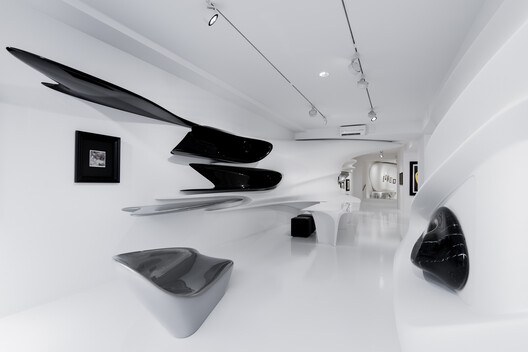
This week revisits the legacy of Zaha Hadid ten years after her passing, situating her work within both its historical context and its ongoing institutional impact. First brought to international attention in MoMA's 1988 Deconstructivist Architecture exhibition, Hadid's early conceptual projects signaled a shift toward more experimental, geometry-driven approaches that would later be realized through advances in digital design and construction. Over time, her work came to define a distinct architectural language while also marking a significant moment of representation within a historically male-dominated field. Recent initiatives, including a public symposium in London, new scholarship programs supported by the Zaha Hadid Foundation, and the naming of a street in Milan, highlight how her legacy continues to be shaped through academic, cultural, and public channels. As Zaha Hadid Architects continues its global practice, these developments reflect how individual authorship evolves into a broader institutional and disciplinary influence.
Related Article
14 Major Museum Projects Currently in Progress Around the WorldEducation, Rankings, and Shifting Global Centers
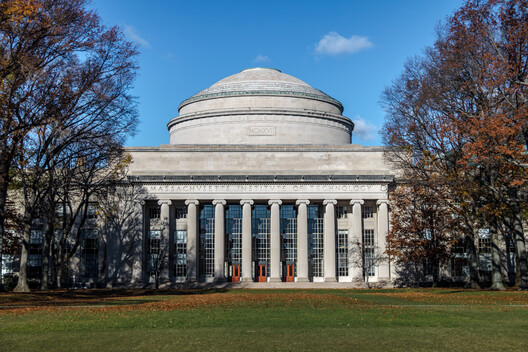
Alongside reflections on legacy, this week also highlights the role of education in shaping the future of the discipline, with the publication of the 2026 QS World University Rankings for Architecture and the Built Environment. While familiar institutions such as The Bartlett School of Architecture, MIT, ETH Zurich, and Delft University of Technology remain at the top, the rankings point to a more distributed global landscape. European schools continue to strengthen their presence, while universities in Asia, including the National University of Singapore and Tsinghua University, maintain consistently high positions. Rather than major changes, the 2026 edition reflects gradual shifts driven by research output, academic reputation, and international collaboration. In this context, architectural education emerges not only as a measure of excellence but as a dynamic network that influences how knowledge, practice, and disciplinary priorities are produced and shared globally.
Cultural Platforms, Public Space, and New Forms of Engagement
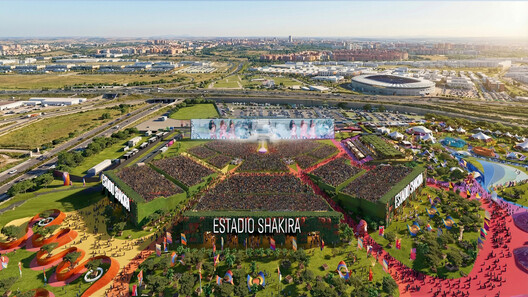
At the scale of projects and urban interventions, this week's news points to an expanding role for architecture as a mediator between culture, public life, and large audiences. In Barcelona, the announcement of five finalist teams, including SANAA, David Chipperfield Architects, and Snøhetta, for the Liceu Mar competition marks a key step in the development of a new waterfront cultural venue. Conceived as an extension of the historic Gran Teatre del Liceu, the project aims to combine performance, education, and public space within a broader transformation of the Port Vell area, reinforcing the role of cultural institutions as accessible and integrated civic platforms. In a different context, BIG's design for a multi-use stadium for Shakira's world tour in Madrid reflects how architecture is increasingly engaged with popular culture and large-scale events. Designed as part of a wider environment combining concerts, markets, and public programs, the project extends beyond a single performance function to propose an immersive and continuous spatial experience.
On the Radar
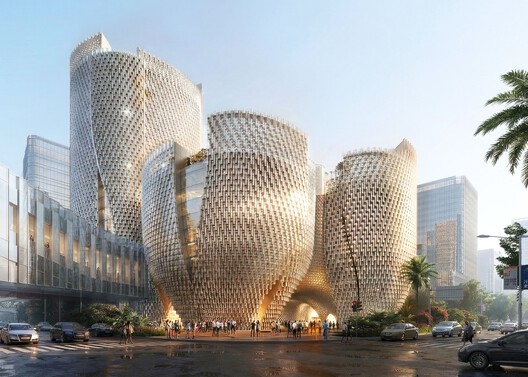
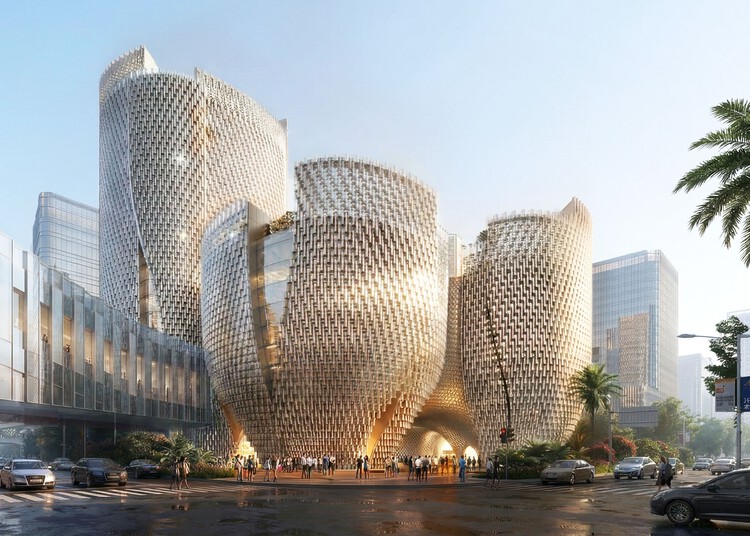
Büro Ole Scheeren's Róng Museum of Art Under Construction in Shenzhen
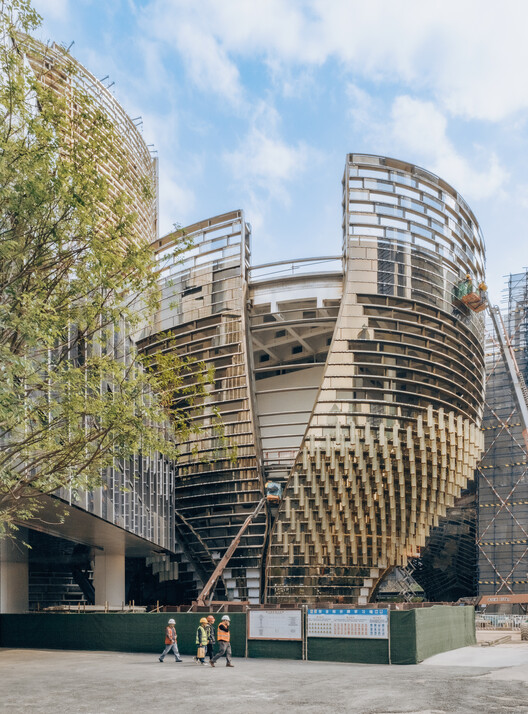
Büro Ole Scheeren has unveiled the design for the Róng Museum of Art, currently under construction in Shenzhen's Nanshan District, with an opening scheduled for 2027. Focused on the visual and digital culture of the 20th and 21st centuries, the museum is part of the larger Houhai Hybrid Campus, a mixed-use development integrating residences, offices, specialty retail, and public spaces. The design features a series of elevated sculptural volumes, freeing the ground for a publicly accessible plaza envisioned as an open "art forum" that encourages movement, exchange, and cultural engagement. Its layered glass facade, composed of parametrically engineered tubes, diffuses light while improving energy performance, complemented by rainwater collection and passive ventilation strategies. Once completed, the Róng Museum of Art aims to act as a cultural landmark, linking Shenzhen's technological innovation with public life and urban development.
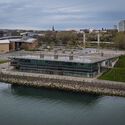
Sunderland's National Glass Centre Faces Demolition After Less Than Three Decades
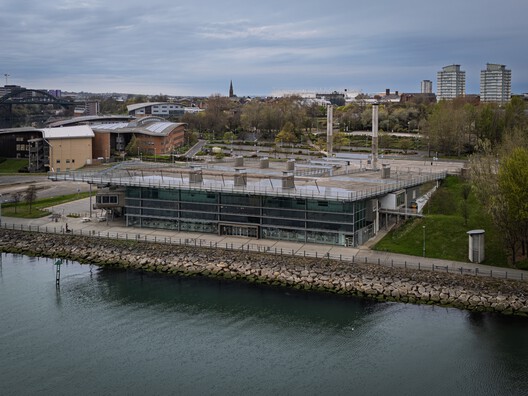
The National Glass Centre (NGC) in Sunderland, designed by Gollifer Associates and opened in 1998, is set to close later this year and faces demolition after less than three decades. Combining a working glass factory with a visitor centre, the building helped regenerate the banks of the River Wear. The University of Sunderland cites costly repairs and ongoing running expenses as reasons for closure, but local campaigns, an online petition with nearly 40,000 signatures, and experts from The Twentieth Century Society argue the building could be adapted and preserved. Architect Andy Gollifer emphasizes the building's flexibility and durability, while the Northern Gallery for Contemporary Art, currently housed in the NGC, will relocate to the new Culture House, leaving the future of this regional cultural landmark uncertain.
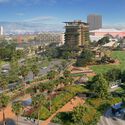
OCVIBE Reveals Plans for Anaheim's New Parks and Plazas, First Open Spaces to Launch in 2027
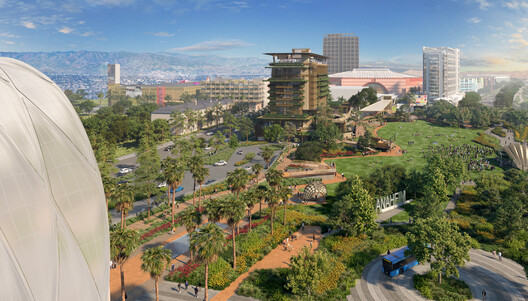
OCVIBE, a 100-acre mixed-use development surrounding Anaheim's Honda Center in Southern California, United States, has revealed designs for 20 acres of public open space, including three miles of walkable trails, landscaped corridors, and outdoor public art. The network of parks and plazas is designed to support wellness, social connection, and cultural engagement, offering spaces for everyday use as well as large-scale events. Meadow Park reflects the historic Santa Ana River, Neighborhood Park serves the surrounding residential community, and Urban Park combines agricultural and river-inspired ecologies. Public programming will include markets, workshops, fitness classes, and performances, while the first plaza, alongside the district's market hall and concert venue, is set to open in early 2027, marking the start of OCVIBE's phased activation of the site.
This article is part of our new This Week in Architecture series, bringing together featured articles this week and emerging stories shaping the conversation right now. Explore more architecture news, projects, and insights on ArchDaily.