Throughout 2025 and early 2026, numerous museum projects were announced, advanced, or broke ground across multiple regions, with completion timelines largely extending from 2026 to 2030. Located across Asia, Europe, North America, and Central Asia, these developments reflect ongoing shifts in the role of cultural institutions within contemporary cities. Increasingly, museums are conceived not only as exhibition venues but as public-facing environments that accommodate education, research, and civic engagement. This expanded programmatic scope is often accompanied by architectural strategies that respond to urban conditions, spatial continuity, and the integration of cultural infrastructure into broader city-making processes.
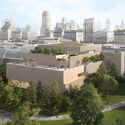
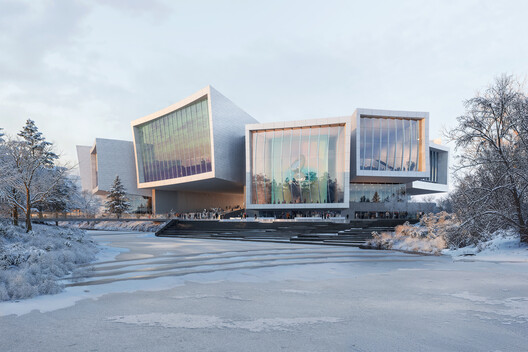
Many of these projects are planned in relation to wider urban or regional frameworks, incorporating public landscapes, transport connections, and mixed-use programming. Rather than functioning as isolated cultural objects, they contribute to the formation of cultural districts, waterfront redevelopments, or civic nodes within growing metropolitan areas. Design approaches by practices such as Snøhetta, Kéré Architecture, MAD Architects, BIG, and David Chipperfield Architects demonstrate a range of responses shaped by local contexts, material systems, and environmental considerations.
Read on to discover the selection of 14 museum projects currently in development.
Museums in Asia
Beijing Art Museum in Tongzhou, China / Snøhetta + BIAD
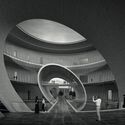
Construction of the Beijing Art Museum began in December 2025 in Tongzhou District, identified as Beijing's sub-center, with completion anticipated in 2029. Designed by Snøhetta in collaboration with the Beijing Institute of Architectural Design, the project spans over 110,000 square meters and is conceived as a multidisciplinary institution accommodating fine arts, intangible heritage, and contemporary practices. Organized around the concept of "vision," the building features a central circular atrium that structures circulation and establishes visual connections across galleries.
Suzhou Museum of Contemporary Art in Suzhou, China / BIG
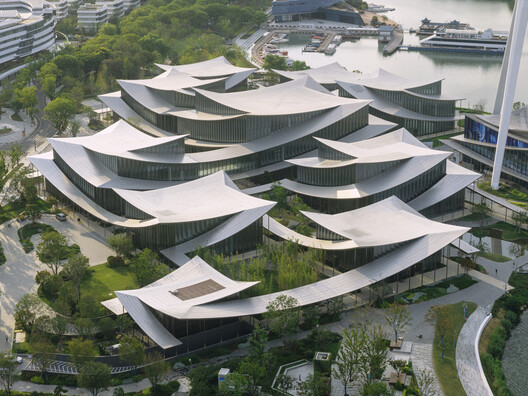
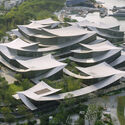
The Suzhou Museum of Contemporary Art, designed by BIG, is nearing completion along the Jinji Lake waterfront and is expected to open in 2026 with the inaugural exhibition "Materialism." Conceived as a cluster of interconnected pavilions beneath a continuous, undulating roof, the 60,000-square-meter complex reinterprets Suzhou's traditional garden architecture through a contemporary spatial framework. Organized around the concept of the covered corridor, the museum links galleries, courtyards, and public spaces into a continuous sequence that integrates water, vegetation, and built form. Curved glass and metal façades reflect the surrounding landscape, while bridges and subterranean connections enable flexible circulation, positioning the museum as both a cultural destination and an extension of the lakeside environment.
National Museum of Uzbekistan in Tashkent / Tadao Ando
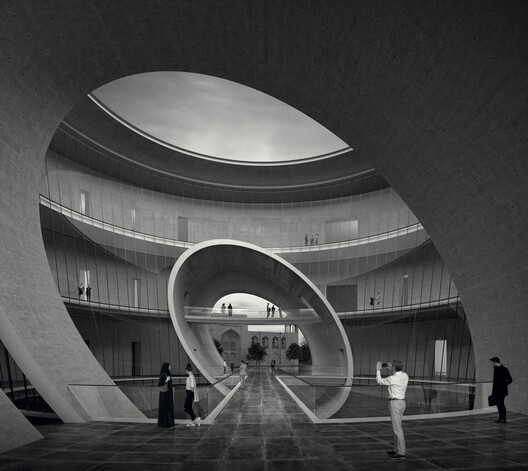
The National Museum of Uzbekistan broke ground in 2025 in central Tashkent and is scheduled to open in 2028 as a major cultural initiative led by the Uzbekistan Art and Culture Development Foundation. Designed by Tadao Ando, the museum is conceived as a primary institution for the preservation and presentation of national heritage, organized through a composition of geometric forms including circles, squares, and connecting triangular volumes. The project combines exhibition spaces, a library, and educational facilities around a public plaza, where natural light and spatial sequencing play a central role in shaping the visitor experience while positioning the building as both a contemplative and civic environment.
Jadids' Legacy Museum in Bukhara, Uzbekistan / Lina Ghotmeh
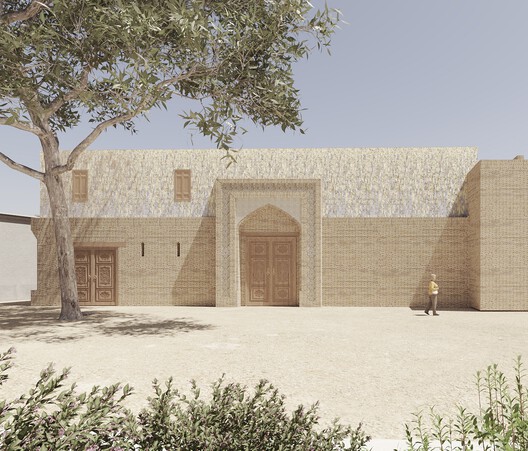
The Jadids' Legacy Museum in Bukhara is being developed through the transformation of a historic residence associated with Usmon Khodjaev and is scheduled to open in 2027. Designed by Lina Ghotmeh, the project is dedicated to the Jadid reform movement and combines preservation with contemporary architectural intervention. Located near Lyabi-Hauz, a historic urban center, the proposal maintains the existing structure while introducing new spatial elements that reflect Ghotmeh's approach of linking historical memory with present-day cultural expression, situating the museum within the broader fabric of the city.
Museums in North America
Las Vegas Museum of Art / Kéré Architecture + Skidmore, Owings & Merrill
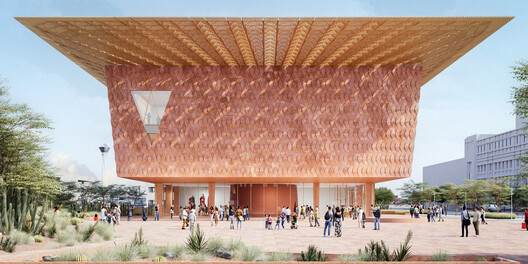
The Las Vegas Museum of Art, scheduled to open in 2029 in Symphony Park, is planned as the city's first purpose-built art museum and is designed by Kéré Architecture in collaboration with Skidmore, Owings & Merrill. Developed as part of a public-private partnership, the project draws on references from the Mojave Desert and incorporates locally sourced materials, with a large canopy extending beyond the building to create shaded exterior spaces. The interior is organized around a central circulation element described as a canyon, while the museum's program includes exhibition spaces, education facilities, and public amenities intended to serve both local communities and international visitors.
Lucas Museum of Narrative Art in Los Angeles / MAD Architects
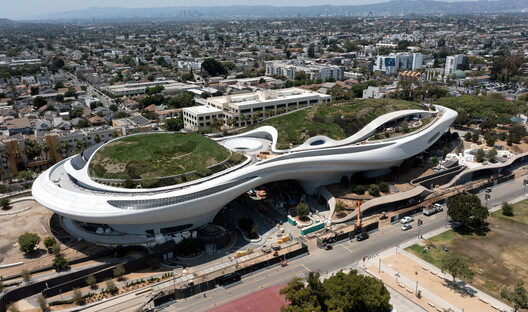
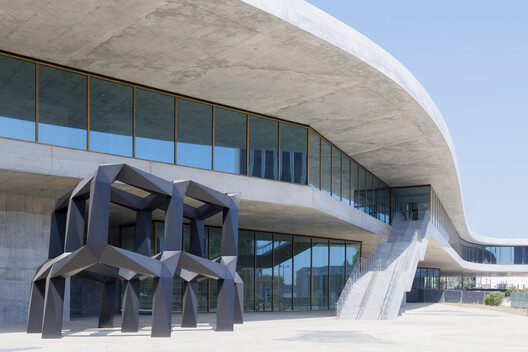
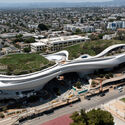
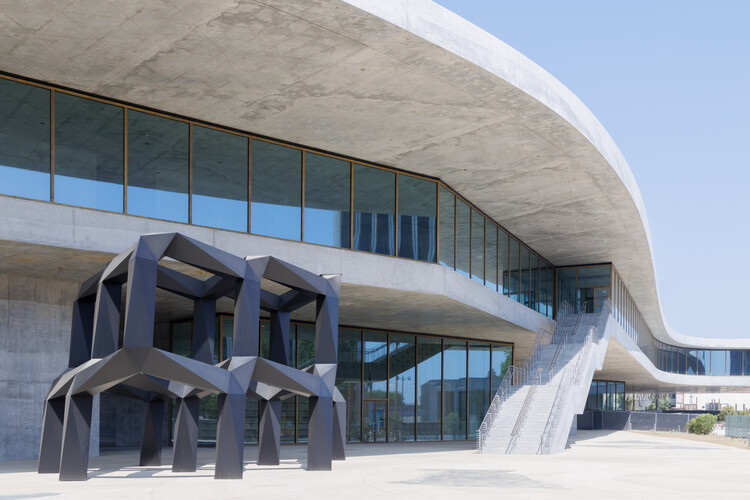
The Lucas Museum of Narrative Art is scheduled to open in September 2026 in Exposition Park, Los Angeles, introducing a new cultural institution focused on storytelling across visual media. Founded by George Lucas and designed by MAD Architects, the 300,000-square-foot building is defined by a continuous elevated form that creates shaded public space at ground level. The program includes galleries, theaters, educational spaces, and amenities, while the surrounding landscape introduces new pathways and gathering areas that connect the museum to the wider Exposition Park campus.
David Geffen Galleries at LACMA in Los Angeles / Peter Zumthor + Skidmore, Owings & Merrill
The David Geffen Galleries at the Los Angeles County Museum of Art are scheduled to open in April 2026, following the completion of major construction at the end of 2024. Designed by Peter Zumthor in collaboration with Skidmore, Owings & Merrill, the project spans more than two decades of development and introduces a horizontal, elevated structure that curves across the site, bridging Wilshire Boulevard. The main exhibition level, raised approximately 30 feet above ground, is organized as a continuous, single-floor gallery space that allows flexible curatorial arrangements without hierarchical sequencing. At ground level, a series of pavilions accommodates public amenities, while landscaped plazas and outdoor programming areas extend the museum's presence across its campus, integrating architecture, art, and public life.
The Metropolitan Museum of Art, Tang Wing in New York / Frida Escobedo
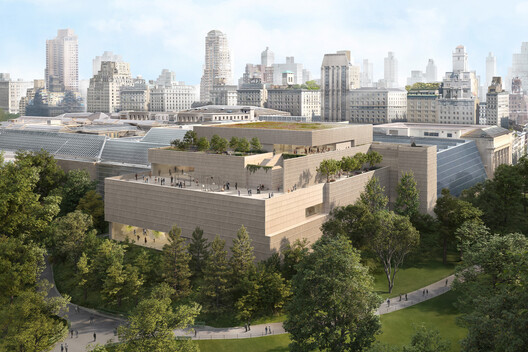
The expansion of the Metropolitan Museum of Art introduces the Tang Wing, a new addition dedicated to modern and contemporary art, scheduled for completion in 2030. Designed by Frida Escobedo, the project increases gallery space by approximately 50 percent while addressing accessibility and circulation challenges through the introduction of new vertical connections, including elevators and ramps. The design features a limestone lattice façade and incorporates terraces and public amenities that extend the museum's spatial relationship with Central Park.
Museums in Europe
Museum of Architecture and Design in Helsinki / JKMM Architects
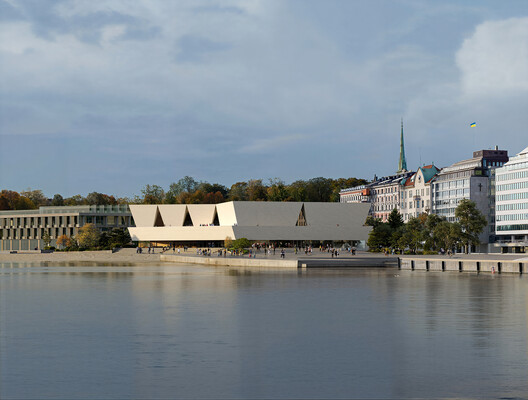
Following an international competition concluded in 2025, JKMM Architects was selected to design Finland's new Museum of Architecture and Design, with construction expected to begin in 2027 and completion scheduled for 2030. Located on Helsinki's South Harbor waterfront, the proposal takes the form of a low-rise, pavilion-like structure defined by a triangular geometry that preserves key urban views while establishing a new cultural presence along the shoreline. The museum will consolidate extensive national collections and include exhibition spaces, a design library, and public programs.
Muzej Lah in Bled, Slovenia / David Chipperfield Architects
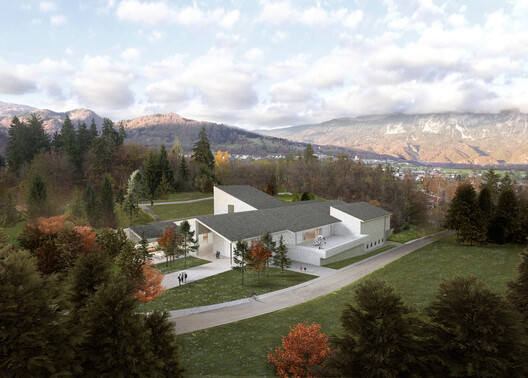
Muzej Lah, designed by David Chipperfield Architects, is set to open in 2026 near Lake Bled, embedded within a forested landscape at the foothills of the Julian Alps. The building is partially integrated into the terrain, with sloped roofs and articulated volumes that respond to the topography while introducing a series of interior and exterior spaces. The project includes galleries, a sculpture garden, and public amenities, and will house the Fundacija Lah collection, making it accessible to the public for the first time.
Museum Ehrhardt in Plüschow, Germany / Kéré Architecture
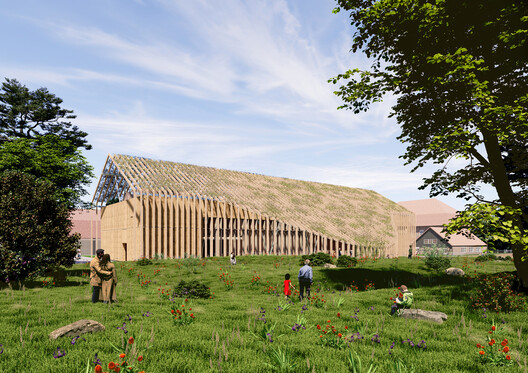
Museum Ehrhardt, currently under construction in northeastern Germany and scheduled for completion in 2027, is dedicated to the work of artist Alfred Ehrhardt and represents Kéré Architecture's first museum project in Europe. The design incorporates locally sourced materials such as wood and clay, with a central rammed earth wall providing passive climate regulation. A timber structure allows for disassembly and reuse, while the surrounding landscape includes gardens and water management systems that integrate the building into its environmental context.
Hungarian Natural History Museum in Debrecen / BIG
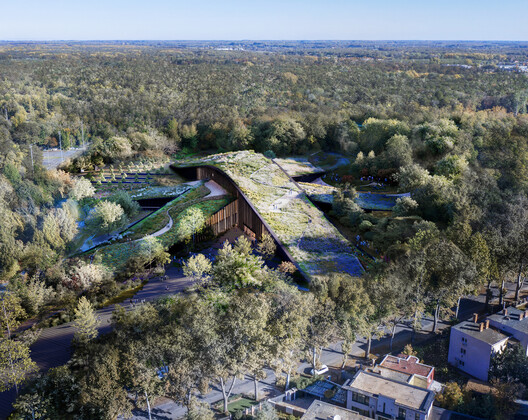
The new Hungarian Natural History Museum in Debrecen, designed by BIG, is conceived as part of a broader initiative to establish the city as a regional cultural and educational center. The building takes the form of overlapping, landscape-like ribbons rising from the forest floor, constructed primarily from timber and partially embedded into the site. The program includes exhibition halls, research facilities, and public spaces, while the design integrates geothermal systems, photovoltaic panels, and planted roofscapes that extend the surrounding park across the building.
In related developments, the expansion of the New Museum by OMA opened to the public on March 21 with a new exhibition focused on humanity. Elsewhere, following the release of seven shortlisted proposals in 2025, Níall McLaughlin Architects was announced as the winner of the international competition for the Museum of Jesus' Baptism at Bethany in Jordan. In Norway, the Kistefos Museum selected Christ & Gantenbein as the winning practice for a new museum building at its site in Jevnaker.