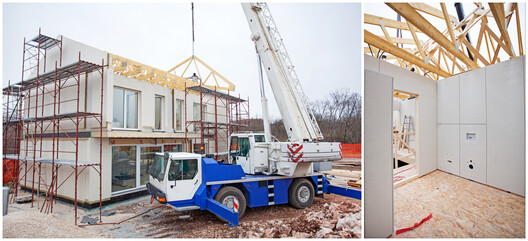
The global offsite construction market—encompassing modular, precast concrete, and hybrid prefabricated systems—was valued at USD 172 billion in 2024 and is projected to reach USD 225.7 billion by 2030 (CAGR 4.9–8%). In the UAE, government targets call for 25–30% offsite content in public projects by 2030; the UK currently leads globally, with 15–20% of housing using offsite solutions. Offsite manufacturing is increasingly promoted as the sustainable future of construction, with benefits including reduced waste, accelerated delivery, and improved quality control. Sustainability is not defined by how quickly a building is assembled. It is defined by how long it performs.
Speed Does Not Automatically Equal Sustainability
Offsite construction has delivered measurable environmental gains. A peer-reviewed study analyzing 59 projects found that this method reduced overall construction waste by an average of 78.8% compared to conventional building methods. Separate research has shown reductions of up to 90% under controlled factory conditions. These improvements are significant.
Waste reduction is only one phase of a building's environmental footprint. True sustainability must be measured over the full lifecycle, spanning 30 to 50 years of operational performance, maintenance, energy consumption, and material durability. This is where offsite construction still faces a performance gap: in the building envelope.
The Building Envelope: Offsite Construction's Critical Opportunity
The building envelope separates the interior from the exterior, maintaining a comfortable climate against outside weather. To maintain comfortable indoor conditions in low-energy buildings, the entire building envelope needs to be perfectly insulated and sealed against air leakage.
Buildings account for 39% of global energy-related carbon emissions—28% from operations and 11% from embodied carbon. As electricity grids decarbonize, embodied carbon is projected to represent nearly half (49%) of new building emissions by mid-century.
To reduce overall CO2 emissions in buildings, offsite construction offers unique advantages over traditional on-site construction in building-envelope performance—via precision factory integration and standardized panelization—but only realizes this potential when systems are engineered for prefabrication.
For offsite projects, this shift amplifies the importance of a building envelope's durability: factory-applied, transport-resilient facade systems that minimize maintenance and extend service life, directly reducing lifecycle embodied carbon. Many offsite projects specify thin, paint-based finishes, duplicating conventional on-site facades. These thin coatings are typically not engineered to withstand transport vibrations, crane-lifting stresses, panel-to-panel joint movement, structural tolerance variations, or long-term UV exposure.
These traditional facade systems, which replicate on-site practices, often deteriorate prematurely, resulting in shorter maintenance cycles. Each repaint cycle introduces additional embodied carbon via new materials, access equipment, plant emissions, and material waste. In hot and coastal climates, conventional exterior paint systems often require repainting every 5–7 years, and sometimes as often as 3–5 years under severe exposure. Over a 30-year building life, this can translate into multiple full facade interventions. Sustainability gains achieved during factory fabrication are progressively diluted by repeated envelope maintenance.
Rethinking Sustainability Through Thermal Performance
Thermal efficiency is perhaps the most underestimated sustainability factor in offsite construction. Research shows that up to 45% of heat loss in heated buildings can occur through uninsulated solid walls. In hot climate regions, external walls and windows together can account for over 60% of cooling demand. Commercial buildings in hot zones require six times as much energy for cooling as buildings in cold zones require for heating. The facade is not decorative. It is an operational infrastructure.
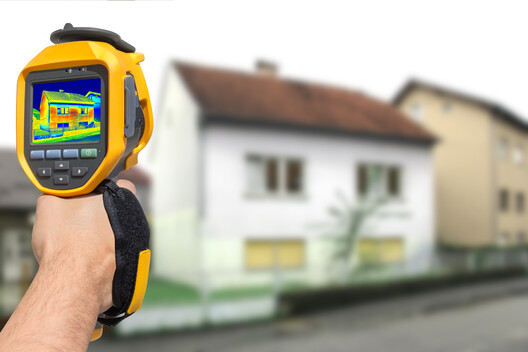
Exterior Insulation Finishing Systems (EIFS) reduce thermal bridging and significantly improve U-values across the building envelope. Independent building energy modeling in Middle Eastern and South Asian climates—conducted by Greenplan Consultants—confirmed that facade thermal insulation alone reduced annual cooling demand by 31%, while combining wall and roof thermal insulation reduced it by up to 47%.
Importantly, the modeling also demonstrated that discontinuous thermal wall systems, such as infill walls like ALC blocks built between structural frames, can increase overall building energy use of a new build by 5–6% due to thermal bridging.
This insight has direct relevance to offsite construction. Panelized and precast systems can unintentionally introduce thermal discontinuities at joints and structural transitions. Continuous exterior insulation through EIFS eliminates these weak points by wrapping the entire structure in uninterrupted thermal protection. For offsite developers seeking measurable operational savings rather than marketing claims, it is clear that building envelope thermal insulation continuity becomes decisive.
Durability as a Sustainability Multiplier
Facade systems typically account for 20–40% of total construction costs (higher for cladding-intensive projects), while lifecycle maintenance can add a further 5–10%. Buildings without structured facade maintenance strategies can incur emergency repair costs that are up to 300% higher than those of preventive approaches. Durability, therefore, directly influences both environmental and financial sustainability.
High-build textured coating systems, like Terraco's trowel-applied Terracoat render, are 10 to 15 times thicker (1.5mm) than traditional painted facades. These renders are engineered with acrylic, silicone, or elastomeric binders to provide durability, flexibility, and impact resistance beyond those of conventional painting solutions.
Unlike thin paint coatings that rely on surface adhesion alone, Terracoat Textured Coatings are specifically designed to bridge minor cracks that may present in the substrate. They are also formulated for the climatic region of use to ensure enhanced algae resistance, long-term color stability, and improved impact performance.
When Terraco Texture Coatings are specified on offsite facade production as part of the Terraco EIFS Systems. The Terraco EIFS impact resistance is classified under ASTM E2486 into Standard, Medium, High, and Ultra High tiers—with Terraco EIFS systems achieving Medium to High ratings through multi-layer mesh reinforcement, ideal for offsite transport and installation stresses.
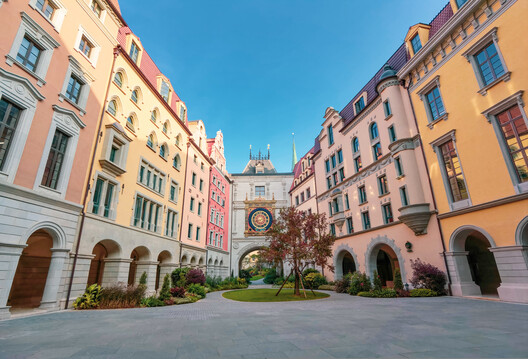
When Terracoat texture coatings are specified as part of the internationally certified Terraco EIFS Systems, durability is guaranteed for 15 years (a refresher top coating is optional). This is in comparison to traditional paint finish systems, which are typically only guaranteed for 5 years. Extending repaint cycles from five years to fifteen-plus years with a Terraco Terracoat Texture coating dramatically reduces lifecycle carbon and refurbishment emissions.
Integrating Envelope Strategy into Offsite Manufacturing
Offsite construction is built on precision, repetition, and quality control. Building envelope systems must align with that logic.
Terraco's system-based facade technologies integrate:
- Continuous exterior insulation options through Terraco EIFS systems (Fire-retardant EPS, Mineral Wool, and Phenolic insulations)
- Reinforced polymer modified basecoats
- Embedded alkali-resistant reinforcement glass fiber mesh
- Internationally certified mechanical fastening systems
- Vapor-permeable primers
- Long-life textured coatings: Terracoat Range
- High-quality stone-effect finishes: Terralite Range
These assemblies are engineered as complete, factory-applied systems for panels and modules—eliminating multiple site coats and ensuring consistency.
By integrating insulation, reinforcement, and finishing into a unified envelope solution, offsite developers can move beyond sustainability marketing toward measurable lifecycle performance.
Beyond the Narrative
Offsite construction has rightly earned recognition for reducing waste and improving build efficiency. But sustainability cannot be judged solely at handover. A building that goes up quickly but consumes excessive cooling energy for 40 years is not sustainable. A facade that must be repainted every five years undermines embodied carbon reductions achieved in the factory.
True sustainability in offsite construction emerges when speed, durability, and thermal performance operate together. The envelope is not a finishing detail. It is the long-term environmental determinant of the building itself.


