

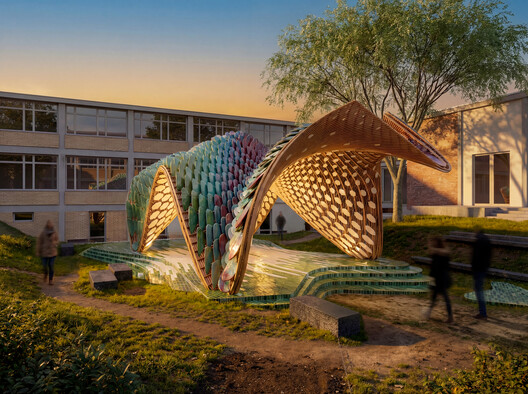
At a moment when architecture is being pushed to respond more directly to environmental and social pressures, Spain's pavilion for World Design Capital Frankfurt Rhein-Main 2026 positions itself as more than a temporary installation. While materiality is at the center of its design, the project explores how a reversible cultural infrastructure can activate public space without permanent construction. Discussions about material use, circularity and reutilization in architecture are closely tied to cultural contexts, environmental conditions, and historical influences that reveal how time shapes the built environment. Beyond its construction, Spain's pavilion expresses identity by reinterpreting the architectural method of Antoni Gaudí, the creator of the Sagrada Familia and Park Güell. It also demonstrates how Spain's creative and industrial sectors address current challenges with innovative construction solutions.
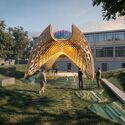
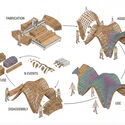
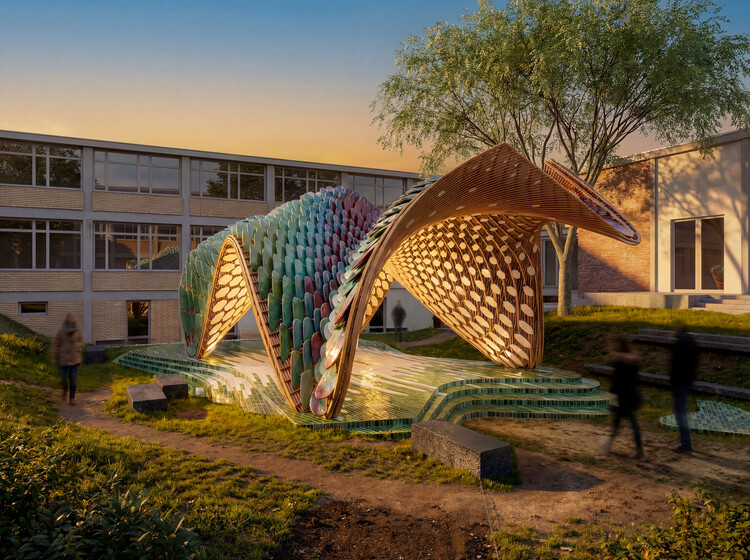
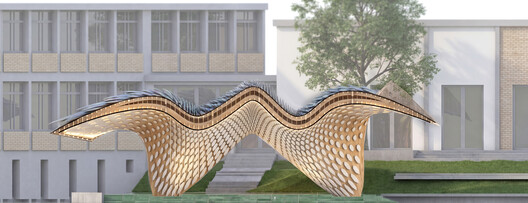
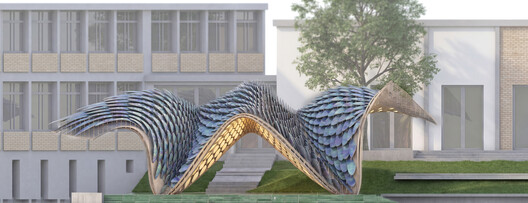
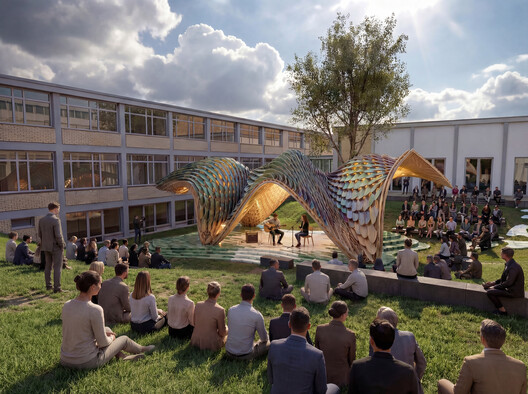
As part of World Design Capital Frankfurt Rhein-Main 2026, the lightweight structure representing Spain will transform the garden of the Cervantes Institute in Frankfurt into a dynamic public cultural space. Designed by José Ramón Tramoyeres and Javier Cortina of ggstudio, and built by Volúmenes and Vareta, the pavilion combines wood, ceramics, and textile solutions. As a dismantlable, reusable, and itinerant proposal, the temporary structure features an organic and continuous geometric design. Aligned with the principles of the New European Bauhaus, it integrates sustainability, construction precision, and a social dimension into a model of circular and reversible cultural infrastructure.
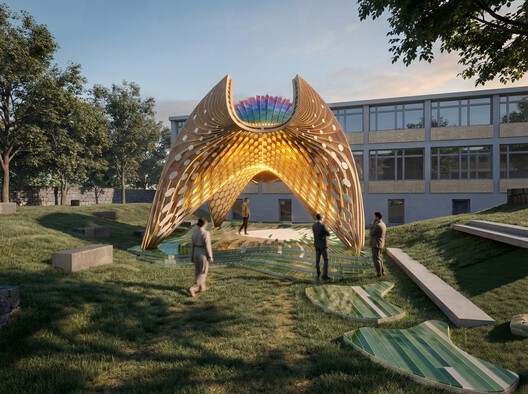
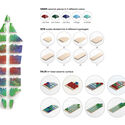
Materiality defines the project, both in how it's built and what it represents. The wooden structure uses a hybrid envelope of ceramic elements that provide texture, durability, and depth, along with textile components that modulate light, ventilation, and interaction with the surroundings. Together, these elements create a dynamic skin that becomes especially striking at night thanks to its integrated, low-energy lighting system. Promoted by ICEX, the project positions itself within the European debate on architecture's role in social, urban, and economic change.
Related Article
Context-Responsive Architecture in Spain: 7 Projects Highlighting Material Strategies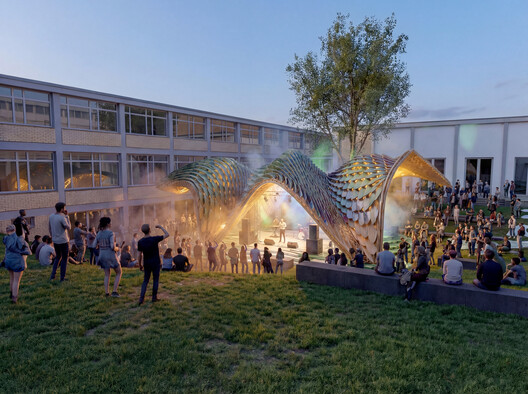
Reworking Gaudí's Method
Through an operational and contemporary perspective, ggstudio engages with the methodological legacy of the architect Antoni Gaudí. Recognized as the leading figure of Catalan Modernism, Gaudí drew inspiration from the curves and forms of nature, guided by geometry, volume, and a balance of simplicity and complexity. Rather than reproducing historical forms, the Spanish Pavilion explores structural and construction principles linked to geometry, material efficiency, and form.
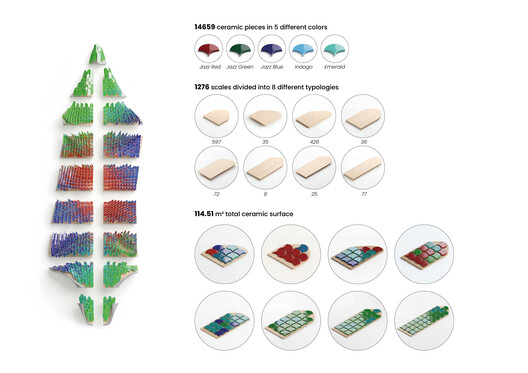
By combining Mediterranean material culture with technical innovation, the installation translates this approach into the contemporary European context through a lightweight, modular structure that is dismantlable and reusable. Its modular system, assembled from wood and ceramics, allows for international mobility, with Milan planned as its next destination.
More Than a Cultural Activation: About Its Social Dimension and Circularity
The Spanish Pavilion is a permeable space, engaging the park and encouraging visitors to move freely. During its Frankfurt tenure, it will host a dedicated program, including institutional presentations, business meetings, cultural activities, small-scale concerts, and events promoting contemporary design and architecture.
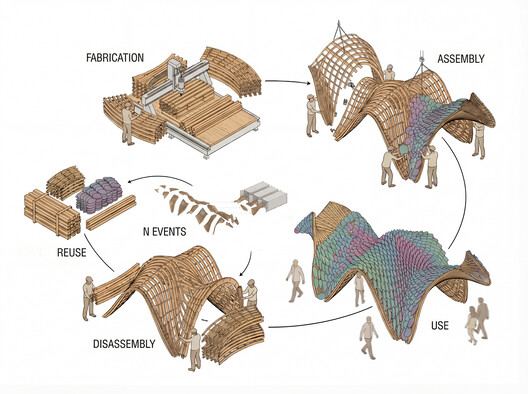
In addition, the project incorporates an analysis of circularity and mobility that evaluates the installation's life cycle, disassembly and relocation. This approach helps define criteria for its implementation in different urban contexts and reinforces the reversible and reusable nature of the architectural infrastructure. The idea of reuse in pavilions and exhibition events reflects a commitment long associated with economic, practical, and symbolic reasons. However, architects continue to rethink how to design structures to promote circularity in response to the global climate crisis and growing awareness of ecological limits. For instance, the Venice Architecture Biennale 2025 aimed, for the first time, to achieve carbon-neutral certification under ISO 14068, with several pavilions designed for disassembly, reuse, and minimal environmental impact.
World Design Capital Frankfurt RheinMain 2026 positions design as a tool for democratic participation, shared agency, and community resilience. The official opening on April 29 will bring together institutional representatives, specialized press, architects, designers, and industry professionals. Through the end of June, cultural, professional, and business programs will be presented, aimed at strengthening dialogue between Spain and Germany.
ICEX brings together Spanish talent, creativity, and industrial expertise at World Design Capital Frankfurt Rhein-Main 2026. The initiative highlights how multidisciplinary collaboration can demonstrate the dynamism, quality, and expertise of the industry. In the end, the future of architecture and design demands the integration and collaboration across diverse disciplines and fields. Contemporary Spanish architecture articulates material tradition, technology, and performance, highlighting broad opportunities for architects to reshape the built environment from diverse perspectives.


