


Artificial intelligence is no longer a distant concept in architectural practice. It is rapidly becoming a practical tool used by firms around the world to accelerate design workflows, generate visualizations, and explore new creative possibilities.
According to a new industry survey conducted by Chaos in collaboration with Architizer, architects are already integrating AI into their daily work. Nearly 800 architects and designers from around the globe participated in the study, sharing insights into how they use AI tools, how much time the technology saves, and how they believe artificial intelligence will shape the future of architecture.
The report shows that the conversation has shifted. For most firms, the question is no longer whether to adopt AI, but how to integrate it in ways that protect authorship, improve reliability, and deliver measurable value.
AI Adoption in Architecture: How Many Firms Are Using AI in 2026?
AI adoption in architecture is growing steadily, though most firms are still in the early stages of implementation.
According to the survey:
- 64% of architects report experimenting with AI tools in their daily workflows.
- One in five firms surveyed is fully embracing AI, integrating it across multiple processes.
- The remaining firms are gradually exploring how the technology fits into their existing design workflows.
Interest in AI is expected to accelerate. Depending on current usage levels, between 73% and 93% of respondents say they plan to increase their use of AI in the coming year. Even among firms that have been slower to adopt the technology, 10% anticipate expanding their use of AI tools.
Overall, satisfaction with AI is positive. Most architects who use AI report being at least somewhat satisfied with the results. Notably, firms that have fully integrated AI into their workflows are significantly more likely to report high levels of satisfaction, suggesting that familiarity and deeper integration lead to better outcomes.
How Architects Are Using AI Tools for Visualization and Design Workflows
The survey shows that architects are rapidly adopting AI-powered tools for design exploration and visual communication. Some of the most common uses include:
- AI-generated imagery for concept development
- Text-to-image visualization tools
- Enhancing and refining architectural renderings
- Generating visual assets for presentations
These tools allow architects to translate early design ideas into compelling visuals. From initial concept sketches to polished client presentations, AI is increasingly becoming part of the architectural design workflow. However, the technology still presents challenges. Commonly cited obstacles include inconsistent output quality, integration gaps with existing software, and the learning curve associated with writing effective prompts.

Despite these challenges, many architects see strong potential for AI to automate repetitive tasks. In particular, designers who are already experiencing productivity gains in concept design believe AI could eventually help automate tedious processes in construction documentation, freeing up time for more creative work.
Benefits of AI for Architects: Time Savings and Productivity Gains
One of the most measurable impacts of AI adoption is improved productivity. Among architects currently using AI tools:
- 86% report that AI saves time or speeds up their workflow
- Nearly one-third say they experience major efficiency improvements
- More than half save at least five hours per week, with larger firms generally seeing greater time savings
One surprising area of efficiency improvement is video editing and content production. Firms using AI-assisted video tools report the largest time savings, with some saving more than 15 hours per week as automated processes streamline repetitive tasks.
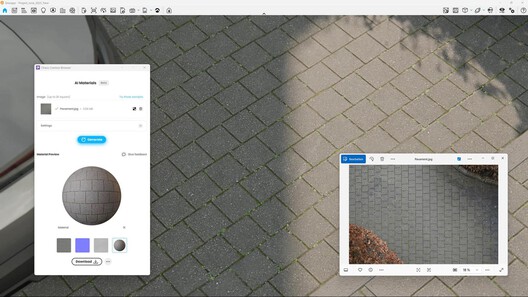
Another notable finding is that about 25% of respondents report the greatest time savings in material selection or asset generation. This suggests that a growing number of architects are integrating AI into established visualization and rendering workflows, enhancing the tools they already rely on.
What Architects Really Think About AI in Architecture
More than half of those not currently leveraging AI report feeling pressure to adopt the technology, either due to industry trends or internal leadership expectations. When asked why they have not yet implemented AI tools, respondents cited practical barriers such as output accuracy and reliability, time and budget constraints, and workflow integration challenges, as well as concerns about originality and authorship. Some worry that AI could cheapen architectural work and diminish creativity.
However, many industry leaders emphasize that AI should act as a design companion rather than a replacement. Nikos Nikolopoulos, founder and creative director at Creative Lighting, explains:
I strongly believe AI's power lies in enhancing human creativity, not replacing it. AI tools should support architects, designers, and visualization artists with capabilities that amplify imagination and efficiency while protecting authorship and originality.

The Future of AI in Architecture: Why More Firms Are Adopting AI
Overall, the survey suggests that the architectural profession is taking a measured, pragmatic approach to AI adoption. Year-over-year data indicates that interest in AI in architecture has followed a familiar pattern: an initial surge of excitement, a brief slowdown as firms evaluated real-world applications, and now a renewed phase of steady growth. As architects gain hands-on experience with AI through everyday experimentation, curiosity is turning into adoption and growing enthusiasm about what the technology could enable next.
The Full AI in Architecture Industry Report provides deeper insights into:
- How architects are integrating AI into their workflows
- Which AI tools are delivering the greatest productivity gains
- What challenges still limit adoption
- Where architects expect AI to have the greatest impact in the future
Download the full report to explore how architects and designers around the world are using AI.


