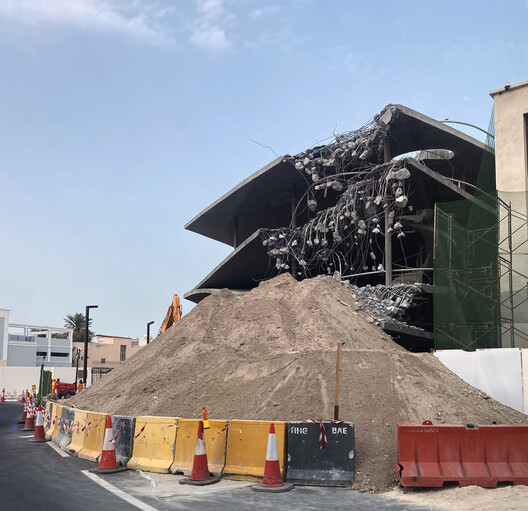
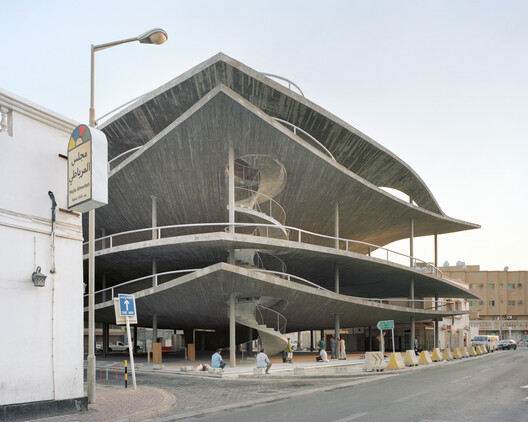
Parking structures designed by Christian Kerez along the Pearling Path in Bahrain are being demolished as part of an ongoing redevelopment initiative in Muharraq. Local reports state that the removal of the car parks is tied to a broader plan to reorganize the historic area and improve access to key heritage sites, including the Sheikh Isa bin Ali House. While the full extent of the intervention has not been officially detailed, available information indicates that multiple structures within the four-part project are affected and that work is already underway.
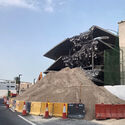
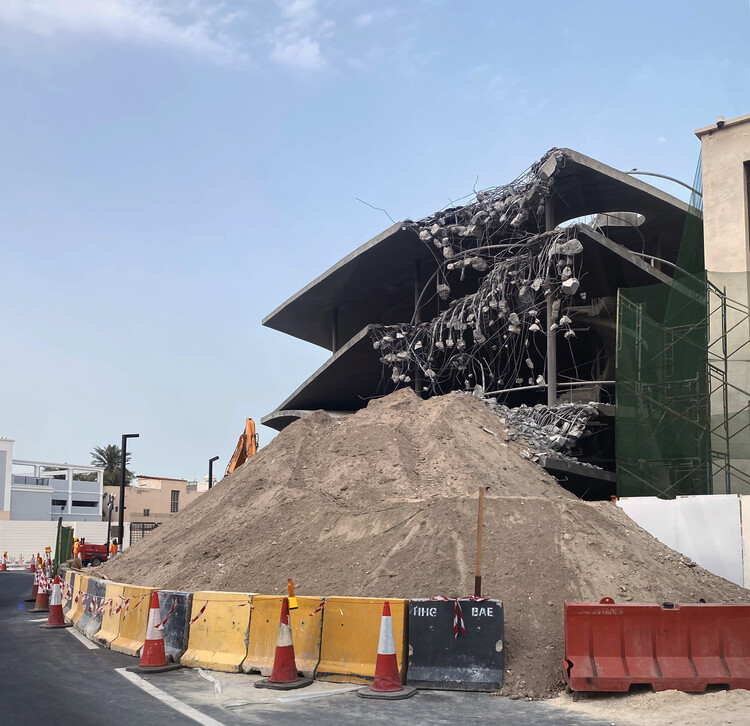
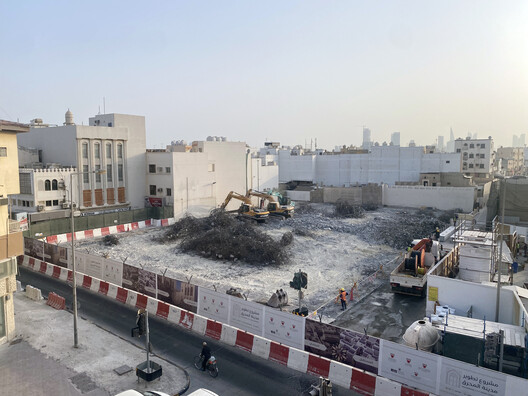
Statements attributed to municipal representatives describe the intervention as part of a wider urban development strategy aligned with national directives for the area. The demolition is framed within a larger vision aimed at enhancing circulation, redefining access points, and reorganizing the relationship between contemporary infrastructure and historically significant sites. Kerez also shared the official statement from a local source, which confirms that the removal of the Pearling Path parking structures forms part of this broader redevelopment plan.
The four car parks formed part of the Pearling Path Project led by Bahrain's Ministry of Culture, which combined the restoration of historic buildings with a series of contemporary architectural and infrastructural interventions. The broader program includes projects by architects such as Anne Holtrop, Valerio Olgiati, and OFFICE Kersten Geers David Van Severen, alongside a network of public spaces and restored heritage structures that together support the continuity of the historic pearling route.
Related Article
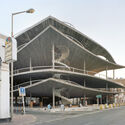
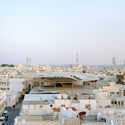
Christian Kerez Designs Parking Structure in Bahrain as Part of the Pearl Path ProjectLocated within the dense urban fabric of Muharraq, the car parks were built in 2023 and conceived as public infrastructure extending beyond their functional role. In addition to accommodating vehicles, the structures created open, accessible spaces intended for gatherings, prayer, and events. The project comprised four buildings with a total surface area of approximately 45,000 square meters, each adapting a shared design logic to different urban conditions.
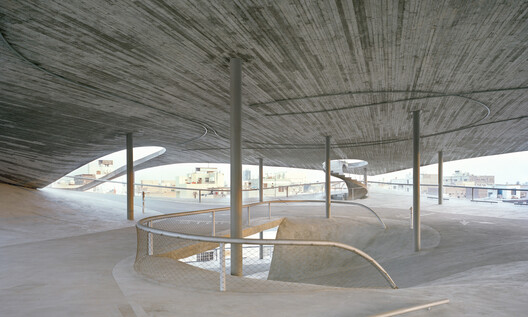
The design was defined by a system of sloping concrete slabs that merged into continuous ramps, connecting multiple levels while shaping a sequence of varied spatial conditions. These geometries produced a shifting experience through contrasts in height, curvature, and enclosure, as movement unfolded across the structures. Structurally, the buildings relied on an exposed system of slabs and columns, with stability achieved through their interconnection.
In other news related to the preservation and transformation of modern and historic structures, a citizen-led campaign in Japan last year proposed alternative uses for Kenzo Tange's Kagawa Prefectural Gymnasium, which has faced demolition since February 2023. In Melbourne, residents successfully secured an extension of Tadao Ando's MPavilion until 2030, extending the lifespan of the originally temporary structure following sustained public advocacy. Meanwhile, in the United States, the City of Dallas is evaluating repair and demolition options for I. M. Pei's modernist City Hall, as part of ongoing discussions around the building's future and condition.