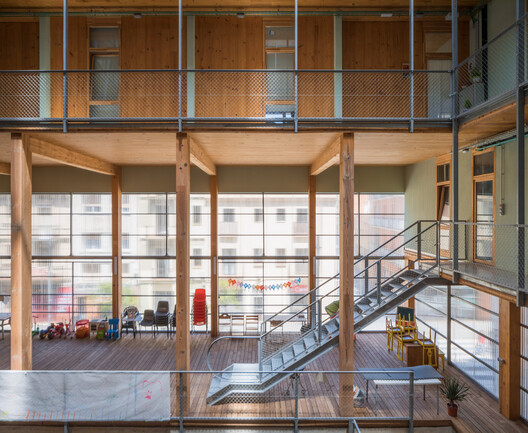
Collective housing is a hallmark of Europe. The 2nd edition of the award is looking for collective housing projects to highlight their social impact and the policy frameworks that support them. Submissions are free and open until 30 April.
Post-industrial modernity generated a wide range of collective housing models that left a lasting mark on European cities and architectural history: from the Hofs of Vienna and the Weissenhof Siedlung to Le Corbusier's Unité d'habitation and the works presented at Berlin's Interbau.
The excesses of the modern movement cast a long shadow over social housing – a stigma that post-modernity failed to dispel. Yet since the turn of the millennium, new forms of collective housing have re-emerged, reconnecting with welfare-state ideals amid pressures from urbanization, property market tensions and ecological urgency.
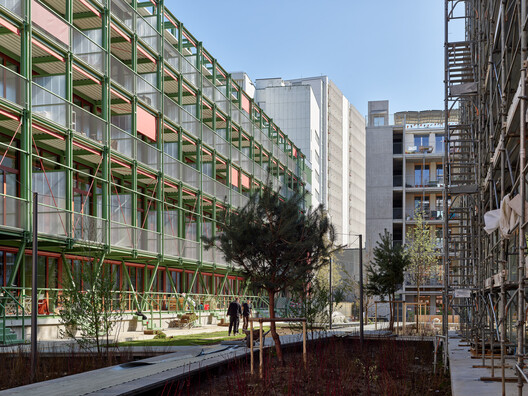
Today, access to housing sits at the intersection of economic, social, and environmental concerns. Collective housing can support social diversity and environmental balance as an alternative to the expansion of single-family housing. As the Covid-19 pandemic underscored, housing is not merely the raw material of the city but an essential condition of life, with a central role in how people connect and live together.
In their conviction that these values must be preserved and nurtured, in 2024 the Basque Architecture Institute (EAI) and Arc en Rêve Centre d'Architecture, supported by the Ministry of Housing and Urban Agenda of the Basque Government, founded the European Collective Housing Award.
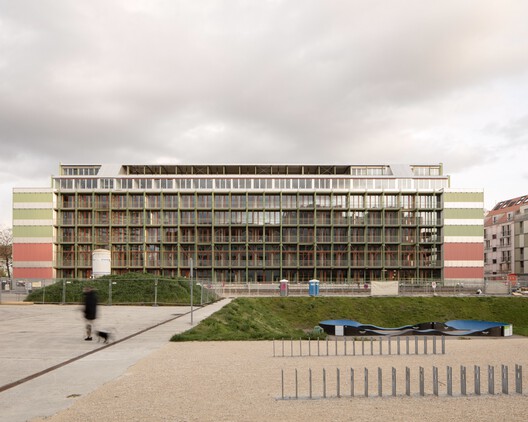
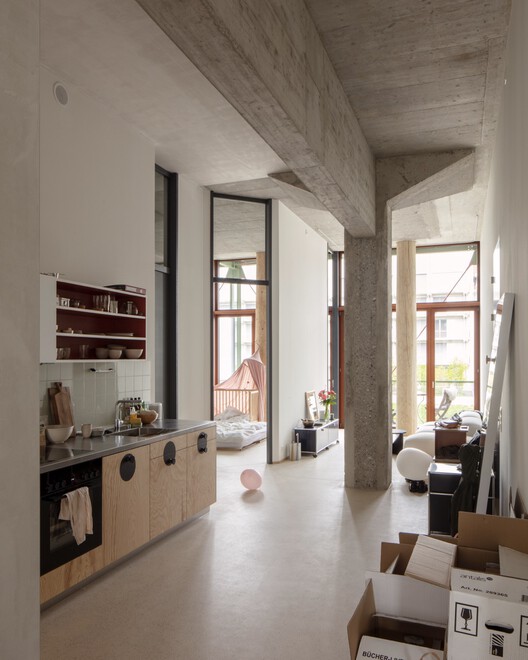
In 2024, the award for Best Renovation went to the conversion of a former wine warehouse in Basel (Switzerland) by Esch Sintzel Architekten, while Best New Construction went to La Borda in Barcelona (Spain) by Lacol.
Second Edition
After the success of the first edition in 2024, this year the award expands its scope to include projects from the 46 countries of the Council of Europe. The goal is to establish a transnational conversation by recognizing the range and diversity of collective housing solutions across the continent.
The open call is aimed at all participants involved in collective housing – architects, housing cooperatives, developers, construction companies, public administrations, and residents. Projects, whether public or private, must have been completed in 2024 or 2025 and include at least three dwelling units. Two categories are available: Renovation and New Construction.
The winners will be announced in San Sebastian, Spain, on October 9. Selected projects will be part of a traveling exhibition across multiple European museums, beginning in San Sebastian and continuing to Bordeaux.
Submissions for projects are free, and will remain open until April 30.
International jury
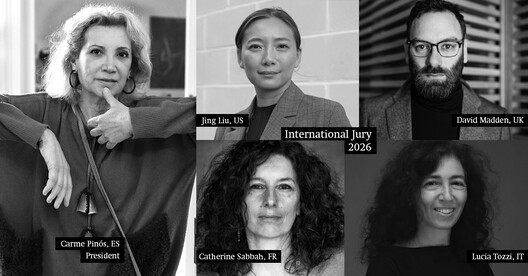
For the 2026 edition, the organizers have appointed an international jury chaired by Spanish architect Carme Pinós. The jury brings together a range of perspectives, including sociology, design, policy, and urban researcher, representing the commitment to celebrate not only aesthetically pleasing projects, but also social responsibility and environmental sustainability.
- Carme Pinós (Spain), architect, National Architecture Award of Spain (2021), Chair
- Jing Liu (USA), architect and SO-IL co-founder
- Catherine Sabbah (France), Executive Director of IDHEAL, housing policy expert
- David Madden (United Kingdom), urban sociologist, Director of the Cities Programme at the London School of Economics
- Lucia Tozzi (Italy), urban researcher and journalist
A transnational conversation
To broaden this discussion, the 2nd edition includes the European Tour, consisting of four roundtable discussions – in Barcelona, Amsterdam, Ljubljana, and Sarajevo. These events bring together local stakeholders in collective housing, including cooperatives, activists, developers, architects, and politicians.
Every roundtable informs the next, contributing to an ongoing exchange of experiences and approaches (see award channels for details).


