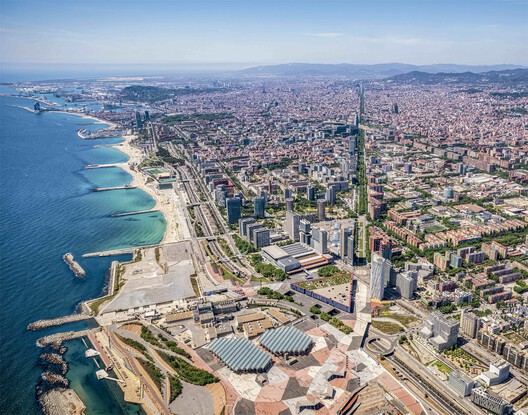
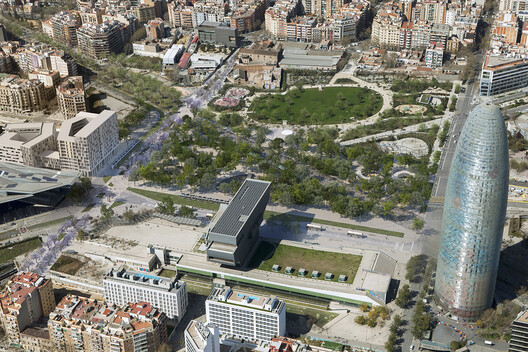
More than three decades after previously hosting the event, Barcelona is set to welcome the UIA World Congress of Architects 2026 Barcelona (UIA2026BCN), bringing the global architectural community back to the city between 28 June and 2 July 2026. Organized under the theme "Becoming. Architectures for a Planet in Transition," the Congress is expected to gather approximately 10,000 participants from over 130 countries, including practitioners, researchers, and students. Rather than being confined to a single venue, the event will unfold across multiple locations along the Mediterranean seafront, among them the Three Chimneys complex, positioning the city itself as an active platform for exchange, discussion, and public programming.
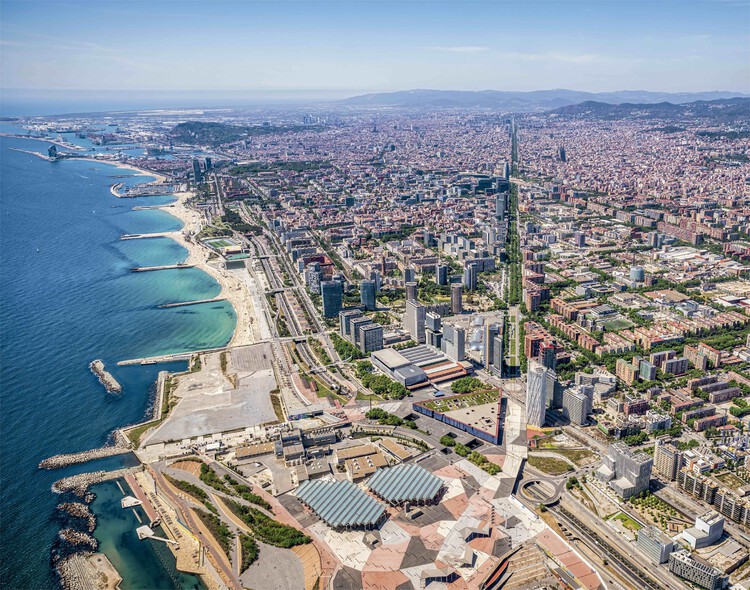
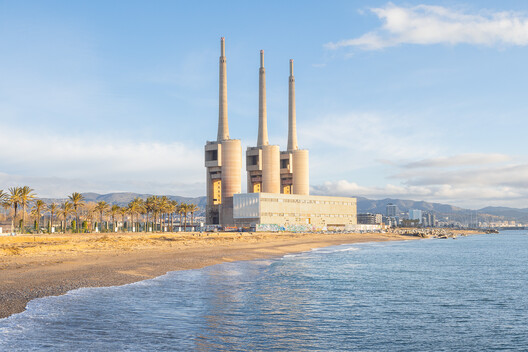
The Congress program is organized over three main days, from 29 June to 1 July, and structured through six thematic lines that guide its content and discussions. Each theme is developed through half-day sessions that combine lectures, panel discussions, roundtables, workshops, and research presentations, including formats such as "Research by Design." The six axes: Becoming More-than-human, Becoming Circular, Becoming Embodied, Becoming Interdependent, Becoming Hyper-Conscious, and Becoming Attuned, frame a broad exploration of architecture's relationship to environmental systems, material practices, governance structures, and cultural production, reflecting ongoing shifts in how the discipline engages with global challenges.
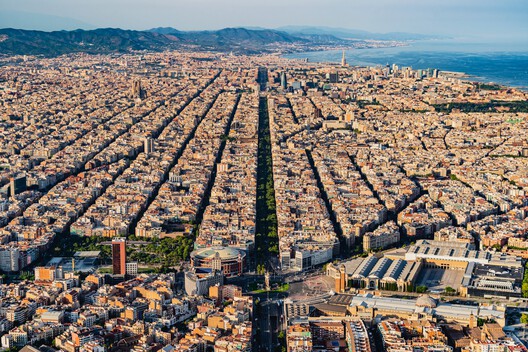
Opening sessions on 29 June focus on ecological frameworks and resource-conscious approaches under the themes Becoming More-than-human and Becoming Circular. Presentations by figures such as Junya Ishigami, Kate Orff, Dirk Sijmons, and Andrés Jaque address the relationship between architecture and environmental systems, considering design as part of broader ecological processes. Later sessions shift toward reuse and circularity, with contributions from Anne Lacaton and Jean-Philippe Vassal alongside H Arquitectes, as well as discussions led by Jo Taillieu and Flores & Prats. Additional participants, including Baukunst, Søren Pihlmann, and Parabase, will examine strategies aimed at extending the lifespan of buildings and minimizing demolition.
Related Article
UNESCO World Capital of Architecture 2026: Barcelona and the Capacity of Architecture to Transform Reality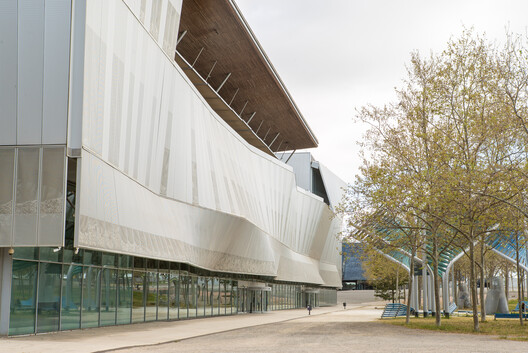
On 30 June, the program turns to construction processes and social frameworks through the themes Becoming Embodied and Becoming Interdependent. Contributions by Marina Tabassum, Palinda Kannangara, and Bruther explore material research and climate-responsive building methods, often grounded in local contexts. Other participants, including BC architects & studies & materials, Hive Earth, and Lehm Ton Erde, will address low-impact construction and the potential of earth-based techniques, while Arquitectura G, together with Go Hasegawa, reflect on the spatial and expressive qualities of materials. The afternoon sessions shift toward housing, policy, and collective forms of living, with contributions from Lacol, Erika Nakagawa, and Clauss Kahl Merz Atelier, alongside an economic perspective by Mariana Mazzucato. Urban-scale considerations are further developed through presentations by Jan Gehl, Rahul Mehrotra, and the Rural Urban Framework.
The final day, 1 July, addresses global systems and cultural dimensions through Becoming Hyper-Conscious and Becoming Attuned. Sessions featuring Mario Carpo, Forensic Architecture, and Centre for Spatial Technologies examine the impact of digital technologies, data, and geopolitics on architectural practice. Additional perspectives from Lev Manovich and The Architecture Lobby extend the discussion to questions of labor, governance, and global infrastructures. Closing sessions turn toward the experiential and cultural aspects of architecture, with contributions from Matilde Cassani, Tatiana Bilbao Estudio, and Bêka & Lemoine, alongside discussions led by Enrique Walker and Philip Ursprung, focusing on the work of the most recent Pritzker Prize winner, Smiljan Radić and Alexander Brodsky.
Throughout the Congress, a group of invited "Critical Antagonists" will contribute to the discussions by introducing alternative viewpoints and prompting debate across sessions. Participants in this role include Bas Smets, Giovanna Borasi, Juan Herreros, Marina Otero, Mark Wigley, Matthias Schuler, Sana Frini, and Timothy Morton, among others, reinforcing the Congress's emphasis on critical engagement.
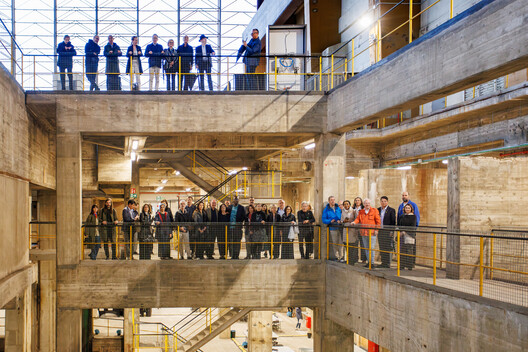
The event is convened by the International Union of Architects (UIA) and organized with the Higher Council of the Orders of Architects of Spain and the Architects' Association of Catalonia, with support from Spain's Ministry of Housing and Urban Agenda, the Government of Catalonia, and Barcelona City Council. Founded in 1948 and headquartered in Paris, the UIA operates as an international federation of architectural organizations and is recognized by several United Nations agencies, promoting architecture's role in addressing societal needs through global collaboration and exchange. Additional program details for the UIA2026BCN, including exhibitions, itineraries, and parallel events, as well as the central exhibition at the Three Chimneys site, are expected to be released in April 2026.
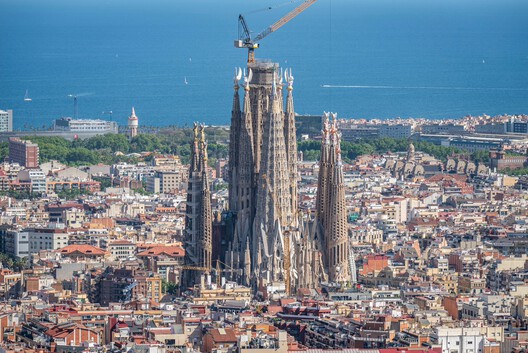
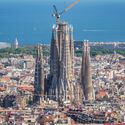
Listed among the most anticipated events of 2026, the UIA World Congress of Architects is expected to bring thousands of participants to Barcelona, which has been designated by UNESCO as the World Capital of Architecture 2026. In parallel, the city recently marked a major milestone with the completion of the central tower of Sagrada Familia, reaching its maximum height of 172.5 meters. Long regarded as one of architecture's most enduring unfinished works, the basilica, designed by Antoni Gaudí, entered its final phase of construction, reinforcing its status as one of the most anticipated completions of the decade, closely tied to the centenary of Gaudí's death.