As housing shortages and affordability challenges intensify across global cities, this week's architectural discourse centers on how design, policy, and adaptive strategies intersect to shape the future of urban living. Initiatives range from grassroots movements and legislative reforms aimed at expanding access to housing to innovative models that rethink ownership, development, and community engagement. At the same time, architects are reimagining existing structures and districts, transforming underused offices, historic landmarks, and unfinished buildings into mixed-use, culturally significant, or publicly accessible spaces. Across scales, these stories illustrate how architecture negotiates scarcity, value, and social priorities, demonstrating its capacity not only to produce new buildings but also to recalibrate urban environments in ways that balance heritage, sustainability, and human experience.

Housing Affordability, Policy, and New Ownership Models
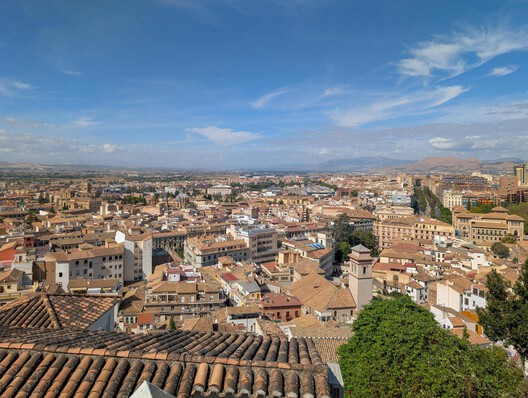
As housing affordability continues to challenge cities worldwide, recent initiatives highlight the growing intersection between policy reform and architectural response. In Spain, grassroots movements in Granada and Málaga have mobilized against tourism-driven speculation, calling for rent control, the expropriation of vacant properties, and stronger tenant protections as housing prices continue to rise. In the United States, the advancement of the 21st Century ROAD to Housing Act signals a federal effort to rebalance housing access, introducing measures to expand construction, support modular building, and prioritize homeownership over corporate acquisition. Meanwhile, in France, proposals for La Défense aim to convert underoccupied office space into thousands of new housing units, reflecting a broader shift toward adaptive reuse in high-cost urban centers. Complementing these policy-driven approaches, Australia's Nightingale Housing presents an alternative nonprofit development model that delivers housing at cost while limiting resale speculation, reframing housing as a social good rather than a financial asset.
Related Article
Smiljan Radić Clarke Receives the 2026 Pritzker Prize, The Artist of Unspoken ArchitectureAdaptive Reuse, Heritage, and Urban Transformation
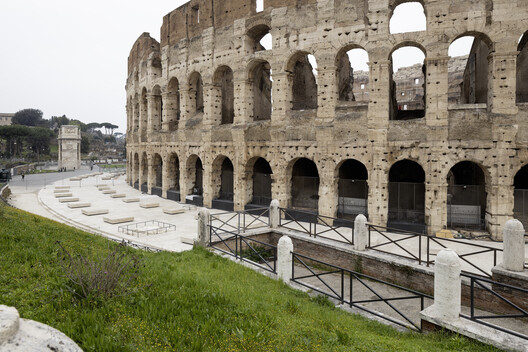
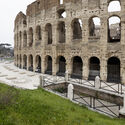
Across different contexts, this week's projects demonstrate how existing structures, whether historic landmarks or modern business districts, are being reimagined to accommodate new uses and contemporary demands. In Paris, RSHP's winning proposal for the Rives-Défense site advances a low-carbon, mixed-use redevelopment that integrates housing, public space, and ecological strategies while reconnecting the district to the Seine River. In London, the iconic BT Tower is set to be transformed into a hotel, with Orms leading the redevelopment of the Grade II–listed structure following its recent acquisition, continuing an ongoing trend of repurposing telecommunications and infrastructure landmarks. In Rome, the restoration of the Colosseum's southern ambulatory by Stefano Boeri Interiors reestablishes the monument's original ground levels and spatial legibility, combining archaeological research with contemporary design interventions to improve accessibility and visitor experience.
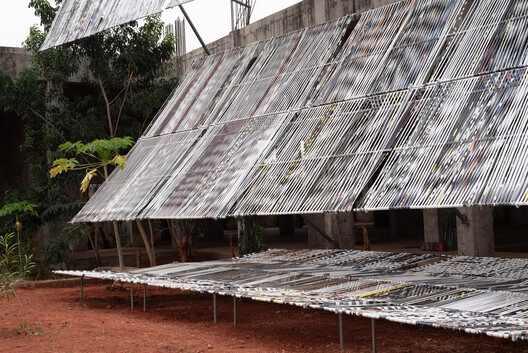
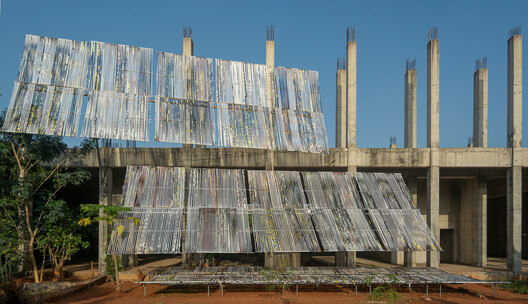
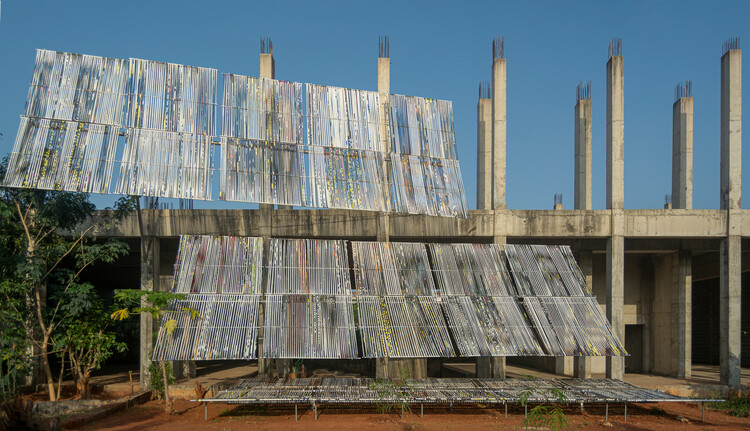
Beyond Europe, alternative approaches emerge at both smaller and larger scales: In Accra, the Limbo Engawa installation at the Limbo Museum reactivates an unfinished Brutalist structure through a lightweight, modular system that creates spaces for gathering, care, and interaction, challenging conventional notions of completeness and abandonment. At a metropolitan scale, Benoy's City Walk master plan in Abuja introduces a 250-hectare mixed-use district anchored by a 450-meter tower, combining residential, commercial, and cultural programs in a long-term vision for Nigeria's capital.
On the Radar
OPEN Architecture's Shede Culture Museum Reaches Construction Milestone
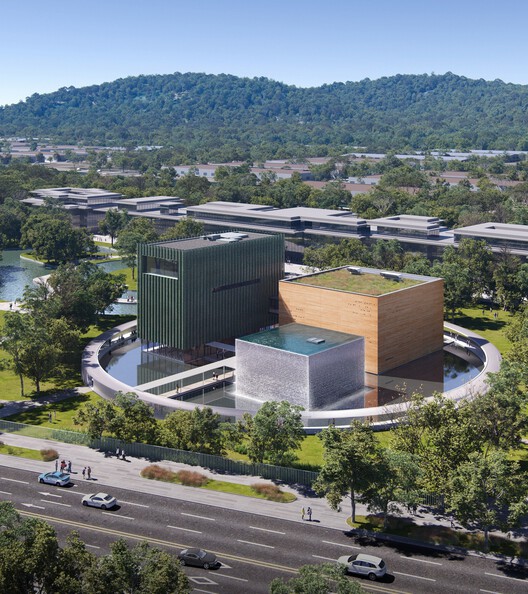
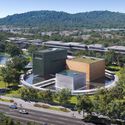
OPEN Architecture's Shede Culture Museum in Shehong, Sichuan, reached its structural topping-out phase in January 2026. Located within the East Garden of the Shede distillery, the project is organised around a 90-meter-diameter circular pond, referencing the traditional Chinese "One Pond, Three Mountains" landscape principle. Three volumes, identified as the Earth Box, Glass Box, and Bronze Box, are positioned in relation to the water, either floating above, partially submerged, or embedded within it, establishing a spatial relationship between architecture and landscape. The design draws on local environmental conditions and material processes associated with spirit production, incorporating rammed earth, bronze cladding, and water-integrated glass surfaces. The museum is currently under construction and is expected to be completed in spring 2027.
Eden Project Morecambe Receives Planning Approval Ahead of Construction
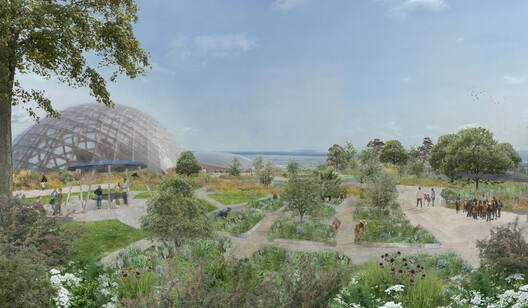
Eden Project Morecambe in North West England has received planning approval for its revised design, marking a significant milestone ahead of construction expected to begin in 2026. Located on the Morecambe Bay waterfront, the project is conceived as a large-scale cultural and environmental destination, featuring two shell-inspired structures that will host a series of immersive exhibition environments exploring the relationship between humans and the natural world. The development will be delivered in phases, beginning with the opening of 1.5 acres of publicly accessible community gardens in 2027, followed by the main complex in 2028. Designed to respond to the coastal context and nearby heritage landmarks, the proposal integrates landscape, education, and visitor programming, while aiming to support regional economic development and tourism.
Pinnacle SkyTower Tops Out as Canada's Tallest Building
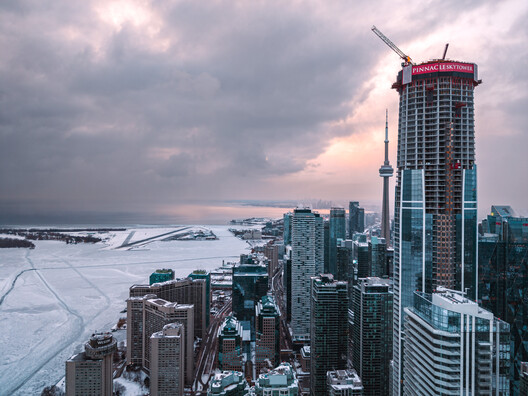
Construction of Pinnacle SkyTower in Toronto has reached its highest floor, making it the tallest building in Canada and the first residential tower in North America to reach 106 storeys. Designed by Hariri Pontarini Architects, the 351.85-meter-tall building features a 12-sided tapered form that blends angular, diamond-like geometry with waterfront-inspired elements, responding to its downtown context. Scheduled for completion in 2026, the tower will house 958 residential units, the Le Méridien Toronto Pinnacle Hotel, and 80,000 square feet of amenities. With floor-to-ceiling windows and balconies extending to the 88th floor, the project offers expansive views of Lake Ontario and the Toronto skyline, forming a central component of the broader 4.4-million-square-foot Pinnacle One Yonge master plan, which integrates residential, retail, hotel, and public space along the waterfront.
This article is part of our new This Week in Architecture series, bringing together featured articles this week and emerging stories shaping the conversation right now. Explore more architecture news, projects, and insights on ArchDaily.