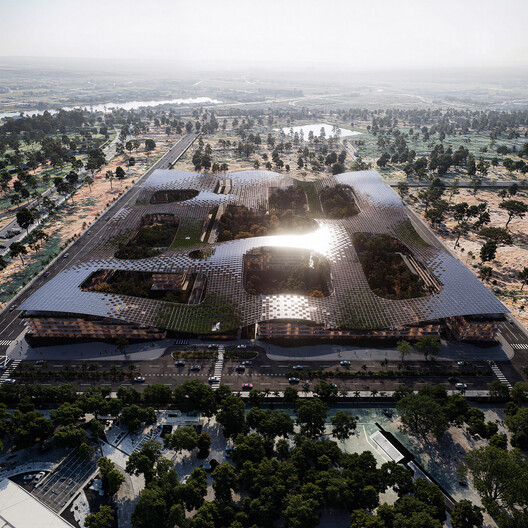
Located within the Parque Tecnológico de Brasília, the World Trade Center Biotic is a mixed-use development designed by Brazilian studio Architects Office as part of the district's broader urban expansion. The project is part of the master plan developed in 2020 by Carlo Ratti Associati and is currently being developed. Conceived as a multi-program complex, the proposal brings together offices, residential units, a hotel, retail spaces, and shared facilities within a single urban framework. The project occupies a site of approximately 70,000 square meters and is planned to reach about 180,000 square meters of built area, with an estimated 150,000 square meters expected to be completed by 2030.

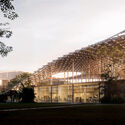
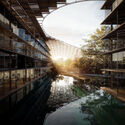
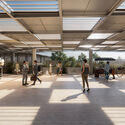
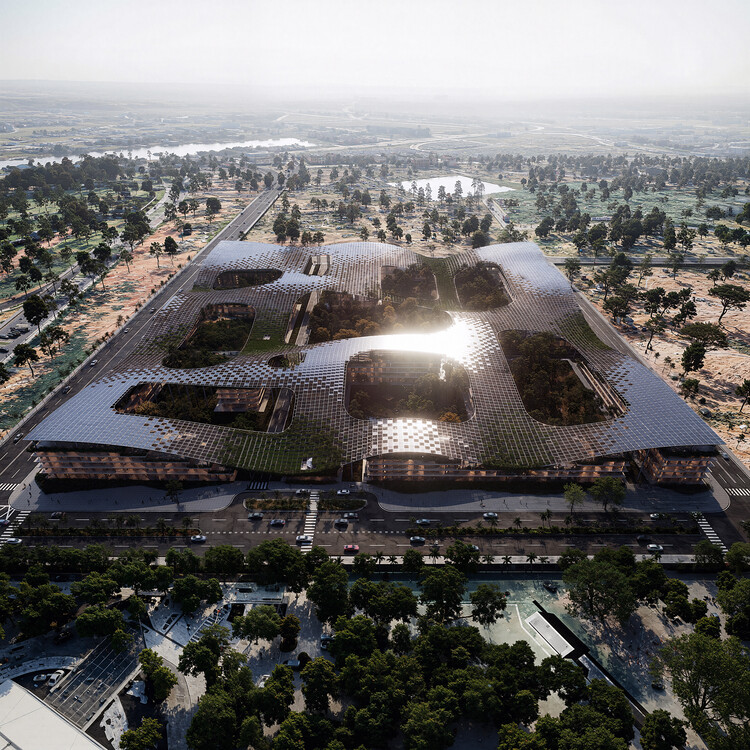
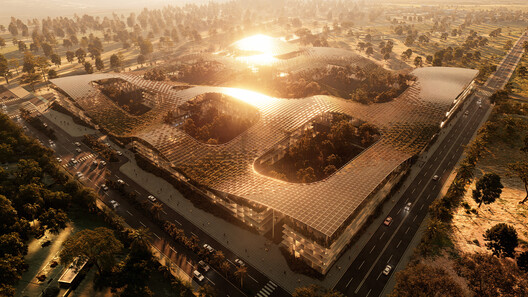
The project explores the integration of multiple programs within a shared spatial system, proposing a development in which residential, commercial, hospitality, and public functions coexist in close proximity. Instead of organizing these uses as separate buildings with independent infrastructures, the proposal concentrates them within a connected structure that allows circulation, services, and public areas to operate collectively. Through this approach, the complex functions as a continuous urban environment where different activities can occur simultaneously and at different times of the day, contributing to a more varied pattern of occupation across the site.
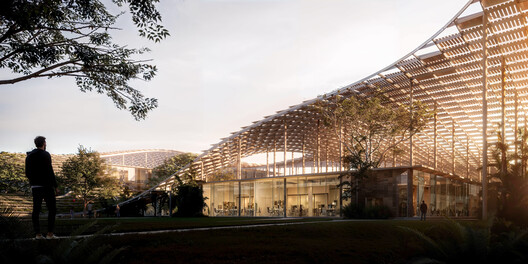
A key concept guiding the design is the idea of "reprogramming," which addresses the possibility of reducing conventional separations between urban functions such as living, working, and circulation. In this framework, the project considers how buildings may adapt to changing uses over time. To support this adaptability, the architectural structure is organized around a modular grid of 8 by 8 meters, allowing interior layouts to be reconfigured while maintaining the overall structural system. This modular logic also contributes to the rationalization of construction processes and facilitates long-term maintenance, enabling the complex to accommodate future adjustments in the program.
Related Article
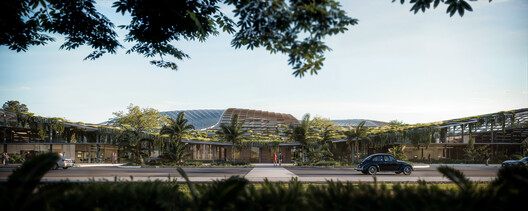
CRA Reveals BIOTIC, a 1-Million Square Meter Extension of Brasilia's Historical Master PlanThe spatial organization responds to the site's topography and landscape conditions. Instead of prioritizing vertical development, the project adopts a predominantly horizontal configuration that extends across the terrain and maintains permeability at ground level. Individual volumes are linked by a continuous architectural surface that operates simultaneously as floor, wall, and roof, organizing circulation while connecting the various buildings into a cohesive system. This surface also structures pedestrian movement across the site, creating shaded areas and transitional outdoor spaces. Environmental strategies are integrated through a combination of passive and active systems. Solar orientation, natural ventilation, and shading devices contribute to improved environmental performance, while reduced slab depths allow deeper daylight penetration into interior spaces.
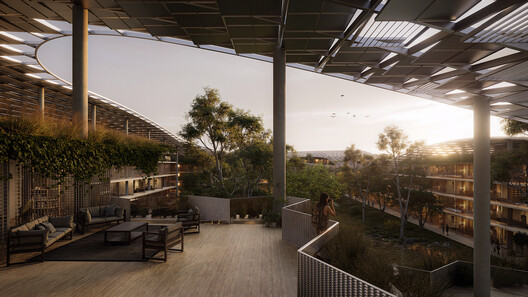
The architecture is articulated as a continuous surface that adapts to variations in height and topography throughout the site. At higher levels, closer to the skyline, technological infrastructure and enclosure systems are concentrated, including photovoltaic panels positioned to benefit from the project's horizontal extension. Toward the ground, the surface gradually transitions into plazas, terraces, planted areas, and lawns, extending the landscape into the built environment and reinforcing the relationship between architecture and public space. Between these conditions, an intermediate layer composed of pergolas and stepped terraces forms shaded zones that mediate between the interior and exterior environments.
In other developments, Skidmore, Owings & Merrill (SOM) recently revealed images of a new landmark proposal in Kazakhstan, featuring two towers known as the Iconic Complex alongside a broader master plan titled the Gateway District, located in Alatau along the Almaty–Qonaev Highway. Meanwhile, in Istanbul, an 84-hectare neighborhood is under development in the Riva area of Beykoz along the city's Black Sea coastline, with a master plan by Snøhetta, BIG, and MVRDV. In Seoul, Heatherwick Studio has also unveiled the first images of its proposal to transform the Daegyo Apartments in Yeouido, the studio's first residential project in the country.