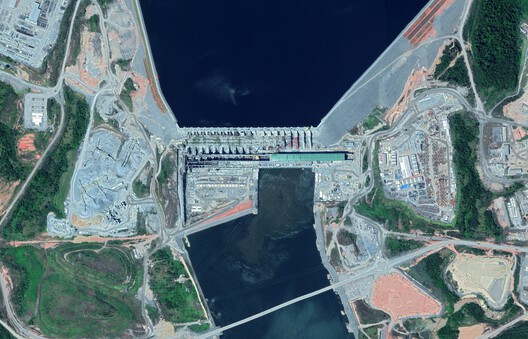
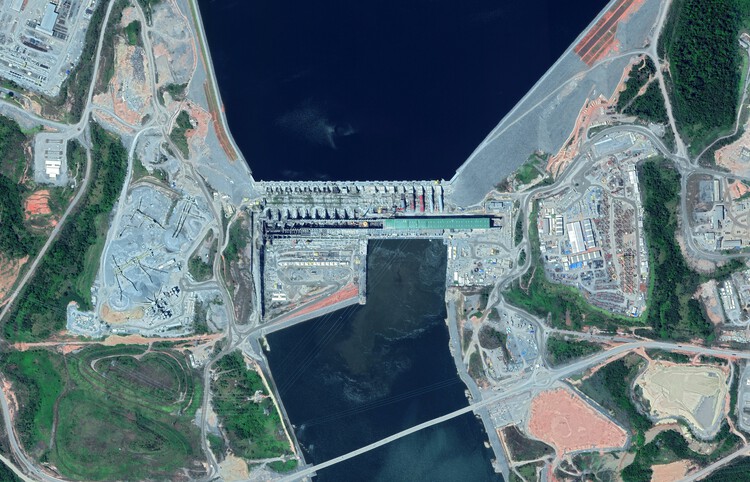
Some of the most significant transformations of South American landscapes have been produced not by cities, but by large infrastructures built to extract and distribute natural resources. Mining operations, energy systems, and transport networks have connected remote landscapes to broader economic structures while transforming rural territories and urban settlements throughout the continent. These infrastructures do not simply occupy space; they reorganize it. They have not only supported economic growth but also reconfigured territories in ways that continue to generate political, environmental, and social debate across the continent. From this perspective, territories can be understood not as fixed geographic areas but as socio-ecological systems shaped by cultural, environmental, and political relations, a point emphasized by anthropologist Arturo Escobar in his work on territorial thinking in Latin America.


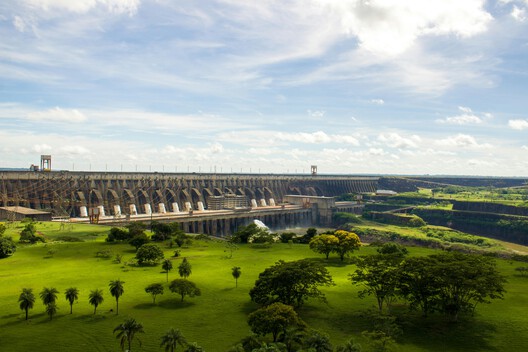
Within this broader landscape, hydroelectric megaprojects became among the most significant infrastructure interventions of the twentieth century. Built across major river basins, dams reorganized hydrological systems while supporting national development strategies and expanding electricity production across the region. At the same time, these infrastructures reshaped surrounding environments and sparked ongoing debates about environmental impacts, territorial control, and community displacement.
Understanding these infrastructures requires looking beyond their technical function. Energy infrastructure also operates as a spatial process that reorganizes landscapes, economies, and social dynamics. Today, as many countries expand renewable electricity production, new infrastructures are emerging across deserts, coastlines, and rural territories, extending networks that have shaped South American landscapes for decades.
Related Article
Rethinking Architecture at the Scale of Planetary SystemsBuilt along major river basins, these projects harnessed the continent's extensive hydrological systems to generate electricity while gradually integrating remote landscapes into expanding national electricity networks. Rivers that historically structured regional ecologies and local economies increasingly became central elements of large-scale power networks. The construction of dams also transformed surrounding landscapes. Reservoirs altered river environments and submerged valleys, while new transmission corridors extended electricity flows across vast regions. In many areas, dam construction produced new infrastructural landscapes where energy production, settlement patterns, and regional development became closely interconnected.
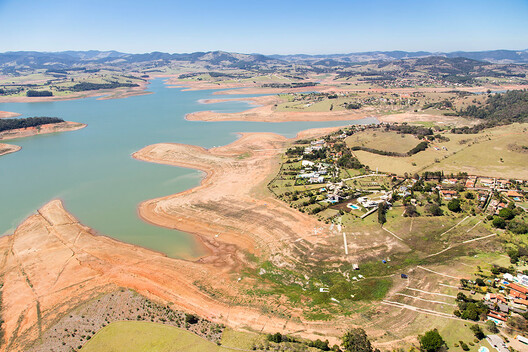
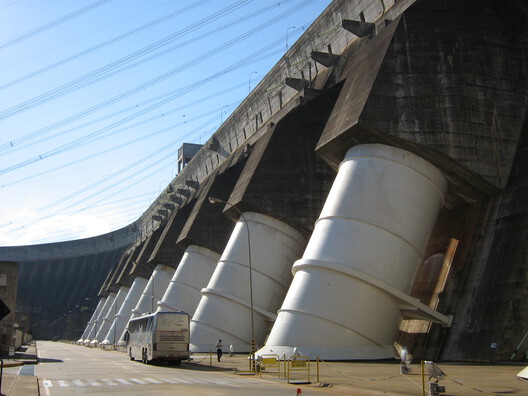
Projects such as the Itaipu Dam on the Paraná River illustrate how hydroelectric infrastructure can reshape territory at a regional scale. Built along the border between Brazil and Paraguay, the project transformed a large section of the river into an artificial reservoir, flooding extensive valleys and producing a new infrastructural landscape across the region. At the same time, the dam linked both countries through a shared electricity network, turning what had once been a peripheral river landscape into a central node of continental energy production. The creation of the reservoir also submerged parts of the ancestral territory of the Avá-Guaraní people, forcing communities to leave lands that had long supported their livelihoods and cosmologies.
Similar transformations have unfolded in other river basins across the continent. The creation of reservoirs frequently reshaped river landscapes, while changes in water flows altered fishing practices and local economies that had long depended on these waterways. Along Colombia's Sogamoso River, for example, the construction of the Hidrosogamoso Dam modified downstream hydrological conditions and affected fisheries that supported surrounding communities. Research examining the Sogamoso basin has documented how these hydrological changes transformed local fishing activities and livelihoods, illustrating how hydroelectric infrastructure can reorganize the spatial relationship between rivers, landscapes, and regional economies.
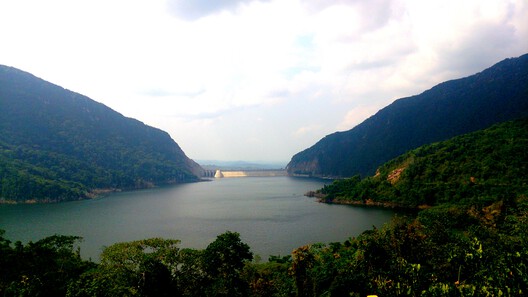
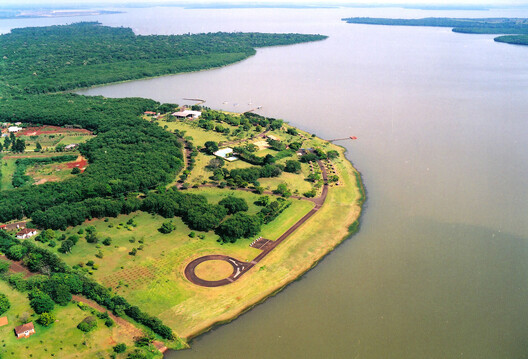
The expansion of hydroelectric infrastructure also reveals how energy production operates at a territorial scale. Dams, reservoirs, and transmission corridors extend across entire river basins, linking distant landscapes to national electricity systems while reshaping patterns of settlement, production, and environmental management. Brazilian geographer Milton Santos described space as the result of interactions between material infrastructures and the social practices that develop around them. From this perspective, large hydroelectric systems can be understood not simply as engineering works but as territorial structures composed of rivers, reservoirs, transmission lines, and urban centers operating together as part of a broader spatial network.
Understanding energy infrastructure in these terms helps explain why dams have played such a central role in shaping South American landscapes. Rather than isolated engineering works, they operate as components of larger infrastructural networks that connect natural resources, technological systems, and regional development strategies.
In recent years, new forms of energy infrastructure have begun to reshape landscapes across South America. As countries expand renewable electricity production, solar and wind projects increasingly appear in territories whose environmental conditions allow large-scale energy generation. Reports examining the region's energy transition highlight that South America possesses some of the world's most favorable conditions for renewable energy production, including high solar radiation levels and strong wind corridors.
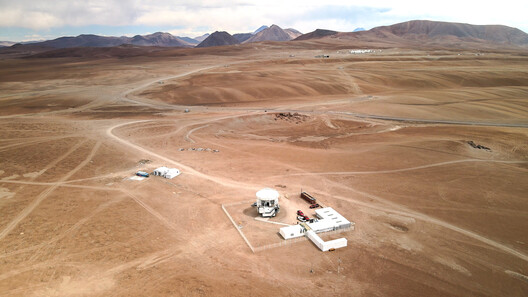
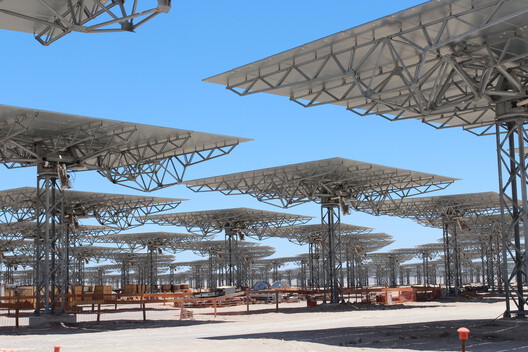
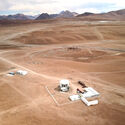
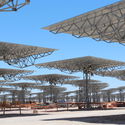
Yet the expansion of renewable energy does not occur in neutral territory. In Chile, the Atacama Desert has become one of the most visible examples of this transformation. Known for having some of the highest levels of solar radiation in the world, the region now hosts extensive solar infrastructures distributed across the desert landscape. Projects such as the Cerro Dominador solar complex illustrate how energy production becomes embedded within these environments, where fields of mirrors, transmission corridors, and service roads reorganize vast desert territories.
Yet these infrastructures are not emerging in an empty landscape. The Atacama has long been shaped by extractive industries, particularly large-scale mining operations that rely on vast energy systems. Lithium extraction in the region, a key component in global battery production, has also generated increasing concern over its environmental impacts on fragile desert ecosystems and water resources. In this context, the expansion of solar infrastructures raises broader questions about how the energy transition continues to reshape territories already structured by resource extraction.
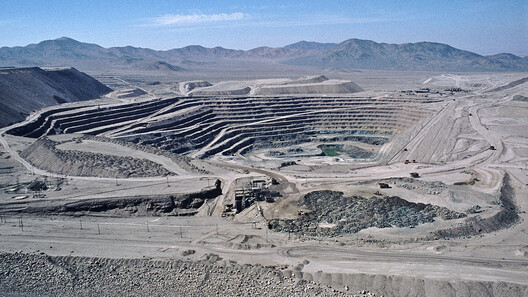
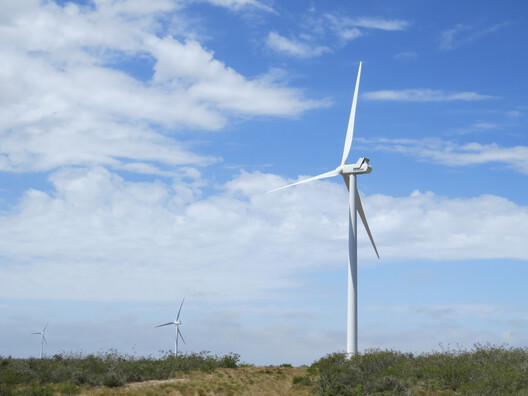
Wind energy follows a similar territorial logic in other parts of the continent. In southern Argentina, the Parque Eólico Rawson extends across the open landscapes of Patagonia, a region characterized by vast territories, low population density, and some of the most consistent wind conditions in South America. Here, rows of wind turbines distributed across the terrain generate a dispersed infrastructural landscape that contrasts with the concentrated reservoirs of twentieth-century hydroelectric dams.
As in the case of solar infrastructures in the Atacama, these wind farms depend on transmission networks that connect remote territories to distant urban centers, extending national electricity systems across regions that historically remained at the margins of major energy infrastructures. These emerging infrastructures expand the spatial logic established during the hydroelectric expansion of the twentieth century. While dams have historically concentrated electricity production along river basins, renewable installations distribute energy generation across deserts, plains, and coastal territories. South America's energy transition thus reflects not only a technological shift but also the emergence of new landscapes shaped by renewable energy infrastructure.
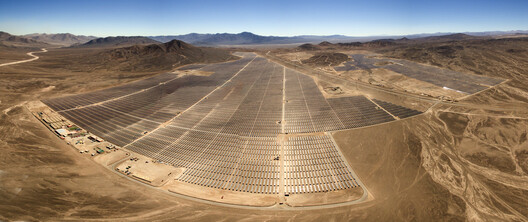
As these infrastructures expand, energy production increasingly becomes a spatial process that reshapes territories across the continent. Rather than replacing earlier extractive systems, many renewable infrastructures extend and transform landscapes that have long been structured by resource extraction, raising new questions about how the energy transition will reshape South America's territorial futures.
This article is part of the ArchDaily Topic: The Technosphere: Architecture at the Intersection of Technology, Ecology, and Planetary Systems. Every month we explore a topic in-depth through articles, interviews, news, and architecture projects. We invite you to learn more about our ArchDaily Topics. And, as always, at ArchDaily we welcome the contributions of our readers; if you want to submit an article or project, contact us.