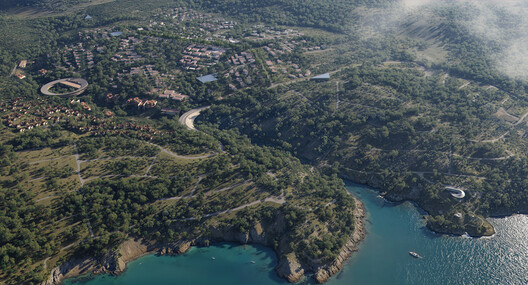
Located in Istanbul, Türkiye, an 84-hectare neighborhood is currently under development in the Riva area of Beykoz along the city's Black Sea coast. The master plan has been developed by an international design team including Snøhetta, Bjarke Ingels Group, and MVRDV, alongside local practices KEYM, DB Architects, Rasa, and Bilgin Architects. Known as Ion Riva, the project is conceived as a landscape-led residential community that integrates housing, cultural facilities, and public programs within an ecological framework shaped by the meeting of forest, river, and sea. The first phase of the development, which has received planning permission and is currently under construction, will deliver 969 homes designed for approximately 3,000 residents, with the first completed residences expected to be occupied in 2027.


The landscape-oriented master plan organizes the neighborhood into smaller residential clusters connected by a network of green spaces and public amenities. Across the first phase, approximately 100,000 square meters of biodiverse landscape are planned alongside a new school and a range of cultural, retail, hospitality, and wellness programs intended to support everyday life. Four cultural buildings designed by Snøhetta, MVRDV, and BIG structure the public dimension of the development, acting as key landmarks within the neighborhood while highlighting connections between architecture, landscape, and community life.
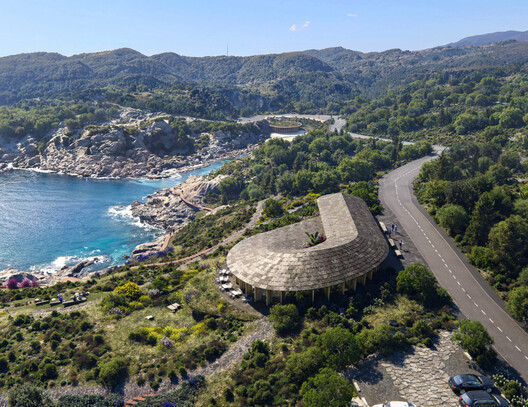
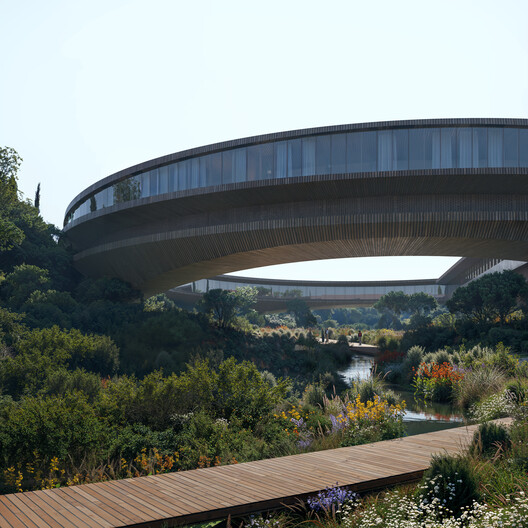
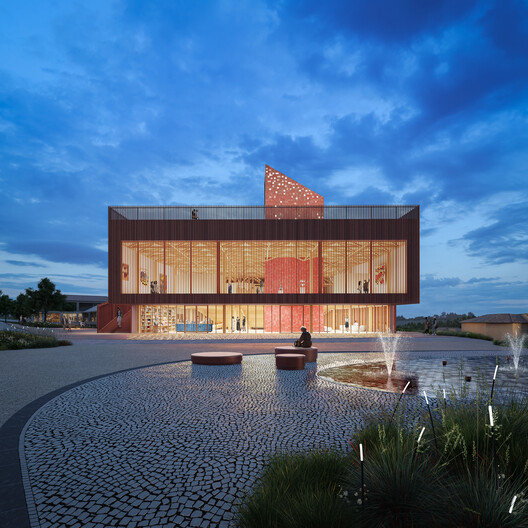
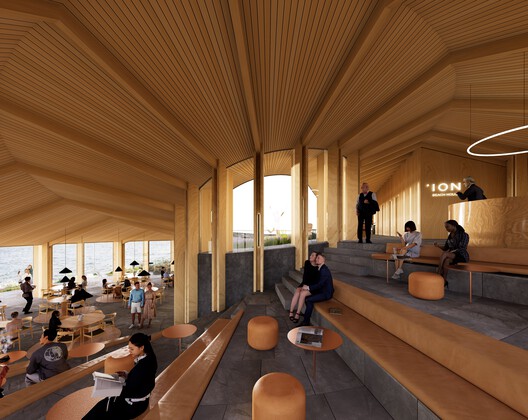
The Ring, designed by Snøhetta, spans the river in a circular form and is conceived as a place for ecological learning, cultivation, and everyday encounters, accompanied by nearby stables and allotments that support environmental education and local food systems. Along the coastline, The Drop, designed by BIG, takes the form of a timber structure shaped like a teardrop and will accommodate a café, restaurant, wellness facilities, and public art. The Lantern, designed by MVRDV, will function as a cultural venue including a performing arts center, cinema rooms, community spaces, an art gallery, and a bookshop, while its roof terrace is designed as an accessible public platform overlooking the surrounding landscape. A fourth cultural building located at the center of the neighborhood will provide spaces dedicated to creativity, craftsmanship, learning, and recreation, including an exhibition space, library, studios, co-working areas, and sports facilities.
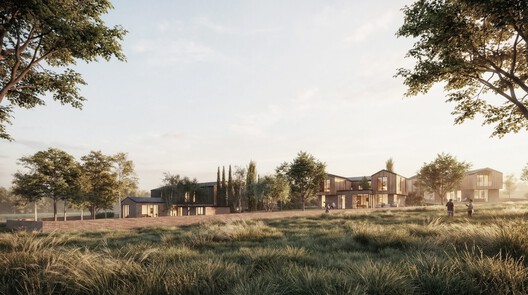
Walkability structures the spatial organization of the master plan, connecting residential clusters, public programs, and everyday amenities through short pedestrian routes that follow the site's topography. Shaded pathways and biodiverse green corridors link parks, open landscapes, trails, and sports facilities, creating a continuous network of movement and outdoor activity across the neighborhood. The residential component of the first phase consists primarily of villas organized around internal courtyards, referencing architectural traditions common across the region while allowing flexible outdoor living spaces. A system of 26 courtyard configurations offers layout variations, while shared amenities within each residential cluster include a swimming pool and communal gathering spaces.
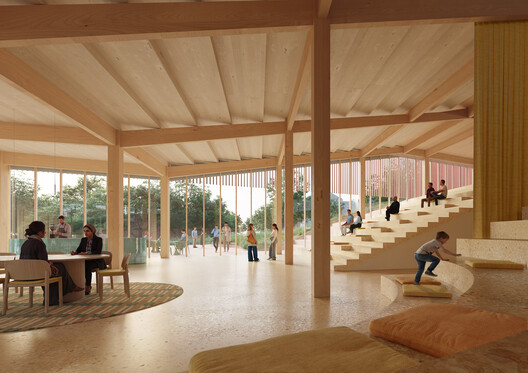
The project prioritizes locally sourced stone and cross-laminated timber, with modular timber construction intended to improve efficiency and reduce embodied carbon. Environmental strategies include on-site renewable energy systems such as grid-connected solar panels, landscape infrastructure designed to regulate microclimates and improve air quality, and water management systems incorporating rainwater harvesting and greywater recycling to reduce potable water demand by approximately 50 percent.
Ion Riva is the first neighborhood project developed by Ion, in collaboration with development consultant Urbanion. The broader project team also includes interior designers Mehmet Yücebaşoğlu (ADOD) and Yeşim Kozanlı, alongside a multidisciplinary group of engineering and consultancy partners. Construction of the first phase is currently underway, with the first residential units expected to be completed and occupied beginning in 2027.
Recently, Foster + Partners revealed designs for a retail plaza on the northern bank of the Golden Horn in Istanbul, part of the larger Tersane Istanbul redevelopment transforming 1.6 kilometers of former waterfront. In other news of major commissions, MVRDV has begun construction on the EU TUMO Convergence Center, an educational and research facility in Yerevan. Meanwhile, Hariri Pontarini Architects and Snøhetta have been selected to design the new Ontario Science Centre in Toronto, while Manresa Island Corp. has unveiled plans for Manresa Wilds, a 125-acre waterfront park in Norwalk developed with SCAPE and Bjarke Ingels Group.