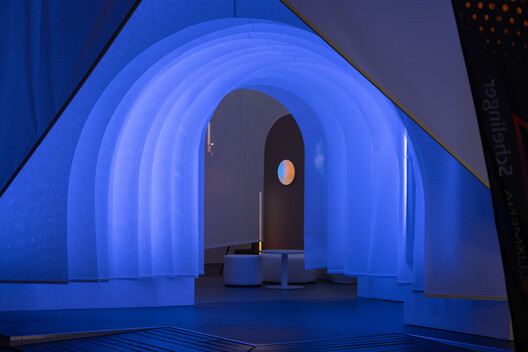
At Light + Building 2026 in Frankfurt, OPPLE Lighting marked its 30th anniversary with an architectural proposition rather than a retrospective. Presented under the theme "Hi Light!," the company unveiled Light as Cloud, a booth designed by OMA. The installation also served as the international debut platform for OLL, OPPLE's new high-end design brand. Rather than functioning as a conventional product display, the project positioned light as a spatial system—one that shapes architecture, circulation, and perception.
Light as Structure
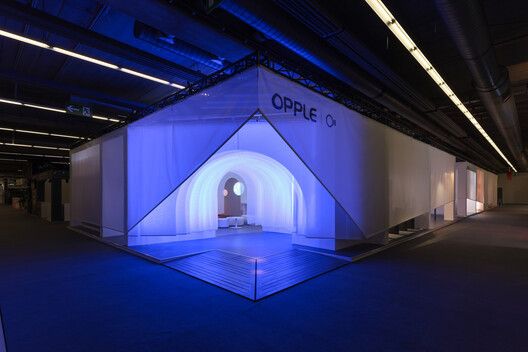
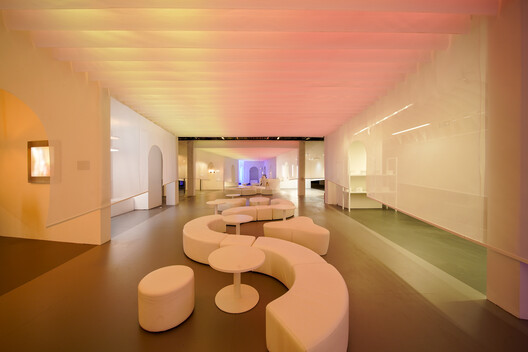
Located within the trade fair's expansive exhibition hall, the booth is defined by a suspended volume wrapped in translucent white fabric. The envelope forms a continuous, permeable boundary that diffuses light across its surface, establishing a clear architectural identity within a commercial environment.
The intervention is simple in geometry but deliberate in execution. The fabric skin operates as both façade and filter, mediating interior and exterior conditions. Visitors move through a controlled sequence of light environments rather than encountering isolated fixtures. In this sense, the installation shifts attention from individual luminaires to spatial continuity.
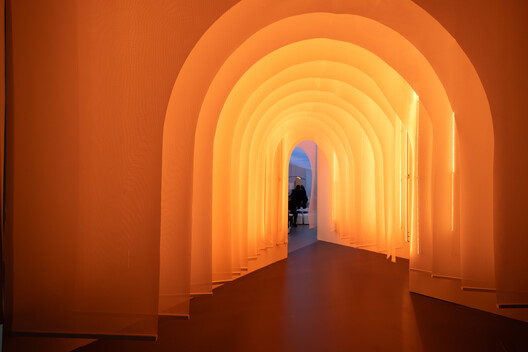
Led by OMA Partner Chris van Duijn, the design explores light as both atmosphere and infrastructure. The "cloud" is not treated solely as a sculptural gesture; it functions as a framework that integrates OPPLE's Software Defined Lighting (SDL) technology at an architectural scale. Light is embedded within the structure rather than applied to it.
At the core of the booth, SDL enables precise spectral tuning and gradual transitions across zones. The system simulates the progression of daylight—from morning to evening—within the enclosed volume. These transitions are not theatrical; they are incremental, reinforcing the idea of light as a programmable building component rather than a decorative effect.
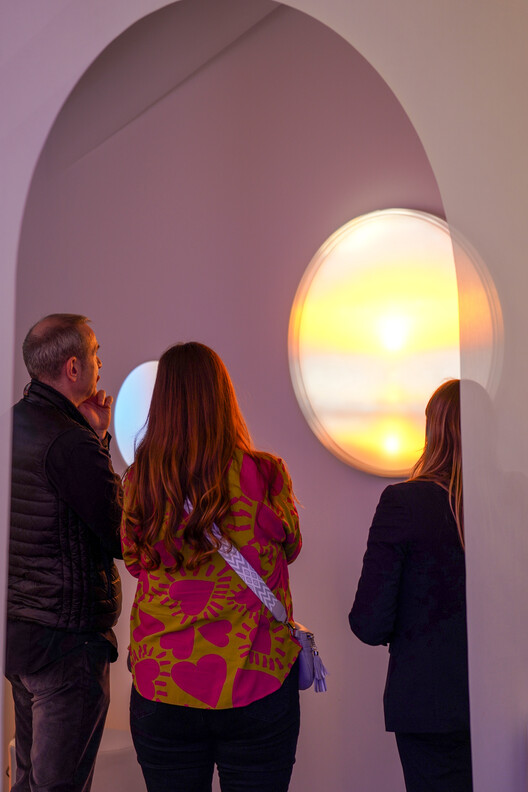
The project reflects a broader shift in the industry: from fixture-based thinking to system-based planning. Here, lighting is treated as a layer of architecture, aligned with structure, material, and movement.
OLL: Design Within a System
Within this architectural framework, OPPLE introduced OLL, its new high-end design brand. If the booth establishes the systemic dimension of light, OLL addresses its formal and cultural potential. The debut collection includes four series: FOLIO, INK, ASTRA, and FLOW. Each explores a different relationship between light, object, and time.
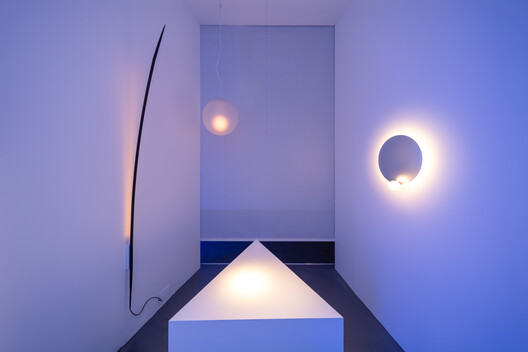
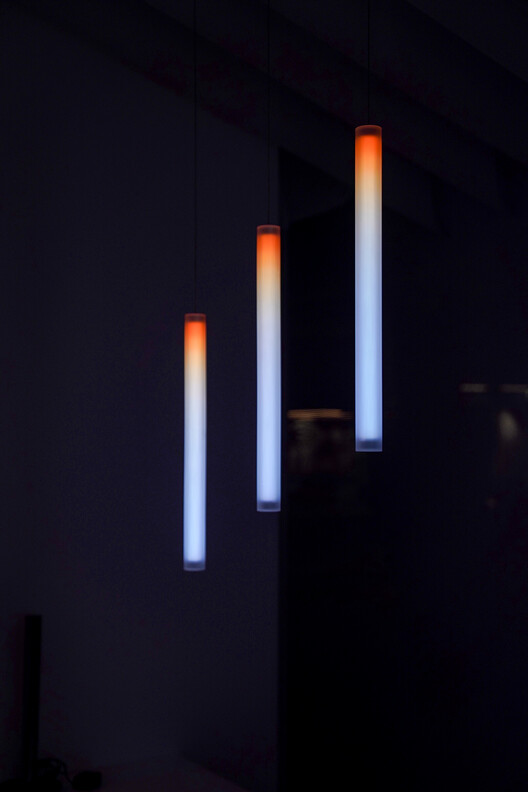
FOLIO investigates the interaction between pixelated light and planar surfaces, treating the fixture as a medium for modulation rather than static output. INK translates principles from Chinese calligraphy—particularly the balance between stroke and void—into three-dimensional luminous forms. ASTRA references the sundial, using slow-moving light to register the passage of time within interior space. FLOW introduces controlled movement within the fixture itself, emphasizing directionality and trajectory.
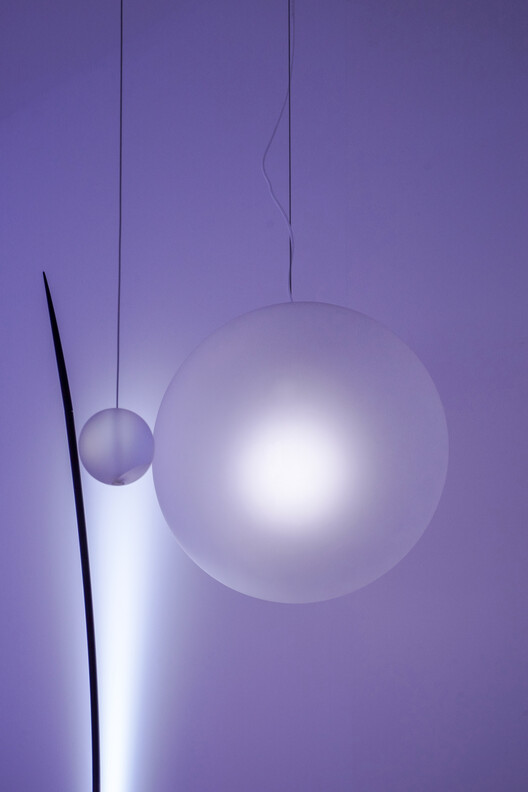
OLL's presentation is defined by its placement within the larger architectural system. Instead of appearing as isolated products, the luminaires operate within SDL-driven environments, demonstrating how design objects can integrate into programmable lighting infrastructures.
From Residential to Urban Scale
Beyond the booth, OPPLE used its presence at Light + Building to reinforce its evolution from manufacturer to integrated solutions provider. Over three decades, the company has expanded from product development into R&D-driven system design, with operations in more than 70 countries.
In residential applications, the Wellsky family returned with updated SDL algorithms and Primasunlux full-daylight sources. Designed for living rooms, bedrooms, and children's spaces, the system applies circadian lighting principles to domestic environments. The emphasis remains on replicating daylight patterns indoors through calibrated spectral control.
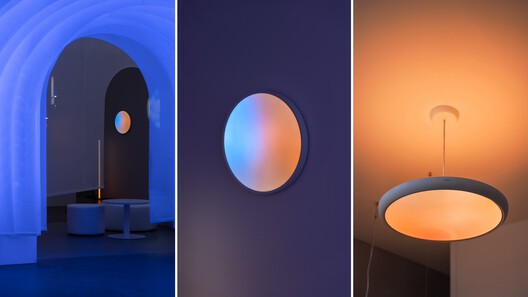
At the urban and commercial scale, OPPLE framed its strategy around three pillars: intelligent building management for industrial and office settings; human-centric lighting for education and healthcare environments; and energy-efficient solutions for cities, sports facilities, and horticulture. In each case, lighting is positioned as part of a broader digital and environmental ecosystem, connected through DALI-based management systems and data integration.
A Maturing Position
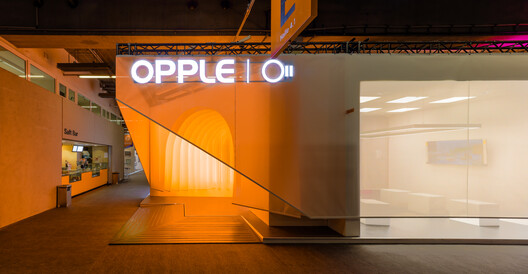
Through its 30-year milestone, OPPLE articulates a clearer brand vision of "SEE BEYOND". The collaboration with OMA signals a willingness to engage lighting as a spatial discipline rather than a supplementary service. Instead of relying on spectacle, the booth demonstrates how programmable light can define enclosure, circulation, and temporal experience.
In a trade fair context often dominated by product arrays and technical claims, Light as Cloud stands out for its structural clarity. It suggests that the next phase of lighting design will be less about individual fixtures and more about integrated systems embedded within architecture itself.
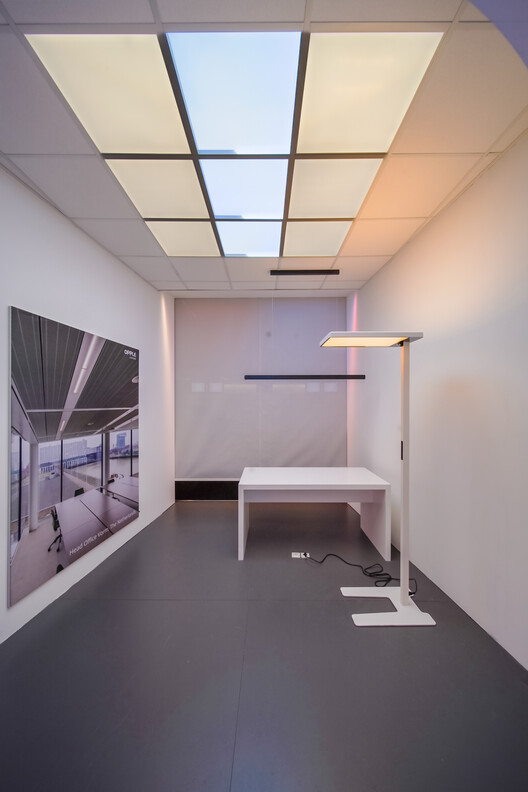
For OPPLE, the anniversary is less a celebration of longevity than a statement of direction: light treated not as an accessory, but as a building material.


