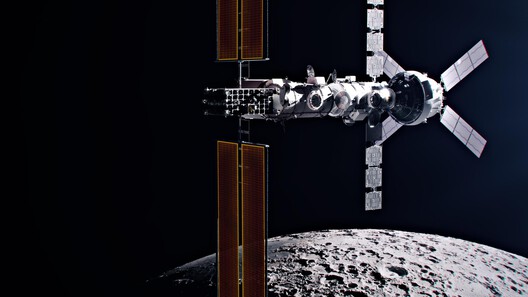
The concept of the technosphere provides a framework for understanding the scale of human impact on Earth. The term was coined by Peter K. Haff, and it is defined as the global network of human-made artifacts: a physical layer of infrastructure, buildings, vehicles, and machinery that functions alongside the biosphere and atmosphere. Currently estimated at 30 trillion tons, this human-constructed mass is dominated by the built environment. In this context, architecture serves as the primary interface, shaping how technology interacts with local ecologies. However, it seems that soon, the Technosphere will no longer be confined to the terrestrial surface. Through NASA's Artemis program, this network of human-made mass is expanding beyond Earth's atmosphere and is looking to establish new orbital infrastructure that represents the first permanent off-world extension of this man-made system.


The first addition to this expansion is Gateway, a modular space station that will be positioned in orbit around the Moon. It will be approximately 1/5 the size of the International Space Station (ISS), and it will function as a base for lunar surface missions and a long-term laboratory for deep-space research. However, due to limitations in transporting and launching heavy parts, the architecture of the Gateway will be defined by modularity to enable incremental assembly. Apart from robotic arms and other complex technical systems, there will be two primary habitable elements serving as the foundation for human life: the Habitation and Logistics Outpost (HALO) and the International Habitat (I-Hab). Together, these modules provide the pressurized volume necessary for human life in a vacuum.
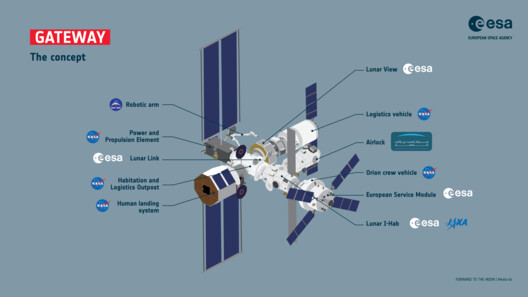
In total, with the docked Orion Spacecraft, I-HAB, and HALO, the crew will have approximately 30 m³ of habitable space while on mission. At first glance, this might seem small, but according to interviews with the architects involved, this is due to "the impossibility of launching massive components to the moon". For the architectural design concept phase of I-HAB, the European Space Agency (ESA) used the services of Thales Alenia Space Italy (TAS-I) in Turin, as well as Liquifer Space Systems, which provided mockups. The objective seems to have been a division of labor between HALO and I-HAB, which reflects an attempt at a program with separation of functions: the noisy, high-traffic command functions on one side, and the private, restorative spaces required for long-duration missions on the other.
HALO was designed and manufactured by Northrop Grumman for NASA. It will serve as the operational and command center of Gateway, and its design will be a 3 m diameter pressurized cylinder. Once the Orion spacecraft is docked, it will be able to support up to 4 crew members for up to 30 days. The module will feature three docking ports that act as the critical structural nodes of the station. These ports will allow for the attachment of other components, like the visiting cargo resupply vehicles and lunar landers. It will essentially become the grid to which all other infrastructure will be connected.
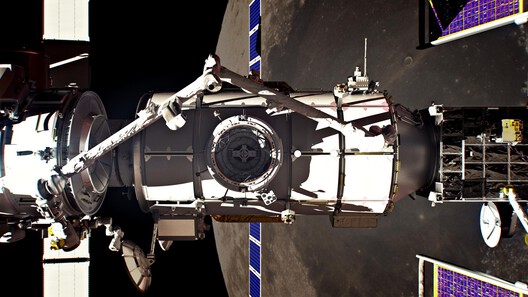
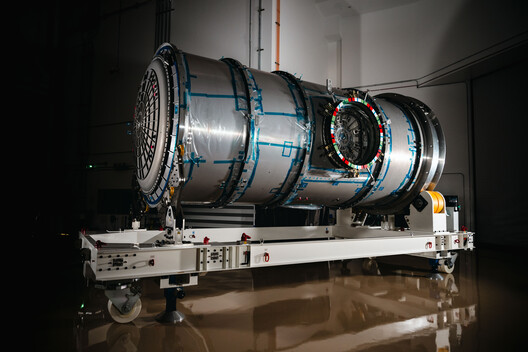
The second core habitable element is I-Hab, designed by the European Space Agency (ESA). It will be sent to Gateway during the Artemis IV mission, and it will be connected directly to HALO. This module will expand the station's capacity with an extra 10 m³ of habitable volume for sustained human presence. It will host the dedicated living quarters, including sleeping areas and a communal dining space. I-Hab will also be a node, featuring four docking ports. Two of these ports connect the module to the rest of the station, while the other two remain available for visiting vehicles. The multiple docking points will give the structure a degree of connectivity that ensures the station can scale as more modules or international partners join the program.
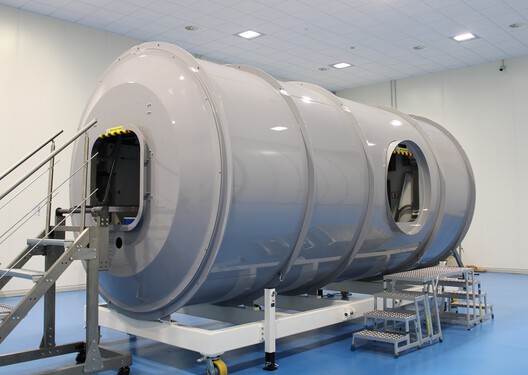
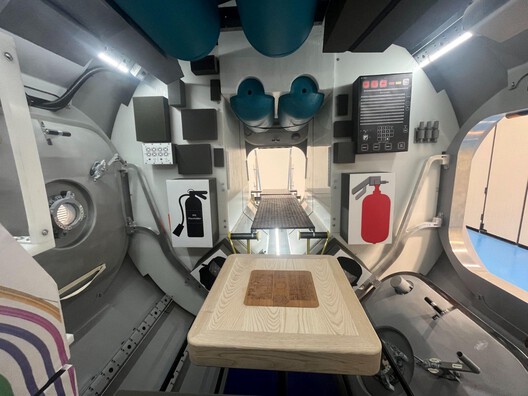
The transition of the technosphere from Earth to the lunar environment needs a fundamental shift in architectural logic. The Gateway outpost represents the "tip" of this expansion, where the technosphere will be the essential element ensuring human survival. This shift defines the domain of space architecture: a discipline where the building is a component of a logistical chain stretching thousands of kilometers back to Earth. In fact, in some institutions, such as the University of Houston, space architecture programs already exist.
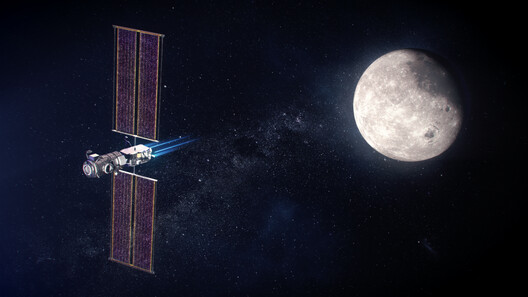
On the lunar surface and in its orbit, where no atmosphere exists, this new Technosphere will be initially composed of only one element: Gateway. The global network of human-made artifacts, which evolved on Earth as a byproduct of industrial and urban development, is now being intentionally engineered to maintain pressurized, habitable environments in space. By prioritizing modularity, standardized docking interfaces, and precise volumetric planning, the Gateway station establishes an architectural blueprint for human habitation beyond Earth's limits. As these elements integrate with broader lunar infrastructure, they will represent a transition of the Technosphere from a localized terrestrial phenomenon into a distributed, multi-planetary system.
This article is part of the ArchDaily Topic: The Technosphere: Architecture at the Intersection of Technology, Ecology, and Planetary Systems. Every month we explore a topic in-depth through articles, interviews, news, and architecture projects. We invite you to learn more about our ArchDaily Topics. And, as always, at ArchDaily we welcome the contributions of our readers; if you want to submit an article or project, contact us.