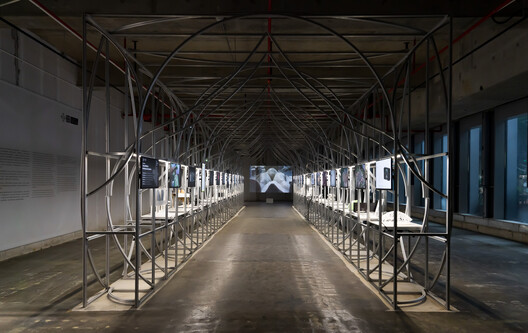
As artificial intelligence continues to disrupt sectors of the economy and reshape entire industries, institutions and individuals alike are bracing—and rapidly adapting—to the changes that machines seem to hold over our heads. Yet the more precise pressure is not simply AI altering the way people work and live, but the business models and investment logics of the companies developing these systems: the concentration of capital, the new requirements for compute, the race for compartmentalized talent, and the infrastructural footprint needed to sustain it. In the Greater Bay Area—anchored by Guangzhou, Shenzhen, and Hong Kong—this dynamic is especially pronounced. Government-led initiatives are actively accelerating the industry's growth, with policy and planning mechanisms beginning to translate an ostensibly intangible field into physical form: zoning updates, earmarked land, and the emergence of AI-oriented building types, from research laboratories to large-scale data centers.
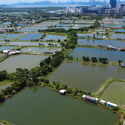
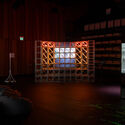
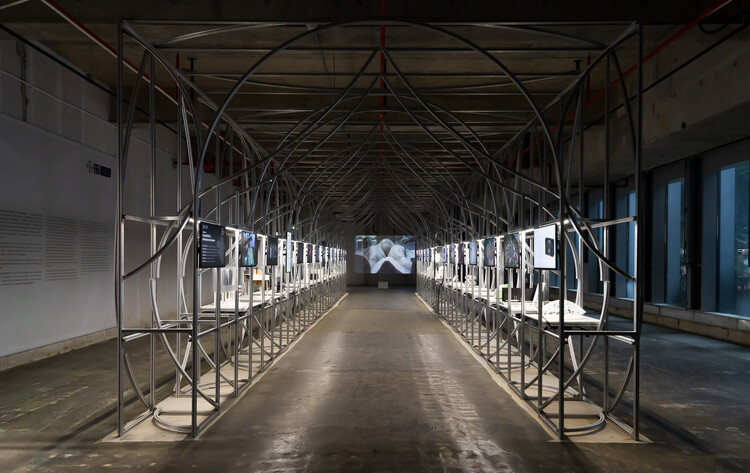
In Hong Kong, the signals are increasingly explicit. The repositioning of Cyberport toward an AI supercomputing centre, the introduction of a substantial Artificial Intelligence Subsidy Scheme, and the targeted development and branding of San Tin Technopole into a major I&T urbanism node—linking data centres, prototype workshops, and applied research—collectively outline a forward-looking institutional agenda. Across the border, parallel moves reinforce the same spatial trajectory: Shenzhen's Qianhai is being shaped to encourage AI clustering and aggregation, while Guangdong's policy direction for a Digital Economy Innovation and Development Pilot Zone further formalizes the region's ambition. Taken together, these efforts begin to map AI not only as an economic strategy, but as a new architecture of urbanization—one that materializes in campuses, server halls, logistics corridors, energy infrastructure, and the attendant public narratives that accompany "innovation districts."
The conversation around AI as a tool for architecture has been well rehearsed—spanning design assistance and visualization, construction optimization, streamlined manufacturing workflows, and project-management logistics. It is precisely against this backdrop that the 2025 Hong Kong–Shenzhen Bi-City Biennale of Urbanism\Architecture (Hong Kong): Techformance (UABB HK 2025: Techformance) feels timely. Through sustained curatorial effort—working alongside architects and cross-disciplinary practitioners—the exhibition does not simply ask what AI can do for architecture; it turns the lens outward to examine what AI is already doing to architecture: how it reorganizes spaces of production and culture, and how its "performance" is staged, normalized, and contested across the built environment.
Related Article
Error 404: Architectural Memory in the Age of Algorithms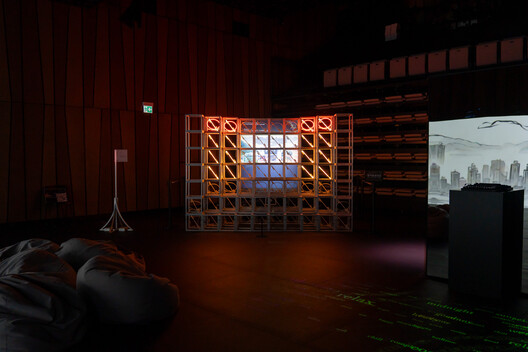
Techformance as Testing Ground: Process, Performance, and Responsibility
UABB HK 2025 discusses how AI is becoming less of a neutral upgrade to the toolbox and more of a shift in authorship—from the architect as sole originator to a practice in which machines "co-author" through generation, optimization, and fabrication, raising the deeper question of professional agency: if design is increasingly mediated by models and algorithms, where does responsibility sit, and what becomes of intuition, judgment, and cultural intent? The curators also sharpen an important tension: AI's questionable promise of performance and efficiency (sustainability modeling, optimization, robotic making) can easily become a flattening logic, unless architecture remains accountable to what is not easily quantifiable—emotion, memory, ritual, and the social life of space.
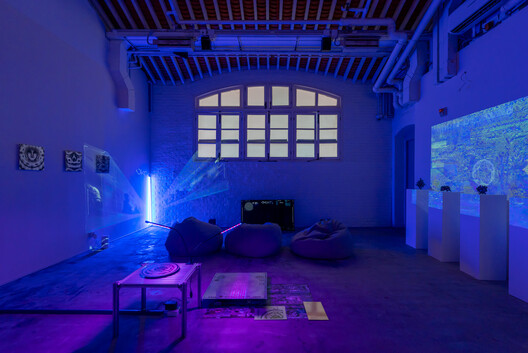
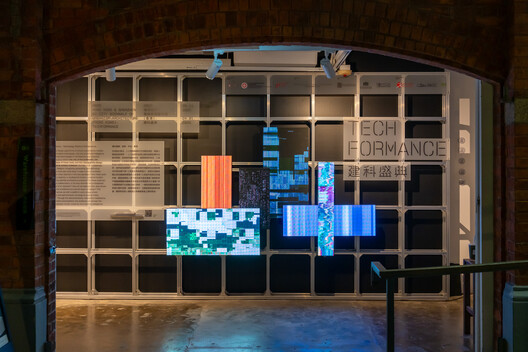
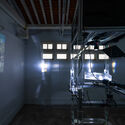
"Techformance" is therefore positioned as a curatorial device: not simply technology on display, but technology as performance—a staged encounter where audiences can watch agency being negotiated in real time. By emphasizing live demonstrations, interactive installations, and speculative provocations, the exhibition proposes that AI's impact cannot be understood only through finished objects; it must be examined through process, through the feedback loop between human intention and machine output. The exhibition's strength, then, lies in treating the exhibition itself as a testing ground: a place where tools are not celebrated as inevitability, but questioned as collaborators—measuring what they amplify, what they automate, and what they quietly displace. In doing so, UABB reframes AI not as a distant future, but as an already-present condition that is reshaping how architecture is authored, evaluated, and legitimized.
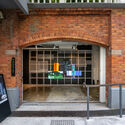
The exhibition's two-venue structure reads as more than a logistical split—it becomes a curatorial diagram that physically stages the same spectrum the show is arguing for. By placing "Techformance" across Oi! and the East Kowloon Cultural Centre, UABB HK 2025 anchors AI between two architectural conditions that Hong Kong knows intimately: heritage continuity through reuse, and future-facing cultural infrastructure built from scratch. Before a visitor encounters any work, the city is already performing the thesis—AI framed not only as a tool, but as an agent negotiating what is carried forward and what is newly produced.
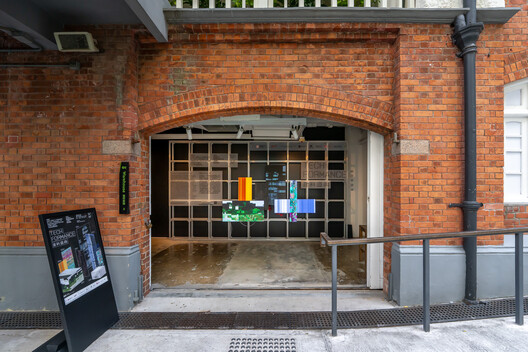
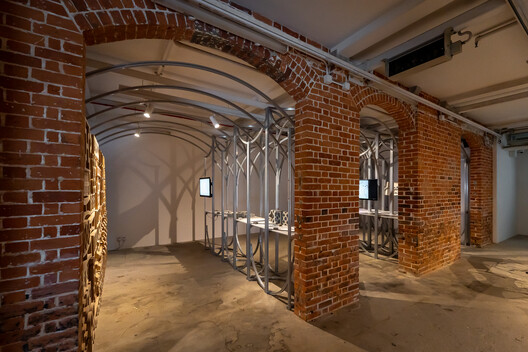
Oi!—as an adaptive-reuse arts space—foregrounds masonry, constraint, and the slow intelligence of working with what already exists. It sets AI against a backdrop of layering and continuity, where "innovation" is inseparable from the ethics of not erasing. The East Kowloon Cultural Centre, by contrast, operates as an institutional counter-pole: a purpose-built performance complex whose very premise is programmability—spaces calibrated for contemporary staging, technical systems, and arts-technology experimentation. Read together, the venues sharpen UABB's central question into an urban one: in an AI-shaped future, will cultural production be driven by adaptive continuity, or by newly built apparatuses that render "the future" legible through systems, scale, and performance-ready space?

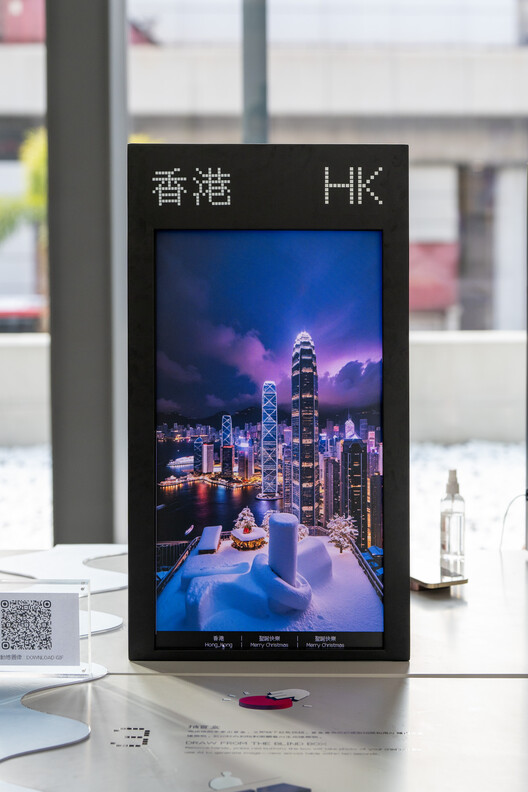
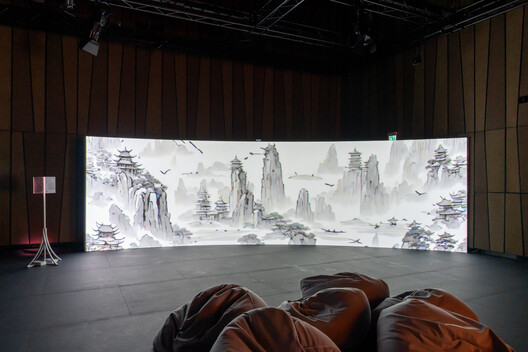
Across UABB's spectrum, Generative Futures: AI in Architectural Design by Hao Zheng and Does AI Dream by Urban Projection & Streetsignhk stage two poles of AI's impact on architecture. Generative Futures frames AI as a pragmatic extension of technique—diffusion-based 3D form generation and neural networks for vectorized geometries—pushing practice from image-like speculation toward buildable, evaluable outputs, and recasting the architect as a designer of constraints and editor of outcomes within a feedback-loop culture of metrics and optimization. Does AI Dream, by contrast, defends what optimization cannot hold: the non-rational, contingent, and intuitively formed moments that make cities vivid, turning the provocation back on us—if AI "dreams," do we still? Read together, the exhibits sharpen Techformance's claim that AI is both a generative capacity and a rationalizing regime, and that architectural agency lies in how the discipline negotiates that tension.
Beyond AI as Tool: Designing for AI Environments
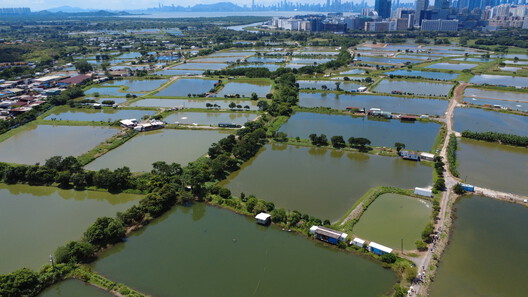
Yet beyond AI as a tool—beyond its role in generating forms, optimizing plans, or accelerating production—an equally urgent question remains under-discussed: what does it mean to design for AI? The region's policy momentum is already translating into a rapid construction cycle of AI-oriented environments—data centres, supercomputing facilities, research labs, prototype workshops, and the thick infrastructural armature that supports them. These are often treated as banal containers for efficiency: sealed, guarded, and service-heavy, with architecture reduced to a neutral envelope around power, cooling, redundancy, and security. Built at speed, they risk becoming the newest generation of urban back-of-house—essential to the city's economy yet spatially and socially absent, as if the digital must necessarily arrive as a mute industrial black box.
If AI is now an infrastructural regime—an ecology of energy, heat, land, logistics, and labour—then the architectural question cannot stop at interface and workflow. It must also confront how AI reshapes the city's typologies and politics: where these facilities are sited, what they displace, how visible or invisible they are allowed to be, and who benefits from their proximity. Compute is not weightless; it arrives as substations, cooling plants, backup power yards, secure perimeters, and a land-use logic that can easily turn large swaths of the metropolis into specialized zones with little civic reciprocity. The real design challenge is therefore not simply to accommodate new building types, but to negotiate their relationship to everyday urban life—access, permeability, public interface, and the cultural narratives that frame "innovation" as a shared future rather than a fenced-off industry.
The opportunity, however, is precisely that these environments are being built so quickly—and at such scale—that they can still be shaped differently. Rather than treating AI facilities as objects to be hidden or exiled, architecture can ask what forms of cohabitation might be possible: designing infrastructural edges that also support public life, ground planes that accommodate civic programs without undermining security, and service systems—waste heat, water management, energy—that are not merely internalized but translated into legible, even beneficial, urban assets. The question is whether AI infrastructure can be embedded into the city as a new kind of civic utility—designed with balance, reciprocity, and public value—so that what powers the future is not cast aside from everyday life, but thoughtfully included within it.
This article is part of the ArchDaily Topic: The Technosphere: Architecture at the Intersection of Technology, Ecology, and Planetary Systems. Every month we explore a topic in-depth through articles, interviews, news, and architecture projects. We invite you to learn more about our ArchDaily Topics. And, as always, at ArchDaily we welcome the contributions of our readers; if you want to submit an article or project, contact us.


