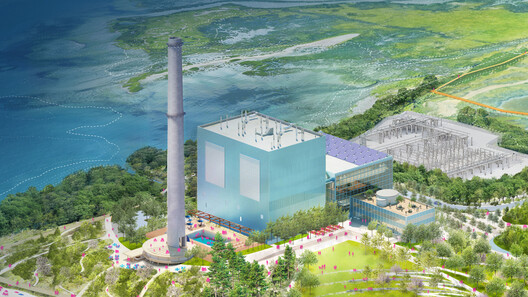
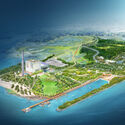
Manresa Island Corp. has unveiled the final vision for Manresa Wilds, a 125-acre waterfront park planned on a former power plant peninsula along Long Island Sound in Norwalk, United States. Developed in collaboration with landscape architecture firm SCAPE and architecture studio BIG, the proposal outlines the transformation of a polluted and long-inaccessible industrial shoreline into a publicly accessible coastal landscape. Following the receipt of a stewardship permit from Connecticut's Department of Energy and Environmental Protection in December 2025, the project will move forward in phases, beginning with the opening of the 28-acre Northern Forest in spring 2027. Subsequent phases, extending into the early 2030s, will deliver the majority of the restored landscape and the adaptive reuse of the 1960s-era power plant as a year-round civic and educational hub, opening nearly two miles of coastline that have been closed to the public for decades.

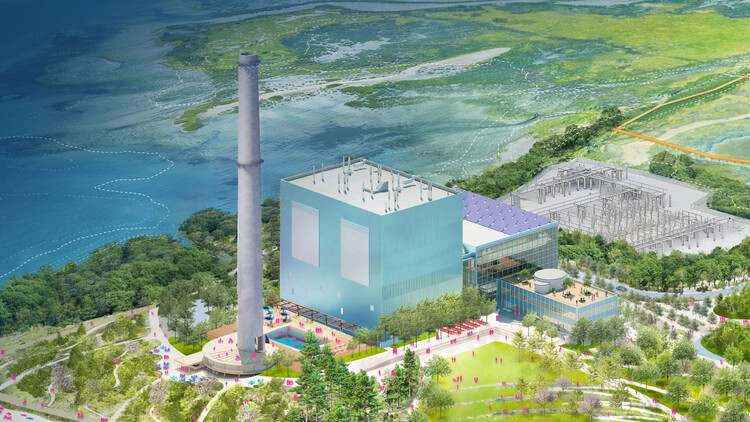
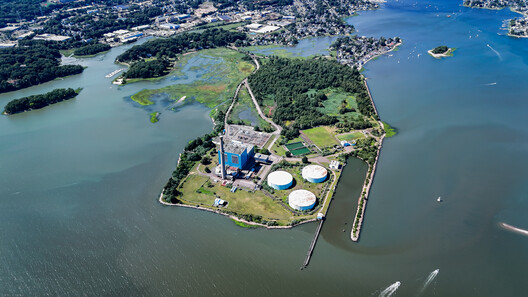
Since the project's announcement in October 2024, the nonprofit has engaged more than 3,000 community members through public meetings, surveys, site tours, and consultations with neighborhood groups, educators, and civic leaders. Public feedback emphasized the desire for a more natural landscape with reduced programming intensity and sensitivity to adjacent habitats and residential areas. Natural areas and habitat protection zones have been expanded by approximately 30 percent, while hardscape and active features have been reduced by half. The most intensive amenities have been consolidated toward the southern end of the site, and lighting and water features have been minimized to limit impacts on wildlife and nearby residents. Transit infrastructure and access points have also been strengthened to support multiple modes of arrival, including bus connections, distributed parking, and pier access.
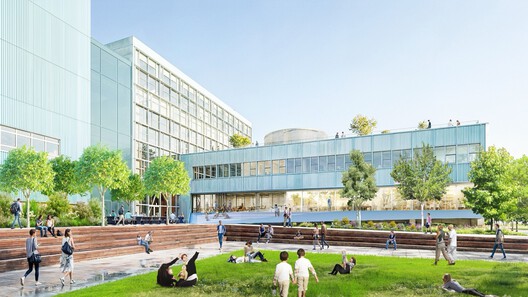
SCAPE's landscape strategy restores and connects a mosaic of coastal and upland ecologies, including birch forests, native meadows, salt marshes, wetlands, and shoreline environments. Thirteen acres of native wetlands are slated for preservation and revitalization, and previous boardwalk interventions have been scaled back in favor of more grounded trails within sensitive marsh areas. A network of more than 15 miles of paths will structure movement across the site, linking forest clearings, gathering spaces, and waterfront overlooks. Along the western edge, planned interventions were removed to establish an undisturbed forest buffer that also serves as a visual and acoustic screen for neighboring communities.
Related Article
BIG and SCAPE Reimagine Decommissioned Power Plant into a Public Destination in Connecticut, USPublic access to the waterfront forms a central component of the proposal. The design introduces a sequence of coastal spaces, including a public beach, a harbor with kayak access and day-use boat slips, tidal pools, coves, and overlooks along the eastern shoreline. A layered resilience strategy integrates preserved marshes, terraces, a headland and beach buffer, and a protective jetty to mitigate flooding and erosion while enhancing habitat performance. In response to community input, coastal programming was reduced in favor of a living shoreline approach that uses native plantings and natural materials to stabilize the coast.
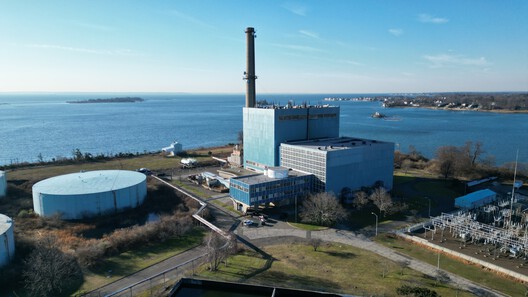
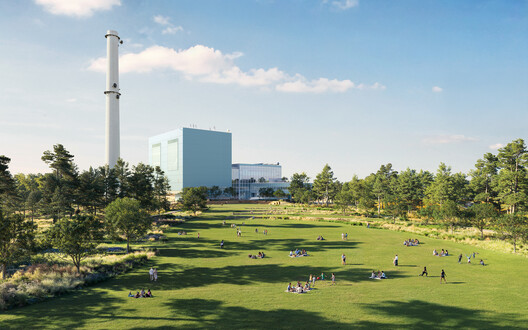
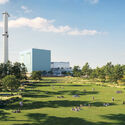
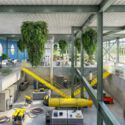
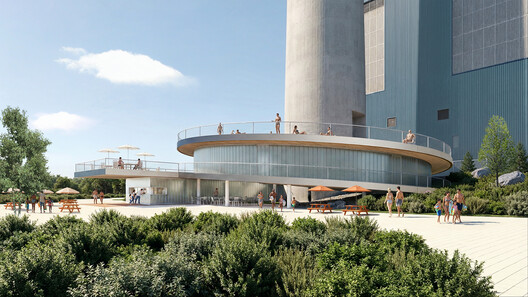
At the core of the project, BIG's adaptive reuse of the former power plant repositions fossil fuel infrastructure as social infrastructure, engineered to withstand a 100-year flood event. The Turbine Hall is envisioned as a flexible civic gathering space with mezzanine levels and exhibition areas, while the Administrative Building will accommodate a café, restaurant, and event support spaces overlooking the central lawn. A new pavilion at the base of the smokestack will support a community pool and public beach with locker rooms and shaded seating, and the Boiler Building is reserved for future educational and research programming. Original machinery will be preserved throughout the complex as part of an interpretive strategy acknowledging the site's industrial legacy, and lighting across both the building and landscape has been reduced in response to concerns about light pollution.
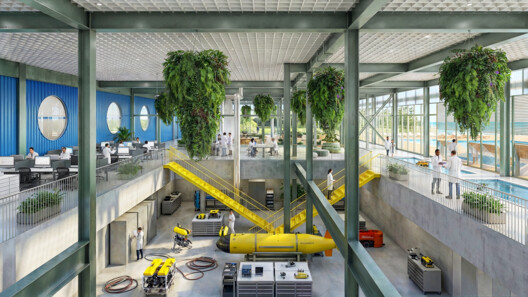
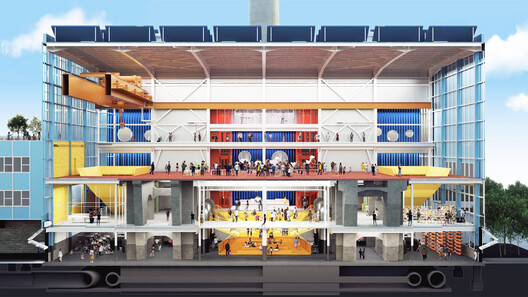
Conceived as a phased transformation, the project integrates environmental remediation, coastal restoration, and adaptive reuse within a long-term implementation framework. Early works focus on soil cleanup, habitat restoration, and resilient infrastructure, enabling incremental public access as construction progresses. As additional phases are completed through the next decade, new landscapes, shoreline amenities, and interior civic spaces will be brought online, gradually redefining the former industrial peninsula as an accessible and ecologically restored public waterfront.
Recent adaptive reuse projects continue to reposition former industrial sites as cultural and civic anchors. In London, the ongoing redevelopment of Battersea Power Station has entered a new phase, with Studio Egret West appointed to evolve the masterplan initially led by Rafael Viñoly. In Berlin, Peter Grundmann Architekten received the DAM Preis for transforming a former freight warehouse into the ZK/U Center for Art and Urbanistics, while in Los Angeles, WEISS/MANFREDI has released updated plans for the redesign of La Brea Tar Pits.