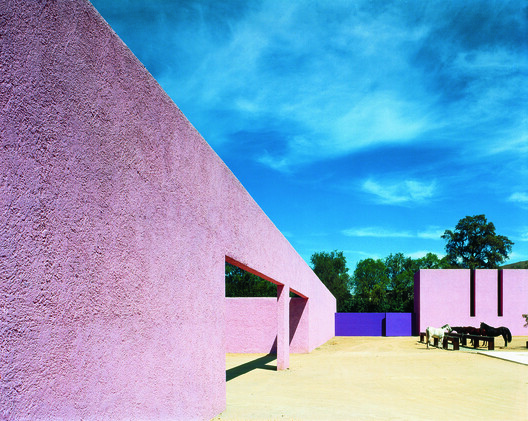
In the architectural history of the Mexican territory, the built environment has functioned not merely as a human stage, but as a biological infrastructure designed to organize proximity between species. The resulting spatial logic is not a solo performance, but a negotiated coexistence between human and animal bodies. To examine this heritage today is to shift the analytical focus away from stylistic authorship and toward a more fundamental phenomenon: the persistence of spatial practices that emerged to sustain shared forms of life.
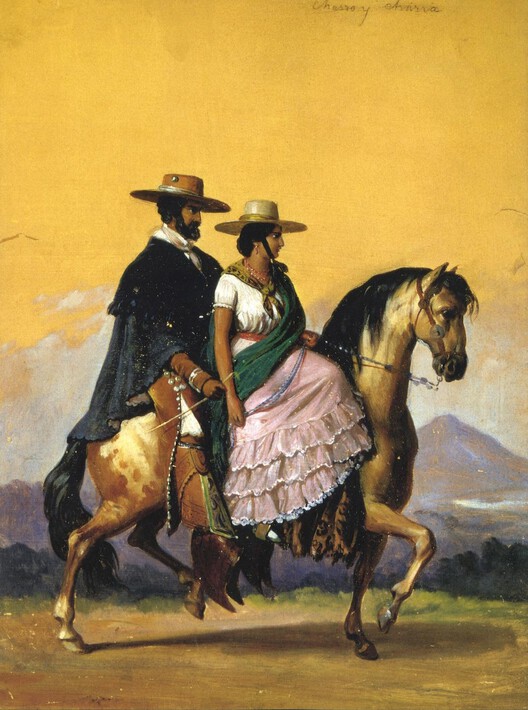
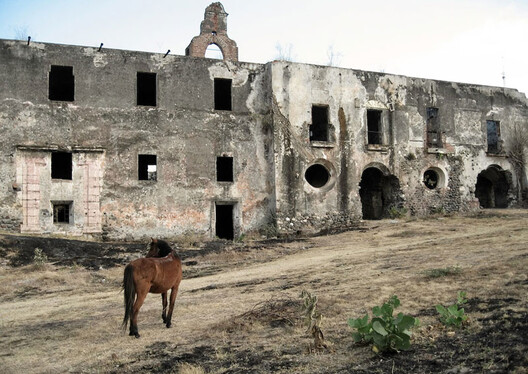
Many of the architectural features now interpreted as cultural or aesthetic markers — oversized thresholds, expansive patios, and durable surfaces — can be understood instead as material traces of an interspecies contract. For centuries, horses, mules, and livestock were not external to architecture but essential inhabitants whose physical presence shaped scale, circulation, and material choices. Their bodies left measurable imprints in space, from the height of entrances that accommodated mounted riders to paving systems designed to withstand hooves, friction, and biological wear. Nowhere was this contract more visible than at the ground level of the colonial house.
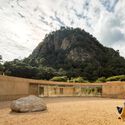
The Ghost Scale of Mexican Modernity
Related Article
The Architectural Heritage of the Valley of Mexico Through the Eyes of Santiago ArauThe spatial record of the Mexican territory reveals a magnitude that appears fundamentally non-human. To analyze the monumental "voids" of the Mexican landscape—from the massive colonial zaguanes to the high, windowless walls of the twentieth century—is to encounter the somatic scale of the horse. This is an architecture where the primary module was not the reach of an arm, but the clearance of a mounted rider and the turning radius of a stallion. While other colonial models relegated the stable to a peripheral utility, Mexican domesticity integrated the animal into the primary domestic core, forcing a volumetric expansion of the interior to accommodate a body of half a ton. The result is a heritage of spatial generosity and 'oversized' proportions; a permanent, physical imprint of a multi-species treaty that remains legible in the residence long after the animal's departure.
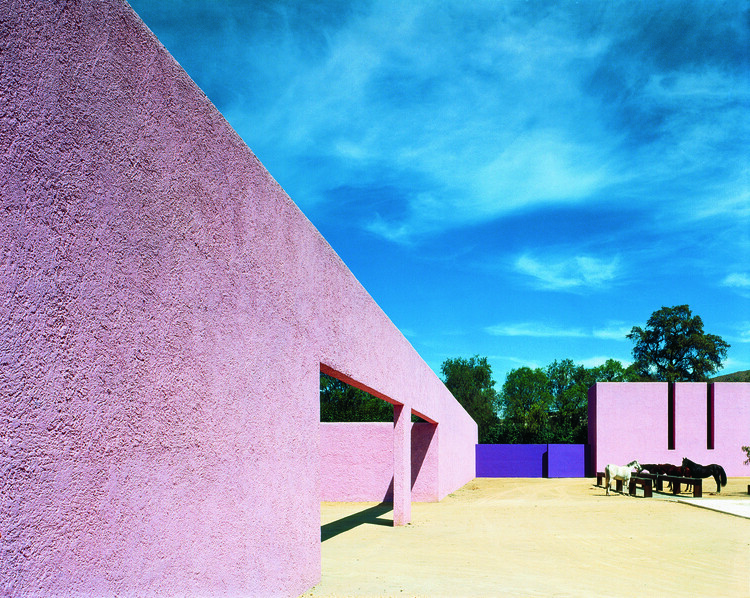
This equine blueprint became a "Ghost Scale" during the transition to modernity: a set of dimensions that survived even after the occupant had vanished. There is perhaps no other country where twentieth-century minimalism was dictated not by industrial standards, but by the biological physics of a horse's body. While the global avant-garde was obsessing over Le Corbusier's Modulor—a system of measures strictly calibrated to the 1.83 m reach of a standardized man—the Mexican modernists were designing for the Centaur. The work of Luis Barragán offers a significant case study for this magnitude; viewed as a historical autopsy of scale, his volumes can be interpreted as a byproduct of a spatial logic expanded by centuries of symbiotic habitability.
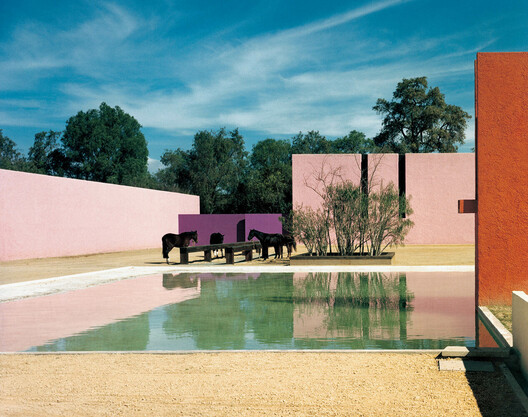
To walk through these spaces today is to inhabit the surplus of a multi-species memory. An immense wall or a monumental entrance is not merely an exercise in abstract minimalism; it is a mass designed to equal the physical and symbolic importance of the animal. The power of this spatial tradition resides in the refusal to shrink the world to fit only the human body. By preserving the vertical clearance and the horizontal breadth originally defined by equestrian life, the architecture maintains a somatic magnitude that provides a biological dignity.
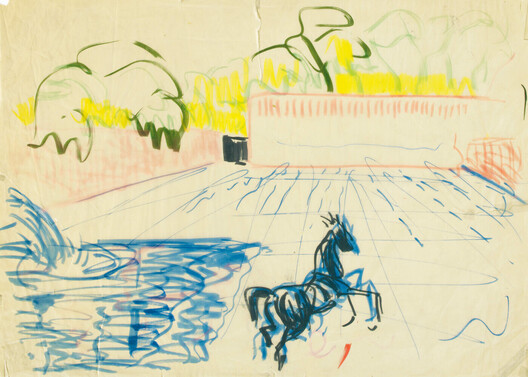
The Syncretism of Scale: Cosmic Grandeur and Equine Logistics
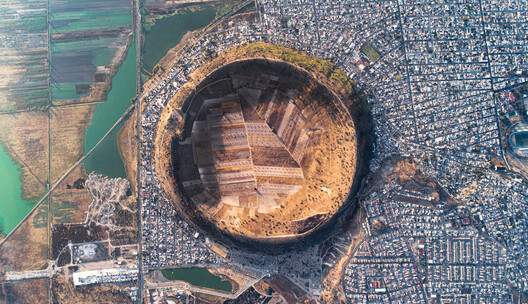
The monumental character of Mexican architecture may be understood as the convergence of two distinct "superhuman" magnitudes. To understand the Mexican void is to witness the syncretism of the Pre-Hispanic Cosmic Scale and the European equestrian logistics. Long before the arrival of the horse, ancient civilizations in Teotihuacán and Tenochtitlán had established a tradition of the "monumental void"—grand plazas and ritual platforms designed to mirror the horizon and the movement of the stars. In these indigenous cosmogonies, architecture was not built for the individual, but for the collective and the divine; the human was a participant in a landscape defined by massive, horizontal stages.
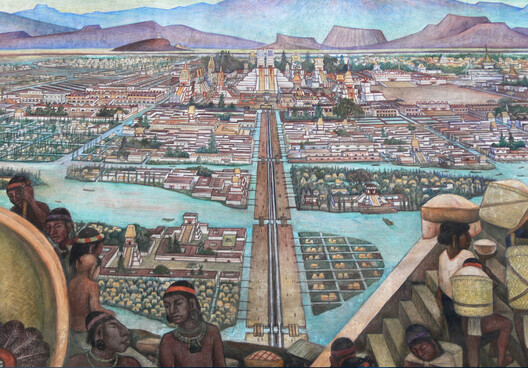
Upon the arrival of the horse, the requirement for equestrian logistics found a structural resonance in this inherited vastness. Unlike the dense colonial models observed in other topographies, the Mexican urban fabric facilitated a unique volumetric expansion. Within this grid, the Plaza and the Patio were transformed into technical arenas where the giro (the turning radius of the horse) could coexist with the ritual of the open sky. This convergence fused the two scales: the height of the lintel was dictated by the horse's crown, while the width of the void remained a legacy of ancient ritual proportions.
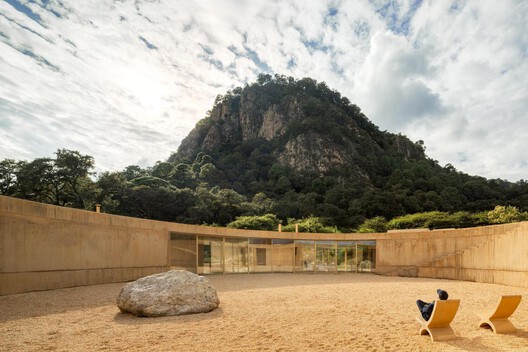
This fusion created a unique "Mexican Monumentality." The Lienzo (the circular arena) and the Hacienda patio are not merely functional enclosures; they are geometric fossils of this syncretism. They represent a scale where the "mysticism" of the indigenous landscape provided the template for the "biological requirement" of the animal. From this perspective, heritage is not found in the solid walls, but in the specific quality of the emptiness between them. It is a vacancy co-authored by the gods of the sun and the physics of the gallop, creating a spatial practice where the human occupant is always invited to feel small in the face of a larger, more ancient treaty.
Tactile Heritage: The Somatic Materiality of Survival
If the dimensions of Mexican architecture were co-authored by the horse's movement, its materiality was dictated by the horse's biology. The textures that define Mexican heritage—the volcanic stone (recinto), the lime-wash (cal), and the heavy timber are not merely rustic aesthetic choices, but the technical remains of a multi-species survival strategy — a materiality of grip, hygiene, and durability. The ubiquitous empedrado (cobblestone) of the Mexican street and patio was a non-slip requirement for a heavy animal; smooth surfaces were hostile territories for hooves. Seen through this lens, the "roughness" of the Mexican finish is a biological signature, a technological legacy of an era where the design's priority was the traction and safety of the non-human resident.
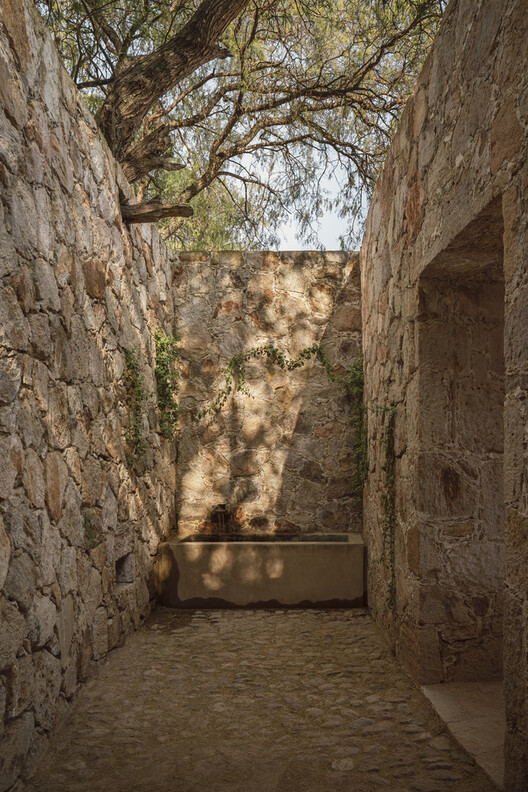
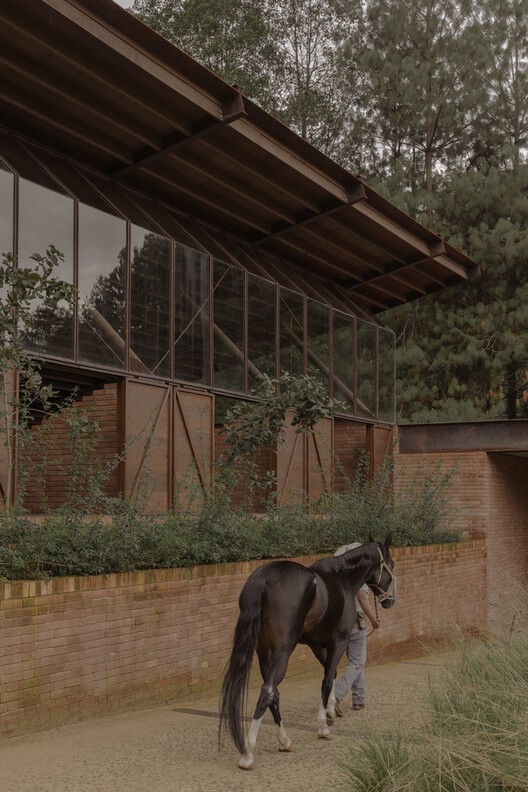
This interspecies domesticity required a specific sensory management of the environment. The massive stone walls were thermal regulators, designed to keep the water troughs (bebederos) cool and the stables ventilated against the heat of animal breath. Even the use of lime was a functional disinfectant, a material chosen to resist the acidity of waste and the wear of constant friction. When Barragán later utilized these same materials in a modernist context, he wasn't just citing tradition; he was preserving a sensory memory. The smell of wet stone and the rhythmic "clatter" of sound against high, dense walls are the acoustic and tactile remains of the horse's presence. Heritage can be understood as the spatial residue of an interspecies treaty—a physical record of the volumes and textures required to sustain shared existence.
The Authority of the Absent Occupant
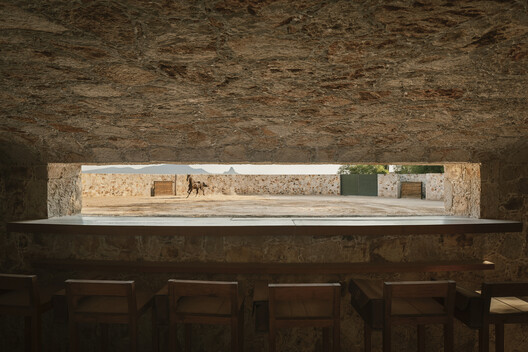
As the horse has transitioned from a tool of labor to a symbol of cultural leisure, the authority of this spatial logic remains a permanent physical imprint. Modern occupancy in the Mexican context may be understood as the inhabitancy of a "Ghost Scale" originally calibrated for a non-human anatomy. Luxury—manifested in high-ceilinged galleries and expansive domestic voids—is found here because these volumes provide a "biological dignity" that contemporary, human-centric architecture often lacks. This surplus of space represents a spatial generosity that allows for infinite reinterpretations, from public sanctuaries to contemporary art spaces.
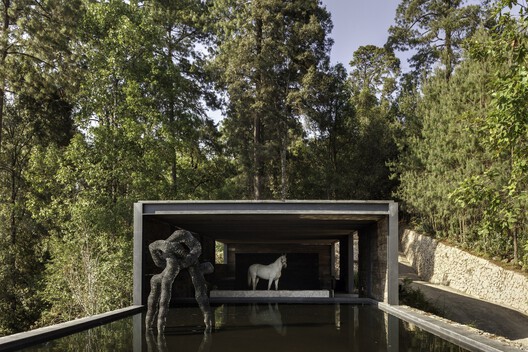
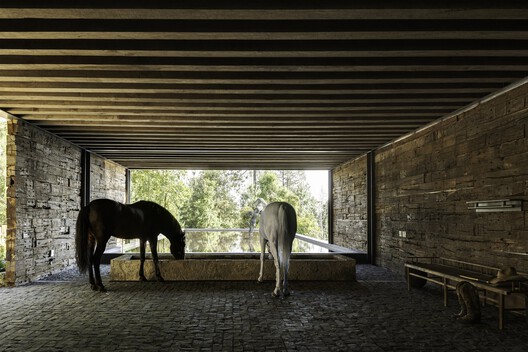
Ultimately, this heritage represents the persistence of magnitudes: an enduring spatial ethos that rejects the compression of the modern world. By protecting these oversized volumes, the architecture honors an interspecies treaty where the emotional and relational bond with the equine survives as a living infrastructure. To maintain this scale is to preserve a lesson in coexistence that may prove more relevant to the future than to the past, ensuring that the "memory of the future" remains rooted in a module fundamentally broader than the human individual.
This article is part of the ArchDaily Topic: Rethinking Heritage: How Today's Architecture Shapes Tomorrow's Memory. Every month we explore a topic in-depth through articles, interviews, news, and architecture projects. We invite you to learn more about our ArchDaily Topics. And, as always, at ArchDaily we welcome the contributions of our readers; if you want to submit an article or project, contact us.