As environmental accountability becomes embedded in design culture, the building envelope is being reconsidered not just as a protective skin, but as an active energy-producing surface. Treating solar technology as a material rather than an attachment reshapes how architecture is conceived and detailed. Color, texture, rhythm, and assembly become inseparable from performance. Building-Integrated Photovoltaics (BIPV) operate within this expanded definition of materiality. By integrating solar technology into façades and rainscreens from the earliest project stages, architects can reduce redundancy, align energy goals with design intent, and rethink how envelopes are composed. Yet translating this ambition into buildable systems requires technical precision and construction intelligence.
By framing solar energy as a building material, many projects now conceive the building envelope considering material qualities, colors and textures, performance characteristics, and design flexibility. Integrating solar technology from the earliest project stages influences envelope design decisions, improves energy performance, reduces material redundancy and waste, and supports a conscious approach to environmentally responsible architecture. But how can energy generation be effectively integrated—from technical requirements to real-world applications in materials and construction systems?
SolarLab's solutions seamlessly combine on-site electricity production with aesthetic flexibility while treating solar energy as a dynamic element of architecture. Applied to both new construction and renovation projects, their solar façade systems range from curtain walls and rainscreens to louvers and shading systems available in a wide selection of colorfast, non-fading finishes that replicate metallic or ceramic appearances and can be paired with various textures and finishes.
Ventilated rainscreens, in particular, increase durability and reduce operating costs by shielding the underlying structure from weather exposure. The ventilation cavity also helps lower thermal loads while generating electricity at the same time. These solar façades allow for quick installation, easy inspection, and reuse in both new builds and retrofit projects.
Discover four projects that demonstrate how SolarLab's rainscreen façades redefine the building envelope through the integration of solar technology as an architectural material.
RRC Polytech Manitou a bi Bii daziigae / Diamond Schmitt Architects & Number TEN Architectural Group
- Location: Winnipeg, Manitoba, Canada
- Peak Power: 99 kWp
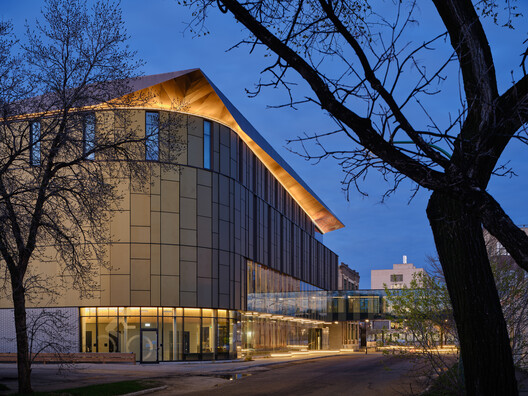
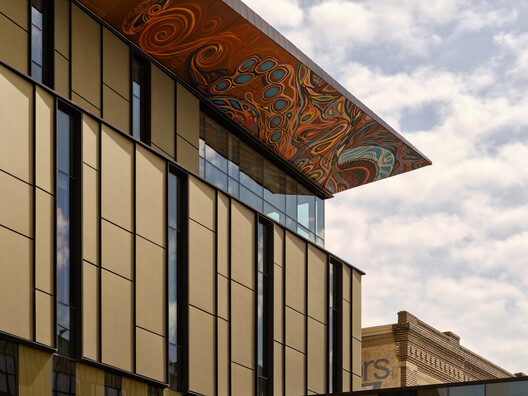
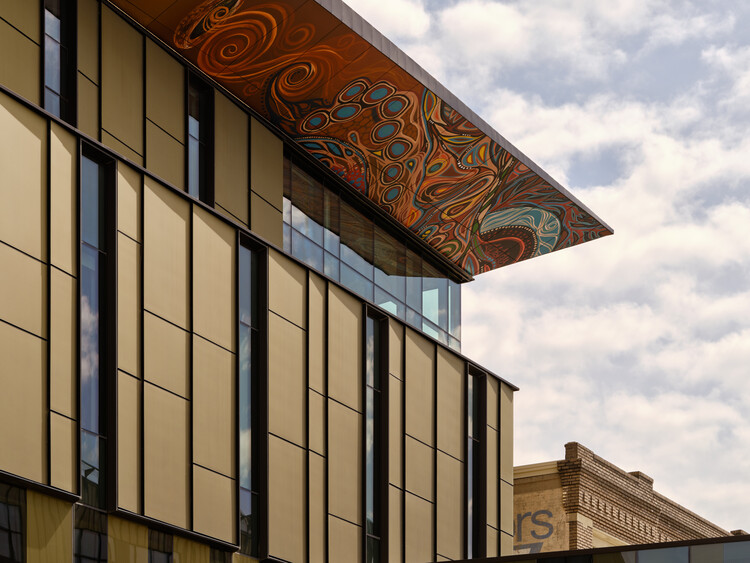
Manitou a bi Bii daziigae, the innovation and collaboration hub at Red River College Polytechnic in Winnipeg, combines local craftsmanship with solar-active technology. Expanding the historic campus with a contemporary envelope, SolarLab provided a custom façade system that plays a key role in both the building's energy strategy and visual identity. Daylight and reflections highlight the transition between the existing masonry structure and the new glass volume, producing a subtle color shift depending on viewing angle and weather conditions.
Through varied panel sizes and shapes arranged in an interleaved pattern, the solar-shingled rainscreen becomes the primary wall system, incorporating frit-printed vision glass within a dynamic façade composition. The cladding flows seamlessly while protecting the structure from rain and sun exposure. With panel-level monitoring and rapid shutdown capabilities, the electrical system ensures safety, resilience, and optimized carbon-free electricity production throughout the day.
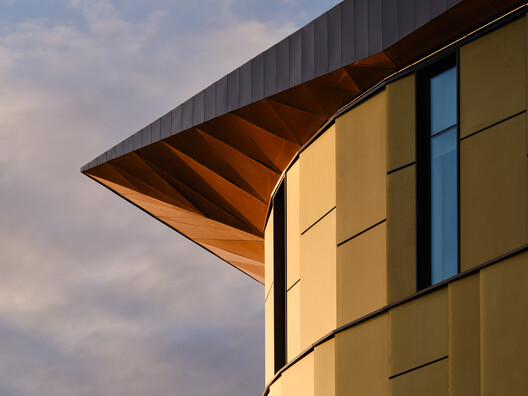
The glare-free façade features dynamic colors and a matte tempered-glass finish. Thanks to anisotropic structural coatings applied to the rear surface, the façade remains maintenance-free and resistant to fading. The tempered glass of the facade panels are satinated and nano-coated. The panels measure up to 1,400 x 2,400 mm, and can be combined in sections up to 4,000 mm tall. Concealed angled suspension systems allow tool-free installation, integrated fire protection, and optimal ventilation.
Breidablikk Gården / Asplan Viak
- Location: Haugesund, Norway
- Peak Power: 39.9 kWp
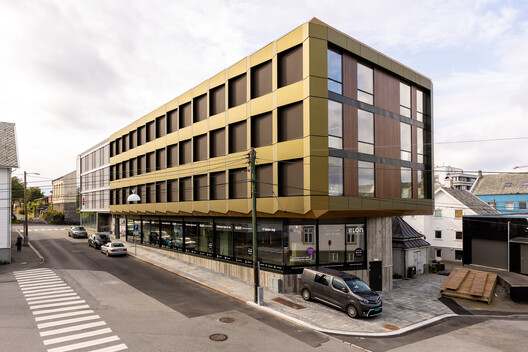
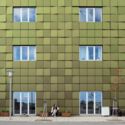
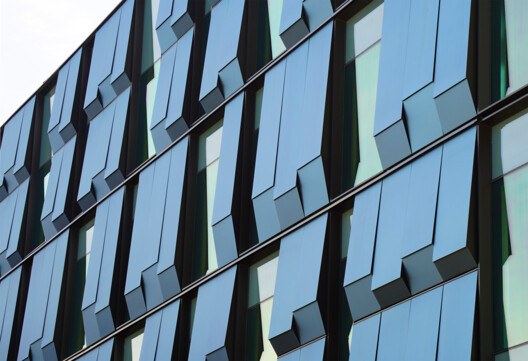
Located in the coastal town of Haugesund in southwestern Norway, Breidablikk Gården demonstrates how urban renewal can revitalize a city. Its dynamic façade expression integrates seamlessly with the surrounding cityscape. Built with a low-carbon wood structure and prefabricated wall modules, this office building features a custom solar rainscreen composed of varied shapes, sizes, and angled panels that create a sculptural façade.
The cladding system introduces movement and depth to the façade by leveraging design freedom, while anisotropic structural colors conceal high-efficiency PV technology behind a glare-free surface. Durable, efficient, and low-maintenance, the solar façades rely on proven lightweight mounting systems. The electrical system was engineered to optimize production, ensure resilience against partial shading, and extend system longevity.
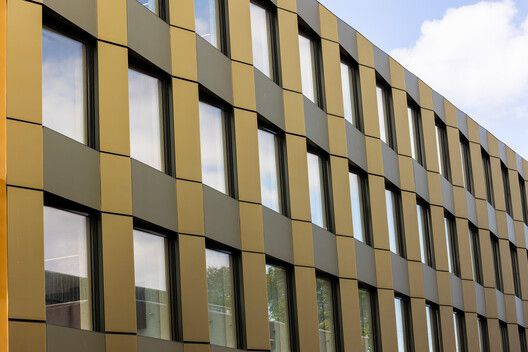
On the east and west façades, SolarLab façade panels are angled toward the south to increase energy production and provide interior shading in the offices. Combined with interior screen curtains, this strategy reduces cooling demand and conserves energy. The façade generates approximately 100,000 kWh annually, covering a significant portion of the building's energy needs. The project demonstrates that high year-round sun exposure is not required for effective solar production; façade-mounted panels remain productive even in regions with low winter sun angles.
Bornholm Hospital / Bjerg Arkitekter
- Location: Rønne, Bornholm, Denmark
- Peak Power: 207 kWp
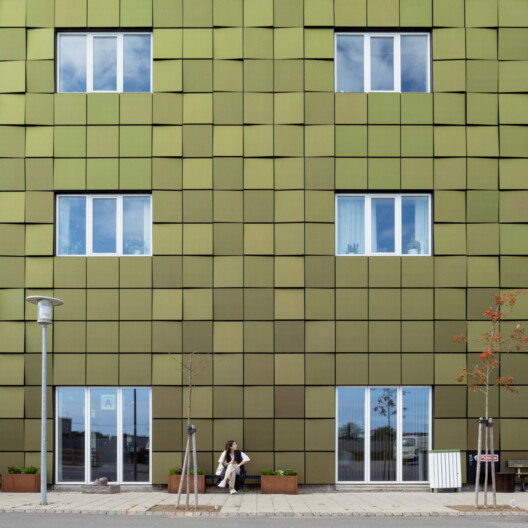
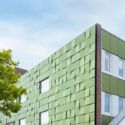
As part of a comprehensive energy renovation, SolarLab's lightweight cladding was selected to protect the upgraded insulation of Bornholm Hospital. The 1,400-square-meter solar rainscreen façade was mounted directly onto new Rockwool insulation, resulting in a durable, resilient, self-cleaning, and maintenance-free exterior.
The façade features dynamic iridescence created by its matte satin surface and structural color coating. A range of individual panel designs was developed to accommodate the aging concrete structure. The resulting BIPV façade maintains a minimal build-up depth while fitting within the existing building envelope.
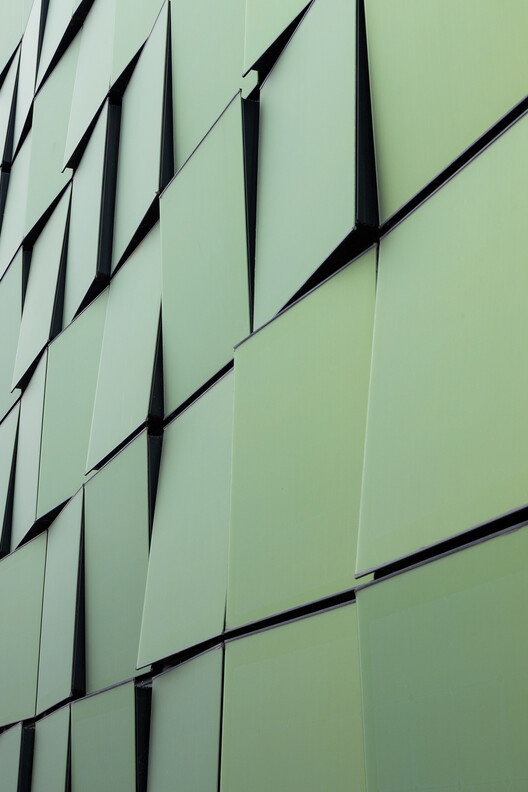
East- and west-facing façades incorporate planar solar panels arranged in horizontal rows between windows, while the south façade is clad in a mosaic of 500 square, individually tilted panels. Each façade is grouped and produces electricity independently through dedicated inverters. The colorful BIPV façades are complemented by a 1,400-square-meter installation of standard all-black panels on the mechanical penthouse.
Fanshawe College Innovation Village / Diamond Schmitt
- Location: London, Ontario, Canada
- Peak Power: 175 kWp
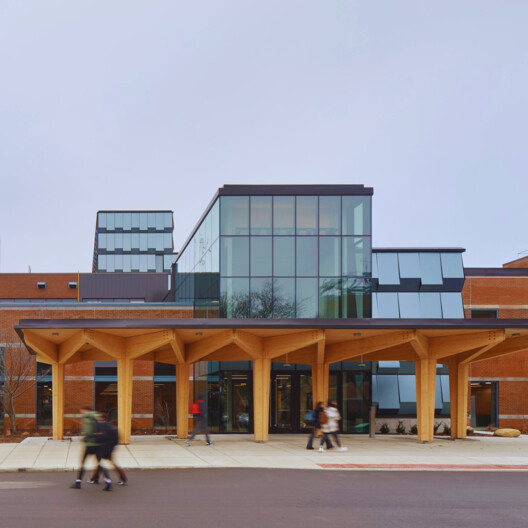
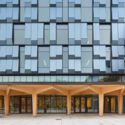
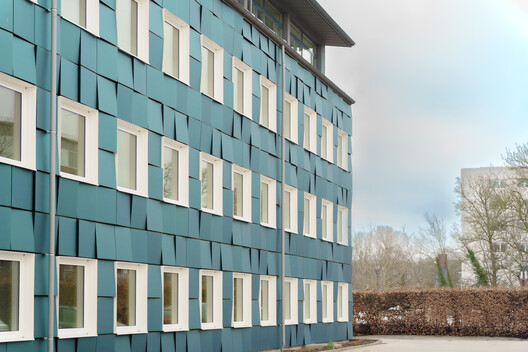
Designed to connect multiple parts of the existing campus, Fanshawe College's Innovation Center reflects the institution's commitment to collaboration and sustainability. The building is wrapped in a custom SolarLab BIPV cladding system that transforms the envelope into an energy-producing rainscreen. Blue-toned glass surfaces subtly shift with changing light while maintaining a refined matte finish, integrating renewable energy production into the architectural identity.
The façade functions as a drained and back-ventilated rainscreen with concealed fixings. Each laminated safety-glass panel incorporates high-efficiency solar cells and is mounted on a precision aluminum substructure engineered to accommodate local wind and snow loads, as well as standard building tolerances. In this way, the architectural surface supports the building's energy performance goals while remaining aligned to its original design intent.
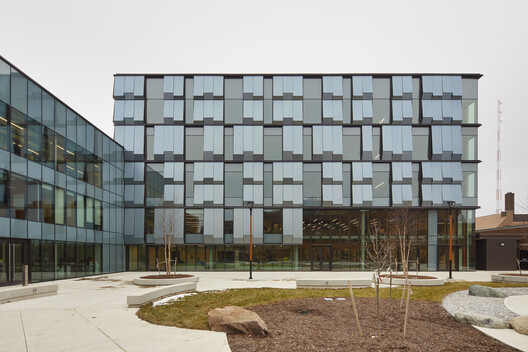
This project illustrates how BIPV can serve as a primary cladding material without compromising the design language and how architectural quality and renewable technology can coexist within a single material expression. The panel layout follows the building's structural rhythm, with carefully aligned joints to maintain a disciplined elevation. At corners and transitions, the cladding returns cleanly to preserve continuity and depth, while the rainscreen cavity provides ventilation and service access.
Integrating solar façades from the earliest stages of a project represents a significant shift that allows designers to simultaneously evaluate aesthetic, functional, performance-related, cost, and carbon footprint considerations. With applications in many other projects, SolarLab is pushing the boundaries of solar energy by reshaping the concept of building materials.


