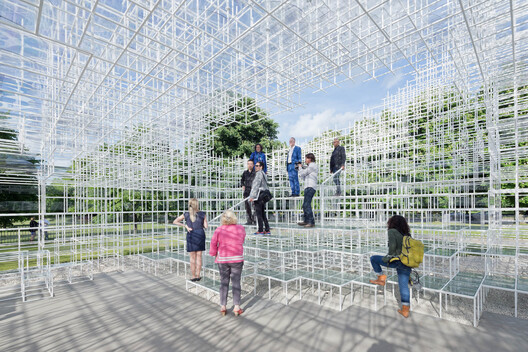
A Gothic cathedral can take centuries to complete. A world exposition pavilion may stand for six months. A ritual structure in Kolkata rises and vanishes within five days. Yet each draws pilgrimage, shapes collective memory, and reorganizes urban life. If heritage has long been defined by what endures, architecture repeatedly shows that cultural authority can also belong to what gathers people.
For much of the twentieth century, conservation frameworks privileged permanence. The Venice Charter, adopted by the International Council on Monuments and Sites, focused on safeguarding monuments and their material authenticity. Cultural value was tied to physical fabric such as stone, brick, and timber. To protect heritage was to preserve what stood. The logic felt stable, even self-evident.


That framework widened in 2003, when the UNESCO Convention for the Safeguarding of the Intangible Cultural Heritage recognized that traditions, skills, and rituals are forms of heritage in their own right. Instead of conserving walls alone, institutions were asked to safeguard the transmission of how knowledge moves across generations. The shift did not abandon monuments, but it made space for another possibility: architecture might matter because of what it hosts, not only because of how long it survives.
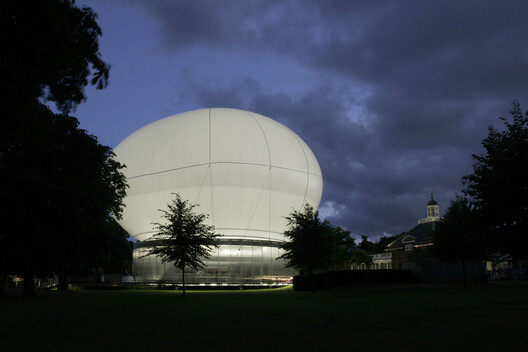
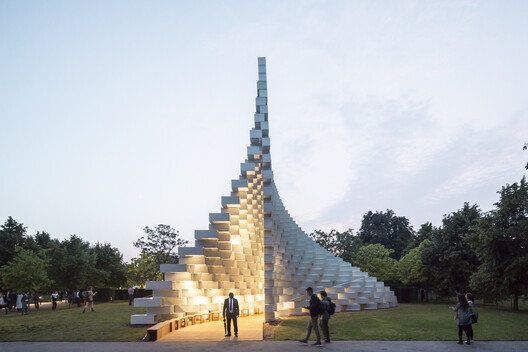
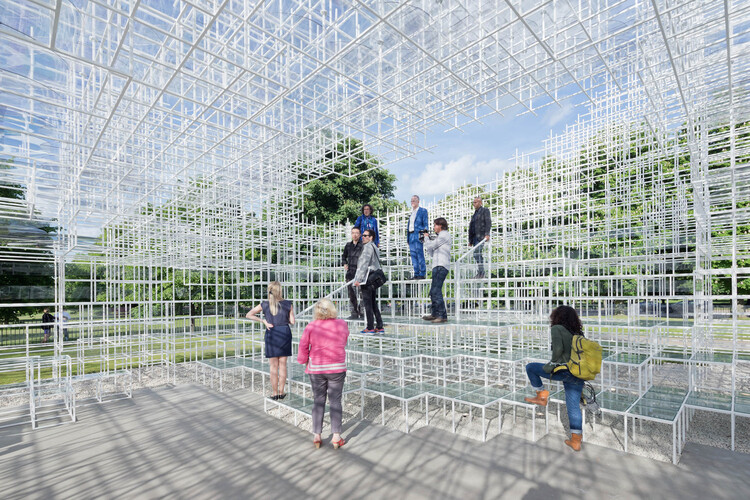
Architectural theory anticipated this turn. Bernard Tschumi argued that architecture is inseparable from events, that space comes alive through action and movement rather than form alone. Rem Koolhaas, in Delirious New York, described Manhattan not as a collection of static objects but as a choreography of congestion and spectacle, where intensity gives architecture its charge. In both cases, meaning emerges through occupation. Without bodies, rituals, and repetition, the building is only a container. Temporary projects make this visible. The annual Serpentine Pavilion in London is commissioned each summer and dismantled within months. Its lifespan is brief, yet it becomes a site of lectures, debate, and global attention. The pavilion's authority does not depend on endurance; it depends on encounters.
At the metropolitan scale, temporary architecture can rival permanent infrastructure in impact. Expo 2010 Shanghai recorded more than 70 million visits, according to the Bureau International des Expositions. Most national pavilions were dismantled when the fair closed, yet the event reshaped entire districts and reframed the city's international image. In Nevada's desert, Burning Man constructs a city each year for roughly 70,000 participants—streets, utilities, and installations that are only to be removed under a strict "Leave No Trace" ethic. In Mina, Saudi Arabia, a vast grid of fire-resistant tents supports the Hajj, accommodating millions during ritual time before falling quiet again. Infrastructure exists to enable recurrence.
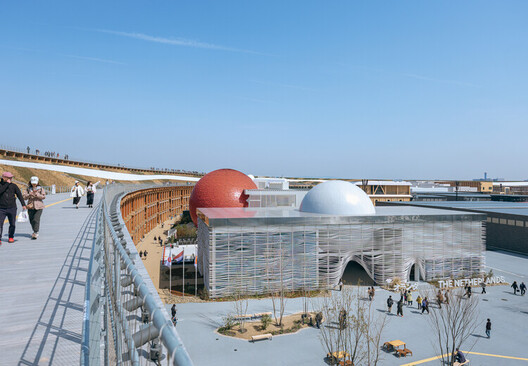
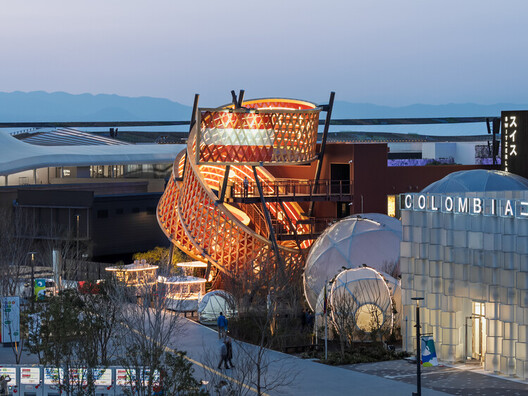
Across these cases, authority stems less from permanence than from repetition. The building may vanish; the gathering returns. Cultural memory attaches itself to the cycle. Within this broader field, Durga Puja in Kolkata reads less as an exception and more as a culmination. In 2021, the festival was inscribed on UNESCO's Representative List of the Intangible Cultural Heritage of Humanity. The recognition centered not on a monument but on community participation, craftsmanship, and ritual performance. The architecture at the heart of the celebration is the pandal, which is designed to disappear.
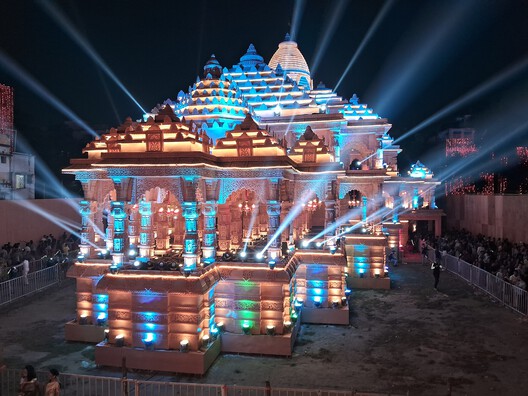
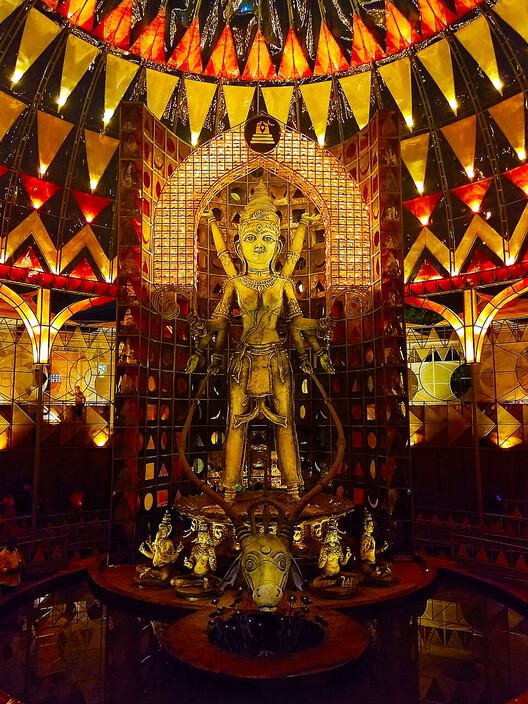
Each autumn, hundreds of neighborhood committees commission elaborate temporary pavilions across Kolkata. Bamboo lattices tied with coir rope form lightweight structural ribs capable of vaults and domes. Fabric skins diffuse colored light into immersive interiors. Electrical systems and fire-safety measures comply with guidelines issued by the Kolkata Municipal Corporation. Within weeks, empty plots transform into spatial narratives; within days of the festival's conclusion, they are dismantled.
The impact is urban. Traffic patterns are rerouted, temporary lighting grids installed, and crowd management coordinated for millions of visitors. State tourism reports from West Bengal regularly note the scale of economic activity generated during the festival period. For several days, the city reorganizes itself around temporary architecture. Moving from one pandal to another becomes a collective itinerary, binding neighborhoods through shared anticipation.
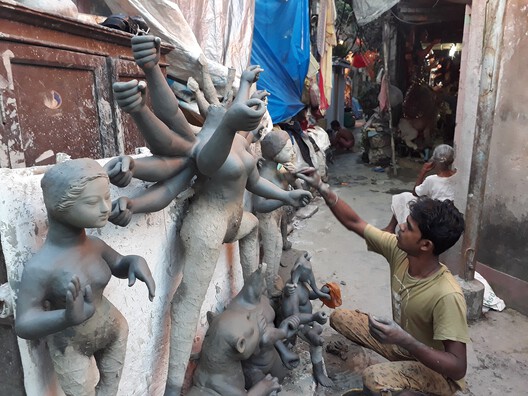
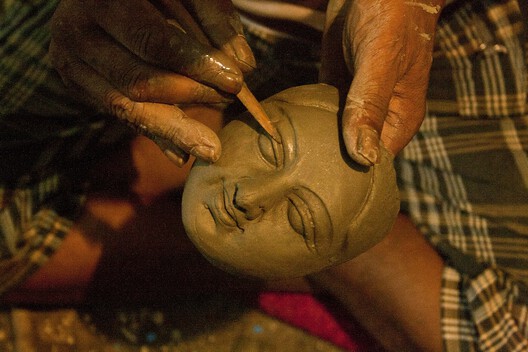
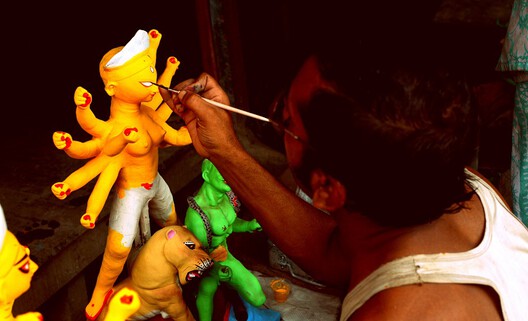
Beneath the visible structures lies a deeper continuity. In North Kolkata, the artisan neighborhood of Kumartuli produces the clay idols installed within the pandals. Workshops here have operated for generations, shaping straw armatures and layering riverine clay according to seasonal rhythms. Skills pass from master to apprentice, anchored in repetition rather than preservation of a single artifact. Environmental regulations issued by the West Bengal Pollution Control Board have encouraged shifts toward natural dyes and biodegradable materials, demonstrating how policy reshapes craft without interrupting ritual flow. The object dissolves; the knowledge persists.
Material cycles reinforce the logic. Bamboo frames are dismantled and resold. Fabric panels re-enter local markets. Lighting systems are reused. Some committees compete through "Green Puja" initiatives, aligning spectacle with environmental responsibility. Construction, celebration, and redistribution, the lifecycle is pragmatic and circular. Temporality does not automatically mean waste; it can activate an embedded economy.
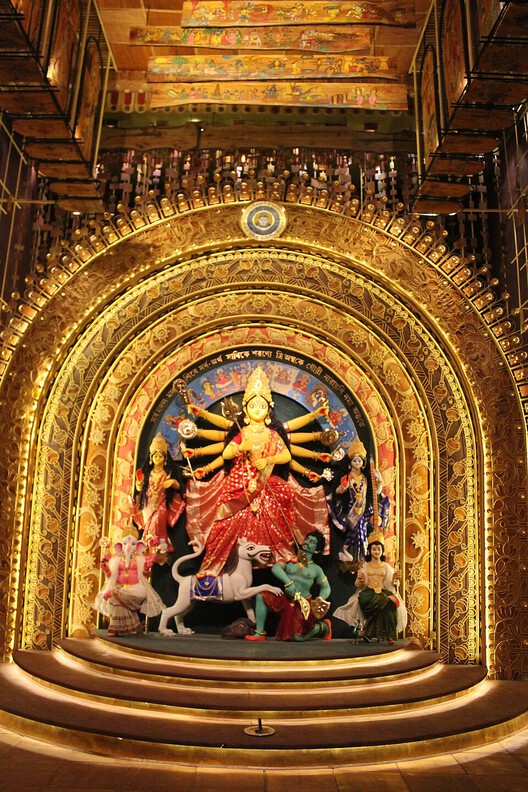
Thematic ambition adds another dimension. Recent pandals have addressed climate change, migration, and public health through immersive scenography. Visitors move through carefully sequenced interiors where light, sound, and texture reinforce narrative. Unlike a monument fixed to a singular historical moment, the pandal updates annually. It absorbs contemporary concerns while anchored in ritual continuity. Seen in this light, Durga Puja suggests a broader evolution in how heritage might be understood. The 2003 UNESCO convention emphasizes safeguarding practices through documentation and transmission. What is preserved is not the bamboo frame itself, but the capacity to build again next year to assemble materials, to mobilize artisans, and to gather communities. The asset is systemic.
This does not diminish the value of monuments. Cathedrals and temples remain powerful anchors of memory. But the global rise of event-based architecture from summer pavilions to pilgrimage infrastructures reveals that permanence is only one pathway to cultural authority. Recurrence can be equally durable. Durga Puja's pandals, dismantled before the month ends, demonstrate that architecture can endure by returning. Their authority lies not in resisting time, but in marking it, year after year, through repetition and reinvention. In rethinking permanence, we may also be redefining what it means to preserve.
This article is part of the ArchDaily Topic: Rethinking Heritage: How Today's Architecture Shapes Tomorrow's Memory. Every month we explore a topic in-depth through articles, interviews, news, and architecture projects. We invite you to learn more about our ArchDaily Topics. And, as always, at ArchDaily we welcome the contributions of our readers; if you want to submit an article or project, contact us.