

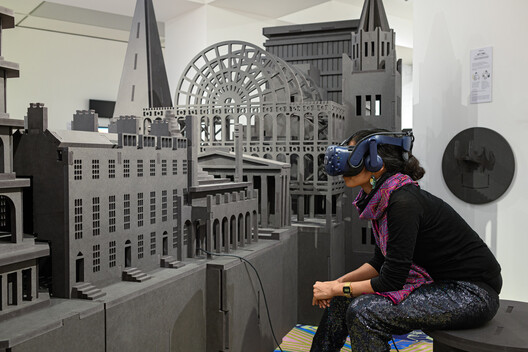
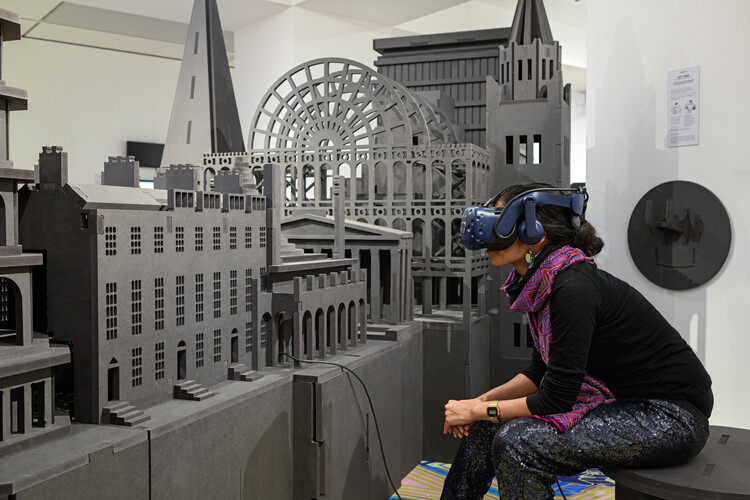
Before the digital turn, architecture's memory was largely tangible. It lived in the weight of drawings, the patina of models, and the thickness of books. To preserve architecture meant to preserve its traces, the documents, sketches, and photographs through which buildings could be remembered long after their material form had changed or disappeared. The modern architectural archive, as it developed in the 20th century, was both a refuge and a device of legitimacy. Institutions such as the Canadian Centre for Architecture, Casa da Arquitectura, or the Deutsches Architekturmuseum were built upon the conviction that to preserve architecture was to preserve its documents.
However, these archives didn't merely store knowledge. They determined what counted as architecture, who belonged to its canon, and how history would be told. To archive is to edit the past — to decide what enters, what is omitted, and how it will be interpreted. The archive, as theorised by Michel Foucault and later by Jacques Derrida, is never neutral; it is an instrument of power, a space that selects and excludes. In architecture, these dynamics are especially evident as they record the visible while silencing what falls outside their categories. The act of collecting has always been, implicitly, an act of judgment.


When digital media emerged, they promised to dismantle these hierarchies. The internet appeared as a new frontier of access, offering democratic access to knowledge, where the logic of selection persists, only now it is often encoded in software rather than institutional policy. Metadata has replaced the catalogue card; algorithms have replaced archivists. Yet the underlying question remains the same: who decides what survives? Beneath every form of storage lies a structure of power — whether institutional or computational — that governs what architecture remembers and what it forgets.
Born-Digital Architecture
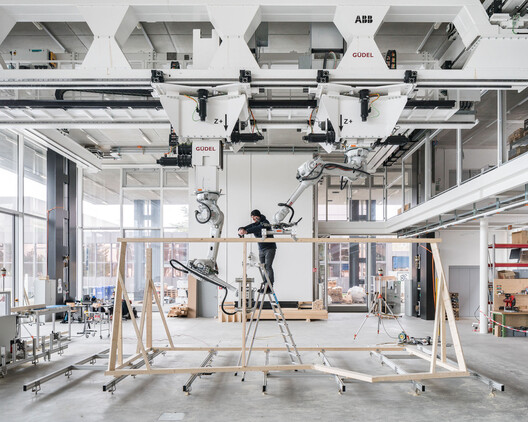
When architecture migrated to the computer, it also entered a new regime of temporality. Files could be copied endlessly, modified in seconds, and transmitted across continents — yet their longevity became alarmingly fragile. Unlike a drawing, which ages with its paper, the digital model depends on software, operating systems, and file formats that decay invisibly. What was once a revolution in efficiency soon revealed itself as a crisis of preservation. How can a discipline that builds for permanence operate through media designed for obsolescence?
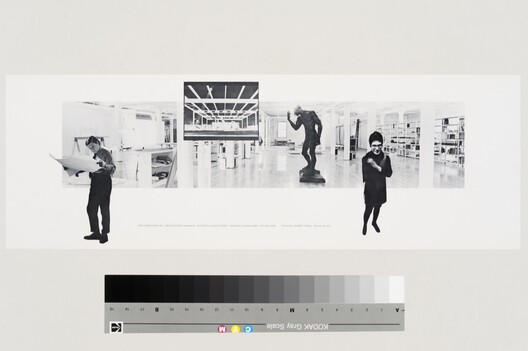
Few institutions have addressed this dilemma as directly as the Canadian Centre for Architecture (CCA) through its seminal project Archaeology of the Digital, curated by Greg Lynn. Conceived as both an exhibition and research program, it examined the first generation of projects born entirely from digital tools — by architects such as Peter Eisenman, Frank Gehry, and Chuck Hoberman — whose primary existence was not physical but computational. These projects had no single original; they lived through scripts, parameters, and data structures. To preserve them meant not only to store files but to retrieve the conditions that made them intelligible.
The CCA's approach reframed the archive as an active system rather than a static vault. Instead of amassing artifacts, it reconstructed the ecosystems that sustained them: obsolete software, operating systems, and even the hardware through which these works were once rendered. This method transformed archiving into an act of performance — each recovery a re-enactment of digital history, each file an excavation site. In this sense, archaeology became more than a metaphor. It described the very practice of digging through layers of code, formats, and protocols to uncover not ruins, but processes: the implicit knowledge embedded in the tools that once mediated design.
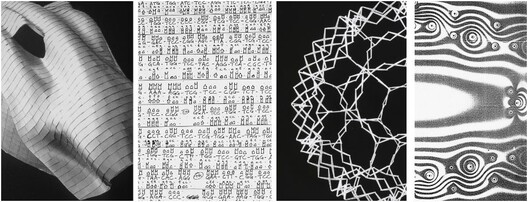
What Archaeology of the Digital ultimately exposed is that digital preservation is a form of translation. A file that cannot be opened is not a memory but a residue, suspended between potential and loss. In this sense, the corrupted or inaccessible model becomes architecture's equivalent of a 404 Not Found — stored somewhere in the system, yet irretrievable in practice. Its recovery depends on emulation, on the capacity to recreate the technological milieu that once animated it. The work of the archivist thus mirrors that of the architect: both construct continuity amid fragility, giving form to what might otherwise disappear.
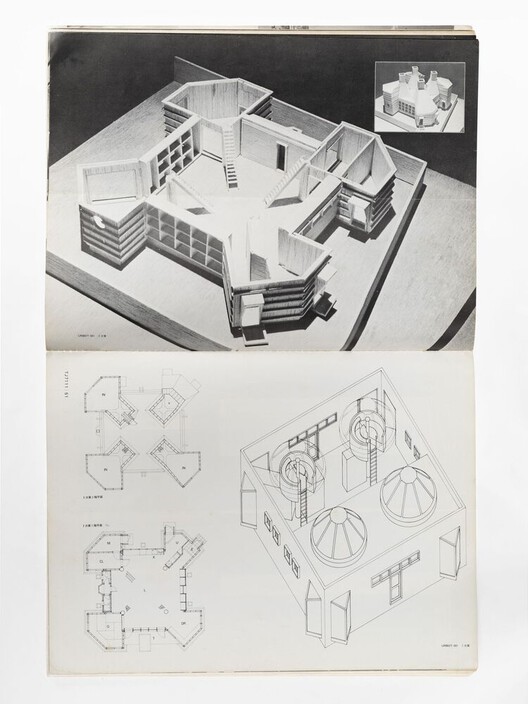
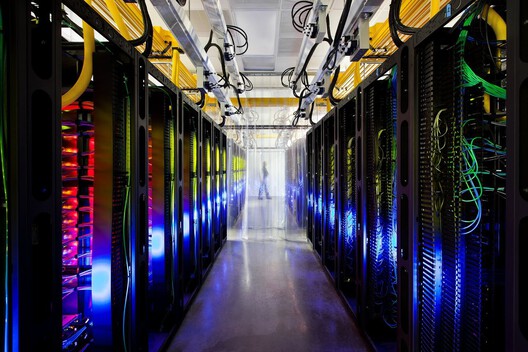
Yet this process also reveals a deeper paradox. Digital media promise infinite replication, but they rely on infrastructures that are profoundly mortal — data centers that require constant maintenance, software that expires, and formats that collapse into obsolescence. The architecture of the 1990s and early 2000s, the first to emerge fully from the computer, now faces the risk of vanishing not through neglect, but through technical decay. To preserve it demands more than storage; it demands interpretation.
In that sense, the archive becomes a site of negotiation between matter and immateriality, between artifact and interface. What the CCA has demonstrated is that to preserve digital architecture is not to freeze it in time, but to sustain its capacity to be read. The act of archaeology, here, is not about unearthing the past but about keeping the ground open — ensuring that the history of architecture remains legible within the shifting terrain of technology itself.
Curated by Code: The Algorithmic Archive
If the architectural archive once relied on the authority of institutions, it now operates through invisible protocols. What was once handled by curators, editors, and historians is increasingly managed by algorithms that filter, classify, and recommend. In this digital ecosystem, architecture circulates as data: it is uploaded, tagged, ranked, and endlessly recombined across platforms. The archive has become planetary, automated, and in constant flux — a space where visibility is no longer earned through scholarship, but generated through code.
Platforms such as ArchDaily function today as distributed archives. Each project published contributes to a collective database of architectural knowledge, one that grows by accumulation rather than selection. Yet unlike the curated collections of institutions such as the CCA, these archives do not preserve objects; they maintain flows. Their organizing principle is not the taxonomy of a library, but the logic of a feed — designed to privilege novelty, relevance, and engagement. In this context, the algorithm acts as the new editor: it determines what is seen, how often, and by whom.
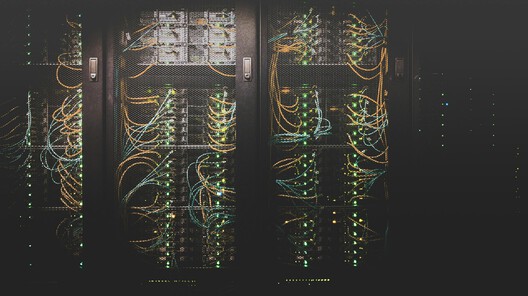
This transformation carries profound epistemological consequences. When visibility becomes algorithmic, the architecture that survives in collective memory is no longer defined by its cultural or disciplinary significance, but by its digital performance. The project that gathers the most clicks, shares, or impressions gains precedence over the one that contributes to a deeper discourse. The archive, once a place of permanence, now behaves like a living market of attention. It remembers what circulates and forgets what does not.
Yet it would be simplistic to read this condition only as a loss. Algorithmic curation also democratizes access and authorship. It dissolves the traditional hierarchy between the architect and the audience, allowing multiple voices to participate in the production of meaning. A drawing uploaded by a student in Jakarta can reach a global audience as easily as a building by a Pritzker laureate. This distributed visibility expands the architecture's public, but it also blurs the boundary between the discipline and its representation. The distinction between architectural production and its documentation becomes porous.
What emerges is a new type of archive: one that is dynamic, participatory, and unstable. Its contents are constantly updated, its hierarchies recalculated in real time. In contrast to the physical archive, which ensures durability through closure, the algorithmic archive thrives on perpetual incompletion. It never stops rewriting itself. Its memory is cumulative yet amnesiac — a database that remembers everything but understands little.
This logic is not unique to architecture. As Benjamin Bratton argues in The Stack, we now inhabit a planetary-scale computational infrastructure that governs how information is produced and exchanged. Architecture, in this sense, is both subject and participant in this system. Buildings are designed, visualized, and disseminated through platforms that operate according to the same principles of indexing and optimization. The digital twin becomes a cultural condition: architecture exists simultaneously as a physical environment and as a dataset within global networks.
Within this environment, the architect's role subtly changes. To design is also to manage visibility, to understand how form, image, and metadata interact within algorithmic economies of attention. The drawing becomes not just a representational tool but a form of interface, designed to perform across screens and feeds. Even the language of architectural publication adapts to this system, privileging clarity, repetition, and searchability over ambiguity or depth. The archive no longer mirrors the discipline; somehow, it actively constructs it.
The challenge, then, is not to reject these systems but to read them critically. The algorithmic archive is not an external force; it is part of the architecture's own ecosystem. To engage with it demands new forms of literacy: an ability to interpret metadata, to question metrics, to design not only for visibility but for understanding. Curated by code, architecture finds itself both empowered and exposed, suspended between accessibility and abstraction, between the democratic promise of the network and the opacity of its algorithms.
The Paradox of Abundance: Remembering through Forgetting
The digital revolution promised to make memory seemingly infinite. Every drawing, photograph, and model could now be stored without limit, accessible anywhere, at any time. Yet this abundance has not led to deeper understanding; instead, it has produced a new form of amnesia. When everything is preserved, nothing seems to endure. The archive overflows, and meaning disperses.
This is the central paradox of the digital age: we remember more than ever, but we retain less. The architecture of memory has shifted from scarcity to saturation. In the physical archive, selection was a necessity, as every document entered through judgment, through the slow politics of curation. In the digital archive, selection gives way to accumulation. The barrier to entry has collapsed; the act of uploading has replaced the act of choosing.
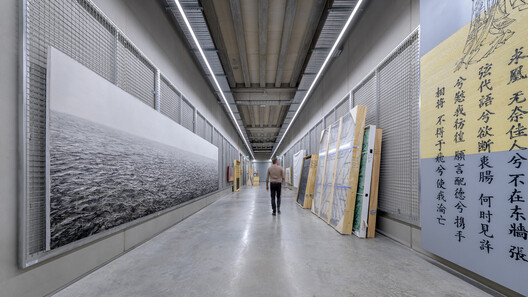
In this flood of information, architecture risks dissolving into a continuum of images — a global stream where the distinction between project, reference, and replica becomes blurred. Renderings replace drawings; databases replace discourse. The very tools that democratize access to knowledge also erode the hierarchies of relevance that once organized it. Visibility, in this context, becomes ephemeral. Today's most shared project is tomorrow's forgotten post.
But forgetting, as philosophers from Nietzsche to Paul Ricoeur remind us, is its condition. Without the ability to forget, the archive becomes inert, unable to differentiate or narrate. The problem of the digital archive is not that it forgets too much, but that it forgets poorly. It loses context, sequence, and meaning, leaving only fragments suspended in data. The task of preservation, therefore, is no longer to prevent forgetting but to give it structure — to curate absence as much as presence. Forgetting, when guided by intention, can be an act of clarity.
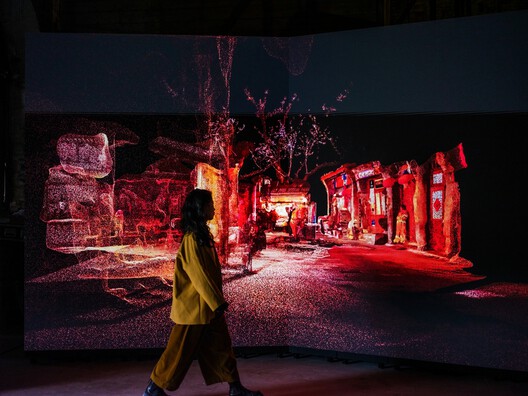
Institutions such as the Canadian Centre for Architecture have long understood this. Each recovered file is a reconstruction of context, a reweaving of a fragile network of dependencies. The institution's curatorial ethos stands in stark contrast to the passive accumulation that defines much of the digital sphere. It reminds us that memory is not a technical function but a cultural act.
For architecture, this insight is especially urgent. The discipline has always oscillated between the permanence of building and the volatility of representation. Today, that volatility seems to have reached a peak. Digital archives record every stage of design, from the first parametric sketch to the final render, yet they often obscure the process itself. Files proliferate faster than they can be understood, leaving behind a sedimented landscape of partial intentions and forgotten iterations. The abundance of documentation threatens to eclipse the work it was meant to preserve.
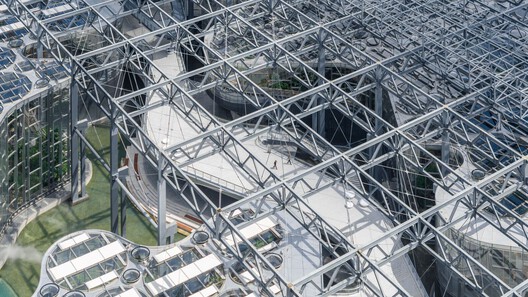
Perhaps this is the most important lesson the digital age offers architecture: that the survival of knowledge depends less on what we keep than on how we organise what we let go. Between remembering and forgetting lies the true space of culture — a space that demands not storage, but thought. In the end, the question is not simply how to store the past, but how to sustain its capacity to speak. The architecture of memory, like architecture itself, is always under construction.
This article is part of the ArchDaily Topic: Rethinking Heritage: How Today's Architecture Shapes Tomorrow's Memory. Every month we explore a topic in-depth through articles, interviews, news, and architecture projects. We invite you to learn more about our ArchDaily Topics. And, as always, at ArchDaily we welcome the contributions of our readers; if you want to submit an article or project, contact us.


